How Cat Purring Heals The Body
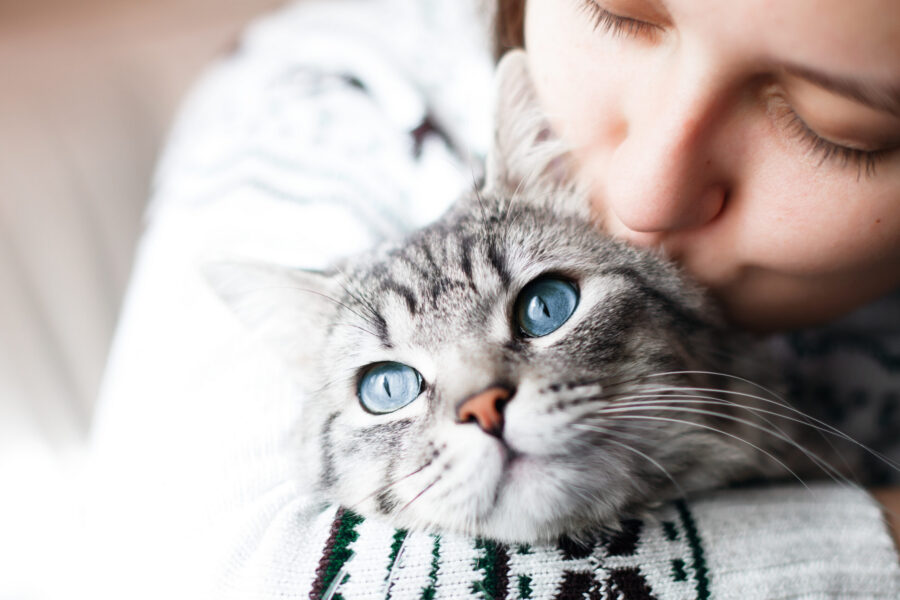
A cat’s purr may help support bone repair, lower stress, and improve heart health through therapeutic healing frequencies and rhythms.
It begins with a rumble. Before the sound reaches your ears, you feel it. A soft, steady vibration presses against your ribcage and slows your breathing. Your cat is snuggled on your chest, purring.
Domestic cats sleep nearly 70% of the time. In most mammals, this level of inactivity triggers muscle atrophy and rapid bone loss. Yet cats remain structurally strong. The answer lies in the feline purr. Take a look at how cat purring heals the body – your own as well as your kitty’s.
Cats purr at bone-regenerative frequencies
In 2001, Dr. Elizabeth von Muggenthaler of the Fauna Communications Research Institute analyzed the purrs of 44 species of felids, including cheetahs, ocelots, lynxes, and domestic cats. She found a consistent frequency range of 25 to 140 Hz.
This range is not random. In sports medicine, experts consider 25 to 50 Hz to be the “Goldilocks Zone” for bone regeneration. Higher frequencies, up to 100 Hz, stimulate repair of tendons and soft tissue. In other words, a cat’s purr matches the frequencies therapeutic devices use to treat injured athletes.
A cat at rest is not idle; they are performing low-energy osteogenic exercise. Purring acts as a full-body maintenance tool. It stimulates bone cells, improves circulation, and protects soft-tissue integrity while the cat rests.
When a cat lies on your chest, those same frequencies pass directly into your own body. It’s not solely a sign of affection or comfort – it’s biomechanical stimulation.
Cardiovascular healing: the Qureshi study
If the vibration of a cat’s purr helps the bones, its rhythm protects the heart. The strongest evidence comes from a 2008 study by Dr. Adnan Qureshi of the University of Minnesota Stroke Institute. His team followed 4,435 Americans over ten years. They found that cat parents had a 40% lower risk of dying from a heart attack.
This effect remained significant even after researchers accounted for smoking, obesity, diabetes, and hypertension.
The reason? Entrainment. Humans are rhythmic organisms. When you hold a slowly purring cat, your physiology shifts to match theirs. Heart rate drops. Blood pressure decreases. Cortisol production — your primary stress hormone — falls. Meanwhile, oxytocin, the hormone associated with bonding and safety, rises.
Your cardiovascular system does more than relax emotionally. It chemically redirects toward health.
A biological partnership
A cat’s purr is sweet and comforting. But the evidence tells a deeper story. The purr is not just an emotional bonus — it is an evolutionary tool. It’s a built-in mechanism that supports bone density, soft-tissue repair, cardiovascular health, and neurological regulation. And we benefit from it simply by being close to our kitties.
The next time your cat curls up on you, pause for a moment. As that quiet vibration rolls through your chest, think about how cat purring heals the body. What you’re feeling is not just love. It’s biology, working in your favor.
Purring cats act as biofeedback devices
At the Pendleton Correctional Facility in Indiana, the F.O.R.W.A.R.D. program pairs inmates with shelter cats. These men live in a state of hyper-vigilance. Their sympathetic nervous systems are locked in fight-or-flight mode.
But the cats change these biological rules. To keep a cat calm, an inmate must lower his voice, slow his movements, and regulate his breathing. Staff describe this as “forced focus.” Biology, not discipline, triggers the behavioral shift. If the inmate tenses, the cat withdraws. If he softens, the cat stays. This simple loop rewires behavior.
Programs like F.O.R.W.A.R.D. consistently report positive changes in inmates:
- Fewer behavioral infractions
- Lower aggression scores
- Improved emotional regulation
- Reduced recidivism after release.
In other words, a purring cat becomes a biofeedback device. It teaches self-control, patience, and empathy — traits often suppressed for survival in prison.
A cat’s purr vibrates at the same frequencies used in therapeutic devices for injured athletes.
If the vibration of a cat’s purr helps the bones, its rhythm protects the heart.
The post How cat purring heals the body appeared first on Animal Wellness Magazine.
Popular Products
-
 Dinosaur Costume Hoodie for Dogs and ...
$50.88$29.64 -
 Rechargeable Electric Dog Nail Trimme...
$87.99$60.78 -
 Double-Sided Pet Grooming Gloves Hair...
$48.99$33.78 -
 Long Pin Slicker Brush for Dogs Groom...
$60.99$41.78 -
 Pet Grooming Shedding Brush Comb
$10.99$6.78