If God Is Real Why Is There So Much Suffering In The Animal Kingdom?
This is a crosspost from my Substack.
The Role of Emotional Suffering in the Animal Kingdom
The Problem of Animal Suffering for Theism
While non-human animal emotions received very little attention during the heyday of behaviorism, scientific research interest has steadily grown in the subject of the last decades. But this does not mean that the subject has only been of recent interest to scientists. Indeed, Darwin dedicated a whole book to the subject, titled The Expression of the Emotions in Man and Animals (1872), collecting evidence for the parallels between the expressions of humans and non-human animals (henceforth animals for simplicity). As Rodgers et al. note, Darwin “laid an important foundation for viewing the defensive patterns of other species as essential evolutionary precursors to human fear and anxiety reactions” (1997, p. 291). However, the more we learn about the negative emotions of animals, such as grief, pain, anger, fear, depression-like states, and so forth, the more we are forced to think about the moral status of these states. How much emotional suffering is there in non-human animals, and how much should we care about them? Nature seems to be filled with suffering, thus forcing us to think about why such suffering exists.
These questions are of central importance to the problem of animal suffering, which is the central theme of this edited volume. Philosophers of religion and theologians have long struggled with the problem of evil, that is, why is there badness and suffering in this world if there is an omnipotent, omniscient, and, perhaps more importantly, benevolent God who has created the world according to his design (McFarland 2018)? A special version of this problem concerns the problem of why an all-good, all-powerful, and all-knowing God would allow non-human animals to experience suffering without seemingly any purpose, which has weakened the conviction many have in God’s existence, despite several arguments by theists to solve this problem. The goal of this chapter is not to address this question or problem of theism directly, which has already been done in preceding chapters. Instead, I will here take a deep dive into the literature on emotional suffering in the animal kingdom to explore whether these could further provide evidence for or against monotheism.
The philosopher and theologian Michael Murray (2008), for instance, has attempted to justify animal pain by highlighting its benefits to animals, going so far as to suggest that pain may be necessary for creatures engaging in complex goal-directed behavior. Indeed, I have made a similar argument in my recent monograph on the evolution of consciousness that there was something close to necessary about the evolution of hedonic evaluation (pleasures and pains) to enable the evolution of complex animal bodies (Veit 2023). So I am not at all surprised that the adaptive benefits of pain have given rise to a body of evolutionary theodicy literature seeking to explain the problem of animal suffering as the natural outcome of God employing evolution to create the diversity of life forms we find in the world (Attfield 2000; Southgate 2002; Wahlberg 2015; Jang 2018; Messer 2018; Sollereder 2018a, b; Peters 2019; Lamoureux 2020). Similar to responses to the problem of evil concerning human suffering, theists have argued that the intuition that pain is intrinsically bad may have to be reconsidered due to the roles it plays for organisms, such as to live a longer and happier life by avoiding harmful situations. My goal here is not to directly engage in this discussion about pain. Indeed, I will largely side-step the common argument for the necessity of pain in this chapter in order to consider whether a similar argument could be made for the roles of negative emotions experienced by animals. As Kahane points out, “[e]volutionary history is awful primarily because it contains so much agony—largely physical pain and other negative physical sensations, but in higher animals also emotions such as fear and distress” (2023, p. 254). While most suffering in the animal kingdom is due to comparatively simple pains, it is these complex emotional states that require an ethical analysis.
To do this, we must understand the value of these emotions, that is, what is the axiological status of the emotional suffering animals experience? On first glance, it may seem hard to justify the suffering animals experience from emotions like fear, but an examination of the role of these states in the lives of animals may offer a way out for the theist, by highlighting how important these states are for the survival of the animals and, thus, the continued existence of such creatures. As I shall argue, however, such reasoning can at best only offer a partial response to the problem of animal suffering. While there are survival and individual benefits that come from the experience of emotional suffering, and we can make a similar case for the need of some such suffering akin to the roles of pain, these do not seem to fully eliminate the problem since an omnipotent designer could reasonably have designed animals in a very different manner due to the sheer unlimited design space of animals that has gone unexplored. A more promising line of reasoning may consider whether the long-term axiological benefits of emotional suffering may be outweighed by greater hedonic value in the long run. This is how I will understand the axiological value of animal lives in this chapter: the sum of positive and negatively valenced (valued) hedonic experiences (Browning 2020). While some may object to a “narrow” utilitarian axiology, I am only committing myself here to hedonic axiology concerning animals; an axiology for the value of human lives may be more complex (see Caviola et al. 2021). With this brief introduction out of the way, let me offer a brief outline of this chapter.
This chapter is structured as follows. In the second section, “What Is Emotional Suffering?,” I will define some of the terms to provide some clarity to the debate and avoid potential confusion. In the next section, “Which Emotions Can Animals Undergo?,” I survey the evidence for negative emotions in animals, focusing on frustration, anger, anxiety, and depression, as the clearest cases for emotional suffering. In the fourth section, “What Does Emotional Suffering Do for the Animals?,” I will discuss the two potential beneficial roles of emotional suffering for animals, that is, in terms of survival and reproduction and in terms of enabling greater positive experiences in the future. In the last section, “Conclusion and Further Discussion,” I will summarize the key arguments of this chapter, briefly examine whether emotional suffering may strengthen or weaken the case for an omnipotent God, and provide some further discussion of how the debate could usefully develop.
What Is Emotional Suffering?
Before we move to the evidence for emotional suffering in animals, we first need to bring some clarity to this muddled debate by defining our terms. In the preceding chapter on the role of pain in the animal kingdom, it should have become clear how widespread pain is in the animal kingdom, as well as its role in avoiding fitness-decreasing behavior. Therefore, it will be useful to draw a distinction here between pain and emotional suffering. Often, the term “pain” is used in a very broad sense to capture any and all mental states that feel bad—often described as negative hedonic valence (Veit 2023). This is how, for instance, utilitarians, such as Jeremy Bentham (1780), thought about pleasure and pain as the guides of behavior. Indeed, a common misconception of the ethical doctrine of utilitarianism is that it only promotes the avoidance of the severely negative feelings associated with bodily injury. Instead, utilitarianism is more broadly concerned with any type of experience that has negative and positive hedonic valence, aiming to minimize the former, while maximizing the latter to have as much “pleasure” in the sense of the sum of all one’s hedonically positive valenced states minus all the negatively valenced states. Other such states should be easily identifiable: think of hunger, fear, anxiety, as examples for negative states, and love, curiosity, comfort, and so forth for positive states.
So a broad notion of “suffering” can include all these negatively valenced states, but we could also identify a very narrow conception here that identifies “suffering” with the narrow sense of “pain” as a distinct physiological state associated with damage and perhaps other nociceptive stimuli, such as high temperatures. I do not think there is a true definition of the term “pain” here that would make the broad or narrow usages of the term correct. Folk usage is—as so often—ambiguous between the two, and I have no ambitions to tidy up that language. However, for the purposes of this more philosophical investigation, it is important to draw this distinction in order to avoid confusion and distinguish this chapter more from the preceding one on pain.
Going back to the term “suffering,” there can again be, as suggested above (at least), two ways of interpreting the term. Broadly, the term can be used to describe all kinds of states we may consider negative, whether these are pains (in the narrow or broad sense) or even states such as poverty or a lack of education. The way I am going to talk about suffering here concerns a narrower sense, often prefixed by the term “emotional,” to distinguish it from the above narrow sense of pain, that is, negative emotional states, such as loneliness, fear, grief, jealousy, and the like.
While pain is sometimes categorized as an emotion or a basic emotion alongside pleasure, it is more sensible to categorize it as an acute state compared to longer-lasting and more complex emotions. Some of these more complex emotional states may justifiably be quite controversial for animals and a result of excessive anthropomorphism. But the fear of excessive anthropomorphism should not make us endorse the equally problematic stance of “anthropodenial,” that is, the denial of any human similarities in other animals (de Waal 1999). Some have remained skeptical that animals have emotions, precisely because they are seen as more complex states than pain. This is especially so when one uses—as I shall do here—a definition of the term “emotion” that tracks common usage and includes conscious experience as opposed to mere behavioral similarities to human experiences such as anxiety. This, of course, does not mean that animal emotions must be exactly like ours. The fear of a rabbit may feel different from that of a human, but what matters for our purposes here is the negative aspect of such emotions—that which makes them bad for an individual.
To summarize this section, I will define “emotional suffering” here as “the negative hedonic experiences associated with emotions such as grief, fear, depression, and so forth.” In the following, we will look at the empirical literature for which negative emotions animals undergo and how much suffering these emotions cause them.
Which Emotions Can Animals Undergo?
The main problem we face in determining which emotions animals can feel is that conscious feelings cannot be directly scientifically assessed (Crump et al. 2020; Browning and Veit 2023b; Veit 2023). This, of course, is not a unique problem in animals. In humans, we also rely on indirect evidence, such as verbal reports, that is, we ask humans to report their subjective experiences. Asking animals to report their experiences verbally is unfortunately not possible, though we can train them to give us at least something similar to verbal reports through pointing, making sounds, or making decisions alongside other behavior that we can observe and is indicative of their internal states (Dawkins 1980). Nevertheless, despite the obvious importance of emotions to animal welfare, emotion researchers, unlike animal welfare scientists, typically ignore subjective experience because of the inherent difficulty in understanding the subjective experiences of animals, instead focusing purely on behaviors and mechanisms that we associate with evaluations (Browning and Veit 2023b). How then should we assess the emotional suffering animals are likely to experience? The solution comes from consciousness/sentience research, which is trying to determine which animals are capable of subjective experience (Birch et al. 2022; Browning and Birch 2022; Veit 2023).
For animals that have been assigned a high probability of subjective experience, such as mammals (Low 2012), birds (Low 2012), and more recently fish (Sneddon 2015; Woodruff 2017; Sneddon et al. 2018; Sneddon 2019), decapod crustaceans, such as crabs (Birch et al. 2021; Crump et al. 2022), and cephalopods, such as octopuses (Birch et al. 2021), we can use this emotion research to at least infer there is a high probability that these complex evaluative processes are also accompanied with subjective experience. This is how many animal welfare scientists implicitly treat their research on welfare indicators, such as animal behavior and physiology, as evidence of how the animals feel (Dawkins 1980; Browning 2020, 2022). This is illustrated in Fig. 17.1, where Krause and Nawroth offer a nice overview of (some) of the evidential lines researchers use to assess the emotional states of animals, such as the decisions animals make, their facial and vocal expressions, their hormone levels, and the autonomic nervous system (2021, p. 3), some of which I will discuss further shortly.
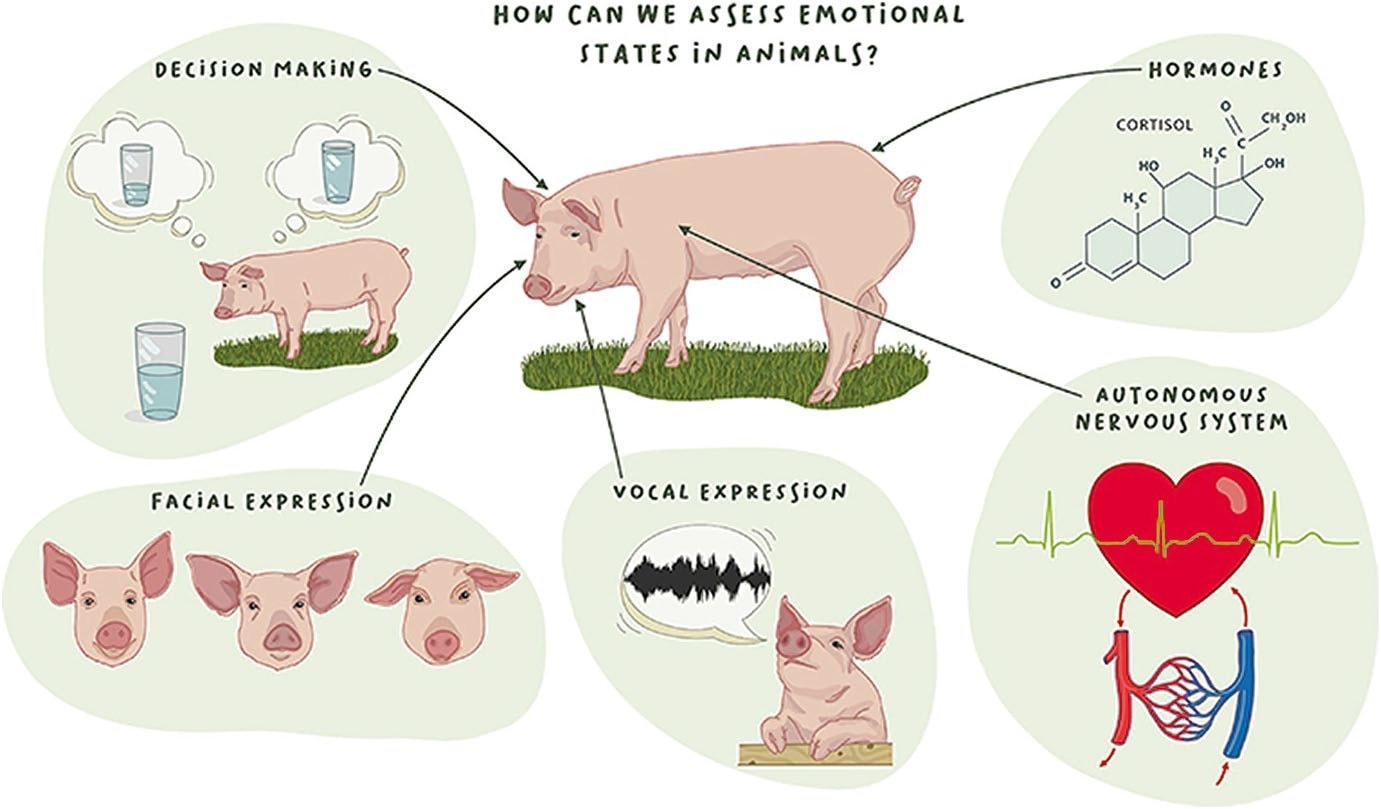
Fig. 17.1 Sources of scientific evidence for animal emotions [reproduced from Krause and Nawroth (2021, Figure 1, p. 3) CC BY].
Typically, animal welfare scientists do not rely on neural evidence because such research is typically highly invasive and often involves the death of animals, which is, of course, detrimental to improving the welfare of that individual. But when we look at affective neuroscience, which is often described as the neuroscience of emotions, following the founding work of Panksepp (1998, 2005), researchers have found strong parallels between the neural structures underlying affective experiences in humans and the neural circuits of animals responsible for evaluation (Berridge 2009; Berridge and Kringelbach 2013, 2015). This is why I have elsewhere argued with Heather Browning that such evidence, alongside evolutionary considerations of shared ancestry, can increase our “confidence in attributions of similarity in affective experience when these brain areas are active” (Browning and Veit 2023b, p. 211). Furthermore, we argued that an insistence of differences in kind in the face of these neurological and behavioral similarities is an exceedingly skeptical stance. To say that other animals have emotions, such as fear, does not imply they are experiencing fear in the same way we do. The differences between us and other animals are a matter of degree, not kind, especially when it comes to how aversive they feel.
But before we move on with this discussion of the emotional experiences animals are capable of experiencing, let me first respond to a potential objection someone might raise at this stage that invertebrates, such as crabs and octopuses, are so far evolutionarily related to us that it is too speculative to attribute them the capacity to feel. Now, one response would be to simply point out that this would be irrelevant within the scope of this chapter. For the problem of animal suffering, it doesn’t really matter whether we draw the boundaries of sentience at insects or mammals, since as long as there are animals with emotional experiences, they will involve suffering.¹ So, we do not have to commit ourselves here to a very early evolutionary origin of emotional experiences. Even if emotions were restricted to the evolutionary misnomer of so-called higher animals or say other Great apes, such as chimpanzees and orangutans, there would still be the problem of why an omnipotent designer would have allowed such seemingly pointless suffering. Indeed, our species appeared around 300,000 years ago, while Great apes existed for over 10 million years (Hill and Ward 1988). This raises the important question of whether evolution was even “worth it” due to the long period of suffering before humans appeared (Kahane 2023). We could thus simply continue this chapter to investigate emotions in the animals most closely related to humans since it wouldn’t change the fact that there has been a lot of emotional suffering.
However, another response would be to point out that since there is more uncertainty about the subjective experiences of animals very far from us on the tree of life, this does not imply that we should simply ignore the possibility of their suffering (Birch 2017). Indeed, this is doubly worrisome since there has been an unfortunate tendency among theists ever since Descartes to deny any animal suffering (Wiertel 2017). While this is one way to resolve the problem of animal suffering, it may be question-begging in at least some cases if one rejects animal suffering due to one’s belief in an omnipotent God. Indeed, this will hardly convince any religious skeptic concerned with the wealth of evidence for the suffering of animals. As Wiertel notes: “though Descartes’s view of animal life was displaced by modern biology, some Christian apologists have adopted Descartes’s willingness to question whether animals subjectively experience pain, at least in the same manner as human beings” (2017, p. 688). Notably, this position seems to be becoming less and less popular among theists, with the beneficial roles of suffering taking a much more prominent role in the discussion. Let us thus move on to the evidence for emotional suffering in animals before we examine what roles these emotions may play for the animals. Here, I will survey what I consider the four most important sources of emotional suffering: (i) frustration and disappointment, (ii) anger and rage, (iii) fear and anxiety, and (iv) depression and grief.
Frustration and Disappointment
A common form of emotional suffering observed in animals, especially in captivity, is frustration. If this frustration is not addressed and becomes a longer-term problem, animals can develop so-called stereotypies, that is, repetitive and often compulsive movements or sounds, which can be used to assess the welfare of animals (Broom 1983; Mason 1991; Mason and Latham 2004; Swaisgood and Shepherdson 2005; Mason 2006; Mills and Luescher 2006; Mason and Rushen 2006; Vaz et al. 2017). Such stereotypies can, for instance, happen when animals cannot pursue their goals, such as pigs trying to root and nest-build, which hurts their noses on the concrete and would require materials like straw (Ludwiczak et al. 2021). It can also lead to problematic behaviors such as tail biting (Schrøder-Petersen and Simonsen 2001). Laying hens are similarly frustrated by their inability to dust bathe and nest-build, which may lead to featherpicking (Rodenburg et al. 2005). This is why animal welfare scientists often advocate environmental enrichment to ease frustration, boredom, and prevent the development of stereotypies (Swaisgood and Shepherdson 2006). Frustration is plausibly related to the inconsistencies we find between the world and our expectations or wants, thus allowing for the identification of different sources of frustration (Amsel 1992).
Another common form of frustration involves frustration due to failed actions. Orangutans, for instance, have been observed to signal for something they wanted, only to respond in frustration when their wishes weren’t satisfied (Andrews 2020, p. 137). In dogs we find “high physiological arousal, communication of the desire for autonomy through aggressive displays (e.g., snarling, growling, snapping, biting) and behavioral tendencies associated with increased efforts such as pulling/lunging on lead or digging at a barrier to access the desired resource” (McPeake et al. 2019, p. 2). In laboratory studies, animals have often been shown to get frustrated if they try but fail to reach food. Brown Leghorn fowls, for instance, have been shown to become similarly frustrated “by presenting food under a Perspex cover” and even lead to aggression (Duncan and Wood-Gush 1971, p. 500). Indeed, it has often been argued that frustration can lead to anger. As the neuroscientist Edmund Rolls notes, “Emotions associated with the omission of a reward … or the termination of a reward … include frustration, anger and rage” (2018, p. 14). This effect can probably be generalized to a wider “range of circumstances: absent, reduced or delayed rewards” (McPeake et al. 2019, p. 2).
Animal welfare scientists have developed a variety of psychometric tools to assess the emotional states of animals. A recent one is a psychometric measurement tool for frustration in dogs called the Canine Frustration Questionnaire that showed a high reliability between the assessment and the subjective assessment of owners (McPeake et al. 2019). Dog owners often report that they are able to identify frustration in their dogs, and this study suggests that humans may be better able to read the emotional states of their dogs than may be anticipated. This should perhaps be less surprising in the case of dogs, however, since their emotional responses have co-evolved with humans and can often differ strikingly from their closest relative—the wolf (Schleidt and Shalter 2003; Paxton 2011; Nagasawa et al. 2015; Chambers et al. 2020). Nevertheless, by scientifically studying animal emotions, we can develop a closer understanding of their emotional states and the signs for how to detect them. As I have mentioned how frustration can often lead to anger above, let us therefore turn to this emotion next.
Anger and Rage
Anger is a common emotion widely shared across the animal kingdom. Indeed, the evolutionary anthropologist Daniel M. T. Fessler notes that “we can expect all complex social animals to experience something like anger” (2010, p. 376). But what is anger? It is an unpleasant high-arousal state that is highly motivating (Kremer et al. 2020, p. 275). Fittingly, humans often describe others as exploding in a fit of rage. We simply have no trouble identifying anger in other humans, as it “distorts” their faces and can lead to quite distinctive aggressive behavior and vocalizations. Krause and Nawroth elegantly point out that this is no different in animals, where researchers have developed “grimace scales” to assess the emotional state of animals as different as “horses, pigs, sheep, rats, mice, and cats” (2021, p. 4). While these scales can be used for a variety of emotions, anger is perhaps the most important one as it can serve us as a warning not to approach or antagonize an animal that might attack. While humans owning pets may feel like they can easily tell the emotions of their animals from their “facial expressions,” we need to be careful not to anthropomorphize them and interpret similarities in expression as certain evidence for identical emotions in animals. What may look like a smile in a monkey, Krause and Nawroth note, is often a sign of stress (2021, p. 3). So this warning applies even to our closest relatives, where one certainly shouldn’t extend one’s hand to a primate showing their teeth.²
Anger is highly aversive, putting animals into a lot of stress caused by perceived threats to their lives or potential status in social groups. Chimpanzees, for instance, have social hierarchies that can involve a lot of displays of anger (de Waal 1991). Hens have pecking orders that are established through aggressive pecking of other hens (Guhl 1956; Rushen 1982, 1984, 1985; Strauss et al. 2022). Aggression is more commonly found in the males of species, with studies having shown that testosterone levels and aggression in males are highly correlated (Reuter 2010, p. 28). We also have some understanding of the genetic basis of aggression, such as the MAO-A gene in mice (Reuter 2010, p. 32), but as with all emotions, the genetic underpinnings of a trait like a disposition for anger and aggression is highly complex, and more studies will be needed. Panksepp described the underlying neural circuits as “RAGE/Anger System” (2011, p. 1799), one of the central affective feelings of animals. He notes that this system can help animals to survive when they are cornered or frustrated by causing fear in predators (Panksepp 2011, p. 1799). Indeed, fear may be seen as a kind of opposite emotion to anger, often being caused by aggressive displays. Let us thus turn to this emotion next.
Fear and Anxiety
A lot of research on animal emotions is funded for the purposes of developing anti-anxiety medication. So-called animal models for anxiety have been developed to study potential treatments without needing to test them in humans first (Neumann et al. 2011). While conscious feelings cannot ever be directly measured, it would make little sense to study all these neurological and behavioral correlates of fear and anxiety in other animals if we thought it wouldn’t help us to elucidate and treat these experiences in humans.
So-called attention bias tests have been useful to identify which animals likely have anxiety, biasing their attention to threatening stimuli, such as loud noises (Kremer et al. 2020). This methodology, for instance, has been used to establish how different levels of anxiety can influence attention in sheep (Lee et al. 2016) as well as cattle (Lee et al. 2018). Indeed, anxiety levels within the same species can be highly diverse, from very high to very low levels of fearfulness (Neumann et al. 2011, p. 1361). However, it is also common to experimentally induce anxiety in animals, which while ethically problematic, rests on the assumption that such studies can help us to understand human anxiety better. Such research is deemed important because we think that we can induce anxiety-like experiences in these animals. One way of inducing anxiety is through drugs, such as 1-methyl-chlorophenylpiperazine (Lee et al. 2016), which can cause anxiety in humans, whereas anti-anxiety medication, such as Diazepam, has been used to lower anxiety levels in sheep (Lee et al. 2016). Indeed, such drugs have been used on wild animals in captivity. For instance, orcas at SeaWorld have been given anti-anxiety medication (Cronin 2014). Part of the problem here is, of course, the strange environment of zoos that many animals find themselves in, and I have elsewhere argued that zoos need to prioritize animal welfare to avoid mental health problems in animals (Browning and Veit 2024).
What should we make of the evidence for anxiety in animals? As I shall argue in the next section, emotions like anxiety are plausibly evolutionary ancient and shared widely across the animal kingdom due to their central role in aiding adaptive decision-making. Anxiety is even found in unexpected species, such as crayfish, who have been successfully treated with anxiolytic drugs for induced anxiety due to electric shocks (Fossat et al. 2014). Perhaps more surprising is that anxiety-like states have even been induced in animals as small as bees (Bateson et al. 2011), which as Frans de Waal points out, “share stress-related changes in levels of hemolymph dopamine, octopamine, and serotonin consistent with anxiety or depression in humans” (2022, p. 2). If even insects can exhibit anxiety-like symptoms, it should not at all be inconceivable that anxiety is widespread in the animal kingdom as a potentially ancient evolutionary capacity with adaptive roles. But before we look at these roles in more detail, let us end this section with evidence for depression and grief in animals, which coincides greatly with the evidence for anxiety, since symptoms of anxiety and depression can often be quite similar, involving the reduction of social behavior and activity more generally.
Depression and Grief
More controversial perhaps is whether animals are capable of experiencing depression and grief. Much of the evidence here is anecdotal in nature because it would be (i) hard to design tests for grief and (ii) probably unethical, say, to take animals away from their parents or to take away their children to observe their behavior. Indeed, I am willing to bet that a study that killed the offspring of an animal to observe the response of the parents would be extremely unlikely to be approved. Luckily, anecdotal evidence is still evidence, and animal keepers, as well as researchers who often spend years with animals, can make use of their unique experiences to evaluate how an animal is plausibly feeling (Browning 2017).
Much of the evidence we have comes from research on Great apes, such as chimpanzees, bonobos, and orangutans, or for that matter, other primates, such as baboons, who have all shown depression-like states when losing their mothers or children (Goodall 1990; de Waal 2003; Smuts 2007). But this may nowadays be hardly surprising due to their recent shared ancestry and behavioral similarities with humans, so it will be useful to look at other animals in particular. Poole (1998), for instance, has argued that elephants who lost their parents suffered grief and depression not dissimilar to humans. Recently, Warsaw Zoo has even given experimental Cannabis oil as a treatment for the depression of one of their elephants, Fredzia, who showed signs of grief and depression, such as avoidance of social contact with other elephants after the oldest female (the matriarch) in the group had died (James 2020). Elephant scientist Caitlin O’Connell suggested, “[Elephants] do appear to display similar behaviours to our own in the context of loss, and since we share the same hormones, anything that helps reduce anxiety seems worth trying” (James 2020). Similar anecdotes are rampant among elephant researchers and zookeepers, and perhaps we shouldn’t be surprised about their emotional complexity with their brains having 257 billion neurons, that is, more than three times as many as us (Herculano-Houzel et al. 2014). More surprising perhaps has been the documentation of so-called elephant graveyards where even unrelated individuals come to visit the resting place of deceased individuals (O’Connell 2007, p. 93). The cognitive ethologist Marc Bekoff has collected a lot of such anecdotes in his work (2000a, b, 2013, 2024), such as when sea lions and dolphins reacted in similar ways to the death of their offspring to how a human mother would, as the sea lions “squeal eerily and wail pitifully, lamenting their loss,” and dolphins try “to save a dead infant” (2000a, p. 866).
While some may try to deny or downplay such anecdotes, a lot of research on depression is done on animals similar to animal models of anxiety (Neumann et al. 2011). Animal models for depression rely on the assumption that animals can experience at least something close to human depression since it would otherwise be pointless to fund such research on animals. Indeed, this is doubly so since this research often relies on stressing animals to induce depression, thus again raising legitimate ethical worries about why there would be a need for such research if it doesn’t help us to cure or understand depression in humans. Before we move on, I should note that this brief survey should not be seen as an exhaustive list of the evidence for emotional suffering in animals. More evidence could be presented in a much wider range of species, alongside additional lines of evidence. For more extensive reviews of the emotion literature, I would suggest interested readers to become engaged with recent reviews (such as Panksepp 2011; de Vere and Kuczaj 2016; Paul and Mendl 2018; Kremer et al. 2020; Paul et al. 2020), as well as important collections of anecdotal evidence since these do not typically make it into traditional types of journal publications but present a lot of evidence that can guide further research (such as Darwin 1872; Bekoff 2000a, 2000b; O’Connell 2007; de Waal 2009; Bekoff 2013, 2024). But I hope this selective overview has made a good case for the existence of different types of emotional suffering across a much wider range of species than one might have anticipated. Let us, thus, now move to the central question of this chapter, that is, whether such emotional suffering may have important roles for these animals, where I will discuss both benefits in terms of fitness and in terms of welfare.
What Does Emotional Suffering Do for the Animals?
What are the benefits of emotional suffering to animals? Here, we can distinguish between two senses of “benefit.” On the one hand, we can think about the benefits that accrue to animals in terms of fitness, that is, better survival and higher numbers of offspring. An argument for these benefits may justify some forms of suffering as something close to a “necessary evil” to enable the continued existence of such creatures, which, as I mentioned above, is a common response to the problem of animal suffering (Murray 2008). On the other hand, we can think about the benefits of emotional suffering to the animals as sentient experiencing creatures. Clearly, emotional suffering feels bad to the animals, and so just like with pain, is it perhaps intuitive to think there is a lot of unnecessary suffering? Yet, some forms of emotional suffering may provide animals with longer-term benefits that outweigh the momentary costs of suffering. Such an argument would focus on the axiological value of emotional suffering in terms of the value animals as sentient individuals derive from it. Thus, we would end up with a hedonic calculus or, to put it differently, cost-benefit analysis to determine whether emotional suffering pays off what we may describe as its “axiological debt.”
Is there an intrinsic value to suffering? Some philosophers have tried to make such a case, though I do not think they succeed since animals, unlike humans, do not derive some form of “deeper meaning” from their suffering. Yet, within the scope of this chapter, I do not have the space to discuss this literature, so we will remain firmly located within the hedonic axiology outlined above. I am happy to be convinced there, but the burden of proof is on those advocating for such an on-the-face-of-it “unintuitive” proposal. Until then, any suffering animals experience can reasonably be considered intrinsically negative, though that does not necessarily imply that it is meaningless suffering because of further benefits. If there is any positive value to suffering, it must be instrumental, that is, the negative feeling of emotions, such as anxiety and depression, must be outweighed by the positive feelings that are caused by these experiences. While the evidence for the roles of negative emotions in terms of fitness and positive emotions will overlap, I shall discuss them here sequentially, beginning with the former.
The Evolutionary Role of Emotional Suffering
That feelings like pain have an evolutionary advantage is easy to see. If an activity that you are engaged in causes you pain, it is a striking signal to reconsider the activity. The relationship between the signal of pain and negative survival consequences is typically pretty straightforward. So the arguments of theologians endorsing an evolutionary theodicy, where emotional suffering is explained as a necessary feature to be an animal, has at least an intuitive appeal. This argument, however, may be harder to make for emotional suffering. Indeed, skeptics of the presence of emotions in animals often argue that such emotions would have no fitness advantages to the animals. As I shall argue here, however, this argument is simply mistaken. Once we consider the likely evolutionary origins of emotions, it becomes easy to recognize how they could play important adaptive roles for the animals.
Let us begin with two emotional states that are often seen as maladaptive: depression and anxiety. Where we consider these states as excessive sadness and fear in humans, these states typically result in a paralyzed state. Motivation is severely reduced, and humans suffering from these conditions report significantly reduced wellbeing. This is why we consider such states as something inherently bad and to be avoided. Indeed, we sometimes pathologize any type of sadness, thinking of it as a terrible and meaningless state. Yet, when we look at medicine from an evolutionary perspective, things may not be that simple. Nesse and Williams—early champions of evolutionary medicine—have long argued that some states, like anxiety and depression, we think of as inherently bad may not be so straightforward because evolution gave rise to these emotions to play important roles; they are as they put it “unpleasant by design” (Nesse and Williams 1995, p. 26). If you are in a state of danger, say because of a predator, it is not at all irrational to “freeze up.” This typically involves a complete refocusing of one’s conscious awareness on the danger one is exposed to, while, of course, a deer freezing up in response to a fast car approaching is not the evolutionary environment for which deers have evolved. Similarly, a state of depression in animals often reflects a series of aversive experiences that make the animals more pessimistic. If you are chased by a predator any time you go out of your burrow to forage for food, then it would, of course, make sense to be in a state similar to human depression, where an animal may be unwilling “to get out of bed.” As Neumann et al. put it in their review of the empirical literature of animal models for anxiety and depression, “[a]nxiety and fear are emotions essential for survival of individuals and species” (2011, p. 1361).
This is not to deny that such states can become too severe and become pathological. This can, of course, happen with almost any emotional response. But as long as such emotions increase the chances of successful survival and reproduction in the usual lives animals have evolved for, it should not be counted against them that they can sometimes misfire. As an analogy, simply consider that an immune system is clearly adaptive, yet that doesn’t preclude the possibility that it will sometimes target healthy cells or cause allergies. Thus, this seems to at least offer some support for the idea that emotional suffering, even in some clear pathological cases, may nevertheless be the outcome of a beneficial system. Animals—on average—are better off for having such a system. This would be true even if the emotional suffering would be expected to outweigh any of the positive experiences animals may undergo during their lives, that is, if their lives would be, as philosophers would describe it, not worth living because the net balance of their hedonic experience is negative.³
One debate that has become popular in the wild animal ethics space has been the proposal to eliminate animal suffering through genetic engineering or drugs because of the assumption that animal lives are on balance net negative (Johannsen 2020, p. 87). Thus, the axiological value of animal lives is seen as negative. Yet, as Johannsen notes, “it would be very surprising if removing the capacity to suffer didn’t also reduce a being’s capacity to have positive experiences” (2020, p. 87). For instance, he suggests that the usage of a drug to eliminate negative feelings would also weaken positive ones, pointing out that anti-anxiety medications can blunt emotions more generally (Johannsen 2020, p. 87). This suggests that our positive and negative emotions aren’t anything like a pick-and-choose buffet where natural selection could have simply given rise to animals that only experience positive states. It is precisely because emotions work together to influence our decisions that we need both positive and negative emotions that trade off against each other and help to prioritize what is most important to the animals. They come together as an evolutionary one-package deal.
The prioritization of needs and evaluation of how they trade off against each other has been a popular view of the role consciousness plays in animals (Cabanac 1996; Denton 2006; Merker 2007; Denton et al. 2009; Panksepp 2011; Ginsburg and Jablonka 2019; Solms 2021; Veit 2023), but when we restrict ourselves to evaluative hedonic experiences more narrowly, we could even describe it as an emerging consensus (Paul et al. 2020; Birch et al. 2021; Browning and Birch 2022; Browning and Veit 2023b). Whether simple affective states, such as a faint feeling of aversion or liking, or complex emotional states, they all enable organisms to engage in more efficient action selection to maximize their fitness. So, it should not be surprising that forms of emotional suffering other than fear and depression have evolutionary advantages.
Accordingly, anger in chimpanzees is not just a pointless tantrum, as one might mistakenly assume, but an important activity to achieve a higher status. Status matters because it gives “alpha male chimpanzees … precedence in feeding” (Rolls 2018, p. 162). Anger can help in both situations where one is an aggressor or where one is defending oneself from a predator. Intense feelings of anger can make other feelings move into the background, such as fear or pain from injuries in a fight for survival. As mentioned before, a very aggressive display of anger can show confidence and scare away predators (Panksepp 2011, p. 1799). Being put in this high-arousal statem, while highly averse, nevertheless is expected to increase the survival chances of animals. This is true even if at times anger leads to death, such as the challenging of someone stronger in their social hierarchy or the choice to fight a predator rather than to flee. Similarly, frustration can play important roles for animals since it “evolved to invigorate responses when an individual is faced with threats to obtaining, protecting, and maintaining resources” (McPeake et al. 2019, p. 2).
Having presented the case for the evolutionary importance of emotional suffering, it may be tempting to see the case as closed. But even if emotional suffering has evolutionary advantages, that is not the same as to say that it is necessary. Couldn’t evolution have played out differently to solve action selection problems in a non-conscious manner? For this response against the problem of animal suffering to work, we would need to show that emotional suffering is not only beneficial but also a necessary feature of design. And while I have argued that hedonic evaluations are plausibly close to necessary (Veit 2023), I do not think that we have successfully established that success in action selection couldn’t have been achieved differently. This line of reasoning seems to weaken the problem of animal suffering somewhat without resolving it. Let us, thus, now consider the potential benefits of emotional suffering to the individuals themselves.
The Hedonic Role of Emotional Suffering
As I noted above, I do not think there have been any successful arguments for the intrinsic value of suffering. If animal suffering has positive benefits for the animals as conscious individuals, this benefit must be instrumental—offering benefits in terms of greater positive experiences. Even arguments like those of Nietzsche ([1886] 2002), who saw pain as valuable, argued for its instrumental role in achieving higher aims. Nevertheless, an axiology of animal suffering may yet turn out to be positive. As I have argued that emotional suffering plays important evolutionary roles, it is not unreasonable to think that the suffering associated with, say, harmful stimuli can lead to learned avoidance and thus a happier life in the long run. If a certain type of food gives you great suffering, it would naturally be best not to keep eating it throughout your life.
When it comes to forms of emotional suffering, however, things are less clear. Animals suffering from anxiety may live longer lives due to more careful behavior, but it is not at all clear whether that is outweighed through positive experiences. Evolution, after all, only cares about your reproductive success, not how happy you are. Emotional dispositions that are of a more permanent nature, such as a disposition for fear or anger, do not confer hedonic benefits in the long run. Even in humans this much is clear. Someone who is quick to anger will not maintain successful relationships, whether of a romantic or Platonic form. Someone who leads a life of fear, not daring to risk anything, does not typically report at the end of their lives that they had just the right amount of risk-aversion. Often, such humans report a lot of regret and wish they had lived a different life. The economist Robert Sugden has made a strong case over the years that the avoidance of regret is one of the most central aspects of how humans make decisions and evaluate how well their lives are going (1985, 1993; Loomes and Sugden 1987a, b). For positive emotions, such as love, compassion, and the like, there is, of course, no problem. We may expect an omnipotent being to equip all living beings with an abundance of positive emotions, but it is less clear whether the presence of emotional suffering really leads to an even greater number of positive emotions. Sometimes, this may happen, but we have not seen anything that would suggest that this should be expected or necessary. Even if some emotional suffering leads to greater pleasures in the future, that would still leave a lot of emotional suffering unaddressed. Thus, we once again find ourselves in the position that while the problem of animal suffering is somewhat weakened, it is hardly resolved. More evidence will shift how strong the problem of animal suffering will appear, but it is unlikely to show that emotional suffering is truly necessary or that it will certainly lead to a better life.
But is this outcome really disappointing? In debates on animal suffering, there have often been very radical positions with a lot of appeals to intuition and little regard for evidence. This is why I argued with Browning that the common assumption that wild animals lead a life of terrible suffering is unsupported by empirical evidence (Browning and Veit 2023a). While we didn’t argue that the lives of wild animals are wonderful either, we made the point that these debates need much more data. I hope this chapter has contributed to this goal by appealing to both proponents and critics of the problem of animal suffering in that we should jointly agree that we need to engage in much further research without engaging in any cherry-picking to support a certain position.
Conclusion and Further Discussion
The suffering of animals in nature is widespread and heartbreaking. Yet, the case may not be so obvious. Emotional suffering, as I have argued in this chapter, is very likely to have important functions for animals. Without the capacity to undergo such experiences, they would likely have worse chances at survival and reproduction. Now, of course, this isn’t an immediate rebuttal of the animal suffering problem either. While it might seem from the perspective of natural selection that emotional suffering would be the opposite side of having positive experiences, an all-good, all-powerful, and all-knowing God could presumably come up with ways to design creatures so they undergo very positive experiences, without thereby also having to undergo negative ones. As Mylan Engel Jr. in a review of Murray’s Nature Red in Tooth and Claw: Theism and the Problem of Animal Suffering (2008) points out:
[P]ain and suffering must be logically necessary for preserving animal life. It’s irrelevant how animal pain happens to function in the actual world. What matters is whether it’s logically possible to create thriving sentient creatures that either aren’t capable of feeling pain or aren’t in environments where their capacity for pain is ever realized. Do we know that this is logically possible? No. But we’re justified in believing that it is, since creating such beings and placing them in non-hostile environments involves no contradiction. To think otherwise is to deny that the Garden of Eden is even logically possible. (2009)
While the evidence for the important roles of emotional suffering can certainly weaken the problem of animal suffering, it does not seem to eliminate it. While an evolutionary theodicy may suggest that the evolution of suffering was perhaps something close to a necessary step for the evolution of complex animal bodies that have to make complex decisions, it may have been possible to evolve a different form of decision-making that does not involve suffering. As consciousness researchers often point out, most of what goes on in the brain is done unconsciously, and that also goes for the evaluation of internal and external sources of information (Veit 2023). Furthermore, just as severe forms of depression and anxiety become pathological without providing benefits to individual humans, so do animals in such pathological states. Indeed, here we have a similar case of chronic pain in animals (Downing and Della Rocca 2023), which is often brought up in debates on the problem of animal suffering, since it constitutes a form of suffering without benefits.
To conclude this chapter, the problem of animal suffering cannot be easily laid to rest, but as I hope to have made clear throughout the last sections, we might make progress on it through a thorough investigation of the emotional suffering animals can undergo, whether in the wild or in captivity, to provide a better scientific foundation for the empirical claims underlying much of this debate. A special focus should be given to future research on pathological variations within species, where excessive negative emotions, such as anxiety and depression, no longer constitute benefits for the animals, either in terms of fitness or future positive experiences. While some forms of emotions can clearly have benefits in the long run, that should not be taken as a given when it comes to all emotions animals experience. More work will have to be done to dispel the problem of suffering than to point out that emotions can sometimes or even often be beneficial. My hope is that there will be a collaboration of proponents and critics of the problem of animal suffering in the future to engage in a joint and neutral analysis of the evidence to avoid the dangers of cherry picking data to support predetermined positions.⁴
Notes
¹ For evolutionary reasons, I am ignoring the possibility that there could be animals with positive emotions without negative ones. Negative affect seems (i) to be evolutionary more important due to the avoidance and (ii) plausibly requires positive affect as another mechanism in order to engage in complex decisions that evaluate risks versus rewards (Veit 2022).
² Though my wife Heather Browning, who used to work as a zookeeper before she became a philosopher, tells me (in personal communication) that one shouldn’t extend one’s hand to a monkey anyway if one wants to avoid getting bitten.
³ See Fumagalli (2018) and Browning and Veit (2024) for further discussion of this definition and its moral significance.
⁴ I would like to thank Heather Browning for her helpful feedback and discussions of this chapter. I would also like to acknowledge funding received from Open Philanthropy for this research.
References
Amsel, Abram. 1992. Frustration Theory: An Analysis of Dispositional Learning and Memory. Cambridge: Cambridge University Press.
Andrews, Kristin. 2020. The Animal Mind: An Introduction to the Philosophy of Animal Cognition. New York: Routledge.
Attfield, Robin. 2000. Evolution, Theodicy and Value. The Heythrop Journal 41:281–296. https://doi.org/10.1111/1468-2265.00136.
Bateson, Melissa, Suzanne Desire, Sarah E. Gartside, and Geraldine A. Wright. 2011. Agitated Honeybees Exhibit Pessimistic Cognitive Biases. Current Biology 21:1070–1073.
Bekoff, Marc. 2000a. Animal Emotions: Exploring Passionate Natures: Current Interdisciplinary Research Provides Compelling Evidence That Many Animals Experience Such Emotions as Joy, Fear, Love, Despair, and Grief—We Are Not Alone. BioScience 50:861–870. https://doi.org/10.1641/0006-3568(2000)050[0861:AEEPN]2.0.CO;2.
Bekoff, Marc, ed. 2000b. The Smile of a Dolphin: Remarkable Accounts of Animal Emotions. New York: Discovery Books.
Bekoff, Marc. 2013. Why Dogs Hump and Bees Get Depressed: The Fascinating Science of Animal Intelligence, Emotions, Friendship, and Conservation. Illustrated ed. Novato: New World Library.
Bekoff, Marc. 2024. The Emotional Lives of Animals: A Leading Scientist Explores Animal Joy, Sorrow, and Empathy — and Why They Matter. Novato: New World Library.
Bentham, Jeremy. 1780. An Introduction to the Principles of Morals and Legislation. Vol. 45. Mineola: Dover Publications.
Berridge, Kent C. 2009. Wanting and Liking: Observations from the Neuroscience and Psychology Laboratory. Inquiry 52:378–398.
Berridge, Kent C., and Morten L. Kringelbach. 2013. Neuroscience of Affect: Brain Mechanisms of Pleasure and Displeasure. Current Opinion in Neurobiology 23:294–303.
Berridge, Kent C., and Morten L. Kringelbach. 2015. Pleasure Systems in the Brain. Neuron 86:646–664. https://doi.org/10.1016/j.neuron.2015.02.018.
Birch, Jonathan. 2017. Animal Sentience and the Precautionary Principle. Animal Sentience 2. https://doi.org/10.51291/2377-7478.1200.
Birch, Jonathan, Charlotte Burn, Alexandra Schnell, Heather Browning, and Andrew Crump. 2021. Review of the Evidence of Sentience in Cephalopod Molluscs and Decapod Crustaceans. LSE Consulting. https://www.lse.ac.uk/business/consulting/reports/review-of-the-evidence-of-sentiences-in-cephalopod-molluscs-and-decapod-crustaceans.
Birch, Jonathan, Donald M. Broom, Heather Browning, Andrew Crump, Simona Ginsburg, Marta Halina, David Harrison, Eva Jablonka, Andrew Y. Lee, François Kammerer, Colin Klein, Victor Lamme, Matthias Michel, Françoise Wemelsfelder, and Oryan Zacks. 2022. How Should We Study Animal Consciousness Scientifically? Journal of Consciousness Studies 29:8–28. https://doi.org/10.53765/20512201.29.3.008.
Broom, D. M. 1983. Stereotypies as Animal Welfare Indicators. In Indicators Relevant to Farm Animal Welfare, ed. D. Smidt, 81–87. Dordrecht: Springer Netherlands. https://doi.org/10.1007/978-94-009-6738-0_11.
Browning, Heather. 2017. Anecdotes Can Be Evidence Too. Animal Sentience 2. https://doi.org/10.51291/2377-7478.1246.
Browning, Heather. 2020. If I Could Talk to the Animals: Measuring Subjective Animal Welfare. Ph.D. Thesis. Australian National University. https://openresearch-repository.anu.edu.au/handle/1885/206204.
Browning, Heather. 2022. The Measurability of Subjective Animal Welfare. Journal of Consciousness Studies 29:150–179. https://doi.org/10.53765/20512201.29.3.150.
Browning, Heather, and Jonathan Birch. 2022. Animal Sentience. Philosophy Compass 17:e12822. https://doi.org/10.1111/phc3.12822.
Browning, Heather, and Walter Veit. 2023a. Positive Wild Animal Welfare. Biology & Philosophy 38:14. https://doi.org/10.1007/s10539-023-09901-5.
Browning, Heather, and Walter Veit. 2023b. Studying Animal Feelings: Integrating Sentience Research and Welfare Science. Journal of Consciousness Studies 30:196–222. https://doi.org/10.53765/20512201.30.7.196.
Browning, Heather, and Walter Veit. 2024. What Are Zoos For? 1st ed. Bristol: Bristol University Press.
Cabanac, M. 1996. On the Origin of Consciousness, a Postulate and Its Corollary. Neuroscience & Biobehavioral Reviews 20:33–40. https://doi.org/10.1016/0149-7634(95)00032-A.
Caviola, Lucius, Guy Kahane, Jim A. C. Everett, Elliot Teperman, Julian Savulescu, and Nadira S. Faber. 2021. Utilitarianism for Animals, Kantianism for People? Harming Animals and Humans for the Greater Good. Journal of Experimental Psychology: General 150:1008.
Chambers, Jaime, Marsha B. Quinlan, Alexis Evans, and Robert J. Quinlan. 2020. Dog-Human Coevolution: Cross-Cultural Analysis of Multiple Hypotheses. Journal of Ethnobiology 40:414–433. https://doi.org/10.2993/0278-0771-40.4.414.
Cronin, Melissa. 2014. SeaWorld Admits to Giving Orcas Anti-Anxiety Drugs. The Dodo. April 1, 2014. Accessed February 28, 2024. https://www.thedodo.com/seaworld-admits-to-giving-orca-492562391.html.
Crump, Andrew, Emily J. Bethell, Ryan Earley, Victoria E. Lee, Michael Mendl, Lucy Oldham, Simon P. Turner, and Gareth Arnott. 2020. Emotion in Animal Contests. Proceedings of the Royal Society B: Biological Sciences 287:20201715. https://doi.org/10.1098/rspb.2020.1715.
Crump, Andrew, Heather Browning, Alex Schnell, Charlotte Burn, and Jonathan Birch. 2022. Sentience in Decapod Crustaceans: A General Framework and Review of the Evidence. Animal Sentience 32. https://doi.org/10.51291/2377-7478.1691.
Darwin, Charles. 1872. The Expression of the Emotions in Man and Animals. London: John Murray.
Dawkins, Marian Stamp. 1980. Animal Suffering: The Science of Animal Welfare. London and New York: Chapman and Hall.
Denton, Derek. 2006. The Primordial Emotions: The Dawning of Consciousness. Oxford: Oxford University Press.
Denton, D. A., M. J. McKinley, M. Farrell, and G. F. Egan. 2009. The Role of Primordial Emotions in the Evolutionary Origin of Consciousness. Consciousness and Cognition 18:500–514. https://doi.org/10.1016/j.concog.2008.06.009.
Downing, Roberta, and Giorgia Della Rocca. 2023. Pain in Pets: Beyond Physiology. Animals: An Open Access Journal from MDPI 13:355. https://doi.org/10.3390/ani13030355.
Duncan, I. J. H., and D. G. M. Wood-Gush. 1971. Frustration and Aggression in the Domestic Fowl. Animal Behaviour 19:500–504. https://doi.org/10.1016/S0003-3472(71)80104-5.
Engel Jr., Mylan. 2009. Review of Nature Red in Tooth and Claw: Theism and the Problem of Animal Suffering, by Michael J. Murray. Notre Dame Philosophical Reviews. February 23, 2009. Accessed May 27, 2024. https://ndpr.nd.edu/reviews/nature-red-in-tooth-and-claw-theism-and-the-problem-of-animal-suffering/.
Fessler, Daniel M. T. 2010. Madmen: An Evolutionary Perspective on Anger and Men’s Violent Responses to Transgression. In International Handbook of Anger: Constituent and Concomitant Biological, Psychological, and Social Processes, ed. Michael Potegal, Gerhard Stemmler, and Charles Spielberger, 361–381. New York, NY: Springer. https://doi.org/10.1007/978-0-387-89676-2_21.
Fossat, Pascal, Julien Bacqué-Cazenave, Philippe De Deurwaerdère, Jean-Paul Delbecque, and Daniel Cattaert. 2014. Anxiety-like Behavior in Crayfish Is Controlled by Serotonin. Science 344:1293–1297. https://doi.org/10.1126/science.1248811.
Fumagalli, Roberto. 2018. Eliminating ‘Life Worth Living’. Philosophical Studies 175:769–792.
Ginsburg, Simona, and Eva Jablonka. 2019. The Evolution of the Sensitive Soul: Learning and the Origins of Consciousness. Cambridge, MA: The MIT Press.
Goodall, Jane. 1990. Through a Window: My Thirty Years with the Chimpanzees of Gombe. Boston: Houghton Mifflin Harcourt.
Guhl, A. M. 1956. The Social Order of Chickens. Scientific American 194:42–47.
Herculano-Houzel, Suzana, Kamilla Avelino-de-Souza, Kleber Neves, Jairo Porfírio, Débora Messeder, Larissa Mattos Feijó, José Maldonado, and Paul R. Manger. 2014. The Elephant Brain in Numbers. Frontiers in Neuroanatomy 8:46. https://doi.org/10.3389/fnana.2014.00046.
Hill, Andrew, and Steven Ward. 1988. Origin of the Hominidae: The Record of African Large Hominoid Evolution between 14 My and 4 My. American Journal of Physical Anthropology 31:49–83. https://doi.org/10.1002/ajpa.1330310505.
James, Liam. 2020. Depressed Elephant at Warsaw Zoo to Receive Experimental Cannabis Oil Treatment: New Treatment Aims to Relieve Stress in Grieving Animal. Independent. August 26, 2020. Accessed February 26, 2024. https://www.independent.co.uk/climate-change/news/elephant-cbd-oil-experiment-depression-mourning-weed-warsaw-zoo-a9689351.html.
Jang, Jaeho. 2018. The Problem of Evil and Theodicy: Focusing on the Evolutionary Theology of John Haught. 한국기독교신학논총 109:135–163.
Johannsen, Kyle. 2020. Wild Animal Ethics: The Moral and Political Problem of Wild Animal Suffering. 1st ed. New York: Routledge. https://doi.org/10.4324/9780429296673.
Kahane, Guy. 2023. Was Evolution Worth It? Philosophical Studies 180:249–271. https://doi.org/10.1007/s11098-022-01893-4.
Krause, Annika, and Christian Nawroth. 2021. Animal Emotions—Do Animals Feel as We Do? Frontiers for Young Minds 9:622811. https://doi.org/10.3389/frym.2021.622811.
Kremer, L., S. E. J. Klein Holkenborg, I. Reimert, J. E. Bolhuis, and L. E. Webb. 2020. The Nuts and Bolts of Animal Emotion. Neuroscience & Biobehavioral Reviews 113:273–286. https://doi.org/10.1016/j.neubiorev.2020.01.028.
Lamoureux, Denis O. 2020. Toward an Evangelical Evolutionary Theodicy. Theology and Science 18:12–30. https://doi.org/10.1080/14746700.2019.1710347.
Lee, Caroline, Else Verbeek, Rebecca Doyle, and Melissa Bateson. 2016. Attention Bias to Threat Indicates Anxiety Differences in Sheep. Biology Letters 12:20150977. https://doi.org/10.1098/rsbl.2015.0977.
Lee, Caroline, Linda M. Cafe, Samantha L. Robinson, Rebecca E. Doyle, Jim M. Lea, Alison H. Small, and Ian G. Colditz. 2018. Anxiety Influences Attention Bias But Not Flight Speed and Crush Score in Beef Cattle. Applied Animal Behaviour Science 205:210–215. https://doi.org/10.1016/j.applanim.2017.11.003.
Loomes, Graham, and Robert Sugden. 1987a. Some Implications of a More General Form of Regret Theory. Journal of Economic Theory 41:270–287.
Loomes, Graham, and Robert Sugden. 1987b. Testing for Regret and Disappointment in Choice under Uncertainty. The Economic Journal 97:118–129.
Low, Philip. 2012. The Cambridge Declaration on Consciousness. Ed. Jaak Panksepp, Diana Reiss, David Edelman, Bruno Van Swinderen, Philip Low, and Christof Koch. Declaration presented at the Francis Crick Memorial Conference, Churchill College, Cambridge University, July 7, 2012. https://philiplow.foundation/consciousness/.
Ludwiczak, Agnieszka, Ewa Skrzypczak, Joanna Składanowska-Baryza, Marek Stanisz, Piotr Ślósarz, and Przemysław Racewicz. 2021. How Housing Conditions Determine the Welfare of Pigs. Animals 11:3484.
Mason, Georgia J. 1991. Stereotypies and Suffering. Behavioural Processes 25:103–115.
Mason, Georgia. 2006. Stereotypic Behaviour in Captive Animals: Fundamentals and Implications for Welfare and Beyond. In Stereotypic Animal Behaviour: Fundamentals and Applications to Welfare, ed. Georgia Mason and Jeffrey Rushen, 2nd ed., 325–356. Oxfordshire: CABI.
Mason, Georgia J., and N. Latham. 2004. Can’t Stop, Won’t Stop: Is Stereotypy a Reliable Animal Welfare Indicator? Animal Welfare 13:s57–s69. https://atrium.lib.uoguelph.ca/bitstream/10214/4716/1/Mason_Latham_2004.pdf.
Mason, Georgia, and Jeffrey Rushen, eds. 2006. Stereotypic Animal Behaviour: Fundamentals and Applications to Welfare. 2nd ed. Oxfordshire: CABI.
McFarland, Ian A. 2018. The Problem with Evil. Theology Today 74:321–339. https://doi.org/10.1177/0040573617731711.
McPeake, Kevin J., Lisa M. Collins, Helen Zulch, and Daniel S. Mills. 2019. The Canine Frustration Questionnaire—Development of a New Psychometric Tool for Measuring Frustration in Domestic Dogs (Canis familiaris). Frontiers in Veterinary Science 6:152. https://doi.org/10.3389/fvets.2019.00152.
Merker, Bjorn. 2007. Consciousness Without a Cerebral Cortex: A Challenge for Neuroscience and Medicine. Behavioral and Brain Sciences 30:63–81. https://doi.org/10.1017/S0140525X07000891.
Messer, Neil. 2018. Evolution and Theodicy: How (Not) to Do Science and Theology. Zygon 53:821–835. https://doi.org/10.1111/zygo.12435.
Mills, D., and A. Luescher. 2006. Veterinary and Pharmacological Approaches to Abnormal Repetitive Behaviour. In Stereotypic Animal Behaviour: Fundamentals and Applications to Welfare, ed. Georgia Mason and Jeffrey Rushen, 2nd ed., 286–290. Oxfordshire: CABI.
Murray, Michael. 2008. Nature Red in Tooth and Claw: Theism and the Problem of Animal Suffering. Oxford: Oxford University Press.
Nagasawa, Miho, Shouhei Mitsui, Shiori En, Nobuyo Ohtani, Mitsuaki Ohta, Yasuo Sakuma, Tatsushi Onaka, Kazutaka Mogi, and Takefumi Kikusui. 2015. Oxytocin-Gaze Positive Loop and the Coevolution of Human-Dog Bonds. Science 348:333–336. https://doi.org/10.1126/science.1261022.
Nesse, R. M., and G. C. Williams. 1995. Evolution and Healing: The New Science of Darwinian Medicine. London: Weidenfeld & Nicolson.
Neumann, I. D., G. Wegener, J. R. Homberg, H. Cohen, D. A. Slattery, J. Zohar, J. D. A. Olivier, and A. A. Mathé. 2011. Animal Models of Depression and Anxiety: What Do They Tell Us about Human Condition? Progress in Neuro-Psychopharmacology and Biological Psychiatry 35:1357–1375. https://doi.org/10.1016/j.pnpbp.2010.11.028.
Nietzsche, Friedrich Wilhelm. (1886) 2002. Beyond Good and Evil: Prelude to a Philosophy of the Future. Edited by Rolf-Peter Horstmann and Judith Norman and Translated by Judith Norman. Cambridge: Cambridge University Press.
O’Connell, Caitlin. 2007. The Elephant’s Secret Sense: The Hidden Life of the Wild Herds of Africa. New York: Free Press.
Panksepp, J. 1998. Affective Neuroscience: The Foundations of Human and Animal Emotions. Oxford: Oxford University Press.
Panksepp, Jaak. 2005. Affective Consciousness: Core Emotional Feelings in Animals and Humans. Consciousness and Cognition 14:30–80. https://doi.org/10.1016/j.concog.2004.10.004.
Panksepp, Jaak. 2011. The Basic Emotional Circuits of Mammalian Brains: Do Animals Have Affective Lives? Neuroscience & Biobehavioral Reviews 35:1791–1804.
Paul, Elizabeth S., and Michael T. Mendl. 2018. Animal Emotion: Descriptive and Prescriptive Definitions and Their Implications for a Comparative Perspective. Applied Animal Behaviour Science 205:202–209. https://doi.org/10.1016/j.applanim.2018.01.008.
Paul, Elizabeth S., Shlomi Sher, Marco Tamietto, Piotr Winkielman, and Michael T. Mendl. 2020. Towards a Comparative Science of Emotion: Affect and Consciousness in Humans and Animals. Neuroscience & Biobehavioral Reviews 108:749–770. https://doi.org/10.1016/j.neubiorev.2019.11.014.
Paxton, David. 2011. Why It’s OK to Talk to Your Dog: Co-Evolution of People and Dogs. Tingalpa: Boolarong Press.
Peters, Ted. 2019. Evolution, Suffering, and Eschatological Redemption: Sollereder, Southgate, and Russell on Theodicy. Theology and Science 17:195–208. https://doi.org/10.1080/14746700.2019.1596253.
Poole, Joyce. 1998. An Exploration of a Commonality between Ourselves and Elephants. Etica & Animali 9:85–110.
Reuter, Martin. 2010. Population and Molecular Genetics of Anger and Aggression: Current State of the Art. In International Handbook of Anger: Constituent and Concomitant Biological, Psychological, and Social Processes, ed. Michael Potegal, Gerhard Stemmler, and Charles Spielberger, 27–37. New York, NY: Springer. https://doi.org/10.1007/978-0-387-89676-2_3.
Rodenburg, T. B., P. Koene, E. A. M. Bokkers, M. E. H. Bos, K. A. Uitdehaag, and B. M. Spruijt. 2005. Can Short-Term Frustration Facilitate Feather Pecking in Laying Hens? Applied Animal Behaviour Science 91:85–101. https://doi.org/10.1016/j.applanim.2004.08.023.
Rodgers, R. J., B. J. Cao, A. Dalvi, and A. Holmes. 1997. Animal Models of Anxiety: An Ethological Perspective. Brazilian Journal of Medical and Biological Research 30:289–304. https://doi.org/10.1590/S0100-879X1997000300002.
Rolls, Edmund T. 2018. The Brain, Emotion, and Depression. 1st ed. Oxford: Oxford University Press.
Rushen, Jeff. 1982. The Peck Orders of Chickens: How Do They Develop and Why Are They Linear? Animal Behaviour 30:1129–1137.
Rushen, Jeff. 1984. How Peck Orders of Chickens Are Measured: A Critical Review. Applied Animal Ethology 11:255–264.
Rushen, Jeff. 1985. Explaining Peck Order in Domestic Chickens. Bird Behavior 6:1–9.
Schleidt, Wolfgang M., and Michael D. Shalter. 2003. Co-Evolution of Humans and Canids. Evolution and Cognition 9:57–72.
Schrøder-Petersen, D. L., and H. B. Simonsen. 2001. Tail Biting in Pigs. The Veterinary Journal 162:196–210.
Smuts, Barbara B. 2007. Sex and Friendship in Baboons. 1st ed. New York: Transaction Publishers.
Sneddon, Lynne U. 2015. Pain in Aquatic Animals. Journal of Experimental Biology 218:967–976.
Sneddon, Lynne U. 2019. Evolution of Nociception and Pain: Evidence from Fish Models. Philosophical Transactions of the Royal Society B 374:20190290.
Sneddon, Lynne U., Javier Lopez-Luna, David C. C. Wolfenden, Matthew C. Leach, Ana M. Valentim, Peter J. Steenbergen, Nabila Bardine, Amanda D. Currie, Donald M. Broom, and Culum Brown. 2018. Fish Sentience Denial: Muddying the Waters. Animal Sentience 3:1.
Sollereder, Bethany. 2018a. Exploring Old and New Paths in Theodicy. Zygon 53:727–738. https://doi.org/10.1111/zygo.12425.
Sollereder, Bethany N. 2018b. God, Evolution, and Animal Suffering: Theodicy Without a Fall. New York: Routledge.
Solms, Mark. 2021. The Hidden Spring: A Journey to the Source of Consciousness. New York: W. W. Norton & Company.
Southgate, Christopher. 2002. God and Evolutionary Evil: Theodicy in the Light of Darwinism. Zygon 37:803–824. https://doi.org/10.1111/1467-9744.00459.
Strauss, Eli D., James P. Curley, Daizaburo Shizuka, and Elizabeth A. Hobson. 2022. The Centennial of the Pecking Order: Current State and Future Prospects for the Study of Dominance Hierarchies. Philosophical Transactions of the Royal Society B: Biological Sciences 377:20200432. https://doi.org/10.1098/rstb.2020.0432.
Sugden, Robert. 1985. Regret, Recrimination and Rationality. Theory and Decision 19:77–99. https://doi.org/10.1007/BF00134355.
Sugden, Robert. 1993. An Axiomatic Foundation for Regret Theory. Journal of Economic Theory 60:159–180.
Swaisgood, Ronald R., and David J. Shepherdson. 2005. Scientific Approaches to Enrichment and Stereotypies in Zoo Animals: What’s Been Done and Where Should We Go Next? Zoo Biology 24:499–518. https://doi.org/10.1002/zoo.20066.
Swaisgood, R., and D. Shepherdson. 2006. Environmental Enrichment as a Strategy for Mitigating Stereotypies in Zoo Animals: A Literature Review and Meta-Analysis. In Stereotypic Animal Behaviour: Fundamentals and Applications to Welfare, ed. Georgia Mason and Jeffrey Rushen, 2nd ed., 256–285. Oxfordshire: CABI.
Vaz, Janice, Edward J. Narayan, R. Dileep Kumar, K. Thenmozhi, Krishnamoorthy Thiyagesan, and Nagarajan Baskaran. 2017. Prevalence and Determinants of Stereotypic Behaviours and Physiological Stress Among Tigers and Leopards in Indian Zoos. PLoS One 12:e0174711.
Veit, Walter. 2022. Health, Agency, and the Evolution of Consciousness. Ph.D. Thesis. University of Sydney. https://hdl.handle.net/2123/29836.
Veit, Walter. 2023. A Philosophy for the Science of Animal Consciousness. 1st ed. New York: Routledge.
de Vere, Amber J., and Stan A. Kuczaj. 2016. Where Are We in the Study of Animal Emotions? WIREs Cognitive Science 7:354–362. https://doi.org/10.1002/wcs.1399.
de Waal, Frans B. M. 1991. The Chimpanzee’s Sense of Social Regularity and Its Relation to the Human Sense of Justice. American Behavioral Scientist 34:335–349. https://doi.org/10.1177/0002764291034003005.
de Waal, Frans B. M. 1999. Anthropomorphism and Anthropodenial: Consistency in Our Thinking about Humans and Other Animals. Philosophical Topics 27:255–280.
de Waal, Frans B. M., ed. 2003. Good Natured: The Origins of Right and Wrong in Humans and Other Animals. Cambridge, MA: Harvard University Press.
de Waal, Frans. 2009. Primates and Philosophers: How Morality Evolved. Princeton: Princeton University Press.
de Waal, Frans B. M. 2022. Sentience as Part of Emotional Lives. Animal Sentience 32. https://doi.org/10.51291/2377-7478.1747.
Wahlberg, Mats. 2015. Was Evolution the Only Possible Way for God to Make Autonomous Creatures? Examination of an Argument in Evolutionary Theodicy. International Journal for Philosophy of Religion 77:37–51.
Wiertel, Derek Joseph. 2017. Classical Theism and the Problem of Animal Suffering. Theological Studies 78:659–695. https://doi.org/10.1177/0040563917715490.
Woodruff, Michael L. 2017. Consciousness in Teleosts: There Is Something It Feels like to Be a Fish. Animal Sentience 13. https://doi.org/10.51291/2377-7478.1198.
Originally published as:
Veit, W. (2025). The Role of Emotional Suffering in the Animal Kingdom. In B. K. Keltz (Ed.), The Palgrave Handbook on the Problem of Animal Suffering in the Philosophy of Religion (pp. 365–388). Palgrave Macmillan. https://doi.org/10.1007/978-3-031-88233-3_17 [Download]
Discuss
Popular Products
-
 Pet Oral Repair Toothpaste Gel
$59.56$29.78 -
 HEPA Portable Air Purifier Filter Air...
$236.99$164.78 -
 Pet Paw Cleaning Foam Waterless Shamp...
$57.99$39.78 -
 Mini GPS Tracker Bluetooth Anti-Lost ...
$27.99$18.78 -
 Smart GPS Waterproof Mini Pet Tracker
$59.56$29.78