Now Hear This: March 2026
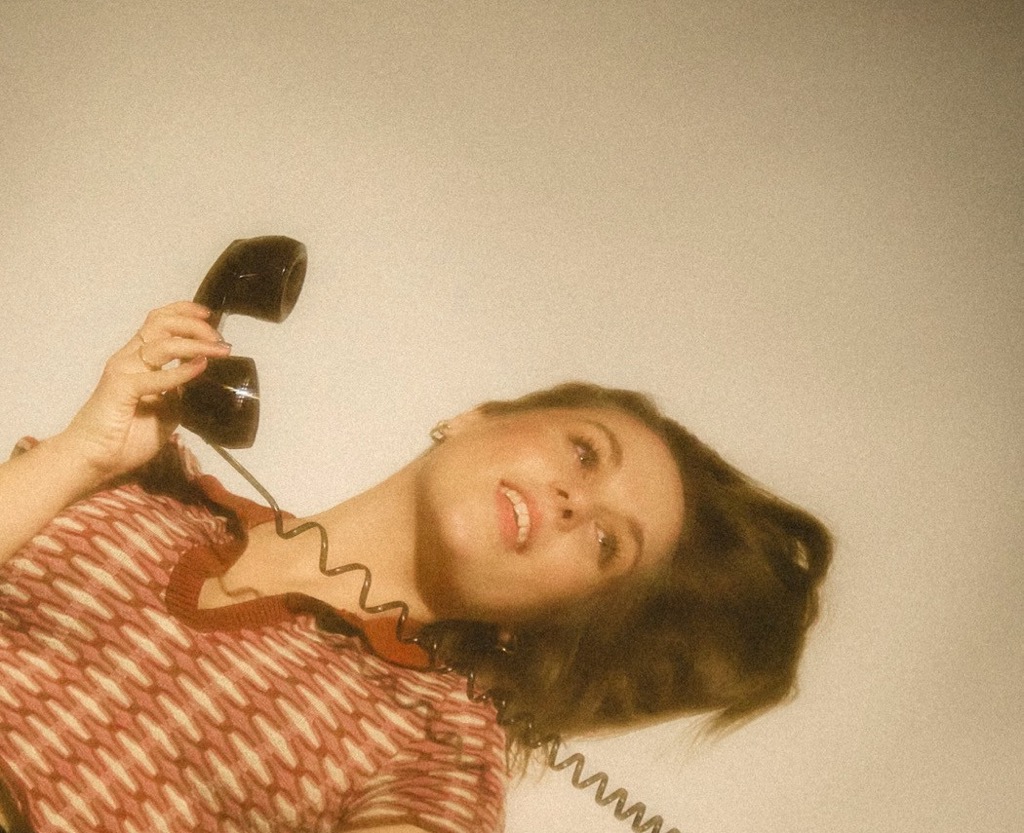
Now Hear This is a monthly A&R column that provides you with exciting new sounds we discovered through the innovative new music discovery platform Groover.
Each month, you can expect a varied bouillabaisse of songs from a vast spectrum of artists from all over the globe, regardless of genre or geography.
More from Spin:
- Courtney Love, Melissa Auf der Maur Reuniting Hole?
- Whatever Happens at 311 Day in Vegas Might Not Stay in Vegas
- AT THE CROSSROADS
This month, SPIN has selected eight artists who deserve your attention, including Seattle soul singer Susan G, the industrial metalcore of GLDN, the technical precision of instru-metalist Gabriel Holbrook, Canadian hard rockers The Jacks of All Trades, Ottowa pop auteurs The Rockyts, global pop hopeful Oke, Julia Junholm’s Soundcloud siren pop and the old country spirit of 18-year-old Gavin Marengi.
Who knows, your next favorite act could just be a read away.
Susan G
Sounds like: A throwback to the days when an R&B singer did their thing over a snapping hip-hop beat, this Seattle siren is another talented voice from the Jet City’s soul scene in the spirit of India.Aire and early Erykah.
Interview:
Describe your approach to music and how you would explain your sound to others.
I am a combination of Pop/soul/R&B and the artists that raised me – Whitney, Lauryn Hill, Brandy and Alanis. I’ve always been drawn to powerhouse female vocalists but am a sucker for Top 40 bops as well. I grew up singing a lot of country music as my mom was from Montana, but I was always drawn to older classic soul music like Ray Charles and Etta James. Even as my newer music is paying homage to 90’s R&B, I need there to be some true soul in the vocals or the beat — otherwise it’s harder for me to get behind.
My approach to music is honesty first, vibe second. While lyrics are important to me, I recognize that most listeners may not even know what you’re saying, but if they feel it, it doesn’t matter as much. At this stage, I genuinely am making music that I want to be listening to. I’ve been missing some of the nostalgia of 90’s Pop and R&B in current music so I like to revisit what I loved about those styles and make it modern. At the end of the day, it’s about connection. If someone emotionally connects to something I’ve made, then I’ve done my job.
How did you come up with the name of your act?
My maiden name (Galbraith) was really hard for people to say so I dropped it to Susan G for simplicity reasons. I happened to marry someone with a last name that also starts with “G” so the good news is I didn’t have to change any branding – ha! But now it’s a way to express myself as an artist in a way that can be independent from my everyday life, which feels pretty freeing and fun.
What are some artists and albums that have informed your creative direction?
Whitney Houston – every album
Boyz II Men – II
Brandy – Never Say Never
More recent artists:
Banks, Rini, India Arie, Ariana Grande (LOVE her use of vocal stacks and strings, mixed with harder hip-hop beats)
H.E.R has been a huge influence to me the past decade and one of the best live shows I’ve seen in my life!
What’s the most exciting thing happening in music right now?
I love the shift I’m seeing in the industry where artists have more ownership over their vision, their branding, and that there are so many ways to collaborate with people from all over the world. I feel lucky that I can utilize social media to put music out there to find my audience and use content as an extension of my creativity. Growing up, a major label was the only way to “make it” in the industry and the lanes felt pretty crowded. With the tools we have now, there are so many avenues to get your music heard and to find other people, musicians, and creators, that can help execute a vision. It’s truly exciting to me to feel like there are no rules and the indie artist can be in full control over their own destiny.
Where do you see the music world heading in the next five years?
As we see the entertainment industry in general making huge shifts, I see the music world and artists coming alongside brands, productions, and digital creators to form a true partnership. I also think people will be thirsty for real experiences. To know that there’s a real person behind what they’re hearing. With all the AI music that’s out there, I find myself yearning to hear vocal cracks, imperfections, and a true soul connection. I think in person live shows that feel intimate and create a shared experience will be extremely valuable. And I hope to be front and center!
How is music helping you during these uncertain times?
I am happy to say that I’ve found music to still be a form of therapy to me…(in conjunction with actual therapy) where I go to process the world, or sometimes, escape it.
It’s easy to shirk back and believe the voices that tell us not to use ours, but in the words of Nina Simone, “it’s an artist’s duty to reflect the times.”
I see female voices that express themselves with joy and authenticity, as true rebellion. I will continue to dream as big as I can so that the more success I have, the more I can give it back. It is with honesty and a true desire to see everyone, regardless of who they are or where they came from, have the ability to chase after their dreams. Music and art can cut through the noise in ways that feel like pure magic and get to the core of what makes us human. And anytime I can be a part of that, I feel extremely grateful.
GLDN
Sounds like: A more feral spin on The Downward Spiral-era Nine Inch Nails with the vicious punch of classic metalcore thrown in for emphasis.
Interview:
Describe your approach to music and how you would explain your sound to others.
My approach to music is often based on world-building, whether through the sound or the concept or both. I don’t just want to write a collection of songs; I want to construct an architecture of sound that the listener is trapped inside of. Sonically, I would describe GLDN as a collision between the cold, mechanical atmosphere of 90s industrial and the reckless, feral aggression of modern metalcore. It’s supposed to feel like a machine breaking down in real-time. It’s heavy, it’s cinematic, and it’s often deeply uncomfortable.
How did you come up with the name of your act?
It’s a corruption of my last name. The word ‘Golden’ usually implies something pure, valuable, or perfect. By removing the vowels to make it GLDN, it kind of strips the humanity and the beauty out of the word, leaving it skeletal and harsh-looking. That contrast – taking something pure and corrupting it – is essentially the core theme of the entire project.
What are some artists and albums that have informed your creative direction?
The DNA of this project is heavily rooted in the massive, narrative-driven concept albums of the 90s. To me, Nine Inch Nails’ The Downward Spiral and Marilyn Manson’s Antichrist Superstar are the blueprints for telling a story about a protagonist’s psychological unraveling. But I’m also heavily pulling from the modern hardcore and metalcore scenes – bands like Code Orange, 3TEETH, and Knocked Loose – bands that aren’t afraid to take heavy music and violently push it forward while still respecting the artists that paved the way for them.
What’s the most exciting thing happening in music right now?
The absolute destruction of genre borders. The gatekeeping in heavy music is finally dying – or at the very least, on its way out. There are hardcore kids listening to industrial techno and metal producers incorporating glitch and noise aesthetics. Artists are no longer afraid to be ‘too electronic’ for the metal scene or ‘too heavy’ for the alternative scene. That lawlessness is where the best art is being made right now.
Where do you see the music world heading in the next five years?
I think we will see massive pushback against hyper-polished, algorithmic singles. It’s already started; people are burning out on disposable, 2-minute songs designed for quick engagement and tiring of the sparkling, sanitized mixes. In the next five years, I think we’re going to see a massive return to the concept album and deep-lore world-building. I think we’ll also see more varied styles of production and mixing.
It’s pretty clear that fans want to belong to something real, not just a cheap, quick single that gets tossed on a playlist. They want meaningful lyrics and overarching narratives – art that resonates beyond surface level and demands their attention. That’s exactly why the upcoming GLDN project, End of Eden, is structured as a three-part narrative that we’re presenting in ‘cycles’.
How is music helping you during these uncertain times?
For me, it’s pure catharsis. The world feels incredibly volatile right now, and we’re also being reminded of the cyclical nature of our history in real time. We keep making the same mistakes over and over again. No one with the power to change it ever learns anything from the past; they can’t see anything beyond their own fragile egos.
Writing the End of Eden album (which follows the rise and destructive fall of a modern dictator) has been my way of processing that chaos and the willful ignorance of those in power. Music provides a controlled environment to expel the day-to-day rage and anxiety of living in the modern world. We will likely never be able to stop mankind from annihilating one another, but if the world is going to burn, I at least want to write the soundtrack for it.
Gabriel Holbrook
Sounds like: Absolutely ripping instrumental metal akin to Jason Becker’s Perpetual Burn for the Relapse Records/Century Media set.
Interview:
Describe your approach to music and how you would explain your sound to others.
My approach is to think of titles or concepts first. In these scenarios, I can usually hear melodies or structured ideas in my head, so I grab the guitar and start playing what I hear. More often than not, it allows ideas to flow nicely. A lot of guitar players nowadays are focused on complexity, and while it definitely has its place in music, I’ve come to realize that simpler ideas ultimately become some of the most memorable, and should be used in creation more frequently.
I would describe my sound as a blend of several styles. There are hints of thrash, prog, electronic, and even classical when I compose. Many of my lead lines feel reminiscent of Chopin at times, and I enjoy using string sections and choirs when writing. That’s how I would describe my current sound. Personally, I believe that an artist’s sound is always evolving in some form or fashion, even in ways you never expect. That experimentation is one of my favorite aspects of creation, but it’s important that you don’t lose your artistic identity. It’s incredibly hard to predict where my sound will be years into the future, but I believe the best is yet to come!
How did you come up with the name of your act?
My act is simply my name, though funnily enough, I didn’t plan on using Gabriel Holbrook. I originally wanted to use Armand, which is my middle name. However, back in August of 2025, I attended one of John Petrucci’s Guitar Universe events as Gabriel. I entered his first-ever live performance boot camp, where three people were randomly selected to learn Pull Me Under and perform it in front of an audience, but the catch was that you faced a barrage of distractions. I had to soak my hands in ice water before playing. During the song, artists rushed the stage, the crowd held up signs and cell phones while asking for picks, bands scowled at you from the sidelines with crossed arms, and leaf blowers were blowing in your face during solos. Anything and everything that would completely derail your performance was present in an effort to teach what it was like to play live. Despite the torment, I wound up winning, and John announced me to the crowd as Gabriel. From there, it made more sense to embrace the name and use it in all aspects of my life, including music. That’s the story behind my artist name.
What are some artists and albums that have informed your creative direction?
There are far too many to list, but some of those artists include John Petrucci, Steve Vai, and Buckethead. Their influence is everywhere in my music, from swybrid picking and multi-fingered tapping to composing with atypical song structures. Learning John’s solos when I was younger not only allowed me to improve my technique as a guitarist, but also helped lay a foundation for my standards, both when I write and when I play. I look up to Vai for his melodic sense and creativity. Steve’s songs are unique to him, and in my opinion, finding that originality is the most important thing for any artist. Lastly, I say Buckethead for his versatility. He plays everything. Songs like Nottingham Lace or his live versions of Animal Behavior have such drastically different intros before he transitions into some of the best melodic leads I’ve ever heard. As far as albums go, Metallica’s first four definitely influenced the “thrash” sound of Chaos Theory. Rust in Peace was another that shaped my leads in particular, and a more modern example would be the Circadian album by Intervals. I’ve listened to it front-to-back countless times, and while the songs are incredible all the way through, it especially influenced the production choices I made when it came to the EP.
What’s the most exciting thing happening in music right now?
There seems to be a resurgence in the rock and metal scene, and that’s one of the things that excites me most. It’s especially enthralling for me because I see metal as a genre that has no boundaries. In my opinion, it’s one of the best styles for personal expression because of how versatile its elements are, and how much emotion you have the potential to convey. I find it wonderful that people are continuing to express interest in the genre. There are entire subcultures and ever-growing communities to support both the music and the artists. Supporting artists is especially important nowadays because of the influx of artificial intelligence that has come about. It can be used as a tool, but personally, I don’t feel that it belongs in spaces that were designed to cultivate human creativity. Any form of media, whether it be music, art, or film, is an opportunity for someone to express themselves and their authenticity, which is what makes them so special to begin with.
Where do you see the music world heading in the next five years?
It’s crazy to think In five years I’ll be 21. There’s a lot of potential for change by then. Part of me thinks that we may see more AI being used in music as it evolves, but the other part feels that people will recognize its limitations regarding genuineness and use it less frequently, if at all. I hope the latter is the case because there are a myriad of artists out there, and each one of their songs is a unique piece of who they are behind their instrument, and that originality is something that cannot and should not be replaced. I imagine that people will always want a human to write and perform their favorite songs instead of an algorithm. However, I see other technologies like digital amps and plugins improving, empowering independent artists to create amazing songs.
How is music helping you during these uncertain times?
I’ve noticed that far too many people are divided on the aspects of life, and unfortunately, there will always be thoughts that instill negativity in others. However, a love of music is, and forever will be, something everyone can agree on. Composing is how I express myself through uncertainty because of how important music is to everyone on the planet. I write what I feel, and I develop a connection. People listen and interpret, and they develop a connection. There are stories attached to every song, whether they’re the artist’s intended message or the personal relationships that listeners form with it. No amount of despair or cynicism in the world could take away one’s ingrained bond with music; I feel that it’s been rooted within us from the very beginning. It’s universal, and it continues to play such a major part in shaping people’s lives. Music is a part of everyone, and knowing that my creations have the ability to help both myself and others through volatile times gives me far too much joy to express with words alone.
The Jacks of All Trades
Sounds like: A talented Canadian rock band inspired by The Tragically Hip but flexing a fiery sonic delivery on par with such classic California desert dwellers as QOTSA and Fu Manchu.
Interview:
Describe your approach to music and how you would explain your sound to others.
Seamus: As a songwriter, my approach to music is to create something I find pleasant and melodic whether it’s in how it sounds or what the lyrics mean. Though we have a rock or classic rock ethos, our sound isn’t so one dimensional. Our songs sound different from each other. The Jacks Of All Trades play every instrument and can cover diverse sounds and feelings. We aim to not fit so tightly into one box or mold.
How did you come up with the name of your act?
Seamus: The genesis of the name began years before I ever became a musician. My family and I were moving from our home where we hired movers to help. I was a young kid and felt I needed to talk to these guys about everything, I shared my drawings, my limited music knowledge at the time and what work I helped my dad out with at the time, mechanical, construction and whatever else my dad needed me for. The movers’ response to all of this was him saying “Wow, a jack of all trades, I see.” This would be the first time I would ever hear the term. It stuck with me. Years later after becoming a musician, our band was under the name the plastic bags – long story. Friends and even one member were critical of the name claiming it was “bad, goofy and not cool”. In one conversation with my dad he had mentioned that we were somewhat jacks of all trades in the way we would switch instruments from song to song. There’s the phrase again! I met with the band and I suggested the new name. They liked it. From that moment on, we’ve been The Jacks of All Trades.
What are some artists and albums that have informed your creative direction?
Seamus: It’s hard for us to pinpoint exactly what influences we draw upon. The songs I write just take on their own intuitive melody and lyricism. But our fans and listeners always tell us what our sound reminds them of and it’s usually different every time. It’s always interesting to hear. Some say we sound like Rush. They hear some Zeppelin in there, sometimes a guitar sound from The Rolling Stones, some say we sound like The Tragically Hip, Blue Rodeo, and many more. I would say there’s some Eagles in some songs. We’re deeply honored by these comparisons. As for the lyrics, I hope they’re meaningful, memorable, fun and poetic. My personal inspiration would be the lyricism, poetry, and storytelling of Gord Downie from The Tragically Hip which I aspire to incorporate into each song.
What’s the most exciting thing happening in music right now?
Matt the drummer: For me, the most exciting thing in music right now is seeing all my favourite bands reunite to go on tour (Rush, Triumph, Def Leppard, just to name a few). It gives me hope that people still like and listen to rock & roll.
Seamus: Agree! People still recognize the genius of rock. That they still know what good music is!
Diego: Yeah, and there’s the rock revival we’re seeing in many branches of the rock genres around the world. Grunge is coming back with smaller bands like Identity Crisis and Mojo Pin. This gives me hope!
Leonard: I think the most exciting thing happening in music right now is that despite the presence of music created with computers and lacking originality, there are a lot of bands that get to write and create something uniquely theirs – just like our band, The Jacks Of All Trades.
Seamus: AI is a crime against music and music artists, against the craft. There’s a lot of people who like listening to repetitive automated beats they call music. It almost feels like some people have forgotten that music is supposed to have melody, shape, artistry and soul! There are many small pockets of bands in different genres that are out there making pretty interesting stuff, not all of it is for me, but it’s better than anything that’s really popular now. It’s also great to see a rise in new music festivals and to see people flock to these events. There’s also pockets of smaller, more intimate venues that feel more like a community where music artists perform and meet their fans. Maybe this has always been the case but it’s great to see our generation continuing this.
Where do you see the music world heading in the next five years?
Matt the drummer: AI is here and it could be here to stay.. But I think people will get sick of technology-based music which is why I’m seeing a stronger trend in country music making it onto the Billboard charts. I trust the discerning listener is searching for good music. I hope this search leads them to rock & roll music.
Diego: There’s recorded music and there’s live music. There’s certainly AI in recorded music but fans will always seek that human connection with the artist that only happens in live performances.
Leonard: We’re seeing AI music creators getting recognition and a payday without being real artists. If this trend goes on, in the next five years, less talented musicians might be tempted to use AI to make “music” where the songs are going to be what I call “music without emotion”. In this way, anyone will be able to release music. This may impact what it means to be a musician or a composer. People might groove to some AI digitally created sound or “music” but in the end they’ll want to connect with the actual human artist making that music. And they can’t do that with some guy who created the AI entity and their AI generated songs.
Seamus: There’s always amazing things going on everywhere. It’s just getting eyes on those happenings. I personally think that music has an uncertain future in terms of mainstream popularity. Internationally known and loved rock bands like Led Zeppelin, AC/DC, Queen, Guns N Roses – who’s going to replace these Greats when they’re gone? Some of them are in their 70s now. Some say that era’s gone. Forever. But I prefer to be optimistic. There are still people writing and performing good music. The next 5 years of music can go anywhere. Maybe as Matt said, people will get sick of fake music or computer generated beats. There could be a revival in rock & roll, grunge, classical or jazz as once theorized would happen.
How is music helping you during these uncertain times?
Seamus: Music keeps me sane. It gives me focus. I get absorbed in the act of creation – whether it’s the process of writing my own or playing existing songs, every aspect of music I enjoy iis creative and relaxing. Sometimes my songs don’t come as easily as other times, and it gives me a challenge. That’s when music helps me learn to work around those blocks or problems. Music is a learning tool, a discipline builder and a beautiful way to spend time.
Diego: For me, music and memories go hand in hand. Whenever I hear Dead Flowers by The Rolling Stones, I get teleported back to the Summer of ’22, back to the Canadian East Coast on that road trip where my family and I would sing to this song at the top of our lungs! When going through a hard time, music brings me back to those amazing times and I know that anything difficult shall pass, too!
Matt the drummer: Political songs like Ohio by Crosby, Still, Nash & Young or even Killing in the Name by Rage Against the Machine helps me process what’s going on. It puts me at ease knowing that music can grapple with and somehow make sense of the political nonsense.
Leonard: Music helps me escape from what’s happening in the world and just focus on feeling the music. Music also helps me connect with like-minded people like Seamus, Diego and Matt and other musicians. It gives me a sense of belonging and connection.
The Rockyts
Sounds like: Vibrant, Wrecking Crew-style pop in the vein of Brian Wilson’s collaborations with Van Dyke Parks but through the lens of a rising 21-year-old artist from Ottowa, Canada, but now residing in sunny Los Angeles.
Interview:
Describe your approach to music and how you would explain your sound to others.
Drastically varying! I try to incorporate as many new things as possible so I’ll go from a ripping blues harmonica solo to delicate glockenspiels from song to song. Anything goes! For example on Wonder, I patted my dog Echo’s chest (who recently passed away) as percussion in the intro so now I’ll be able to hear one of my favorite sounds forever. I also opened up the piano & plucked the strings by hand instead of using the keys at the break at 1:34. Sometimes I’ll write a song actively & other times I’ll hear it play in my head fully formed & be totally surprised as it continues playing. One time I was writing a beautiful melody at a piano when I realized it was a dream piano & I wasn’t awake. So I quickly made myself wake up & remembered the melody & got it down. So maybe the approach is moreso to have a bad work balance because I guess I’m even working while I’m sleeping!
How did you come up with the name of your act?
After months of struggling to come up with a UNIQUE name, the heat was reaching a fever pitch & everyone was asking me if I had come up with something good yet, specifically stressing that it “better be good”. Knowing I had nada, I decided to leave town in shame, on foot because I didn’t deserve to drive (you can get a sense from that where my head was at at the time). Anyway, a few dozen miles out, I was bitten by a bee on my bare foot (I was walking bare feet as I always do), so I moved with lighting speed & captured it in a toothbrush cover thing I had in my pocket (God knows why) & commanded it to lead me back to the hive. There, I appealed to the Queen who granted Clyde was out of line in this case (the bee’s name as I found out was Clyde), & sentenced him to help me solve any problem that was weighing on me. I grinned knowing I was to lay a doozie on the poor thing, who thought & thought until the end of the summer at which point he presented me with the greatest name in history: The Rockyts. Which was very fitting given my guitar is rocket shaped. I still don’t know how Clyde knew that because he never saw my guitar. That’s actually really weird. Oh well. Some things will always be mysteries.
What are some artists and albums that have informed your creative direction?
Well I used to listen to & make EDM until around age 12, when while cutting the grass at my grandma’s apple tree field, I decided to put on The Beatles – Sgt. Pepper’s Lonely Hearts Club Band to see what they were all about. That opened the door to a world of color & I also loved their early singles. That lead to my initial base comprising of The Beach Boys – Friends, Wild Honey, Pet Sounds, The Kinks – The Kinks Are the Village Green Preservation Society & early singles, Frank Sinatra – In the Wee Small Hours, Songs for Swingin’ Lovers for their orchestral arrangements on nocturnal walks, The Rolling Stones – Their Satanic Majesties’ Request & early singles, Van Morrison – Astral Weeks for biking through corn fields, Buddy Holly, T. Rex, etc.
What’s the most exciting thing happening in music right now?
My project bringing back color & imagination.
Where do you see the music world heading in the next five years?
I see it heading towards me bringing back color & imagination.
How is music helping you during these uncertain times?
With all these phones & short form “content” music is one of the many great things for which we can instead use our time to bring us back to present living where anything is possible instead of dwelling on all the opinions & theories blasted onto us that take us either into the past, future or fake scenarios that block us from living from the heart instead of the mind’s accumulated ideas.
Oke
Sounds like: Widescreen world pop from a Nigeria-born, Luxembourg-raised queer9 artist who aims right for the heart with his jubilant sense of harmony.
Interview:
Describe your approach to music and how you would explain your sound to others.
My approach to music is actually very simple. I dig into my own story, because I have so much to share. I was born in Lagos, Nigeria, and I think that comes with a lot, struggle, yes, but also beauty. There’s resilience, there’s the love of a mother, there’s community. It’s not always negative. There are powerful, positive stories in all of it. Growing up between Nigeria and Luxembourg meant I was navigating two worlds at once. I didn’t always have the space or language to fully explore my emotions or my sexuality when I was younger. A lot of that discovery happened later. Now, I see that duality as a gift. I’ve taken the best of both worlds, and that’s what shapes my music. I also feel a responsibility to connect my work to African and Black history. In places like Luxembourg or Germany, we don’t always see those stories centered or represented. So for me, creating music is also about expressing myself fully and unapologetically, and making sure those narratives are visible.
With ALTER-EGO, I leaned even deeper into that idea. The project explores different sides of who I am through characters, but they’re all rooted in my real experiences, identity, ancestry, and growth. Sonically, I would describe my sound as pop at its core, but heavily influenced by Afrobeats, dance music, gospel, and electronic elements. It’s a fusion of everything I grew up with and everything that moves me today. It’s emotional, rhythmic, and rooted in storytelling.
How did you come up with the name of your act?
I was born in Lagos, Nigeria, but raised in Luxembourg from the age of 6. My surname is pronounced “Oh-keh” in Yoruba, but when I moved to Luxembourg, people couldn’t pronounce it properly. Instead of saying it the Yoruba way, they would say it like “okay,” as in “OK.” At first, it was frustrating. It even became something people would make fun of. But over time, I decided to flip it. I realized there was power in it. From a marketing perspective, it’s short, simple, and memorable. And beyond that, it connects directly to my origin. I’m a Yoruba boy, and that name carries that history with me. I also wanted something original. I couldn’t go by Khalid, for example, because there’s already a Khalid. I didn’t want confusion about who I am. I wanted a name that was uniquely mine. so I embraced Oke. It reflects where I come from, it’s iconic in its simplicity, and it feels authentic to me. That’s how I want to be remembered, as an artist with a distinct voice and a name that carries my story.
What are some artists and albums that have informed your creative direction?
Some artists who have really informed my creative direction, first and foremost, are Fela Kuti. He’s a pioneer of Afrobeats, but beyond that, I’m inspired by his creative vision, especially live. The arrangements in his music are heavy and intricate, and the lyrics come straight from the heart. His work carries weight in Nigerian history, and that’s why his legacy still lives on. It’s powerful, political, and unapologetic. Brandy has also influenced me a lot. I love her voice and the way she layers and arranges her vocals. The album I always return to is Full Moon. There’s something so intentional and detailed about it. It’s emotional but still controlled and precise. Aretha Franklin is another huge inspiration. I’m drawn to her story and the depth in her voice. Even though she always knew she was great, it took time for the hits to come. I relate to that journey, believing in your gift before the world fully sees it. When I look at someone like Beyoncé, especially with Renaissance, I’m inspired by how she centered history and culture, particularly ballroom and Black queer pioneers. She reminded the world where those sounds came from. That kind of cultural reclamation is powerful to me. Nicki Minaj has also influenced me creatively. I don’t align with all of her public views, but from from an artistic perspective, she’s an incredible lyricist and storyteller. The way she created alter egos like Roman and Barbie definitely inspired me. That freedom to explore different characters pushed me to develop my own.
On my ALTER-EGO EP, those influences come together through my personas. Stella Ross is fearless and outspoken. She’s bold, glamorous, and says exactly what she wants. Darius is more emotional and vulnerable. He allows me to talk about love and heartbreak in a way that feels safe and honest. Then there’s Ori, who connects me back to my roots, spirituality, and ancestry. Ori allows me to experiment, to be different, to step outside of society’s expectations and connect with something deeper. All of those artists shaped me, but ultimately they gave me permission to fully explore every side of myself.
What’s the most exciting thing happening in music right now?
I think the most exciting thing happening in music right now is that artists can build their own communities. There are pros and cons to everything, but today we have so many platforms, TikTok, YouTube, SoundCloud, Instagram, where we can share our music directly with the world. You don’t necessarily need a major label or someone inside a company to validate you or push your vision. You can create your own space and find your audience in a very organic way. That freedom is powerful. Even with the rise of AI, which I have mixed feelings about, I still believe in the irreplaceable power of human artistry. I’m not a fan of using AI to create music in place of real emotion. AI can’t replace a live performance. It can’t replace presence, energy, or the feeling in a room when an artist connects with an audience. That kind of magic requires a human being. For me, that’s what makes this era exciting. Performance is becoming even more important. I’m a performer at heart. I love putting on a show, the extravagance, the drama, the scale of it all. I come from a culture where being bold and expressive matters. So the fact that audiences are craving real experiences again, real emotion and real connection, that’s something I’m really excited about.
Where do you see the music world heading in the next five years?
In the next five years, I see the music world moving back toward talent being at the forefront. I think authenticity will matter even more, but not just in terms of image. It will be about the actual craft. The voice, the writing, the performance, the ideas. A viral moment can be powerful, but it doesn’t guarantee longevity. Longevity comes from talent. It comes from having a clear artistic trajectory and the depth to sustain it. You need substance behind the moment. Without that, it fades quickly. I really believe that talent will prevail. Not AI, not just tools or trends, but real creativity and real work. We still have to use our minds and develop our artistry. For young artists like myself, that’s exciting. It means we can focus on building something lasting and let our talent lead the way instead of chasing a viral hit.
How is music helping you during these uncertain times?
During these uncertain times, music has grounded me. Sometimes it feels like the world is burning, like it’s bleeding. There’s so much tension, so much division. I’m very aware of how fortunate I am to live in Luxembourg and to have the opportunities I’ve had. The only thing that separates me from many people back home in Nigeria is opportunity. Not intelligence, not worth, just opportunity. That awareness pushes me to keep going and to use my platform with intention. I want to create safe spaces for young Black boys and girls, for queer kids who might not see themselves reflected in the world around them. As an artist, I feel a responsibility to stand up against racism, and to speak out when the LGBTQ+ community, especially the trans community, is being targeted. It hurts to see that. When something goes wrong in society, our communities are often the first to be blamed or attacked. For me, music is a way to fight that. I believe music can reach people’s conscience. It can shift hearts. It can open minds. That’s what I believe in. With my EP ALTER-EGO, I’m telling very queer-centered stories, exploring identity and self-acceptance in a bold way. And this is only the beginning. ALTER-EGO is a bridge to the larger vision, my album coming in 2027. I’m using my music with purpose, and that’s what keeps me steady in uncertain times.
Olivia Junholm
Sounds like: Dreamy siren pop that sounds like Julie London if she recorded in the era of SoundCloud.
Interview:
Describe your approach to music and how you would explain your sound to others.
Music has always been central to who I am. Growing up in Sweden with a musician and producer as a father, it was part of me and my family’s everyday world – onstage, backstage, and at home. Performing felt natural from a young age, and that foundation still guides me today.
Now based in Los Angeles, my sound blends soulful vocals with dreamy pop melodies and subtle jazzy influences. My work has been recognized by Rolling Stone, aired on European radio, and shared through performances ranging from global platforms like Sofar Sounds to intimate LA venues such as Hotel Café, The Peppermint Club, and The Baked Potato Jazz Club. No matter the setting, my goal is always to create an experience that feels intimate, intentional, and deeply felt.
How did you come up with the name of your act?
It’s my real name, the music is personal, so keeping the name felt natural.
What are some artists and albums that have informed your creative direction?
I grew up surrounded by gospel music and somewhat ironically, also playing a lot of ABBA, as the Swede I am, on my little record player as a kid. As I got older, artists like Emily King, Norah Jones – especially Come Away With Me – and Lianne La Havas became huge influences, particularly in how they blend soul, jazz, and intimacy in their songwriting. Today, those influences are still very present, alongside artists like Maya Delilah, Olivia Dean and RAYE. I also love Lizzy McAlpine’s songwriting and her ability to be both vulnerable and precise.
What’s the most exciting thing happening in music right now?
I’m excited that albums and larger bodies of work seem to be making a comeback. For a long time, releasing singles felt like the only way forward, but it feels like things are shifting back toward more complete artistic statements.
I also love that it’s become “trendy” to be personal and vulnerable as an artist, showing up without a filter. That’s something I think TikTok culture has helped normalize, and I genuinely think it’s beautiful.
Where do you see the music world heading in the next five years?
That’s a big question. It’s impossible not to mention AI, since it’s such a hot topic in the music industry right now. On one hand, it can be worrying, there’s a fear that music could lose its soul, become entirely computer-generated, and even affect people’s jobs in the industry. But I truly believe that as AI grows, so will the desire for real, human-made music and live performances, and I’m excited to be part of that future.
Even though I live in LA, I’m a proud Swede, and I loved reading the other day that Sweden has banned AI-generated songs from its official national music charts. I think moves like that are an important way to help preserve the value of authentic artistry.
How is music helping you during these uncertain times?
For me, music is a way to share a message, whether it’s hopeful, uplifting, comforting, joyful or something else. Through lyrics, melodies, and vocals, it has the power to connect people and offer perspective, which feels more needed in the world today than ever.
Gavin Marengi
Sounds like: Incredibly mature and authentic country-rock smoothness from an incredibly promising talent who is all of 18 years old but writes and arranges with the conviction of an artist thrice his age.
Interview:
Describe your approach to music and how you would explain your sound to others.
I’m chasing songs that feel lived in. The stuff that comes from late nights, honest thoughts, and whatever’s going on in my life, not what I think I’m “supposed” to write. That’s been the whole thing for me: truth first, then the hook. The music is really built around storytelling, but I like it to hit with some grit. I want the line to land and I want the band to hit behind it. Sound-wise, I’ve described it as: “Southern folk with a little edge / Indie Country” and people don’t really lump me into the modern-country lane, which I’m totally fine with. The other part of my approach is that I’m serious about being an original artist. My strategy from day one was to stay out of the bar-cover circuit, and build ticketed shows where I can play my songs and grow something people can invest in, knowing I’m “all-in” on what I love to do.
How did you come up with the name of your act?
Early on I decided that I wanted to be in that space like Ryan Bingham, and Zach Bryan, Tyler Childers so I decided to go out with my real name Gavin Marengi.
What are some artists and albums that have informed your creative direction?
My biggest influence is Chris Stapleton, without hesitation. And if we’re talking albums that shaped how I think about writing and performing, I would say my top three are:
1. Bruce Springsteen, The River (some of the best-written songs, in my opinion)
2. Chris Stapleton, Traveller (biggest influence on me)
3. Ryan Bingham, Ryan Bingham Live (it makes me want to play live every time)
Also , Zach Bryan, Jason Isbell, and Caamp are people who inspire me, because they all put the song first, and it feels like a real person telling real stories.
What’s the most exciting thing happening in music right now?
The most exciting thing is watching artists build careers where the real-life part still matters ticketed shows, actual fan connection, and songs that translate when the room goes quiet. That’s still the gold. Artist are able to successfully have a career without a powerful machine behind them. I’m not saying having a machine behind you is a bad thing I just think it’s a great time for independent artists to shine without being held back.
But you can’t ignore how much the game has changed, social media is basically everything now for getting seen even if the physical part (playing live, earning fans the hard way) hasn’t changed as much as people think.
And I’ll be real, I love the chess match of promoting music right now trying to find a unique angle instead of doing the same exact rollout everybody’s doing. Social media allows me to be creative and learn on the fly what is working or not.
Where do you see the music world heading in the next five years?
I think the push is going to keep moving toward singles and momentum, because if you drop an album without a locked-in audience, it can just disappear into the void.
I think the next five years is going to reward artists who can do more than one thing well. There is a lot of work to be done every day that doesn’t include music, that’s just the way it is. If you are willing to go the extra mile and create content and constantly reach out to industry folks you have a much better chance of success. I spend so many hours a day just sending emails to people who do not know who the hell I am ha.
build a real live show, keep fans engaged between releases, and create a world around it (merch, content, community, whatever’s authentic to you)
For me, that’s part of why I started messing with my Northeast Brand merchandise thing, because merch isn’t just “extra”, it’s a huge part of keeping the machine running, and I like repping where I’m from.
How is music helping you during these uncertain times?
Music has been the most consistent thing in my life since I was 12 or so. During COVID, we were doing these Friday night “COVID jams,” learning a new song every week and going live on social media, and it actually built a little community around it. That routine kept me moving forward when everything else felt paused.
And with my latest release on Jan 9th 2026 “Breathing Years,” that song is about growing up while chasing something and trying not to lose yourself in the process. I was told by industry professionals after releasing 2 albums before I was 18 to slow down a bit, live a little, and really figure out who I am before I just keep dropping music.
That’s the way music helps me: it forces me to reflect, turn the chaos into something I can use to fuel song ideas, and then the best part is watching it mean something to somebody else. That feeling, when people really listen to an original song and it connects? That’s the whole reason I do this. Writing and performing music helps me cope with the uncertainty in my world as well as the world at large.
Groover connects independent artists with music industry professionals to accelerate their careers. Their goal is to empower independent artists by providing a platform that connects them with the best curators, radio, media, labels and other music pros to receive guaranteed feedback and exposure.
Over 700,000 artists use Groover to connect with 3,000+ professionals across the globe. Artists have received over 7M+ pieces of feedback, 1M+ shares (e.g. playlists, reviews) and 1,500+ label contracts — all thanks to Groover!
To see our running list of the top 100 greatest rock stars of all time, click here.
Popular Products
-
 Pet Oral Repair Toothpaste Gel
$59.56$29.78 -
 HEPA Portable Air Purifier Filter Air...
$236.99$164.78 -
 Pet Paw Cleaning Foam Waterless Shamp...
$57.99$39.78 -
 Mini GPS Tracker Bluetooth Anti-Lost ...
$27.99$18.78 -
 Smart GPS Waterproof Mini Pet Tracker
$59.56$29.78