'clean Energy Is Going To Win Out': Permitting Bill Tests Greens' Faith

Renewable energy companies and environmental groups have a long history of joining forces to push for favorable government policies.
Then came the bipartisan bill to overhaul the nation’s permitting rules.
While groups representing wind, solar, batteries and other renewable energy companies are lobbying hard to get the landmark deal through Congress by the end of the year, environmental groups are riven by the bill's potential to cut red tape for fossil fuel projects alongside renewable ones.
The break reflects not just an ideological split, but an economic one. The renewables industry is reaching maturity and argues it can compete on an even playing field with fossil fuels. Renewable energy companies, like their fossil fuel counterparts, would also find it easier to build under the Bipartisan American Affordability and Jobs Act’s rewrites of the National Environmental Policy Act, Clean Water Act and Endangered Species Act.
“They're holding onto the laws that they won a couple decades ago that are looked at as major accomplishments of the environmental movement from the second half of the 20th century, without regard to whether or not they're the right laws right now in our history,” Tom Matzzie, CEO of renewable energy developer CleanChoice Energy and chair of the pro-solar Invest in Tomorrow Coalition political action committee, said of environmental opposition.
Environmental advocates want to see solar and wind proliferate as a strategy for addressing climate change. But they argue the changes to those bedrock environmental laws go too far, while worrying that the legislation would allow President Donald Trump to steamroll approvals for fossil fuel projects over the next couple years — and saddle the U.S. with those emissions for decades to come.
“It becomes a distorted conversation if we’re not talking about all the other implications beyond energy, full stop,” said Abbie Dillen, president of Earthjustice, a nonprofit public-interest law firm.
The debate is mirrored in Congress itself, with some House Democrats calling for changes to the Senate package, or holding off until next year in order to strip provisions they believe will harm the environment.
The two Democratic Senate sponsors — Sheldon Whitehouse of Rhode Island and Martin Heinrich of New Mexico — have argued the post-midterms period is the time to vote, even as they’ve continued to press the Trump administration to show it won’t discriminate against renewables.
Rep. Jared Huffman (D-Calif.), who is gearing up to take the House Natural Resources Committee gavel if his party regains the chamber in the November midterm election, has posited Democrats can get a better deal if they wait.
“Folding our hand now or in the lame duck makes no sense when we can keep working on this and, in a few more months, have a much better deal that works for everyone,” Huffman said after the legislation text was released.

With Americans focused on cost-of-living concerns, both camps argue renewable sources are the most able and ready to come online to meet growing power needs and stabilize electricity prices.
Renewable advocates go further. They are betting the business realities of energy development are in their favor — that they will build out faster and more cheaply than oil, gas and coal if the bill becomes law.
“We think that if you make it easier to build energy, clean energy is going to win out because of the economics, because that's what we see coming on the horizon,” said Nat Keohane, the president of the Center for Climate and Energy Solutions. “We see the next generation of clean, firm technologies coming on as well, and we think they're going to compete.”
A big split
The bill to ease federal permitting bottlenecks is a major milestone in itself, after years of congressional efforts to tackle an overhaul.
In recent years, both renewable energy advocates and environmentalists have agreed that projects were held up by federal agencies’ lengthy timelines, such as for environmental reviews on public lands or protracted endangered species consultations. They’ve also both complained about this country’s fragmented oversight of the grid, which hampers build-out of interstate transmission lines critical to transmit the electricity generated by remote wind, solar and geothermal projects.
Environmental groups, however, have long contended agencies lack the proper amount of staff to process applications rather than faulting existing laws. They said Trump gutting the federal workforce through the so-called Department of Government Efficiency worsened those bottlenecks.
Since BAAJA was released, environmental groups have said provisions addressing federal environmental laws are too aggressive — taking aim at their ability to challenge approved projects in the courts and reducing needed protections for water, landscapes and wildlife. And they’ve argued fossil fuels development could accelerate, even if renewables also get a leg up.
One key area of dispute: Is it possible for renewable energy companies to build out faster, eclipsing fossil fuel projects and, therefore, keeping future emissions in check?
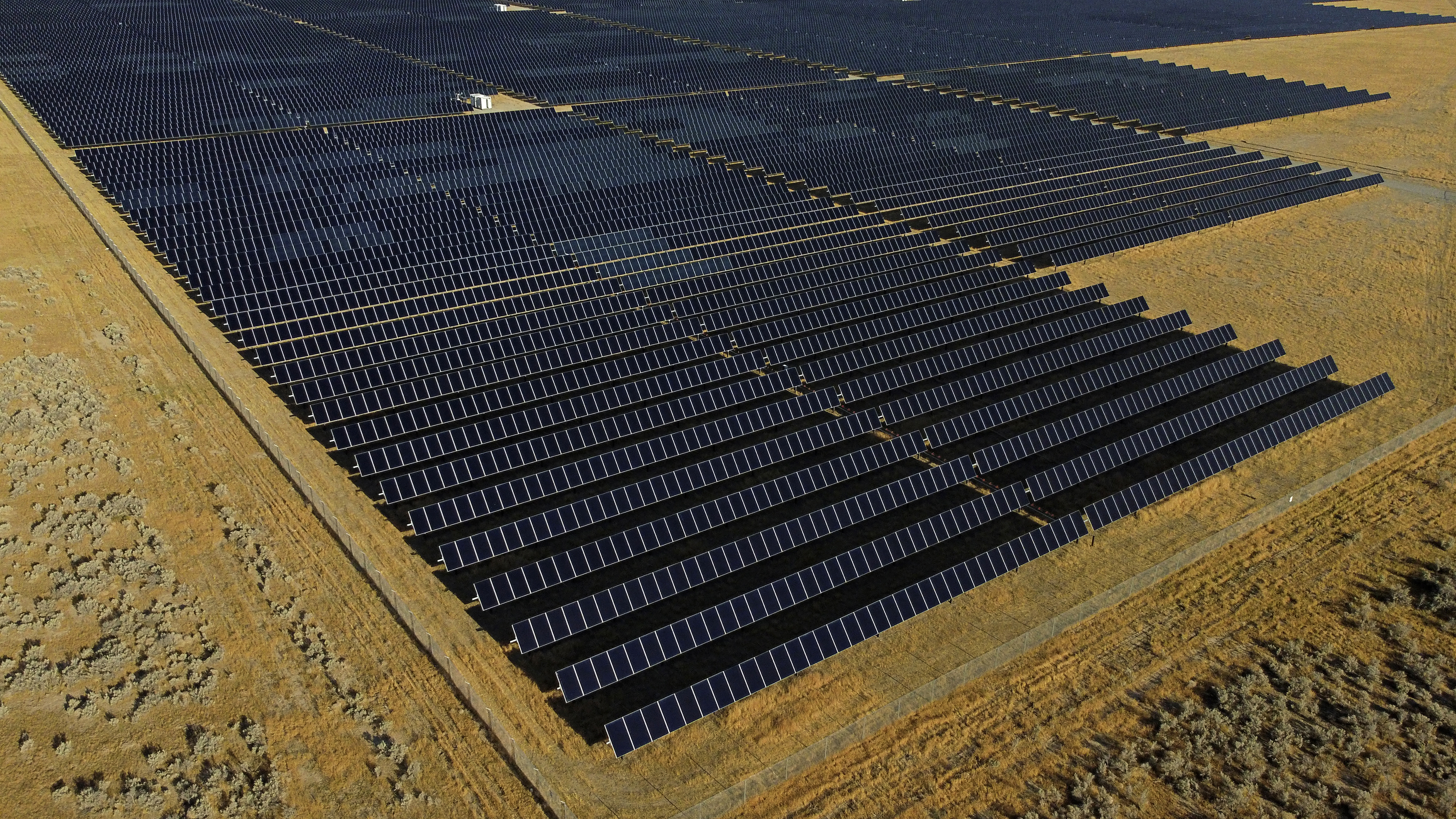
As of now, renewable energy advocates think they have the edge. Solar, wind and energy storage account for more than 93% of planned utility-scale additions this year and 1,742 gigawatts of projects seeking interconnection, compared with 253 GW of gas, according to the American Clean Power Association, an industry trade group.
“In a level playing field, clean energy wins. I think the world has changed, and I believe that enabling a level playing field means that a clean energy transition happens much faster,” said billionaire climate investor Tom Steyer, who's urging his fellow progressives to support the bill. “If you look, it's happening all around the world. We're a big laggard, and I believe that this bill is a step to improving the status quo.”
Wind, solar and battery storage have seen drastic cost declines over the years, as well as technological improvements that have aided in speeding their deployment and increasing their competitiveness against fossil fuels.
But the Trump administration has thrown up additional hurdles targeting solar and wind projects, which has forced companies to rely on the courts haltingly pushing development along.
The permitting bill aims to address those kinds of obstacles through new deadlines for approvals and “certainty” language that would limit actions from any adversarial presidential administration with remedies when an agency acts in bad faith. It would also make reforms for the transmission build-out to address existing bottlenecks for bringing new energy onto the grid.
"If climate is a priority, and I know for many people it is, it's hard to see that there is anything better in the short term than getting this bill done," said Dan Hendrick, the vice president of external affairs at Clearway Energy, which has a portfolio including solar, wind, battery storage and natural gas projects. "As practitioners in the clean energy realm, we can see the data from our side and say, this will unstick a lot of projects in the near term.”
Environmentalists counter that an even greater flourishing of fossil fuel projects allowed by the Trump administration in the next couple years would hamstring communities from constraining unwanted, polluting projects and prevent Democrats from executing ambitious climate policies.
Some environmental groups have declared they are opposed to the bill, but many of the most influential organizations with Democratic leadership are operating in negotiation mode.
Notably, the Natural Resources Defense Council, whose ideas helped shape big Democratic policies like the Obama administration’s rule to curb power sector greenhouse gases, has praised the transmission provisions but suggested changes to “deeply flawed” portions.
The group warned that the "project certainty" provisions will end up benefiting fossil fuels more than renewable energy if the bill becomes law under Trump. The NRDC also raised concerns about a provision of the bill that would allow developers to sue over “disparate treatment,” noting that this could turbocharge the ability of fossil fuel producers in coming years to file lawsuits if there is a more climate-focused Democratic administration.
“Our evaluation of this bill is happening in the context of the most antagonistic federal administration to our environmental values in history,” Holly Bender, chief program officer with the Sierra Club, wrote in a separate Oct. 8 analysis. “Despite this backdrop of attacks, we have every intention of staying in this conversation as we dive deeper into [the bill] and understand its impact, because nothing matters more than getting this right.”
Renewable power push
The dynamic comes as the renewable energy industry has been trying to expand its political heft following losses last year in Republican’s One Big Beautiful Bill Act that phased out long-held tax credits amid repeated hostility from Trump.
“This legislation can pass, but it isn't going to pass itself. And the clean energy industry needs to step up and fill a vacuum,” said Steve McBee, a longtime energy strategist and the founder of the renewable energy advocacy platform Amped. “We need to demonstrate that we can organize. We can put a muscular effort forward on behalf of a piece of legislation.”
So far this year, the industry has gone on the offense to combat their political opponents, to better align with Republicans and to rethink how the industry is positioning itself in the legislative fights ahead.
“This legislation, because it's bipartisan, has created the opportunity for new allegiances and new collaboration,” said Jason Grumet, the head of the American Clean Power Association. “And restoring collaboration that's been long existent.”
McBee said the current debate differs from earlier legislative fights over Democrats’ Inflation Reduction Act, when climate and renewable energy groups were frequently aligned. It also differs from the negotiations last year around Trump’s OBBBA, when advocates weren’t able to convince Republicans to protect hundreds of billions of incentives the IRA provided the sector and their districts.
One factor is that the fight for the permitting bill comes at a political moment when energy affordability is at the forefront for politicians of both parties.
“We have to demonstrate that we have learned the lessons from the IRA defense, and we need to be much better in this instance. And this is a great opportunity for us to do that,” McBee said.
The renewables sector this year has been split over whether to continue its fight to bring back federal tax incentives. Solar manufacturers have argued the help is necessary to erect new industries to compete with cheaper Chinese products. Some installers, on the other hand, have said it shouldn’t be the industry’s top priority.
But the renewable energy industry is united on the permitting bill and even teaming up with fossil fuel advocates and other unlikely partners in its lobbying efforts.
“I think we will see more fossils built, but I think this will streamline us building clean energy faster,” said Jon Powers, the president of CleanCapital, an independent power producer focused on distributed renewable energy. “Permitting is the No. 1 challenge that we're all facing right now.”
He also cautioned that alignment with some progressive environmental groups could imperil necessary GOP support to get the bill passed. “As soon as you have something that will get repealed in the next swing of Congress, that isn’t a win either,” Powers said.
Popular Products
-
 Fake Pregnancy Test
$61.56$30.78 -
 Anti-Slip Safety Handle for Elderly S...
$57.56$28.78 -
 Toe Corrector Orthotics
$41.56$20.78 -
 Waterproof Trauma Medical First Aid Kit
$169.56$84.78 -
 Rescue Zip Stitch Kit
$109.56$54.78