‘the South Rose Up’: Black Lawmakers Urge Democrats To Invest In Region Before 2028
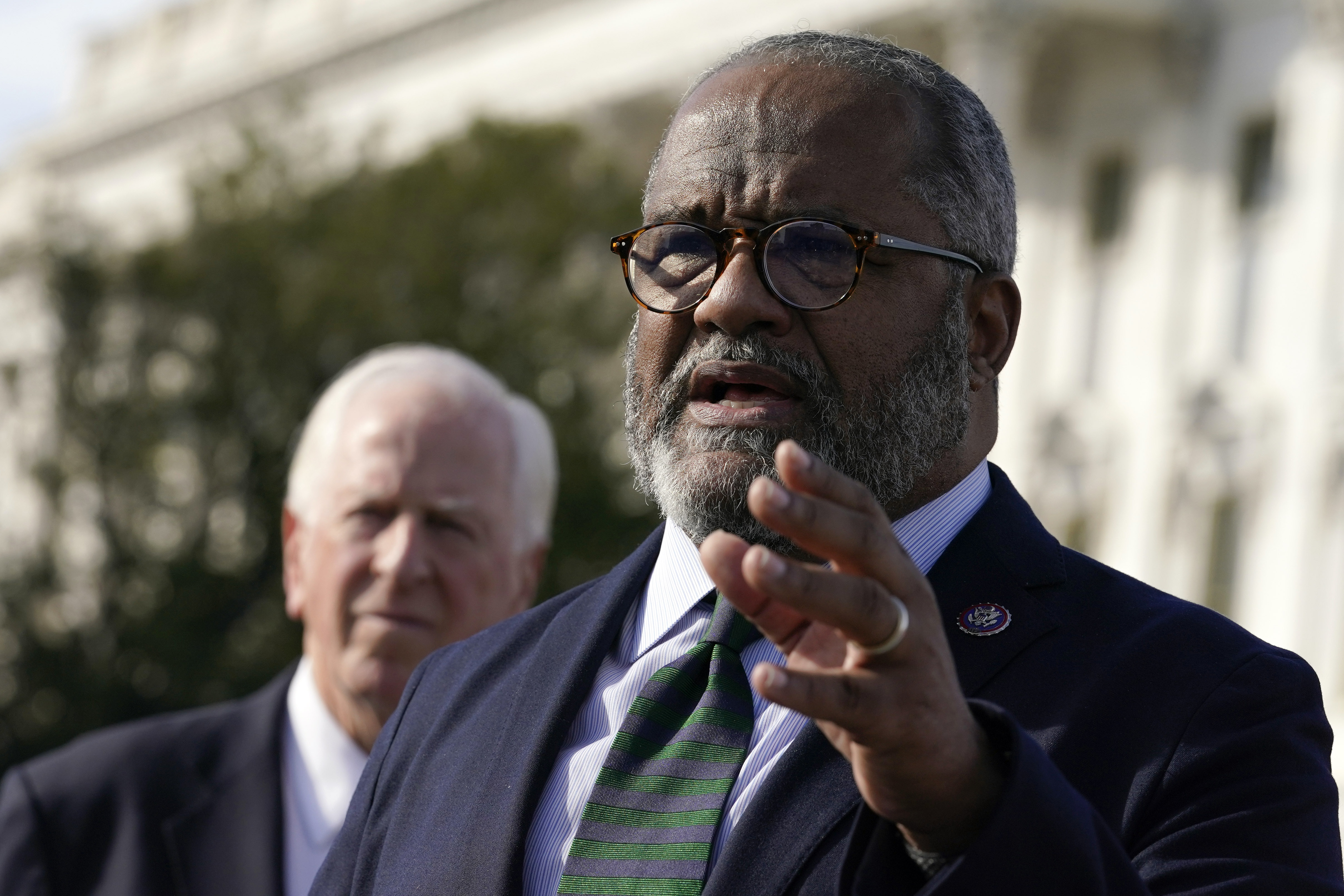
Black voter turnout fueled wins across the South in Tuesday’s midterms. Now Black lawmakers are warning national Democrats they can’t take the victories for granted.
Following a string of stunning wins and incredibly close contests in bright red states powered by a surge in Black voters, Black Democrats are calling for their party to invest in the South now for future cycles.
Many of them aren’t waiting until the dust settles to actively seek commitments from party leaders and donors, who they have previously chided for not investing earlier in promising candidates, like Scott Colom in Mississippi’s Senate contest, who is within striking distance of beating incumbent GOP Sen. Cindy Hyde-Smith.
“You cannot reap for which you don’t sow,” said Rep. Troy Carter (D-La.), who is poised to chair the Congressional Black Caucus next year. “The South rose up this election without the timely resources. Now imagine with a little bit of investment, not just at election time, but 365 days a year.”
A major pivoting of resources will require the Democratic Party to reject its long-held fear that the South is too Republican to be winnable. And skeptics may argue that Democrats only fared so well there this year because the headwinds against the GOP were extreme everywhere.
Yet across House races Tuesday, turnout in counties that are at least 60% Black surged 21 points compared to the last midterm in 2022, according to a POLITICO analysis of preliminary returns. That's more than double the increase in votes cast nationally in counties where the population is less than 20% Black.
Carter and others are arguing that sinking resources into these areas now will provide major benefits for the party come 2028.
“All roads to the White House will come through the South. We demonstrated that,” he added.
Rep. Jim Clyburn of South Carolina echoed Carter’s sentiments, saying that ignoring these Southern states is “ignoring the states where 52% of African Americans live.”
“They don’t seem to understand that,” Clyburn, a former member of House Democratic leadership and a longtime advocate for funding state parties in the South, said in an interview for POLITICO’s “The Conversation” with Dasha Burns.
Rep. Bennie Thompson (D-Miss.), who has previously criticized the Democratic Congressional Campaign Committee for not investing earlier in this cycle, said in an interview Wednesday he and other House lawmakers will lobby the DCCC to step up its aid to Black candidates in the South going forward.
“There's an opportunity to grow this footprint even larger for the Democratic Party, and I look forward to continuing to advocate for that investment more than what it's been,” Thompson said.
Democrat Oliver Gilbert III, who won Tuesday to become Democratic Rep. Frederica Wilson’s successor in her South Florida district, said Senate candidate Angie Nixon’s loss against GOP Sen. Ashley Moody by less than three points justifies a substantial investment in the state by the party’s campaign arms.
“It definitely warrants investment,” he said. “Not investing can’t be a strategy. Ceding territory and ceding votes cannot be a strategy.”
The DCCC invested around $12 million this cycle on a digital ad campaign engaging Black voters starting in May 2025. In a statement to POLITICO, DCCC spokesperson Bridget Gonzalez said the group “continuously engaged with communities on the ground through historic investments and outreach efforts.”
“This election day has made it crystal clear that Black voters were critical in helping Democrats take back control of the House, and we’ll continue fighting to make sure every voter’s voice is heard,” she said.
Senate Minority Leader Chuck Schumer, poised to become majority leader in the new Congress, may also face pressure to do more to support Black candidates next year.
The New York Democrat this cycle helped recruit Colom and worked to direct donors to his and Nixon’s states; he also included the candidates in fundraisers organized by the Democratic Senatorial Campaign Committee. The Schumer-aligned Senate Majority PAC has spent $2.2 million to boost Colom and has coordinated other investments in the state.
“Enthusiastic turnout among African Americans helped secure the momentous victories seen Tuesday in Georgia, South Carolina, North Carolina, Texas and other critical states,” said SMP spokesperson Lauren French. “Senate Majority PAC is dedicating its energies into seeing Scott Colom elected in Mississippi.”
Sen. Angela Alsobrooks (D-Md.) said in an interview she was one of the first sitting senators to go and campaign with Colom in his state and push Democratic leaders to get more involved.
“I came back and I talked to everyone, requested a meeting with leadership and said ‘Listen, Mississippi we have a shot. Florida we have a shot,’” said Alsobrooks, who is Maryland’s first Black senator.
And Democratic Sen. Raphael Warnock, who is Georgia’s first Black senator, said he privately made the pitch to national donors several times that Colom — and, by extension, Mississippi — were worthwhile investments. Now that the race is still too close to call, defying most Democratic expectations, Warnock wants the party to take advantage of momentum in the state.
“I’ve been preaching the gospel of the South for a long time and telling my party to invest, and if they don't see the wisdom of that call after last night, I don't know what else could move us,” Warnock said in an interview Wednesday.
“We need to be in Mississippi today, registering voters, mobilizing voters, engaged in voter protection, regardless of the outcome, because Mississippi is a blue state,” he added.
Democrats won all major statewide offices in Georgia — a state with a high Black population — including electing former Atlanta Mayor Keisha Lance Bottoms as the country’s first Black woman governor. In North Carolina, another high-Black population state, the party flipped a Senate seat for former Gov. Roy Cooper and held on to Rep. Don Davis’ heavily Black competitive swing district that the GOP had gerrymandered.
Alabama Democratic Rep. Shomari Figures also defied many in the party’s expectations by winning reelection after his heavily-Black district was redrawn to favor Republicans.
Democrats won their first Senate race in South Carolina in almost three decades and finally flipped Texas and Kansas Senate seats blue, too. If Colom can pull off a win in Mississippi, he’d be the first Democrat to do so in his party in roughly four decades and the first Black senator from the state since the Reconstruction era.
It can’t be definitively said what factors drove Black turnout this year, but the change in voter behavior is happening just months after the U.S. Supreme Court issued a ruling that further rolled back protections enshrined in the Voting Rights Act. The verdict spurred a wave of redistricting in Southern states, with Republican lawmakers drawing out a number of Black minority-majority districts.
Jaime Harrison, who chaired the South Carolina Democratic Party before becoming chair of the Democratic National Committee during the Biden administration, said in an interview after the election that “what we’re seeing is Black voters coming out after the [Supreme Court] decision.”
Despite the redistricting effort, Carter said "we now have the largest CBC in the history of the caucus."
Thompson said a year-round investment on the ground now was going to be necessary.
“A lot of us who have been in politics all of our adult life, we see investments in other campaigns substantially larger, and they lose,” Thompson said. “There’s value in investment with something as beneficial as the Black vote is in the South.”
Alec Hernández and Dasha Burns contributed to this report.
Popular Products
-
 Classic Oversized Teddy Bear
$23.78 -
 Gem's Ballet Natural Garnet Gemstone ...
$171.56$85.78 -
 Butt Lifting Body Shaper Shorts
$95.56$47.78 -
 Slimming Waist Trainer & Thigh Trimmer
$67.56$33.78 -
 Realistic Fake Poop Prank Toys
$99.56$49.78