4 Top Pollsters On What Worries Them Most
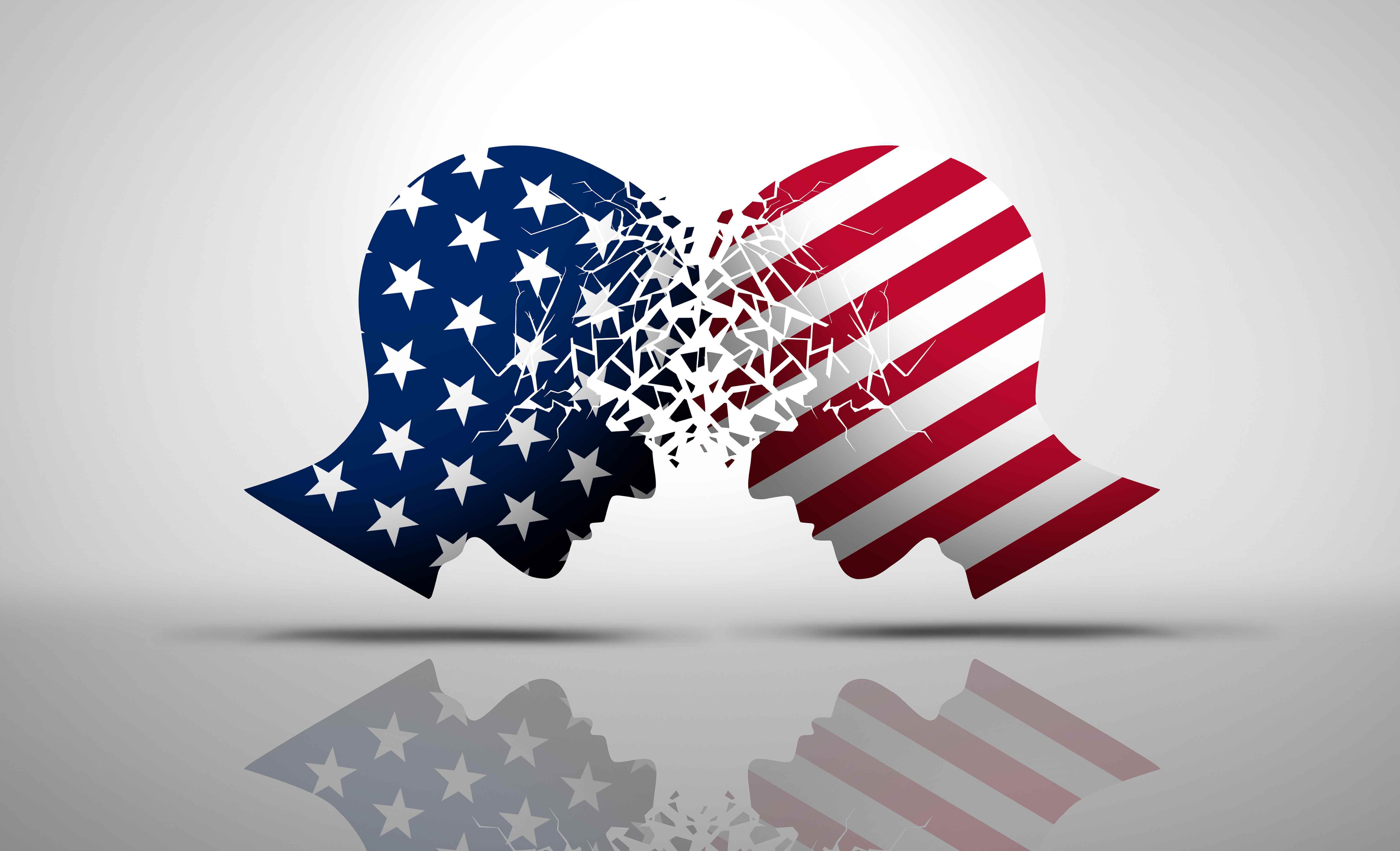
President Donald Trump’s approval rating has hit a record-low. Democratic enthusiasm levels are off the charts. The party holds a clear edge on the generic congressional ballot question. By most measures, the polls point to something like a blue wave this November. The question, for many, is whether they can be trusted.
There is reason for concern. In addition to high-profile misses — the most prominent among them, the 2016 presidential contest that elected Trump — recent election cycles have witnessed cratering survey response rates, flawed weighting and turnout assumptions, and a rise in bad-faith actors, not to mention the challenge of vanishing landline phones.
This year, a handful of episodes have further undermined confidence. Polls predicted a slam-dunk victory for Abdul El-Sayed in Michigan’s Democratic Senate primary — he won by one percentage point. Francesca Hong, the democratic socialist running in Wisconsin’s Democratic primary for governor, held a double-digit lead in pre-election surveys — she narrowly lost. And a poll in the Los Angeles mayoral race — which spread widely after one of the candidates, Mayor Karen Bass, touted it on social media — turned out to be entirely bogus. The Los Angeles Times later reported that the individual behind the sham poll said it was part of a “short-term social experiment”to examine how polling numbers could “spread through the political information ecosystem without independent verification.”
The polling misfires, however, don’t reflect the changes in the industry. There are new methods of reaching people, and new ways to account for the most elusive voters. Those corrections have seemingly paid off; you may not realize it, but the polls largely nailed the results of the past two midterms. Still, polls aren’t meant to be predictive. They represent a snapshot in time, offering insight into public sentiment and voters’ most pressing concerns.
“Certainly, given the polling misses in 2016 and, to some extent, 2020, there's an obvious fear factor,” says Charles Franklin, director of the Marquette Law School Poll. “We've done a lot over this past decade to try to improve the control we have over those kinds of errors, but ultimately we can't force people to do polls, and so this remains always a background fear factor.”
To explore the questions surrounding the midterm election polls — and claims they might be overestimating Democratic support — we convened a roundtable of top pollsters: Franklin, the director of the Marquette Law School Poll since 2012; Christine Matthews, who has worked with Republican clients as president of Bellwether Research, a public opinion polling firm; Charlotte Swasey, director of analytics at Searchlight Institute, a D.C.-based Democratic think tank; and Seb Wride, head of polling at London-based PF Global, POLITICO’s polling partner which conducts polls in the U.S. and the UK.
Senior editor Charlie Mahtesian moderated this conversation. It has been condensed for length and clarity.
Speaker Mike Johnson said recently: "None of us should put any stock in polls anymore because they are wildly inaccurate; we all know that.” On the Democratic side these days, you can find voices that think perhaps the polls are underestimating the size of the wave that's supposed to be coming next month. So, what's your level of confidence in the reliability of the polling that we're seeing at this moment?
Christine Matthews: Historically, one thing that we've looked at is polling error over election cycles. Writ large, the polling error has been smaller for the past two midterms, 2018 and 2022, than it has been for the past general elections. So, as pollsters, we've done a slightly better job overall with polling accuracy in the midterms.
That being said, how much should we trust polls? I think you have to look at individual polls and pollsters. I, for example, have a lot more trust in the AP-NORC poll, or the New York Times poll, or the CNN poll than I do a poll that comes out in a state and I go to the website of the polling firm, and there's no people listed as the team conducting the poll.
Charlotte Swasey: It's entirely possible that the polls are a little bit wrong. But they would have to be so dramatically wrong for Mike Johnson to have a good year, that it would be practically unprecedented. We're not pulling these polls completely out of a hat. We have the historical records about how the party of the president does in a midterm year. If you look at that alone — and you don't even look at the polls — the party of the president loses seats, unless Sept. 11 has just happened.
Charles Franklin: Certainly, given the polling misses in 2016 and, to some extent, 2020, there's an obvious fear factor. It's easy to raise concerns, and the biggest of those remains non-random non-responses — in this case, too few Republicans responding — and this year, maybe excited Democrats somehow over-responding. We've done a lot over this past decade to try to improve the control we have over those kinds of errors, but ultimately we can't force people to do polls, and so this remains always a background fear factor.
But I think when you look at the consistency across polling, coming from more conservative polling firms or more Democratic firms, I'm more impressed with the broad consistency we're seeing across companies and across states. If you look at Senate and gubernatorial polls around the country, you're seeing a lot of consistency there as well.
Christine, the pollster Patrick Ruffini posted a fascinating graphic about the states where strong Republicans were hardest to reach in the polls. Among the states where Republicans were heavily or moderately underrepresented in polls are Kansas, Nebraska, Iowa and Ohio. So, in other words, the red states that could very well determine control of the Senate. Are you seeing any evidence like this that might suggest some of these states are fool's gold for Democrats this year?
Matthews: I don't know if they're fool's gold, but I don't disagree with his assessment. In fact, I was stressing out about that this morning with one of our polls. I do think that non-response among base Republican voters in some of these red states is a problem.
Doesn't mean that the pollsters conducting the polls aren't managing for that. We are. Sloppy polls, maybe that’s a problem. But if you're managing for it to some degree, hopefully that's baked into the polling.
Franklin: One of the things we've done methodologically over those last 10 years is shift from stratifying [Wisconsin] into five big geographic regions to stratifying it into a little over 100 regions — stratified from the most Republican, pro-Trump areas to the least. So, this year, and actually for the last several years, we've had a lot more control over the political geography of the sample selection.
It’s not perfect, because we could still be getting an unrepresentative set of Republicans from those most Republican areas. But we're miles beyond the level of pre-stratification in the sample selection. That's a good example of how pollsters have adjusted to the legitimate concerns, and the problems we've had in the past of non-random, non-response. Still, you do all of those things, but you have those anxiety moments when you get the sample back and you go, “Oh, are we under in this stratum?”
Seb, as a pollster who's been working on both sides of the Atlantic, are you seeing any striking similarities or differences in what your surveys are finding here or in the UK, in terms of issues or public priorities?
Seb Wride: In the UK, we've had our fair share of polling misses in the past. What I would say is, people remember the misses really, really well. They remember that Brexit wasn't called correctly in 2016, even though it was actually largely in the margin of error. They'll remember overstatements of different parties here and there, and we've had our fair share of late closing in the races as well.
As to the issues, I’m seeing commonalities in the challenges that are facing incumbents across the Atlantic. Both Trump and our own collection of prime ministers — we've had a fair few in the last few years — have faced the same challenges in maintaining a strong coalition. Affordability and cost of living come up everywhere.
What does the polling data tell us this year about the once-ascendant Obama coalition — or about the state of the realignment that Donald Trump's 2024 win seemed to be ushering in?
Franklin: We're certainly seeing decay in Republican support from 2024 among Hispanic voters. Young people considerably, also. Significant slippage among non-college whites. On the one hand, you can think of that as a coalition that Donald Trump put together in 2024 to win re-election, and there’s certainly a lot of truth to that.
But I also think there’s a common story here: People's concerns with inflation and the cost of living have been at the top of our most important issue chart since the spring of 2022, if not the fall of 2021. That issue primarily contributed to the Biden administration's failure and low approval ratings. It powered Trump's election in 2024, along with immigration. But now, the shoe is on the other foot, and it's damaging the Republicans and the president for the same economic reasons, the same basic underlying concerns about the cost of living.
Is this a matter of groups who moved in one direction and now are moving away? Or is it the fact that lots of people, regardless of group, have been responding to those perceived economic difficulties?
Swasey: When we talk about group movement, there's also this underlying assumption that groups are homogenous. Especially in a midterm year, this set of, let's say, Hispanic voters is not the same set who voted in the presidential year, or in prior elections. These things aren't firm blocs.
We can make estimates about trends among particular populations. But you have to account for the fact that we're talking about trends in a midterm, which is usually a slightly less exciting year than a presidential one. It's more of a reaction to the president. Maybe if you're a fan of Trump, you're not going to show up this time. It complicates our ability to make broad statements about these trends.
Matthews: I don't think that you can look at one election and say, “That's a realignment.” What the larger trends are telling us is there's an enormous amount of dissatisfaction with the way things are being run in this country — the wrong track numbers, the consumer sentiment, concerns about getting ahead with this economy, inflation, being able to buy a house, afford health care.
These concerns have driven a lot of sentiment for several election cycles. Combine that with the rise of particularly young voters and others who say they're independent, and you basically have a cohort of voters looking for some relief and some solutions.
They're going to be our swing voters. They're going to be the people who move back and forth — and if they don't get that relief, they're going somewhere else.
Wride: The only way I really see [a realignment] happening is if that disaffection is owned by the Democratic Party, the way that Trump took ownership of it in 2016. That's how it becomes less than a flash in the pan rejection of whoever's in there right now.
People have tangible things to point to as reasons that Trump has been responsible for the economy now, like the Iran war. People do tie the actions of the current government to the way that they're feeling, and the way that they're being punished at the pump. But at the moment, I'm not sure that the Democrats are claiming the space and becoming the vehicle for that disaffection to translate into a longer-lasting coalition that keeps winning elections.
Is there a single cross-tab or voting demographic or question — perhaps right track, wrong track or generic congressional ballot — that we should be watching closely in the final weeks of this campaign?
Matthews: Back in the day, it used to be “cares about you.” Which candidate or which party cares about people like you? With this level of cynicism that we see, I don't know that that is what I would track today. If you, as a Republican in particular, edge forward on “cares about people like you,” you were kind of golden.
Wride: We've all mentioned the demographics that we know are interesting: the young people, the Hispanic voters. One that we've been looking at a lot is MAGA identity. It’s really interesting because it represents the challenge that faces the Republican Party going forward here, which is whether to step away from the Trump era or to keep it going.
We've seen pretty consistent trends of people who voted for Trump and then say, “I don't identify with the MAGA movement.” They're pretty much always moving further away from Trump. They seem to be the concentration of where the disaffection is landing. It's an interesting group. I'm not sure if it will necessarily tell you whether this election is won or not, but maybe it will tell us something about the direction of the Republican Party and towards 2028.
Matthews: The cross-tab might be Trump voters who now disapprove of him.
Franklin: And there you see an awful lot of party loyalty, despite that disagreement. There’s a little more crossover in our Wisconsin polling of those non-MAGA Republicans, who make up about 17% of Republican likely voters in Wisconsin. We're seeing a 20% crossover to the Democratic gubernatorial candidate — that's pretty sizable, even though it's less than one in five Republican voters. But that division within the party is fairly clear, and you've got a similar one if you look at Trump disapprovers within the GOP.
Interestingly, we're not seeing that same division among Democrats between democratic socialists and non-democratic socialists.
Swasey: This is a tough question for people who've dedicated their lives to looking at the whole survey every time. On my end, I'm most interested in the difference between a generic congressional ballot and a named congressional ballot — you get these specific indicators about particular candidates. I'm looking at that for an indicator of how well specific Democrats are doing over the baseline, and that gives you a pretty good indicator of how many additional points on top of that national swing you're picking up.
It's not a demographic, so it doesn't tell you everything. But when you see a really big gap there, it starts to give an indicator that there is going to be overperformance by particular Democratic candidates over this sort of broad anti-Republican, anti-Trump swing.
Christine, I'm fascinated by the point you were making about when you stopped paying attention to the “which candidates care about you” question. Around what time would you say that was?
Matthews: It used to be so important in the polls that we did. The national polls always asked it too, and then you’d sort of look at Mitt Romney versus Barack Obama. I don’t know, I’d say 10 years ago.
So, the beginning of the Trump era?
Matthews: Yeah, I'd say the Trump era sort of blew that out of the water.
Charlotte, you recently wrote: "Polling has become a playground for grifters, liars, and frauds.” What led you to that conclusion? And if that's the case, I wonder how nervous we should be about the 2028 presidential election and what's going to happen then?
Swasey: The thing that led me to that conclusion is how easy it's gotten to make a dubious or a literally fake poll — and also, just people's habits of news consumption.
It's interesting because it's not exactly a problem with reputable pollsters or even with reputable aggregators. The New York Times and CNN polls are quite good. They spend a lot of time, they have their name on it. It's a big reputational risk to do anything even vaguely dubious. That is not where this problem originates. Where it originates is folks who are either trying to break into the space or just trying to get clicks, like the poll that was a social experiment in the Los Angeles mayoral race, things like that.
That is what I'm actually worried about for 2028. Our ability to measure a presidential primary and a presidential election is difficult, but there's nothing strictly wrong with it. I think this whole conversation has talked about ways in which people are thinking very, very carefully about how to do that properly, how to account for errors. What I'm concerned about is essentially information pollution, things that are either intended to skew prediction markets or just straight misinformation flying around. It would be really difficult, especially in a primary, to tell people that what they're seeing about their preferred candidate isn't real.
Does the rise of prediction markets have any implications for polling? Have they proved to be a disruptive force? Could they one day replace election polling?
Wride: I've not really met people who give them that much credence. The reason is that they move after polls, not before them in any meaningful way. I'd imagine there will be times where the poll will miss and the prediction market will get it right, and there'll be people who over-obsess over that and say, "Is this it?” But the reality is that prediction markets just tell you the information that’s going on. They can't tell you something new.
Even in a world where prediction markets turn out to be a perfectly acute prediction of every electoral outcome, there'll still be a role for polling to tell you why things are happening, the issues that matter. So I'm not yet worried about my job.
Franklin: Here in Wisconsin, with the Democratic primary in August, we had a good example of that. The prediction markets continued to believe that the previous frontrunner had around a 90% chance of winning right up until poll closing time, and then precipitously dropped through the evening.
So, if you're looking for prediction markets for a special clairvoyance, nope. They didn't see that coming either. The polls all got it wrong as well — but if you’re looking for the prediction markets to aggregate information that's not available through polling, the fact that it didn't move until we actually started seeing vote returns coming in on election night is a good example that these things have real limits.
The other side is, even if prediction markets do a good job of forecasting election winners — which is certainly useful information — they do virtually nothing to explain why those things are going on. Again, in the Wisconsin primary, polls showed a clear frontrunner who ultimately lost by 4,000 votes. But the polls also showed why she might lose. There was a lot in the pre-election polling that raised very plausible scenarios in which the outcome was different, and provided valuable insight into that race, even though it didn’t have the eventual winner.
Swasey: I'm not particularly worried about prediction markets taking down the industry. Like Seb said, they appear to be consumers of polls more than generators of additional information on top of polls. There's been a little bit of back and forth about their accuracy. Some folks have done research that claims they're pretty accurate in undercovered elections. I tend to attribute that to the fact that elections are relatively stable. If you look at past election results, you can get pretty close with five minutes in a spreadsheet, so I'm not clear that they're better than that.
For these big ticket races, it is certainly a complicating factor. I'm used to thinking of polling as something that is affecting either campaign spending decisions or campaigning decisions or public sentiment. It's a little strange to be affecting this secondary market that is none of those things, but is highly sensitive to polling inputs.
Matthews: Every election cycle, it's “Is polling dead? Is polling done? Are pollsters finished?” The latest thing that we haven't even talked about is synthetic interviewing — which means you don't actually interview any real people, you train AI models to simulate how they’d expect a random sample of people to respond to certain things.
The research that's been done on synthetic interviews is that it is not effective. And it's not something I would ever use, so I'm not going to spend a ton of time thinking about it. But it's one of those questions where, “Oh, could pollsters be replaced by AI?” And I think the answer to that is also no.
Seb, we don't really have a vast body of past evidence of polling about data centers and AI and public sentiment surrounding them. As somebody who has been under the hood there, what are you finding? Is anything surprising you?
Wride: I'm actually on the road right now, trying to speak to people in areas where data centers are coming in, which has been really interesting. We've been tracking attitudes toward AI for a while, and it was a slightly weird thing to be doing back in 2022 and 2023. But there has been a precipitous and rapid change in the last six months.
Quite often, it's a local issue. Quite often, they're looking at governors and they're looking at councils. But it's all playing into one big problem that is changing things in this election — which is corruption, it's affordability. Data centers are yet another thing affordability [crutch], something that Democrats can point to and say, "Look, this is an energy bill-raising, water-guzzling machine that's coming into your area, and that's going to cause affordability issues.” It probably explains why you see people like Mike Rogers [the Republican Senate nominee in Michigan] distancing themselves from it.
But the key thing is corruption. For a lot of people who live in areas where data centers are coming in, the reasons that they got there are very unclear. The transparency around them arriving has been unclear, and it's forming this perspective that things are happening off-screen for them, and they're not entirely sure why.
You mentioned that it's a recognizable change dating back to about six months ago. Is there a single inflection point that you'd point to, or is there a sense that something has changed?
Wride: It started to adopt a partisan identity. When that happens, particularly in America, it calcifies onto either side of the debate. If you know that the Democrats are against data centers and Republicans are for them, then you start to take your own side on it. That started to happen this year. It obviously became a big talking point because of the scale of the rollout as well, and every one of the swing states has an example that they can point to. That's part of the reason that this happened.
But then, very recently in the last few weeks, there was an inflection point in how worried people were about it. Several things happened all at once in one week — the people coming out of labs and saying that this is going to destroy the world, that really cut through in a way that I was quite surprised about. Followed by Trump saying that they were going to call it superintelligence rather than artificial intelligence, that cut through, too.
The more something's talked about, and particularly when it's in a partisan space already, the more that it's going to be an issue going forward. I would not be surprised if AI and attitudes towards AI played a very significant role in 2028. I would be surprised if it played a significant role in 2026, but I wouldn't be surprised if it plays a minor role in some races.
At this time of year, it's fashionable to rage at pollsters. And it’s already a tough time to be a pollster. You're not only confronted with the decline of landlines, nosediving response rates, technological change, deep polarization, mistrust, resentment, and now what seems to be this flood of bad faith actors.
What do you think the future of polling looks like? Do we have to resign ourselves to this chaotic world that's filled with unreliable, low-quality polls, or is there hope for something different going forward?
Franklin: Oh, woe is us because we have critics. Show me people who don't have critics. Journalists are in much the same business. Oddly enough, not every journalist is widely admired by everyone in the world.
Some of this is the more polarized society and the more brutal political rhetoric that goes with it, both online and from office-holders. But I think in some ways, it's the price of doing business.
Swasey: It's much like democracy — this is the worst system we have, except for every other system. This is the way by which we talk to voters. There are probably, at this point, millions of people who get their voice into politics and tell us what they think via polling.
These are people who are not in the media. They're not sharing their opinions any other way. That is the important part of what polling does. We spend a lot of time and a lot of energy worrying about horse race accuracy, but that is a tiny fraction of the utility of this tool.
It's really important right now to keep that in mind, when everyone is laser-focused on accuracy. I also wouldn't be surprised if we saw a pullback towards getting polling results from reputable sources. Maybe a return to expertise rather than the intense democratization of anyone having a firm, putting stuff up wherever. It's entirely possible we'll see shifts, but I don't expect it to go away.
Wride: It imagines that there is a world without polling, and I really can't see what that would be. The only insight you'd ever get into what people think in a country would be every couple of years in an election, which we all know is also not a great representation of the way that people think and feel about things. In many ways, it's a single binary choice question that captures 100 issues at once, into red or blue. That's not a very good indicator of where people are.
The reason I'm bullish about polling surviving all of the challenges it's facing at the moment is because I think there's always going to be a time when businesses or policymakers or politicians think, “I wonder what people think about that.” And what are they going to do besides poll? That is really the only way we get that insight.
How would you rate the media coverage of polling this year? Are we failing miserably? Are we acting responsibly? Are we somewhere in between? You're allowed to just lash out, this is your opportunity.
Franklin: For 10 years, the knee-jerk response to polling is “Polling is broken. It doesn't work.” I've lived with that since 2016. If I try to explain more detailed parts of the polling, that's harder to get across. It's harder for a journalist to write about, because it's more complicated. It's harder to draw an audience in, because most people aren't so geeky that they want the detailed second or third layer.
In one sense, yes, the world's always been like that. It's always been hard to get past the headline and into more complicated details. But I have done interviews where the first question is “why were the polls so wrong?” in an election where the polls were demonstrably not wrong. That, I think, is a frustration with the same storyline repeated over and over and over again.
Here’s a lightning round question. What is a state or an issue to watch in the remaining weeks, either because it's notoriously hard to survey; or there's a proliferation of bad polling about it; or because recent history leads you to wonder if the polling may not really be capturing what's happening on the ground?
Wride: We all know that affordability matters, and there is a ton of polling on affordability. You're spoilt for choice there. But the other thing that matters is corruption, as I said earlier, and I don't see nearly as much polling around that. That's the thing that I'm most interested to see, because it keeps coming up when we talk to voters about what's shaping their vote.
Swasey: For me, it's Texas. It's a state where it is very easy to fill a poll. It's very populous. You're not going to run into sample constraints. But you have this large Hispanic population, and you also have areas of the state like the Rio Grande Valley that are very hard to reach. It's a state where it's really easy to get a bad poll that seems fine, and I am persistently anxious about the state of polling there. You also run into problems when you have to do things bilingually, and that is harder and more expensive.
Matthews: I'm gonna go with healthcare. If you look at the latest survey that Pew Research conducted on the electorate, and if you look at the issues that Republican, Democratic and independent voters say are important to them this year, health care has increased in salience for Republican voters significantly over a couple years.
Republican candidates are not talking about health care. They're talking about taxes. They're talking about gender identity issues. What happens with that? What happens with Republican voters who increasingly care about health care costs, and their Republican candidates are not airing ads on it? Are these Republican voters going to take a chance on Democrats on the health care issue? That’s a question to me that I don't know that anybody else is thinking about.
Franklin: I'll go into the cross-tabs and say independent voters are really interesting to me this year. They're a modest group, but in competitive states they're kind of critical to putting one party over 50%. In Wisconsin we're 45% [Democratic] and 45% [Republican] but 10% independent. Parties have got to get some of those independents to pass 50%.
What we've seen in both our state and our national polls is that independents are incredibly negative towards the GOP this year — very negative to the president, very concerned about the economy and leaning heavily towards Democrats on the generic ballot or on specific races. It's a volatile group, and it could shift. It could shift more than once between now and Election Day. But I am looking consistently at other people's polls as well as ours, and it looks very consistent that these independents are among the sourest of the sour voters this year.
Does that maintain itself and result in a Democratic edge? Or is it an anti-incumbency thing? Throw the bums out, as Charlotte said earlier. If it is, then it might not be as uni-directional in who it helps and hurts.
Popular Products
-
 Gas Detector Meter
$311.56$155.78 -
 Foldable Garbage Picker Grabber Tool
$93.56$46.78 -
 Portable Unisex Travel Urinal
$49.56$24.78 -
 Reusable Keychain Pepper Spray – 20ml
$21.56$10.78 -
 Camping Survival Tool Set
$41.56$20.78