Abortion, Voter Id And More: These Ballot Measures Could Reshape State Laws

The battle for control of Congress is getting the lion's share of the attention in the lead-up to the midterms, but there are a lot of other consequential measures that'll appear on ballots this November that could have a direct impact on voters' lives.
Ballot measures often don't receive much national attention, but every two years, voters across the country decide whether to adopt policies that have major implications for their states. This year is no different.
There are more than 140 total measures collectively across 40 states this year. Many touch on some of the biggest issues in U.S. politics, including abortion, transgender rights, voting and the democratic process itself.
Ballot measures can give the people a way to directly alter the laws in their states instead of relying solely on their elected representatives to create policy on their behalf. In some cases, they provide an opportunity for voters to endorse or reject something their state legislature wants to do. In other cases, regular citizens can get their preferred policy on the ballot directly through a signature-gathering campaign.
Here's a rundown of some of the major measures on statewide ballots this year.
Abortion
The Supreme Court's 2022 decision to overturn the nationwide abortion protections established by Roe v. Wade instantly turned abortion access into a state-by-state issue. It also led to a flurry of ballot measures across the country in which voters were asked to decide whether their states should protect or restrict abortion rights. In the years since, voters have generally come down in favor of protecting abortion rights.
That trend will get another test this year due to abortion-related measures in four states.
In Idaho, voters will decide whether to overturn their state's strict abortion restrictions and establish a right to reproductive freedom and privacy, including abortion until fetal viability. If the measure passes, Idaho will become the latest red state where voters have used a ballot initiative to expand abortion rights.
One of those red states is Missouri, where voters approved a measure in 2024 that struck down some of the nation's most restrictive abortion laws. A Republican-backed measure on this year's ballot would repeal that 2024 amendment and allow strict abortion restrictions to be put back into place. The same measure would also create new limits on gender-affirming care in the state.
Two other states that already have relatively permissive laws around abortion access — Nevada and Virginia — are voting on measures that would enshrine abortion rights in their state constitutions, a step that would make it much harder to restrict access in the future.
Transgender policy
The debate over transgender rights, particularly when it comes to minors, has become a central issue in American politics. It should be no surprise, then, that a number of states have measures related to the topic on the ballot this year. All of them would impose new limits on transgender rights.
Four states — Washington, Nebraska, Arizona and Colorado — will vote on measures that would ban trans athletes from participating on sports teams that match their gender identity. There are some important differences from state to state, though. The proposals in Washington and Nebraska would only apply to girls' and women's teams. Colorado's and Arizona's would apply to both male and female teams.
Washington's bill also includes a stipulation that would require all K-12 students, whether they identify as trans or not, who want to play girls' or women's sports to have their sex verified by a doctor. Arizona's measure would also ban schools from allowing trans minors or adults to access bathrooms, locker rooms or other private spaces designated for a sex that doesn't match the one they were assigned at birth.
A separate initiative in Colorado would ban gender-affirming surgeries for minors. Missouri's measure would go even further. In addition to banning the surgeries, it would also prohibit minors from receiving other forms of gender-affirming care, like hormone therapy and puberty blockers.
Voter ID
Six states will vote on measures related to voter ID.
Those in California, Colorado and Nevada would either establish or expand laws requiring voters to show ID when they cast their ballots. Each of the proposals would also require voter ID for mail-in ballots.
Arizona, Ohio and North Carolina already have strict voter ID requirements in place under state law, but measures in each state would add or expand those requirements in their state constitutions.
Schools
Schools have been a major flash point for culture war battles in recent years. A handful of measures on the ballot in November will ask voters to weigh in on some of those debates.
Arizona and Wisconsin both have measures that would ban affirmative action in schools and all other government agencies.
Alabama has a pair of proposals. One would require public schools to play the national anthem at least once a week. The other would make the recitation of the Pledge of Allegiance a daily requirement and mandate school boards to adopt policies that allow student-led prayer.

A sweeping parental rights initiative in Washington would give parents of public school students substantially more oversight over the education their children receive, including the power to review curricula and textbooks. It would also put strict new limits on the kinds of medical care schools can provide without parental notification and roll back changes to the state's parental rights law that protected against discrimination and bullying in schools.
The ballot initiative process
Ballot measures frequently center on contentious political issues, but in recent years, the initiative process itself has increasingly become the subject of political debate.
Five states will vote on measures that would make it harder for citizen-led ballot initiatives to become law. They would accomplish that by either raising the share of the vote certain measures need to get approved or restricting the subjects that initiatives can address.
Voters in California and Utah will consider measures that would require certain initiatives that would raise taxes to receive more than the simple majority of support they currently need to be successful. California's would raise the bar for voter-proposed local special taxes to two-thirds of the vote. Utah's would set the new standard for tax-related citizen initiatives at 60%. North Dakota and South Dakota both have measures that would require any attempt to change their state constitutions to get 60% of the vote.
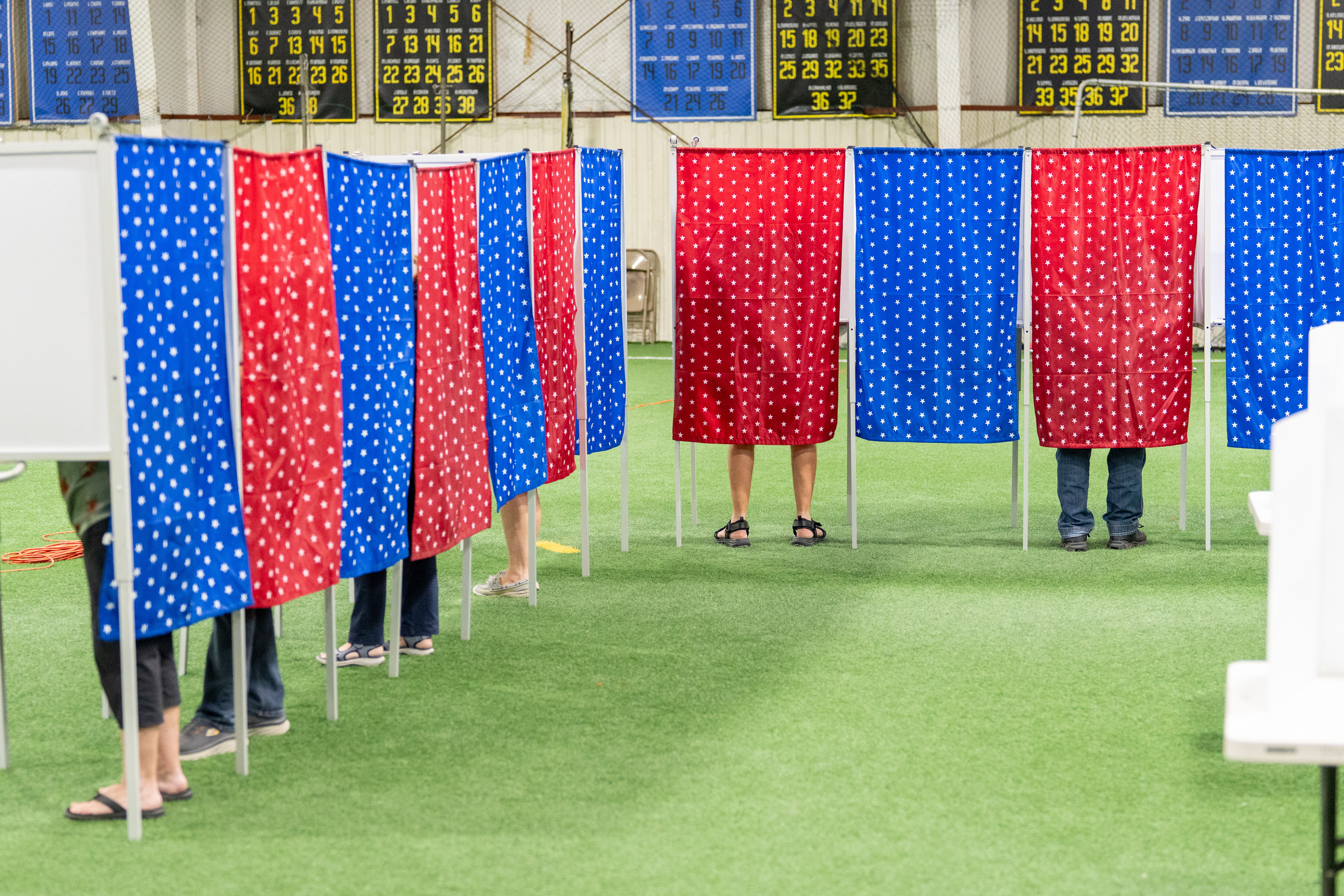
Changing the threshold for success by 10 percentage points may not sound like a huge deal, but it is often the difference between a proposal becoming law and being rejected. For example, initiatives in Florida that would have legalized abortion and recreational marijuana use both received majority support from voters in 2024, but neither became law because they fell short of the state's 60% approval standard.
Idaho has a measure on the ballot that would ban initiatives aimed at legalizing marijuana, psychedelics and other narcotics. If it passes, only the state legislature would have the power to legalize or decriminalize those substances.
Another two states will decide on measures designed to protect the initiative process. A proposal in Montana would amend the state's constitution to guarantee citizens' rights to pursue ballot initiatives and make it harder for the government to interfere with measures approved by voters.
In Missouri, voters will weigh in on a measure that would prohibit the state's Republican-led legislature from weakening the initiative process. It would also bar it from amending or repealing any measures that have passed unless 80% of both chambers agree to put the change before voters.
Other notable initiatives
There are many pivotal ballot initiatives being considered across the country that don't fit neatly into a specific category. Here are a few of them.
Alaska voters will decide whether to repeal their state's recently adopted ranked-choice voting system. A proposal in Arizona would ban new traffic cameras without direct voter approval. Nebraska will choose whether to legalize online sports betting. Vermont will consider a measure that would ban discrimination based on gender identity. Virginia will decide if people convicted of felonies should have their right to vote restored once they're released from prison. A measure in Wisconsin would prohibit the government from closing places of worship during public health emergencies. Massachusetts will consider whether recreational marijuana sales should once again be made illegal. A proposal on the ballot in North Dakota would require all public schools to provide free breakfast and lunch.
Lower-stakes — but still noteworthy — measures under consideration include a Colorado initiative that would enshrine the right to hunt and fish in the state constitution and a request for Idaho voters to select an official state gun.
This article originally appeared on Yahoo News at https://www.yahoo.com/news/politics/article/abortion-transgender-rights-and-voter-id-these-are-the-major-ballot-measures-voters-will-consider-in-the-2026-midterms-170513122.htmlPopular Products
-
 Classic Oversized Teddy Bear
$23.78 -
 Gem's Ballet Natural Garnet Gemstone ...
$171.56$85.78 -
 Butt Lifting Body Shaper Shorts
$95.56$47.78 -
 Slimming Waist Trainer & Thigh Trimmer
$67.56$33.78 -
 Realistic Fake Poop Prank Toys
$99.56$49.78