Billionaire Openai Investor Vinod Khosla Thinks 80% Of Jobs Could Vanish By 2030, And That ‘fear Of Ai’ Put American Politics In A Chokehold
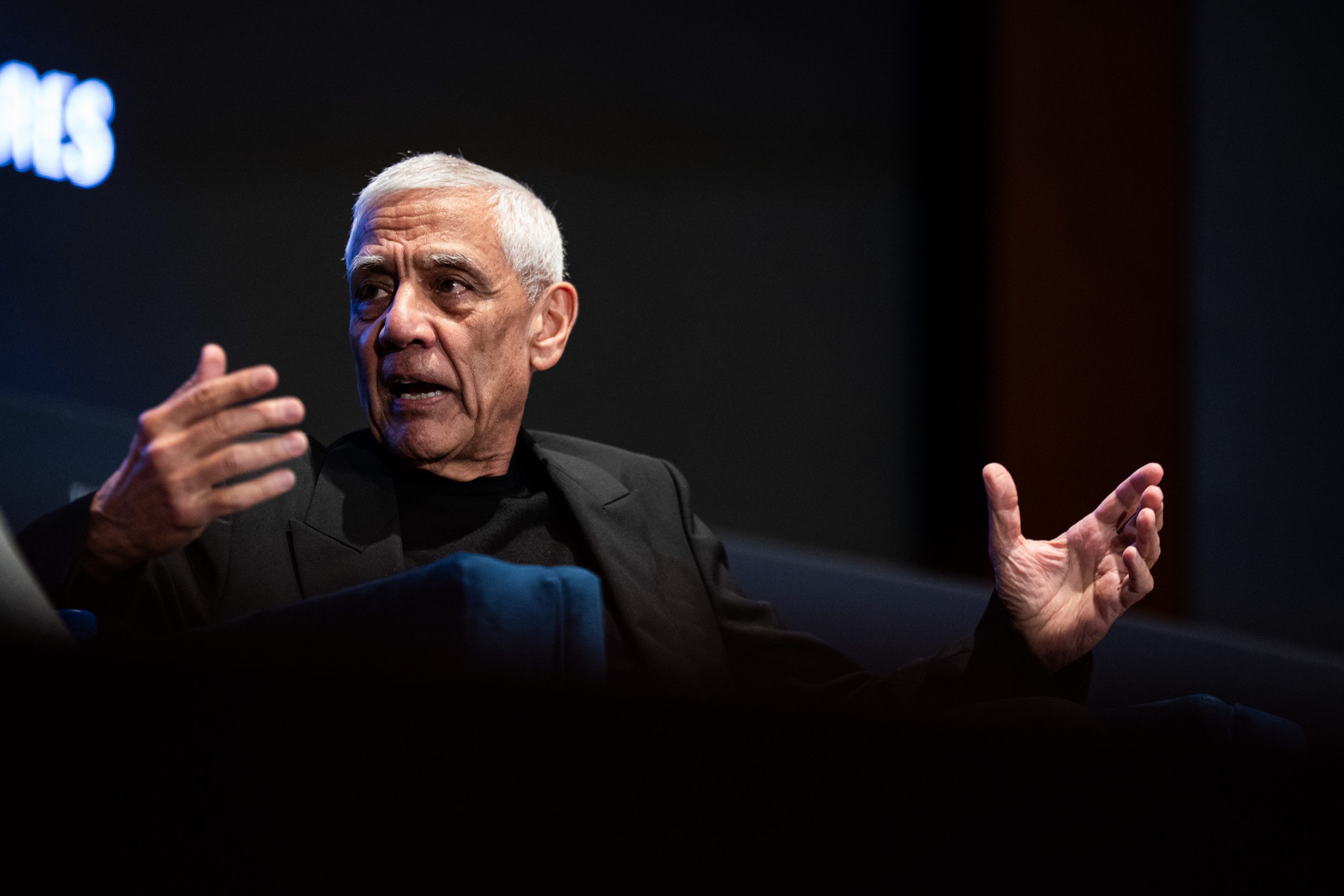
In a sit-down interview with Fortune Editor-in-Chief Alyson Shontell, billionaire venture capitalist Vinod Khosla had a dire message: by 2030, 80% of jobs will be AI-capable, and open to potential displacement. Now, he’s warning that’s what’s going to sway politics from now on.
“There will be massive job dislocation” with AI, Khosla said during a panel at the Hill & Valley Forum, a conference bringing together Washington policymakers and Silicon Valley executives on Tuesday. Despite that, people need to see the benefits of the technology before any disruption occurs, he said. “Will there be new kinds of jobs? Maybe, maybe not. I don’t know. There’s very few things AI won’t be able to do today in next few years. So I do think we ought to structurally solve this problem by increasing the minimum level of services.”
But instead of looking at AI’s potential benefits, Khosla—who founded Sun Microsystems and Khosla Ventures and has a net worth of $11.5 billion,—said Americans have AI-caused uncertainty on their minds.
“The single biggest issue I believe in the 2028 presidential election will be fear of AI,” Khosla said.
Khosla has been a leading advocate for AI adoption while tempering the economic impacts on everyday Americans. His comments at the forum, during a panel entitled “Mind and Machine: The Forces Shaping the AI Era” about the role of the government in AI adoption, are not new for the billionaire, who has warned AI will now take over as the country’s most divisive issue from now on.
“I think the single biggest danger to AI is not AI capability or lack thereof. The single biggest danger to AI adoption is politics,” Khosla said. And it’s already playing out at the state level, he said, giving the example of a bill advancing in the New York State legislature that would ban AI from giving medical or legal advice.
Florida recently passed a bill that would force data center companies to pay for their own utilities, and New York lawmakers are considering a bill that would put a moratorium on new data center permits. This comes as Americans are feeling a growing affordability crisis, especially from rising energy costs, which is expected to be a losing issue for Republicans ahead of the midterms.
Instead, Khosla argued, Americans shouldn’t fear AI, but think of the endless possibilities it’s capable of accomplishing.
“The US could develop a free doctor and offer it to everybody on the planet,” he said. “That’s a project doable in the next two, three years, and have more expertise than any doctor.” He pointed to a recent Nature Medicine study that found that AI outperforms human therapists when blindly judged by human therapists.
He even thinks voters should look at the tax benefits AI can bring to their pockets. Khosla repeated his idea to restructure the tax code and end income tax for anyone who makes less than $100,000 a year, starting in 2030.
“AI will favor capital over labor in the historical capital versus labor battle, and so there’s no reason in the AI age to have a capital gains tax that’s different than ordinary income tax,” he said. “If we equalize those two, we can be tax neutral and eliminate 125 million people off the tax roll, just anybody making $100,000 or less doesn’t pay any taxes.” That’s a pretty good balance, especially since 40% of capital gains tax is paid by people making more than 10 million a year.
Khosla’s co-panelist, Sen. Maria Cantwell of Washington, demurred at the idea of restructuring the tax code, saying that Congress is “a little better at the near term.” The senator gave the example of the 2022 CHIPS and Science Act, which committed nearly $53 billion to revitalize domestic semiconductor production. She agreed with Khosla about the need to deploy AI to everyday Americans now.
“Why aren’t we just giving tools that use sophisticated health information and empowering the public with that health information?” she asked. “I think that would go a long way to making people understand the power of what we need to push towards, she said, adding that there should be privacy protections.
When asked by moderator and CEO of Varda Space Industries Delian Asparouhov about how the U.S. can lead and control AI adoption, Cantwell said she supports the idea of starting a “tech NATO.”
“The United States should get the biggest democracies and the biggest technology countries to standardize on principles that we believe in for technology adoption,” Cantwell said. “We should basically say, countries who have back doors and do these other things you shouldn’t buy technology from them because you know you’re going to get.”
This story was originally featured on Fortune.com
Popular Products
-
 Large Wall Calendar Planner
$55.76$27.78 -
 Child Safety Cabinet Locks - Set of 6
$83.56$41.78 -
 USB Touchscreen Heated Fingerless Gloves
$75.56$37.78 -
 Golf Swing Trainer Practice Stick wit...
$21.56$10.78 -
 Golf Swing Training Belt
$41.56$20.78