Conservatives Cheered When Elon Took Over X. Now It’s Tearing Them Apart.
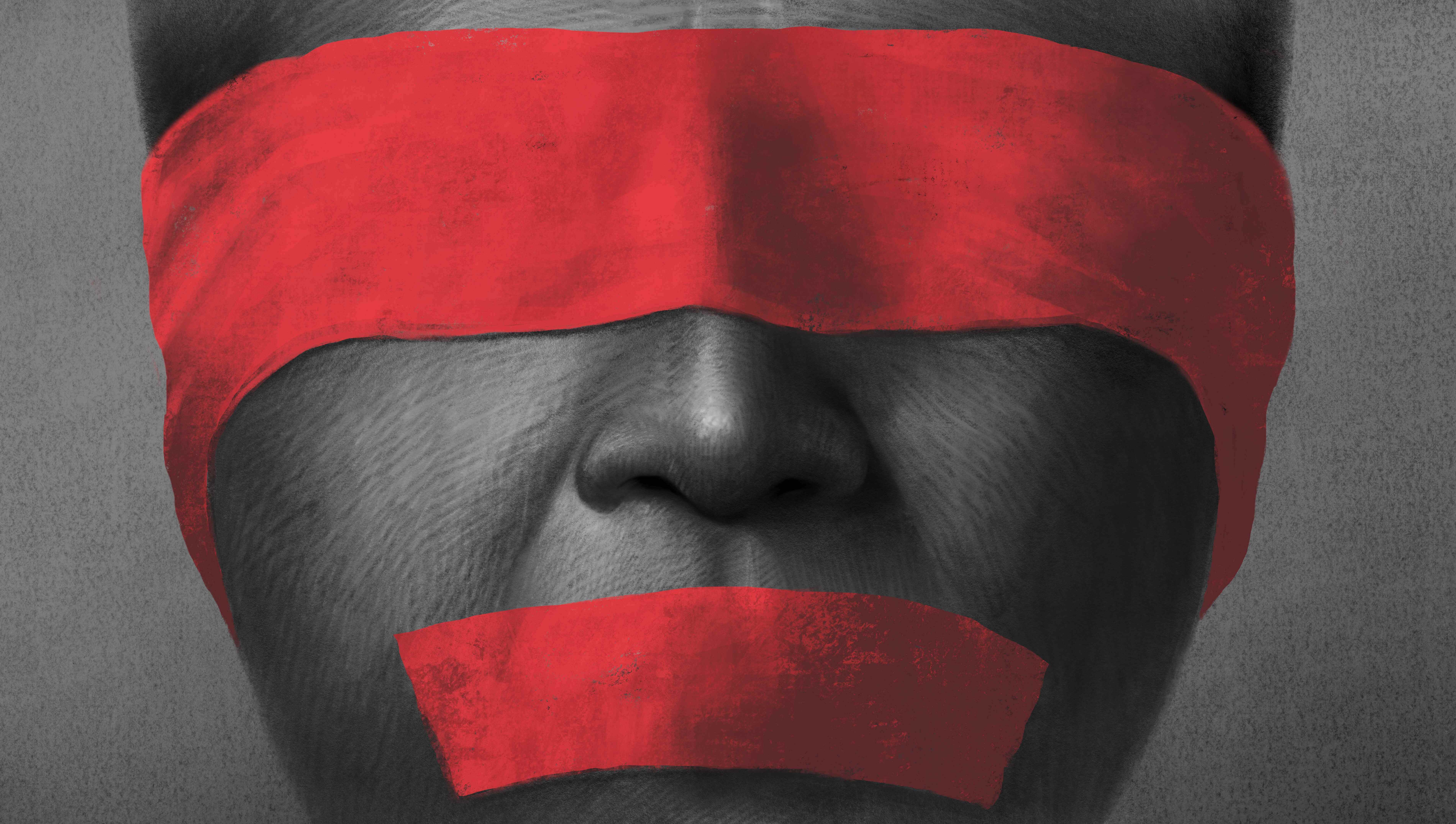
When Elon Musk bought Twitter in 2022 promising to end “woke” censorship and transform the platform into a right-leaning haven of free speech, conservatives almost universally rejoiced. The right’s expectations for the Musk-era platform were sky-high: Many predicted that it would end the liberal media’s supposed stranglehold on information. Others hailed it as an epochal moment in the history of American conservatism.
Three years later, Musk’s control of the platform, now re-branded as “X,” has delivered its fair share of benefits for conservatives — not least of which was Musk’s successful full-court press to elect Donald Trump in 2024. But as the elite echelons of the MAGA movement slowly descend into obscure online disagreements and testy turf wars between rival influencers, conservatives are starting to confront an unpleasant possibility: that the right’s domination of X is doing more to divide the MAGA movement than unite it.
It’s an ironic inversion from the days of pre-Musk Twitter, when liberals and progressives bemoaned the platform’s tendency to stoke petty intramural disputes while conservatives watched gleefully on the sidelines. Now, it’s the conservatives who are doing the bulk of the bemoaning. In a recent op-ed for The Wall Street Journal, Ohio gubernatorial hopeful Vivek Ramaswamy announced his plans to log off of X, citing its “warped projection of reality.” And Ramaswamy isn’t alone in heading for the digital exits. During a recent appearance on Steve Bannon’s War Room podcast, the conservative commentator and former Breitbart editor Raheem Kassam bleakly proclaimed that he was deleting the app from his phone.
“X is a post-apocalyptic cesspool of bots, pedophilia and political illiteracy,” Kassam wrote in a text message when asked about his decision. “I deleted it from my phone because it was making me dumber.”
As anyone who’s spent time on X during the Musk era well knows, Kassam has a point. Since Musk took over the platform and promptly relaxed its content moderation rules, researchers have found a notable uptick in both hate speech and activity from bots — or fake accounts — especially during high-profile political events like presidential debates. Musk’s efforts to combat bot activity have in turn backfired on conservatives: A new feature rolled out earlier this year displaying the country where an account is based inadvertently revealed that many of the most active pro-Trump and MAGA accounts are based abroad.
And Musk’s trouble doesn’t end there. In the past week, he has been embroiled in a controversy over the lack of guardrails on the platform’s AI chatbot, called Grok, which allows user to “digitally undress” people — including children — without their consent.
Yet conservatives’ gripes with the platform run deeper than its less-than-scholarly level of discourse. Increasingly, some big names on the right are coming to worry that X’s algorithm — which elevates short-form video and audio clips over links to articles or essays — is undermining the right’s political cohesion by promoting the most outlandish and conspiracy-minded members of Trump’s coalition.
“When you take away linking to articles or essays and you reward short video clips, you’re going to move toward a kind of Jerry Springer conspiracy theory podcast slop,” said the conservative activist Christopher Rufo. “That’s a troublesome trend for the right in particular, because you have actual lunatics like Candace Owens” — the far-right podcaster who has built a massive audience peddling conspiracy theories about Charlie Kirk’s killing — “that have garnered the biggest audiences in the business.” (Owens did not respond to a request for comment though a representative.)
Rufo, of course, is no squishy moderate himself, having spearheaded the now-government-wide campaign against “critical race theory” and successfully agitated for the firing of prominent liberals like former Harvard President Claudine Gay. But from his vantage point, the problem with the current X algorithm is not that it rewards radical voices so much as it elevates figures who appear more interested in generating political spectacle than in driving real-world results.
“They have political effects, but they’re not actually orienting what they’re doing toward political outcomes,” Rufo said, citing Owens as well as the white-nationalist commentator Nick Fuentes and the far-right manosphere influencer Andrew Tate. “This is a problem because you cannot build a successful political movement on Candace Owens schizo-posting — it can’t be done.”
The problem is not confined to the online far-right, Rufo said. At a recent conservative fundraising event, he said, he was buttonholed by a well-connected Republican donor who held forth on the Israeli and French government’s role in the Kirk killing — an unsubstantiated theory that Owens has pushed aggressively on her podcast. “It’s not just random basement incels that are listening to this material,” Rufo said. “It’s creeping up into the actual political world that distorts our perceptions and makes us less effective.”
The turmoil and division generated on X is becoming a problem for elected Republicans, too. Even as MAGA voters remain largely united behind Trump and his agenda, Republicans are being forced to spend time and political capital addressing squabbling among MAGA’s elite activists and influencers. Rufo pointed in particular to Vice President JD Vance’s recent speech at Turning Point USA’s annual “AmericaFest” gathering in December, where the vice president dedicated the majority of his remarks to tamping down the intra-MAGA feuds between populist-nationalist conservatives like Tucker Carlson and more conventional figures like Ben Shapiro that had dominated the early days of the conference.
“It’s a problem for someone like JD Vance, who is having to figure out a way to deal with it,” Rufo said. “And I’m not sure that he's figured it out yet.”
Liberals, for their part, have largely responded to conservatives’ takeover of the platform by fleeing for less noxious — or at least more ideologically simpatico — digital pastures like Bluesky. But for those who have stayed on the platform, the uptick in conservative infighting is inspiring more than a little schadenfreude. That feeling has been especially strong among liberal posters who lived through the height of progressive dominance of Twitter in the pre-Musk era, when the platform routinely descended into internecine fights between competing factions of liberals and leftists.
“For the first time, the right is also having to do politics in public in [the] weird way” that the left did in an earlier era of Twitter, said Jerusalem Demsas, the editor of the center-left Substack publication The Argument and a frequent participant in intra-left internet skirmishes. In the pre-Musk era, Demsas explained, the preponderance of liberals and progressives on Twitter prompted Democrats to carry out their coalition arguments online, while Republicans were largely able to settle intra-party squabbles behind closed doors. But thanks to the newfound dominance of conservatives on X, the roles have reversed, with Democrats conducting their ideological spats in airless conference rooms while Republicans hammer out their coalition kinks online, for all the world to follow.
“The downsides of that are pretty big,” said Demsas. “It’s kind of weird to talk about how you should pretend to hold opinions you don’t really hold in public, [and] it kind of defeats the purpose [of those discussions] if it’s, like, obvious that you're just doing politics.”
Demsas added that Democrats learned the hard way that social media tends to elevate an extreme and generally unrepresentative slice of public opinion — and that catering too directly to that online constituency carries real electoral dangers for elected officials. In the left’s case, that dynamic prompted Democrats to adopt politically damaging stances on issues like policing and crime. With the right now in control of both X and the government, Demsas said, it’s not hard to imagine Republicans heading down a similar path on a divisive issue like immigration.
“With immigration, the true ideologues are still cheering on Stephen Miller, but we see now that the majority of Americans are upset with ICE and think that it’s going too far,” she said. “It’s very, very hard to correct and to track public opinion if the way that you track public opinion is through Twitter.”
And just like progressives who belatedly learned the downsides of adopting the jargon of overly online activists and academics, some conservatives are confronting the possibility that the language of the online right — which is saturated with obscure memes and self-referential jokes — may not be the best way to speak to the independent voters who bolstered Trump’s slim electoral majority in 2024.
“[The question is] will the right, broadly speaking, adopt the kind of mannerisms and habits of communication that are exemplified in the fever swamp of the internet, and thereby alienate ordinary voters who find that distasteful or just don’t understand it,” said Jonathan Keeperman, the head of the far-right publishing house Passage Press and prolific poster under his online pseudonym “L0m3z.”
All signs suggest that the GOP under Trump is headed in that direction: On X, government agencies and elected Republicans have embraced the patois of the online right, incorporating right-coded memes and far-right internet slang into their day-to-day messaging. But as Keeperman pointed out, these digital easter eggs delight online conservatives and raise the hackles of liberals, but it’s not yet clear that they make a difference with average voters who don’t spend their days parsing government agencies’ posts for coded messages.
Still, one might expect the online right to be unreservedly giddy about its unrivaled control of X, yet even Keeperman expressed a little bit of nostalgia for the old days of progressive dominance, when an outlandish comment from a liberal account would become a rallying cry for the conservative minority.
“This was the glue for the right — opposition to this leftist excess that was articulated on places like Twitter,” Keeperman said. “And you don’t have that anymore. You don’t have this consensus articulation of whatever the left’s beliefs are, and therefore there isn’t a common shelling point for all these different coalitions on the right to rally around and understand themselves in opposition.”
Without that shared target, Keeperman added, conservatives are increasingly turning on each other. “In the absence of like people on the left, you create these sorts of factional arguments in their place, and you go after people who are otherwise on your own side,” he said. “People want to mix it up and have some arguments and debate, and if not the left, it’s just the guy standing next to you.” That’s how you end up with, say, a vicious, multi-day feud between two conservative podcasters who otherwise agree on the majority of issues.
Even accounting for these downsides, Rufo and Keeperman agreed that that Musk-era X has, on the whole, been a beneficial force for the MAGA movement. Aside from helping elect Trump in 2024, the platform now gives conservative activists and commentators a direct line to senior Trump administration officials, many of whom have made a habit of engaging directly with users on the platform. (Vance came up frequently as the most terminally online member of Trump’s inner circle.)
That dynamic all but guarantees that ideas and controversies that germinate on X often end up being reflected more or less directly in administration policy — as was the case with a recent viral video about welfare fraud allegations in Minnesota, which resulted days later in the creation of a new anti-fraud position at the Justice Department.
But Rufo and Keeperman also acknowledged that the downsides of conservative dominance are very real— and could become more acute as the jockeying for the 2028 presidential nomination intensifies.
“The assessment is pretty obvious: It’s better to be in power than not to be in power, but now we have new challenges, we’re in a new era, and the online right is in a moment where some will have to adapt,” said Rufo. “That’s going to be the defining path for the next three years and for the rest of this Trump term.”
Popular Products
-
 Orthopedic Shock Pads For Arch Support
$71.56$35.78 -
 Remote Control Fart Machine
$80.80$40.78 -
 Adjustable Pet Safety Car Seat Belt
$57.56$28.78 -
 Adjustable Dog Nail File Board
$179.56$89.78 -
 Bloody Zombie Latex Mask For Halloween
$123.56$61.78