Democrats Are Running Against Ai. These Strategists Want Them To Start Using It.
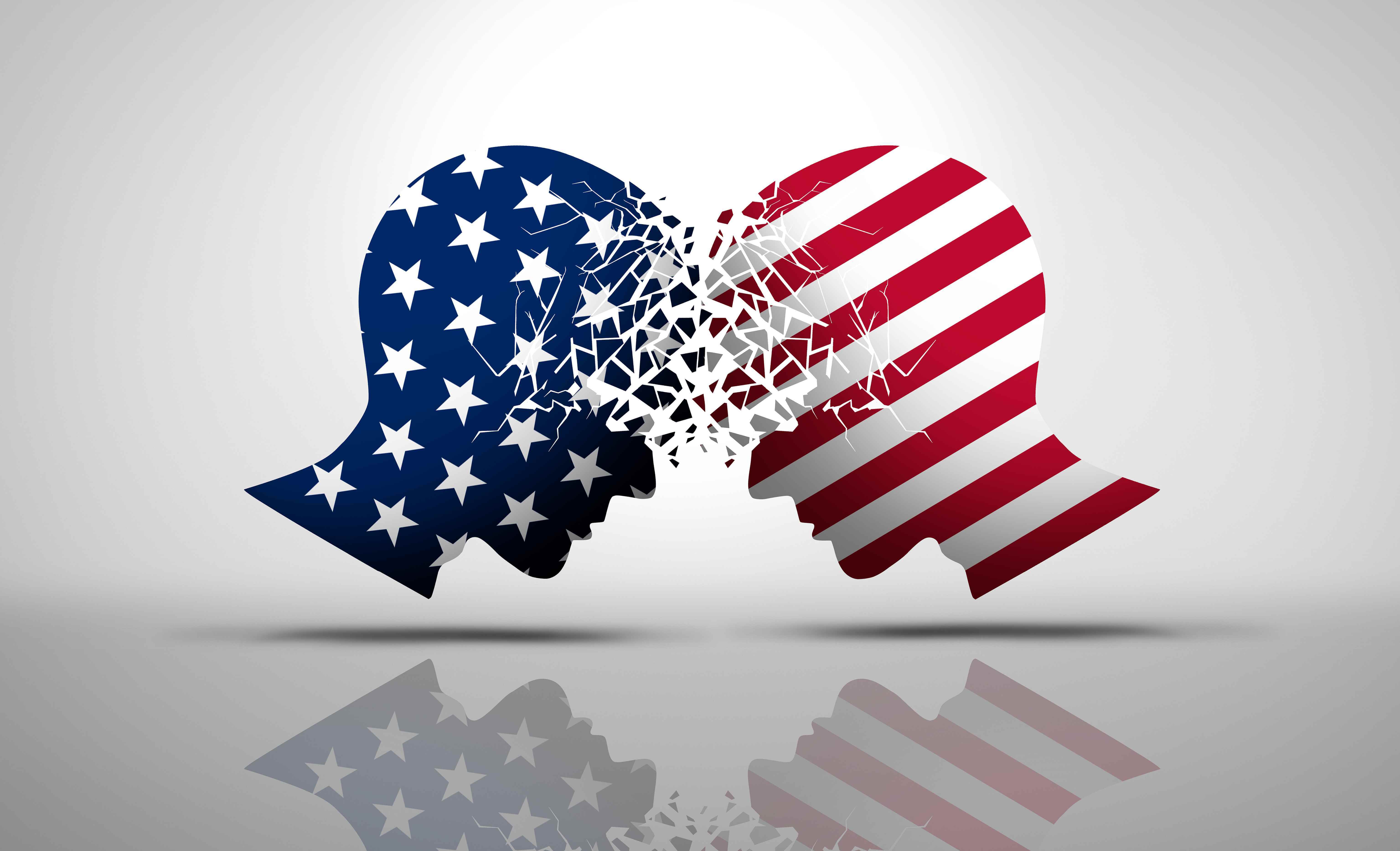
SACRAMENTO, California — Democratic strategists are pushing their candidates to embrace AI tactics on the campaign trail, warning they’ll be outgunned by Republicans if they don’t harness the technology in crucial battles for control of Congress and, eventually, the White House.
It’s a hard sell as politicians watch AI skepticism swell among voters. But in meetings with candidates and campaigns as well as on the sidelines of party gatherings across the country, operatives are scrambling to convince Democrats running for office to embrace a technological arms race that could transform how campaigns operate — from voter targeting and opposition research to producing ads in a fraction of the time.
“If we're not winning, we don't even have a say in how this technology gets regulated,” said Maya Hutchinson, CEO and co-founder of the progressive campaign advertising firm BattlegroundAI, explaining that candidates “have to understand the tool. You have to figure out how to use it.”
The stakes extend well beyond the midterms, with experiments now underway that could define how campaigns operate in 2028 and years to come. It is shifting the debate about AI in political campaigns beyond public perception of the technology — and to the strategic advantages on which elections are lost or won.
Now, campaign players like Hutchinson are traveling to party conventions and consulting conferences across the country to highlight their work. They’re holding Claude Code study halls to teach the basics of “vibe-coding” to fellow consultants, and hosting monthly “open-mic nights” reminiscent of a lunchtime brown-bag session for summer interns to demo new tools.
Keyon Thomas, a Democratic strategist, former pastor from Los Angeles and co-founder of the progressive software firm PolitoDigital, said he traveled to Austin earlier this month ahead of the Democratic National Committee’s summer meeting to speak with party leaders, including DNC Chief Security Officer Chris Roosenraad, about integrating AI into more aspects of campaign strategy. In all, Thomas estimated he’s attended more than 30 political conventions and conferences this year — traveling so often that he’s upgraded his airline loyalty status from silver to platinum in mere months.
“Me and my wife have a running joke that I don’t live at home anymore,” Thomas said. “The number of state parties that are blowing up my phone right now, blowing up my inbox and wanting to have a conversation, is significantly more than it's ever been.”
Complicating matters considerably is a throughline in Democratic politics this cycle: that bashing the AI industry can be a winning strategy. Surging progressives like Abdul El-Sayed in the Michigan Senate race and moderates like New Jersey Gov. Mikie Sherrill have made opposition to data centers and AI populism core campaign themes. And in New York, Gov. Kathy Hochul recently made waves by enacting the first state-level moratorium on new AI data center projects.
Anxiety about AI is a somewhat bipartisan issue, although Democratic voters have consistently registered more concern in recent polls than Republicans, who report greater worries over national security issues. A POLITICO poll from April, for instance, found 57 percent of Democrats favored stricter AI regulation, even if it means China develops AI faster, compared to 47 percent of Republicans.
The dynamic extends to Congress, where Republicans more than Democrats have backed light-touch rules for regulating AI that prioritize continued advancement against competitors from China. And even as some GOP midterm candidates have sought to distance themselves from the increasingly controversial industry, others like Michigan Senate candidate Mike Rogers and California gubernatorial candidate Steve Hilton have used the technology to create campaign ads.
Campaign strategists’ views on using the technology in campaign work also fall along partisan lines. An American Association of Political Consultants member survey conducted in March found just 49 percent of Democratic strategists reported using AI daily, compared to 64 percent of Republicans. Democrats were also more supportive of further regulating AI than Republicans, by a margin of 82 percent to 53 percent.
“Democrats are much more reluctant to use it than Republicans,” said Trent Wisecup, a partner at Republican consulting firm FP1 who uses AI to assist with storyboarding, editing and reviewing political ads.
For Democratic AI devotees like Thomas, the divide presents a challenge: How do you sell Democrats on AI’s benefits when trashing it — and trashing their Republican opponents for using it on the campaign trail — seems to resonate with voters?
It’s “the hardest part of this entire process,” Thomas said. But he added: “Someone has to have the balls to try it.”
Strategists, mindful of AI’s less-than-stellar public reputation, are opting to integrate such tools into less-visible parts of political campaigns and trying to move their peers beyond a limited view of AI as a means for generating viral videos.
At PolitoDigital, Thomas said some of his clients are using an AI-enabled model called “Spintax” that hyper-personalizes text messages and emails sent to likely voters. He said Spintax was deployed in the high-profile campaign for Democrat Emily Gregory, who gained national attention earlier this year for flipping President Donald Trump’s hometown Mar-a-Lago state House seat.
Other examples include using AI-powered research tools to shave weeks off the time it takes to compile “oppo books” of damaging information about opponents, and CampSight, a product the progressive recruitment group Run For Something launched in June to help candidates understand what chatbots like ChatGPT and Claude are saying about them.
“There's so many use cases for AI in campaigns, but it's not the sexy stuff. It's big efficiency wins,” said Hillary Lehr, managing director of the progressive-leaning firm Higher Ground Labs, which is organizing the open mics and funding startups like BattlegroundAI in an effort to grow Democrats’ campaign tech arsenal.
Others are finding success in school board races and other local campaigns, where cash-strapped candidates are more willing to incorporate AI tools as a cost-saver. Hutchinson said BattlegroundAI, which she co-founded in 2024 with an investment from Higher Ground Labs, uses AI to create low-cost digital ads, often for down-ballot candidates who otherwise wouldn’t be able to afford them.
“They're the ones that have to figure out scrappy new ways to do things,” Hutchinson said. “Candidates who are comfortable in their seats, who are filled with resources and money and are not looking to change the status quo — those are people who are going to be later adopters.”
But in big-ticket races, AI so far has not played a prominent role in a successful campaign. And California, despite being well-known as a global tech hub, offers numerous examples of failed candidates who made a point of using the technology, tarnishing its potential as a potent tool.
For example, ahead of the state’s gubernatorial primary in June, Silicon Valley mayor and Democratic candidate Matt Mahan hired strategist Sam Feingold as his AI director while creating an AI-powered canvassing platform to incentivize volunteer door-knocking. On Election Day, he got less than 4 percent of the vote.
And while AI-generated ads created to boost Republican Spencer Pratt’s LA mayoral bid this spring helped elevate his national profile, Pratt finished his race in third place. The ads also triggered accusations from Democrats that he was flouting California’s stringent disclosure rules for AI-generated campaign materials.
The most recent flop came just this month when California state Sen. Scott Wiener, who finished first in the primary race to replace outgoing Rep. Nancy Pelosi, rolled out a parody chatbot to mock his fellow Democratic opponent, San Francisco Supervisor Connie Chan. It quickly backfired: Pelosi and her powerful political allies blasted the bot as “sexist” and a source of “harmful racial tropes.” Days later, Wiener took it down and issued an apology.
Thomas and other strategists concede that failures exist, and that they’ll likely need a marquee win for Democratic campaigners to fully buy into the technology.
But he countered that AI’s capabilities are expected to skyrocket in the coming years — and that if Democrats don’t experiment, they’ll quickly be left behind.
“Do I expect AI to be a difference-maker in ‘26? Probably not,” Thomas said. But “in ‘28, that’s when the gloves will come off. That will be your AI election.”
Popular Products
-
 Classic Oversized Teddy Bear
$23.78 -
 Gem's Ballet Natural Garnet Gemstone ...
$171.56$85.78 -
 Butt Lifting Body Shaper Shorts
$95.56$47.78 -
 Slimming Waist Trainer & Thigh Trimmer
$67.56$33.78 -
 Realistic Fake Poop Prank Toys
$99.56$49.78