Democrats See New Momentum For Plans To Tax The Rich
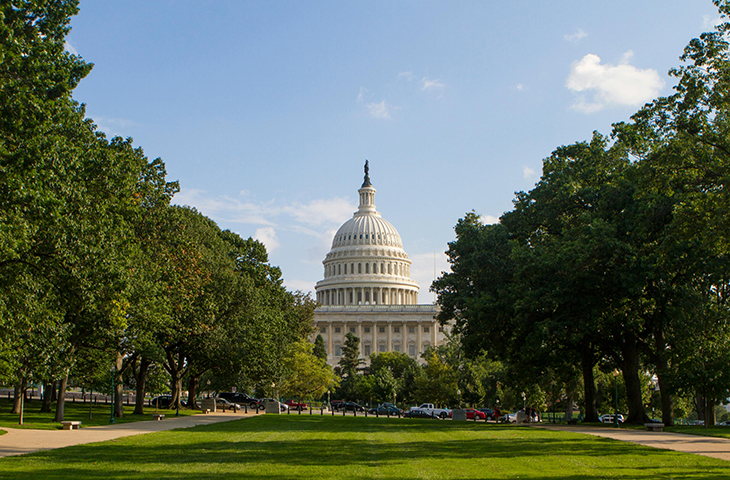
Rich people are back on the menu in Washington.
After Democrats’ resounding victory in Tuesday’s midterm elections, proposals for a federal wealth tax and other stiff tax increases on the well-to-do are roaring back to life on Capitol Hill after years of lying dormant.
Democrats don’t even necessarily care that President Donald Trump — now promising to be “Mr. Veto” — will still be in position to shoot down anything they pass. Many are already looking past him as the party builds a platform for the 2028 presidential elections, saying that they need to focus on highlighting their priorities for voters.
Democrats should also welcome a veto fight next year with a weakened Trump over taxing the rich and improving affordability, said Sen. Chris Van Hollen (D-Md.), arguing that will only help the party drive home the point with the public.
“It is essential that we show the American people where we stand,” said Van Hollen, a potential 2028 presidential contender. “If Trump vetoes it, it will just show people that he’s on the side of billionaires.”
Democrats got a huge shot of momentum Tuesday night, winning decisive majorities in both the House and Senate, with far bigger margins for error than Republicans have enjoyed over the past two years. Moreover, the growing ranks of the ultra-wealthy have only strengthened their dreams of sticking it to the rich as artificial intelligence giants like Anthropic and OpenAI prepare to go public — to say nothing of their frequent antagonist Elon Musk becoming the world's first trillionaire.
That Big Tech is building its fortune on AI technology that's widely expected to result in significant job losses — and which voters roundly rebuked at the polls — could only supercharge Democrats’ calls for higher taxes. Beyond all that is a desperate need for revenue.
Social Security's looming insolvency will have lawmakers searching for cash, as will Democrats’ desire to show voters they are up to the task of addressing affordability. Many of their priorities, like reinstating beefed-up tax subsidies for health insurance, will be pricey, and the government’s $2 trillion deficit will force lawmakers to reckon with the cost.
“They’re going to have to figure out if and how they want to pay for those policy changes,” said Anna Taylor, a former top Democratic tax aide in the Senate. “That will be a big part of the conversation.”
Growing support and constitutional questions
The "how" part will be a huge debate among congressional Democrats.
A wealth tax, once a hobbyhorse of the left, is emerging as an increasingly mainstream idea among Democrats, even if voters are rejecting one for California. There are now multiple proposals pending in Congress, and Van Hollen and a number of other possible presidential candidates have embraced the idea, ensuring it will remain at the forefront.
Van Hollen downplayed the California measure's apparent defeat, suggesting it was impractical for one state to go it alone when wealthy people could easily avoid the levy by moving elsewhere; that's what Google co-founder Sergey Brin did when he relocated to Nevada. Democrats' proposals would be much harder to avoid.
“I think there’s growing support,” says Van Hollen. “People are recognizing that we have a tax system that allows individuals to accumulate huge amounts of wealth.”
At the same time, it’s far from clear that a majority of Democrats support a wealth tax, in part because of questions about its constitutionality.
Though the Sixteenth Amendment created an exception allowing for income taxes, an arcane clause in the Constitution requires “direct taxes” — an anachronistic term that’s typically interpreted as a tax that can’t be passed on to someone else — to be apportioned among the states, allowing them to be paid in proportion to their populations. It's a test a wealth tax would likely flunk.
Some Democrats also worry they will only exacerbate the government’s budget problems if they try to finance costly spending initiatives with a wealth tax, only to have the levy likely nixed by the Supreme Court.
Better chances this time
But senior Democrats have already started to quietly roll out ideas for other, more traditional tax hikes on the rich.
New York Sen. Chuck Schumer, expected to return in the new Democratic majority as Senate majority leader, recently proposed quadrupling a tax on stock buybacks. Sen. Ron Wyden of Oregon, now set to retake the gavel of the tax-writing Finance Committee, has a slew of proposals, including a plan to restrict wealthy investors’ use of derivatives.
“The committee will redouble its efforts to ensure billionaires pay their fair share and hold tax cheats accountable,” Wyden said in a statement Wednesday.
Rep. Richard Neal (D-Mass.), the likely incoming Ways and Means Committee chair, wants to limit how much rich people can stash in retirement accounts. Van Hollen also has proposed a sliding scale of surtaxes on people making more than $1 million, an idea that’s been endorsed by nearly half of the Democratic caucus in the Senate including moderates like Sens. Mark Kelly (Ariz.) and Angus King (I-Maine) — and already implemented by multiple states. Lawmakers could also dust off ideas that were considered, but discarded, during the Biden administration, such as increasing an Obama-era surcharge on investments.
Democrats could potentially get a measure of political cover from Republicans such as Sens. Bernie Moreno of Ohio and Rep. Tom Cole of Oklahoma, who’ve recently come out in favor of higher taxes to help fund Social Security — while stopping well short of supporting a wealth tax.
Taylor, who is now head of the Tax Policy Group at Deloitte, said it was an open question what support might look like inside the incoming Democratic caucus, which will be a lot more geographically diverse after picking up seats in places like South Carolina, Kansas and Iowa.
“It will be interesting to see if some of these red-state Democrats coming in are comfortable with some of these proposals, or if they’re going to be in a different place,” she said. “I don’t think we know yet.”
Even when Democrats controlled the entire government during the Biden administration, they only managed to push through a few major tax increases, like a new minimum tax on corporations, and none aimed squarely at high earners, thanks to objections by moderates.
“It was a huge failure,” said Alex Jacquez, senior vice president of policy at Groundwork Collaborative, which advocates for higher taxes on the rich.
But Jacquez likes their chances a lot better this time around.
“You’re going to have a more friendly caucus in both chambers to taxing the wealthy than in 2022 and 2023,” he said. And the public is with Democrats, with polls ahead of the midterms showing voters had a strong appetite to tax the richest.
“People are angry, and they are directing that anger at big corporations and the wealthy,” he said. “When it comes to public opinion, this is the best moment that you could have to raise taxes on the wealthy."
Popular Products
-
 Electronic String Tension Calibrator ...
$41.56$20.78 -
 Pickleball Paddle Case Hard Shell Rac...
$27.56$13.78 -
 Beach Tennis Racket Head Tape Protect...
$59.56$29.78 -
 Glow-in-the-Dark Outdoor Pickleball B...
$49.56$24.78 -
 Tennis Racket Lead Tape - 20Pcs
$51.56$25.78