Democrats Won Congress: Auto Tariffs And Ev Credits Are Back In Play
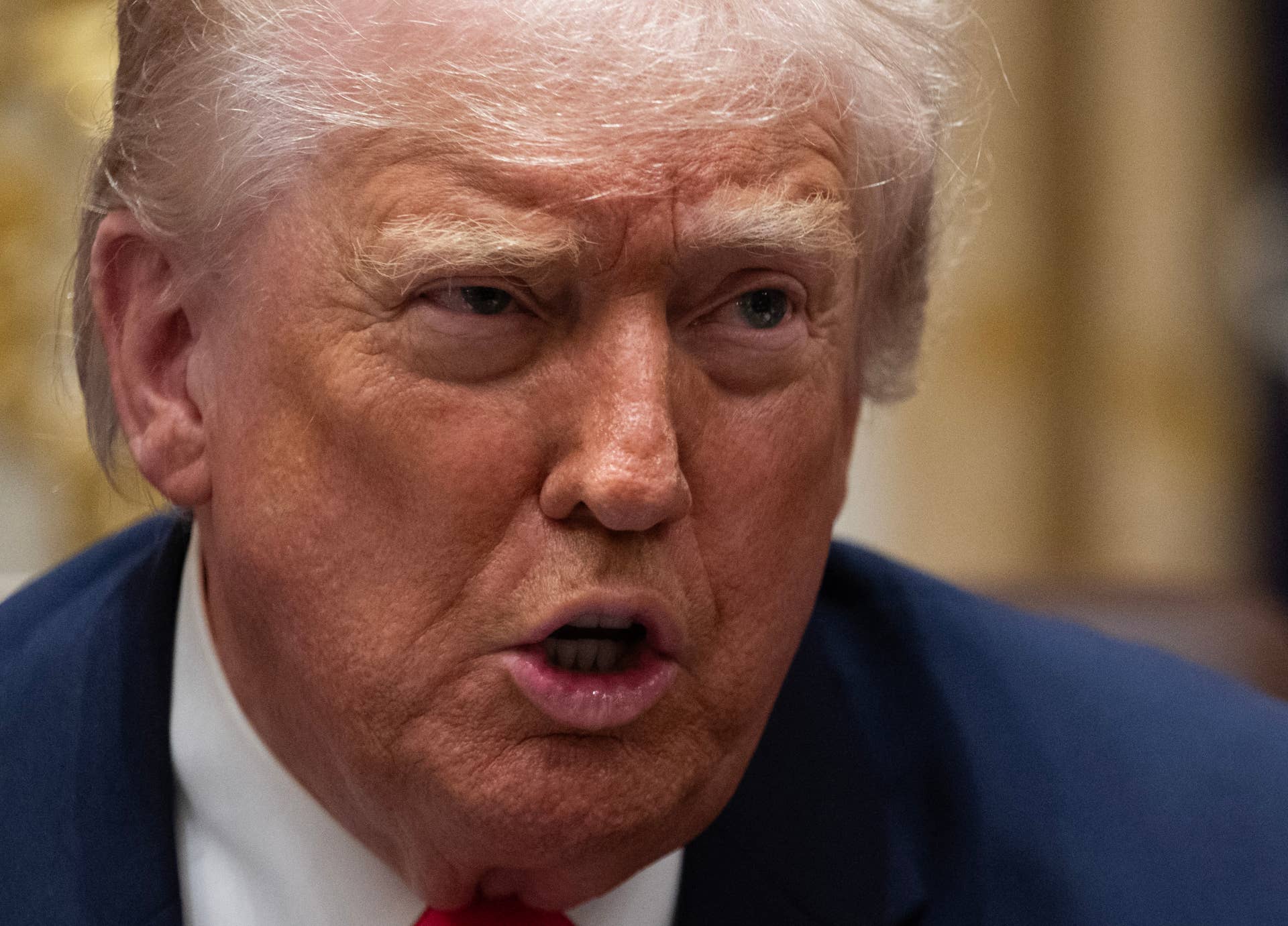
You could be color-blind and still sense the dynamic shift in American politics falling into place after Tuesday’s midterm elections, a Democratic Blue Wave sweeping out Republicans in traditional strongholds like Texas, South Carolina, Iowa and Kansas.
In the coming weeks the pundits will try to divine what led to this repudiation of Pres. Donald Trump and the MAGA movement he spearheaded. The next question is what the election results will mean in terms of legislation and policy – and whether Trump will follow through on his threat to become the “Veto President,” setting up roadblocks wherever possible.
The 120th Congress will face intense pressure to deal with issues like the Iran War, tariffs, inflation and the overall health of the economy. What – if anything – lawmakers accomplish could also have a significant impact on the auto industry.
Andrew Caballero-Reynolds / AFP via Getty Images
It’s the Economy, Stupid
Concerns about the economy have been mounting for months, especially in light of inflation – which hit an annualized rate of 3.7% in September, according to federal data. Consumers feel it every time they go for groceries or fill up their gas tanks. Gasoline is up almost 50% since the start of the Iran War. Diesel has surged even higher and that is adding to inflationary pressure since the fuel is used for everything from farm and construction equipment to last-mile delivery vans. Experts fear energy costs won’t come down until there’s an end to the Iran War which has led to the closure of the critical Strait of Hormuz, through which 20% of world petroleum supplies normally transit.
Affordability is a particularly serious problem for the auto industry as average transaction prices climb to record levels month after month – reaching just over $52,000 in October, according to tracking service Cloud Theory. Surprisingly, vehicles sales have remained more robust than expected, said Cox Automotive analyst Erin Keating, who forecasts the year will come in at 16.1 million vehicles. But that’s still well off the record 17.57 million vehicles sold in 2016, as millions of potential buyers are priced out of the market.
Tariffs and Trade
The Iran War is just one reason why vehicle prices have reached the stratosphere. A Democratically-controlled Congress is likely to seek ways to force the president to roll back the tariffs that have added to production costs. While Trump’s trade war impacts vast sectors of the economy, he has put particular emphasis on the transportation sector with hefty tariffs on not only imported autos and auto parts but the foreign-made steel and aluminum used in virtually every vehicle assembled in the U.S.
Related: Your Next Car Could Cost Nearly $1,000 More as Material Prices Surge
As with the Iran War, however, it’s uncertain what, if anything, Congress will be able to do. Short of some unlikely compromise they’d be forced to modify or eliminate existing trade legislation. And, on the trade front, Congress is likely to put pressure on the White House to finally wrap up negotiations over the U.S.-Mexico-Canada Agreement. The trade pact originally inked during Trump’s first term maintained decades of relatively open trade borders between the three countries. The lack of clarity as talks drag on has made it difficult for automakers to lay out mid to long-term investment strategies. Getting an update to USMCA in place is critical, said Keating who added that, “Automakers want something solid and stable, something they can plan against.”
Honda
Clearing the Air
The environment is a subject the president has addressed repeatedly through his many Executive Orders. These include a controversial rollback of the Corporate Average Fuel Economy mandates of more than 50 mpg set in place under former Pres. Joe Biden. New legislation could attempt to reinstate that target which, in turn, “would effectively force the industry to come up with more efficient vehicles, including hybrids and EVs,” said Sam Abuelsamid, lead auto analyst with Telemetry Research. Research has repeatedly shown Americans demanding better mileage. But it’s unlikely such polls would get Trump to reverse his stand.
Congress also could seek to force the administration to collect the billions of dollars in fines automakers technically owe for missing their CAFE targets. The White House has decided not to seek payment.
Separately, lawmakers might try to reinstate the incentives of up to $7,500 for EV buyers that were phased out by Congress last year under the so-called One Big Beautiful Bill Act Trump signed into law on July 4, 2025. The new House and Senate majority might also press to continue spending federal funds previously allocated for a nationwide EV charging network.
The Veto President
Whatever the new Congress chooses to do faces the reality of Constitutional checks and balances – here the equivalent of an irresistible force running headlong into an immovable object.
None of the more dire scenarios outlined by White House critics – such as the placement of federal troops at polling stations – played out on Tuesday. Few observers now see the likelihood that newly elected lawmakers will have trouble taking their places on Capitol Hill come January. But that doesn’t mean the new majority will simply flip the direction that the federal government has taken under Trump.
Indeed, after recognizing the extent of the Democratic victory on Tuesday night, the president posted an image on his Truth Social media site showing a MAGA-red hat emblazoned with a single word, “VETO.”
Bringing Back Bipartisanship
As a result, there may be “very little done” the new Congress can accomplish, said Keating, short of pressing the president to “slow down…on the use of executive power.” Vetoes can be overridden with support from two-thirds of the members of both Houses. But a Republican-led legislature failed to pull together the supermajority needed after Trump vetoed two bills during his second term.
Nonetheless, Keating sees some opportunities ahead. “We’ve seen bipartisan cooperation on China,” she noted. That could be critical if lawmakers decide to move ahead on the Connected Vehicle Security Act.
BYD
Locking Out China
At first glance, that measure is meant to codify an executive move by former Pres. Biden banning the sale of vehicles using Chinese connected car hardware and software. But, as written, it also would ban Chinese automakers from both building and selling vehicles in the U.S. The measure was sponsored by Michigan’s Democratic Senator Elissa Slotkin and Ohio’s Republican Bernie Moreno – a former car dealer – while picking up solid support on both sides of the aisle.
There’s no question automakers such as General Motors, Ford and Toyota would like to lock out Chinese brands like BYD, Geely and Chery – the latter reportedly looking to buy an existing U.S. plant to establish a beachhead. For his part, Ford CEO Jim Farley has described such a possibility as “an existential threat.”
Related: Ford Says It Can’t Keep Chinese Cars Out Forever
But don’t count on the anti-Chinese measure to pass – or even make it to a floor vote in either House or Senate. While “there is bipartisan support, I think it will be a low priority” in the new Congress, said analyst Abuelsamid. The problem is that while automakers want to lock the Chinese out, consumer surveys find strong interest in the low-cost products from brands Like Geely, Chery and BYD that could help put the brakes on rising vehicle prices.
Where the Big Changes Might Take Place
For his part, Sam Fiorani, vice president of AutoForecast Solutions believes “Democrats won’t be able to get much through” Congress and then signed into law by Trump. Most of the other analysts we spoke to echoed that concern.
That doesn’t mean we won’t see change, however. “There’ll be a lot more impact at the state level,” predicts Keating. Democrats scored well in a number of state elections, notably in Texas, one of the country’s largest automotive markets. She anticipates that could result in new legislation covering a wide range of automotive issues, including EV mandates, infrastructure, franchised dealer requirements and right-to-repair rules.
There’s no question automakers and auto buyers alike could use some legislative help. The midterm results hold out the possibility of new momentum on Capitol Hill. But Trump’s veto threat could simply result in paralysis unless at least some Republican survivors of the Blue Wave see their best opportunity is bringing back some level of bipartisanship to Washington.
Popular Products
-
 Fake Pregnancy Test
$61.56$30.78 -
 Anti-Slip Safety Handle for Elderly S...
$57.56$28.78 -
 Toe Corrector Orthotics
$41.56$20.78 -
 Waterproof Trauma Medical First Aid Kit
$169.56$84.78 -
 Rescue Zip Stitch Kit
$109.56$54.78