El Salvador’s Mass Incarceration Of U.s. Deportees
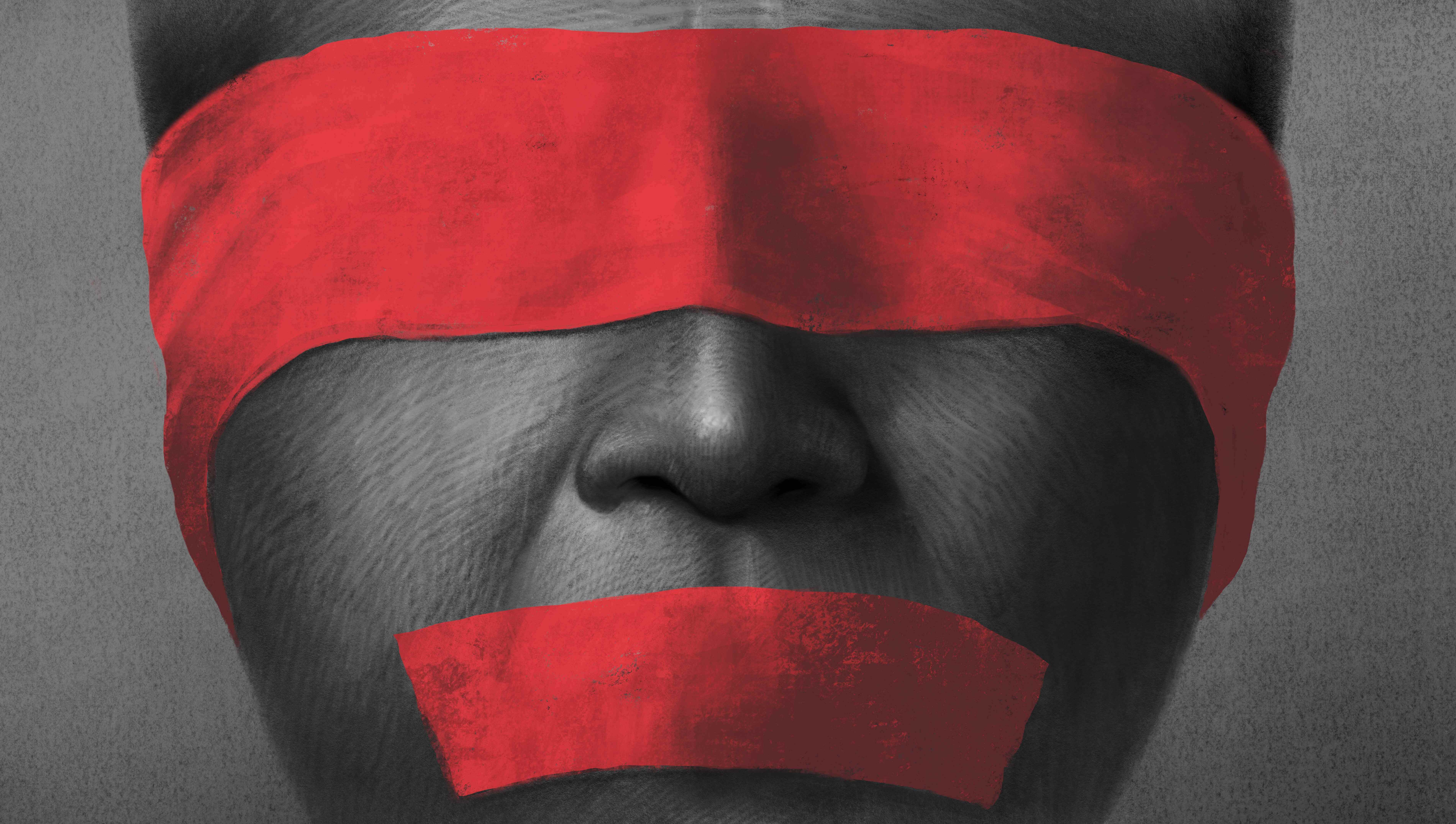
Ana paced near the arrivals terminal of the San Salvador airport, eyeing the door where deportees from the United States are released. She was there on a sweltering day in May to pick up her son, who had been detained in Texas and deported. She would drive him home, she decided, and cook him dinner. They would figure out what to do next.
But when a group of men walked out wearing ICE-issued sweatsuits, their shoelaces removed from their shoes, her son wasn’t among them. She approached a police officer, who searched his name on a tablet. “He’s being taken to prison,” he told her.
Ana, who spoke with me on the condition that I not use her real name or her son’s name, was confused. Her son, 25, did not face charges in either the U.S. or El Salvador. Ana got the name of the police station where her son had been taken. From there, she was told, he would be transferred to a maximum-security prison that has become infamous in El Salvador for the number of prisoners who have died in custody. She sped to the station and begged an officer to let her inside. “You can have five minutes with him,” the officer said, “but try to control yourself.”
The officer returned with her son, who was wearing a white shirt and handcuffs. He looked handsome, Ana thought. He had been living in the United States for four years, having fled El Salvador after being physically attacked by both gangs and police officers, according to his asylum application. Ana started crying as she hugged him. She promised to deliver food to the prison.
“This isn’t going to be forever,” he said as the officer escorted him away. She hasn’t seen or heard from him since.
A year and a half ago, Kilmar Abrego Garcia, a 31-year-old Salvadoran man, was deported to El Salvador and detained in a maximum-security mega-prison known as CECOT. Abrego’s deportation, which was in violation of legal orders, prompted a public backlash and a federal judge’s intervention; he was ultimately returned to the United States. But as public attention has shifted elsewhere, El Salvador has continued imprisoning deportees sent from the United States, including many who have not been charged with any crime. They have disappeared into the country’s black hole of a correctional system, where lawyers can’t locate them. Even though the U.S. is aware of these extrajudicial detentions, it has dramatically increased the number of people it sends to El Salvador. On most days, the U.S. flies deportees to the San Salvador airport—after which some vanish.
One person with knowledge of the deportation flights in El Salvador told me that about four people from every flight of 120 passengers are jailed. Some deportees said that even more people on their flights had been detained. The United States has roughly doubled its number of deportations to El Salvador in the first half of this year. From January to June, 9,829 deportees arrived on at least 83 flights, according to El Salvador’s migration ministry. The scale of the ongoing detention of deportees has not been previously reported.
[Read: How the Trump administration flipped on Kilmar Abrego Garcia]
When deportation flights land, Salvadoran officials board the planes and read a handful of names from a list. Those people are escorted from the plane in handcuffs and taken to waiting police vehicles. On the airport tarmac as passengers disembark, security officials pull aside other deportees who have been judged to look like gang members.
The jailed deportees remain in Salvadoran detention, unable to speak with their attorney or family, and usually without being told which crimes they’re accused of committing. Many detained deportees have been sent to CECOT. Others are transferred between other prisons across the country. The government won’t confirm for family members where people are detained or whether they are even still alive. At least five deportees from the U.S. have died in custody, according to Cristosal, a Salvadoran human-rights organization. In three of those cases, the group said, the bodies showed signs of violence or torture.
The Trump administration claims to have no responsibility for what goes on after deportees are sent to El Salvador. “Once an alien is removed from the United States, the alien is no longer in ICE custody or under ICE’s purview,” an ICE spokesperson wrote to me in a statement responding to a question about deportees being detained.
For the past three months, Ana has made frequent trips to the prison where she believes her son is detained to leave care packages of soap, food, and clothes. Officers take those packages but do not offer any information about her son’s legal status. She requested and received a signed document from the country’s justice department that says that her son “HAS NO CRIMINAL HISTORY.” (My search of public records likewise failed to reveal any history of charges in the United States.) He has been assigned a public defender, who has not been able to meet with him. The attorney told Ana that her son has been charged with “illicit association”—the generic charge leveled against prisoners who have been detained as part of the government’s crackdown on gangs. It carries a maximum sentence of 60 years.
“I don’t know if I’ll ever see him again,” Ana told me.
In 2022, El Salvador’s president, Nayib Bukele, announced a “state of exception” that would allow his government to round up large numbers of suspected gang members and jail them without charges. It was initially meant to last 30 days, but it has been extended for more than four years. In that time, Bukele’s government has made more than 90,000 arrests, representing about 2 percent of the country’s adult population. Some of those people—almost all boys and men—have been part of mass trials in which hundreds of inmates are convicted at the same time over videoconference, with no publicly available evidence presented. Some inmates are as young as 12.
The crackdown has led to a significant decline in the nation’s homicide rate and made Bukele into a popular figure not only in parts of El Salvador but also across much of Latin America. It has also made him a close ally of the Trump administration, which sees Bukele as an important part of a rightward shift across the region. But Bukele’s greatest gift to Donald Trump was his offer in 2025 to accept criminal deportees from the United States and incarcerate them in his country’s prisons in exchange for a fee. (The U.S. paid El Salvador nearly $5 million.) Bukele called it an opportunity for the U.S. to “outsource part of its prison system.” Secretary of State Marco Rubio said that the deal was “an act of extraordinary friendship.”
The first flights of Venezuelan deportees landed in San Salvador in March of last year. That month, then–Department of Homeland Security Secretary Kristi Noem visited CECOT, saying in a video as she stood before a prison cell full of silent, shirtless inmates that “if you come to our country illegally, this is one of the consequences you could face.”
Bukele boasted about the cruelty prisoners endure in his detention facilities, posting photos and videos of prisoners being marched with their heads shaved. But it quickly became clear that many of the deportees the United States was sending to El Salvador, including Abrego Garcia, were not hardened criminals. The U.S. stopped deporting non-Salvadorans to El Salvador last April. It no longer needs to; it is now sending deportees to roughly 30 other “third country” destinations, many of them much farther away, including Liberia and South Sudan. In Congress and among NGOs, the focus has shifted away from human-rights violations in Salvadoran prisons.
[Read: El Salvador’s exceptional prison state]
But El Salvador never stopped incarcerating deportees, and now it is detaining its own nationals. I spoke with nine families whose relatives have been deported since as early as March 2025 and remain in detention. Some learned of their loved one’s whereabouts only when they were spotted in the background of Salvadoran-government videos and photos. Dual U.S. citizens visiting the country of their birth have also become caught up in the crackdown, some of them apparently detained because they had tattoos that were deemed suspicious by Salvadoran authorities. In January, one Salvadoran man was deported from the United States even after a judge ordered a hold on his removal based on the United Nations Convention Against Torture, a case not unlike Abrego Garcia’s. He was detained upon arrival in El Salvador. His lawyer wrote in a July court filing that “Salvadoran authorities have transferred Petitioner between prisons, and his family has not been provided information regarding his current location, his condition, or whether he is alive.”
Gustavo Villatoro, El Salvador’s minister of justice and public security, has released the mug shots of some deportees who he says are gang members who must be detained. “In El Salvador, deported gang members do not return to the streets: here they are terrorists and go straight to jail to answer for their actions in the criminal case against the international MS13,” Villatoro wrote on X in May. Last month, a passenger at the San Salvador airport posted a video on TikTok that showed police escorting deportees off the tarmac in handcuffs.
Irvin Jeovanny Quintanilla García was deported from Texas in March 2025. But the Salvadoran government wouldn’t confirm for his family where he had been sent or whether he was in the country at all. He had not been convicted of a crime in the United States or in El Salvador. “It was like he had disappeared,” Luis Quintanilla, Irvin’s brother, told me.
Months later, Luis saw his brother in two frames of a video recorded inside a Salvadoran prison, eating lunch and standing in a prison workshop. He wore a white long-sleeve shirt and a yellow baseball cap. The family hired a Salvadoran lawyer to figure out whether Irvin faced any charges. But the Salvadoran attorney general’s office would not respond to him. The lawyer then contacted the Inter-American Court of Human Rights, a judicial body that seeks to resolve disputes across the Americas, which wrote an official letter to El Salvador’s government requesting information about Quintanilla’s case. It wrote similar letters on behalf of five other deported detainees.
In each case, the Salvadoran government responded cryptically that the deportees are being held as part of a “collaboration and sovereign cooperation” between the United States and El Salvador, and that El Salvador is acting only as a “receptor state” while the U.S. maintains “penal jurisdiction” over the cases. Neither the U.S. nor El Salvador has explained what that means. Out of desperation, Quintanilla’s mother, who was living in the United States at the time of Irvin’s deportation, returned to El Salvador to search for him. She is now dropping off her own care packages once a month at the prison where she believes he is being held. “But we don’t know for sure that he’s there,” Irvin’s brother said. “They won’t tell us anything.”
Sarah Bishop, a professor at Baruch College, serves as an expert witness in the asylum hearings of Salvadorans. Since the start of the state of exception in 2022, she has interviewed the family members of 30 Salvadoran men detained after their deportation. Only one has been released. In a recent case, she told a U.S. immigration judge that based on a man’s criminal record, tattoos, and history of interactions with MS-13, he was “exceedingly likely” to be jailed by Salvadoran police if he was sent back. The judge denied the case, and the man was deported this past summer. Bishop spoke with the man’s family a few days afterward. As she predicted, the man had been jailed upon arrival.
Although it’s difficult to know the exact criteria that Salvadoran security officials are using to determine which deportees to detain, at least some of that information appears to be coming from the United States. In 2014, the two countries signed a memorandum of cooperation that would allow the U.S. to share the criminal history of deportees. At the time, ICE said that it was meant to help El Salvador “categorize and monitor repatriated criminals for domestic purposes.” But under Bukele, the information is being used to justify detaining deportees, even if they have no outstanding arrest warrants.
[Read: What the deported Venezuelans went through in El Salvador]
When Bukele has been accused of jailing innocent people or overreaching in his crackdown, he has pointed to the country’s security gains. “I don’t care if they call me a dictator. I’d rather be called a dictator than see Salvadorans being killed in the streets,” he said last year.
The families of the imprisoned deportees continue crisscrossing the country to locate their loved ones. Some have formed a WhatsApp group called “Families in search of justice” where they exchange information about their children’s cases or whereabouts. But there is rarely new information. So instead, the families vent their anger and appeal to a higher power.
“They will pay for every innocent person who suffered at their hands,” one mother wrote earlier this month.
“I pray for a miracle from God,” another responded.
Popular Products
-
 Classic Oversized Teddy Bear
$23.78 -
 Gem's Ballet Natural Garnet Gemstone ...
$171.56$85.78 -
 Butt Lifting Body Shaper Shorts
$95.56$47.78 -
 Slimming Waist Trainer & Thigh Trimmer
$67.56$33.78 -
 Realistic Fake Poop Prank Toys
$99.56$49.78