How A Diplomatic Snub Evokes The Complicated Us-brazil Relationship In The Second Trump Era
Darren Beattie, the recently appointed U.S. State Department senior adviser for Brazil policy, had planned to attend a forum on critical minerals in São Paulo in mid-March. But his visa was denied.
The reason had nothing to do with U.S. policy on critical minerals. Rather, Beattie reportedly had plans to make a detour to Brasilia to visit former President Jair Bolsonaro. The right-wing politician, a longtime ally of President Donald Trump, has been in jail serving a sentence for attempting to prevent his successor, President Luiz Inácio Lula da Silva, from taking office. On March 25 it was announced that the Brazilian Supreme Court will allow Bolsonaro to serve out the rest of his sentence at home, due to ill health.
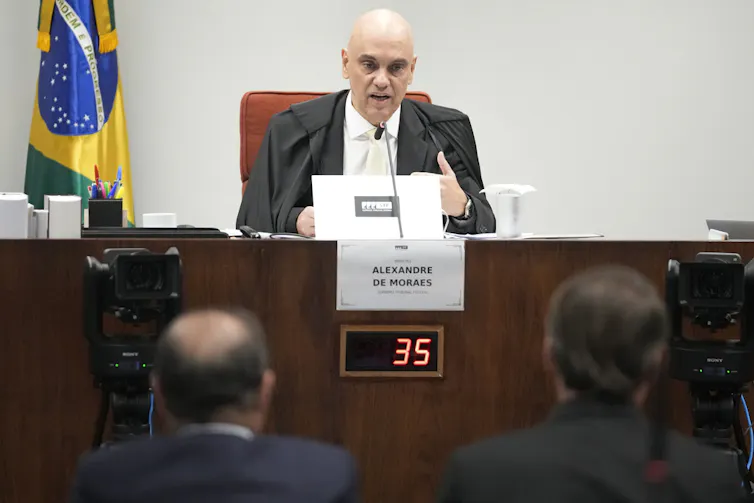
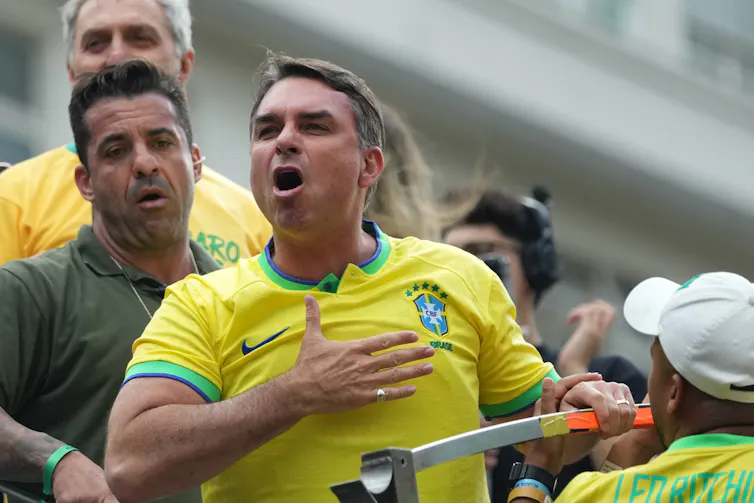
Supreme Court Judge Alexandre de Morães, who oversaw Bolsonaro’s trial, denied Beattie’s visa after consulting Brazil’s foreign ministry, which said the visit could amount to “undue interference” in the country’s internal affairs, given that 2026 is an election year. Bolsonaro cannot run for office, due to his criminal conviction, but his son Flávio is the most popular likely opposition candidate. Beattie is a known critic of Lula and Morães and has praised Bolsonaro as representing “exactly the type of nationalism that we want and support.”
Lula, for his part, later claimed that the block on Beattie’s visa was payback for the Trump administration’s refusal last year to give a visa to Brazilian Health Minister Alexandre Padilha.
As a professor of Latin American politics, I believe the Beattie episode is important given what it reveals about strained U.S.-Brazil ties since Trump’s reelection. Specifically, that relationship has been wrapped up with the U.S. administration’s broader support for Brazil’s former leader and his right-wing base. From the standpoint of Lula’s government, the latest U.S. actions are another instance of meddling in the country, particularly in the lead-up to presidential elections in October.
The Trump-Bolsonaro pipeline
To some observers and critics, the Trump administration’s foreign policy is about dismantling the alliances that propped up the post-World War II international order. But the policy goes beyond that to support authoritarian national-populist movements around the world.
Indeed, many officials in the Trump administration still accept Jair Bolsonaro’s narrative that his criminal conviction at the hands of the country’s Supreme Court is a form of “lawfare” aimed at repressing him for what he says rather than what he did. The official police and legal record, on the other hand, paints a much more damning picture of Bolsonaro’s participation in a coup plot.
Yet Trump has long echoed the allegations of improper targeting of Bolsonaro, including when he imposed punitive 50% tariffs on a range of Brazilian exports to the U.S. in July 2025.
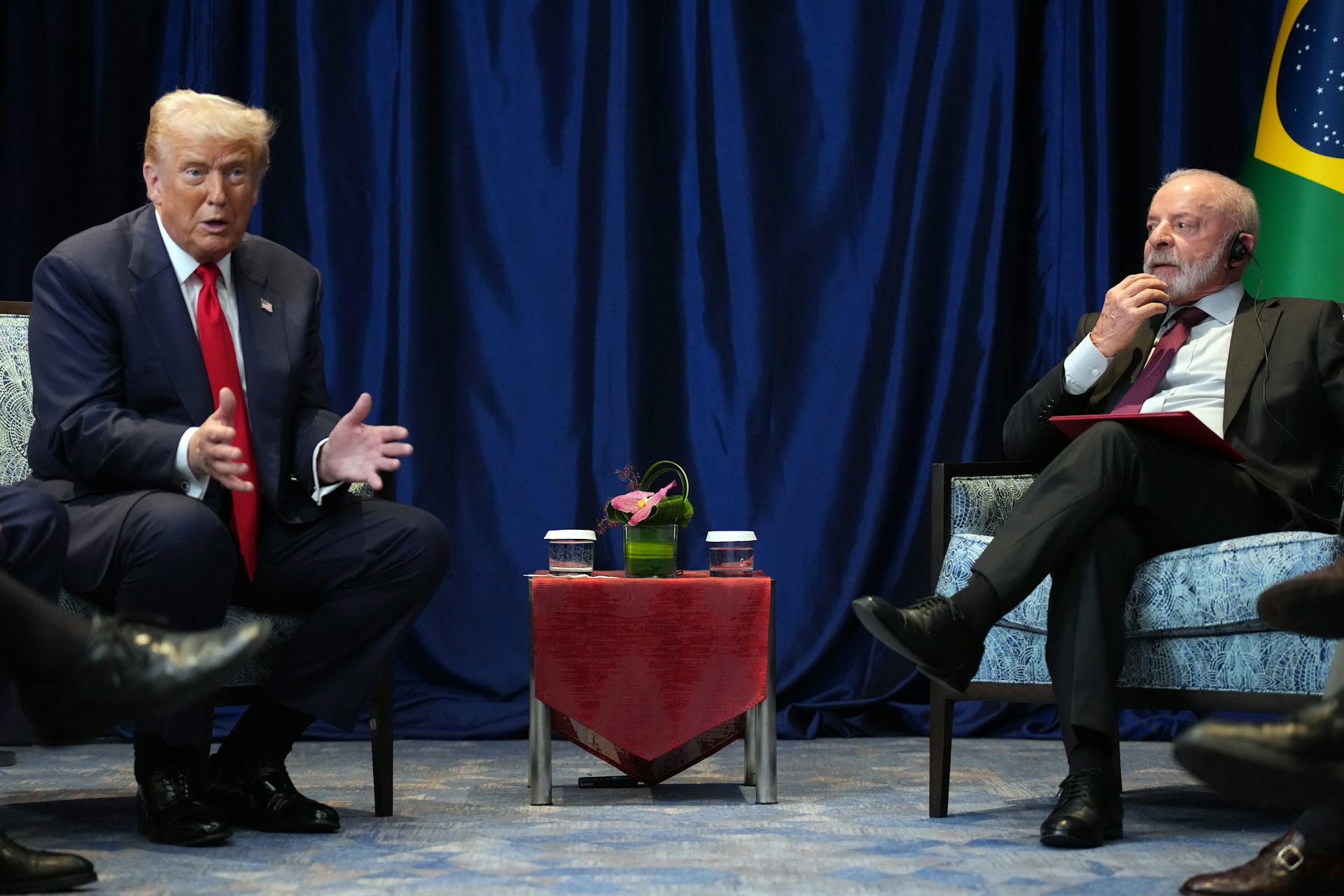
Those tariffs were later reduced on many products, and the U.S. Supreme Court invalidated them in a February 2026 ruling. Furthermore, Trump and Lula engaged in a later rapprochement of sorts, which included the Trump administration’s decision to lift sanctions on Morães.
Yet the kerfuffle over the Beattie visa shows there remains a fundamentally antagonistic relationship between elements of the Trump and Lula coalitions, despite recent improvements in the two countries’ diplomatic relations.
Lula is expected to visit Trump in Washington, D.C., sometime in the near future, and assuming that remains on the agenda, what happens there will be carefully watched for clues about where the bilateral relationship stands.
Brazil’s fears of Washington’s meddling
For the Lula administration, the episode with Beattie is part of a much greater concern that the Trump administration could try to tip the scales of the October 2026 presidential election in Brazil.
The fear is hardly without recent precedent. In 2025, Trump extended a bailout to Argentine President Javier Milei, a Trump ally, including a US$20 billion currency swap that buoyed the economy and helped Milei’s far-right party Liberty Advances do well in the October legislative elections.
Meanwhile in Honduras in December 2025, the Trump-backed candidate Nasry Asfura won a tight presidential election, helped by Trump’s declaration that there would be “hell to pay” if Asfura’s small lead was overturned in the vote count.
Those cases are to say nothing of the explicitly militarized forms of coercive power the Trump administration has used in Venezeula with the abduction of President Nicolás Maduro, or the oil embargo imposed on Cuba as a way to undermine the government there.
These interventions provoke fear among Lula supporters in Brazil and evoke memories of an earlier age of U.S.-backed authoritarianism in Brazil.
Part of the concern is that America’s bitterly polarized society and concerns over the rise of authoritarian politics mirrors Brazil’s own situation. A Genial/Quaest poll from early March 2026 shows a statistical tie in electoral support for Lula of the Workers’ Party and Flávio Bolsonaro of the Liberal Party.
Beattie, too, serves as a kind of proxy for the politics that Trump represents – and that Lula aims to prevent in Brazil in the form of Bolsonarism. Before landing a job in the current administration, Beattie was fired from the first Trump administration for attending a conference at which prominent white nationalists, including Richard Spencer and Peter Brimelow, were also present.
Later, Beattie helped found the pro-Trump conservative Revolver News, and he has a long history of making what critics have framed as inflammatory remarks and promoting conspiracy theories.
The clash between ideology and pragmatism
It is unclear whether a pragmatic approach will prevail in U.S. policy toward Brazil.
At present, there are elements of such an approach in U.S. policy toward Venezuela. The Trump administration is happy to negotiate with the Delcy Rodríguez government as long as it receives Venezuelan oil exports. While Lula and other critics have castigated the Trump administration’s removal of Maduro from power, the current U.S. policy of dealing with the remaining Chavista leadership in Venezuela — albeit on terms favorable to the U.S. — signals a degree of pragmatism.
In Brazil, the Trump administration has ample reasons for making deals with Lula, including to gain access to the country’s critical minerals, such as niobium, lithium and cobalt. Brazil has an estimated 20% to 23% of the world’s rare earth minerals, and U.S. government officials and investors are very interested in these deposits.
It could be that the personal relationship between Trump and Lula and the economic interest of the U.S. in Brazil’s critical minerals cause the Trump administration to stay neutral in the October presidential election.
On the other hand, the Lula administration, consistent with a long-standing concern in Brazilian diplomacy to maintain autonomy in its dealings with other countries, is reluctant to sign an exclusive agreement with the U.S. on critical minerals. That concern was on display earlier in March, when no Lula administration officials attended a U.S. Embassy-hosted summit on critical minerals in São Paulo.
Moreover, Brazil will likely continue to resist any U.S. pressure to diminish its trade relationship with China.
The Lula administration is also alarmed that the Trump administration might classify two of its organized criminal groups – the Primeiro Comando da Capital and Comando Vermelho – as terrorist organizations. Such designations have formed a key basis of recent aggressive American actions across the hemisphere, and some in Brazil fear they could be extended to their country, too.
There is other evidence, however, that aggressive anti-Lula and pro-Bolsonaro officials in the Trump administration, such as Beattie, would like to tip the scales in favor of the opposition in the October elections.
Beattie’s schedule in Brazil had included a meeting with the likely presidential candidate Flávio Bolsonaro, discussions with Brazilian government officials about court decisions to block social media accounts, and meetings with civil servants at the Superior Electoral Court in order to better understand Brazil’s electronic voting system.
This agenda raised concerns that it could form a pretext for later allegations that the 2026 election was fraudulent and that Brazilian voters’ free speech rights were infringed by the judiciary. Such allegations were made by supporters of Jair Bolsonaro, and Beattie too, in the wake of Brazil’s 2022 election.
All of this exposes the delicate nature of current relations between the U.S. and Brazil, two politically polarized countries with recent histories of democratic backsliding whose right-wing populist movements are closely intertwined.
If Lula comes to Washington as planned, he is likely to have much to discuss with Trump.
Anthony W. Pereira received funding from the British Academy and the ESRC in the past. He is not currently receiving research funding from any government or private organization.
Popular Products
-
 Adjustable Shower Chair Seat
$107.56$53.78 -
 Adjustable Laptop Desk
$91.56$45.78 -
 Sunset Lake Landscape Canvas Print
$225.56$112.78 -
 Adjustable Plug-in LED Night Light
$61.56$30.78 -
 Portable Alloy Stringing Clamp for Ra...
$119.56$59.78