How Jeff Bezos Broke The Washington Post
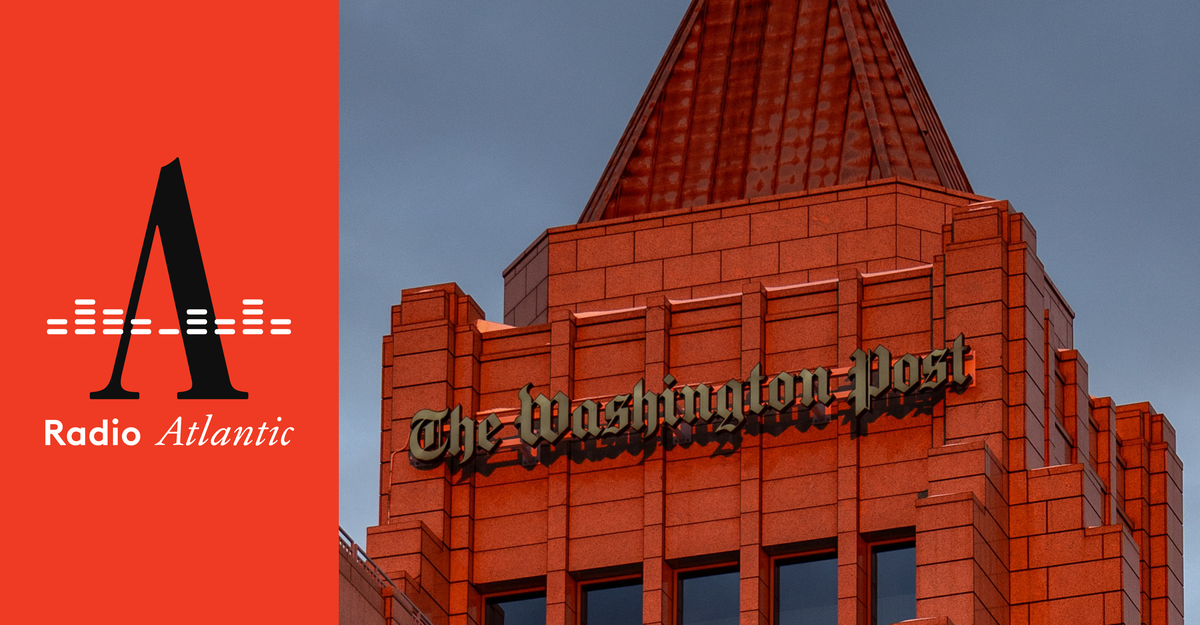
Subscribe here: Apple Podcasts | Spotify | YouTube | Overcast | Pocket Casts
In the first blush of their relationship, The Washington Post and Jeff Bezos seemed like an excellent match. Here was a paper with a strong pedigree that had fallen on somewhat hard times, and a suitor with funds who seemed eager to return it to steady glory. In 2013 Bezos purchased the paper for $250 million from the Graham family and promised a “golden era” to come. I had left the Post by then but was happy for my former colleagues. When Donald Trump took office a few years later, it was a relief to know that a journalistic institution with a record of holding White House misdeeds to account was still close by.
Yesterday, in a dismal morning Zoom call, the Post’s executive editor, Matt Murray, announced that they were laying off one-third of its already diminished staff. The follow-up email had the tone of robotic obfuscation that any decent editor would have rewritten. (“Following up on today’s communication, I’m writing to share the difficult news that your position is eliminated as part of today’s organizational changes.”) It’s of course painful, as a journalist, to see fellow journalists get laid off. It’s painful, for anyone alert to the moment, to know that one of the last remaining expert watchdogs is hobbled. It’s maybe most painful to know it could have been avoided.
In this episode of Radio Atlantic, I spoke with Joshua Benton, the founder of and a senior writer at the Nieman Journalism Lab at Harvard University. Benton has closely watched the media business for years. He explains how the newspaper reached this point, the loss to journalism, and how the future of the Post is ultimately up to Bezos.
The following is a transcript of the episode:
Hanna Rosin: Seven years ago, around this time, The Washington Post ran an ad in the Super Bowl: “Democracy dies in darkness.” It showed scenes of fires, explosions, floods, tanks—and journalists who’ve risked their lives for their profession.
All with swelling music and a voice-over by Tom Hanks.
Tom Hanks (in a Washington Post commercial): Knowing helps us decide. Knowing keeps us free.
Rosin: But then just before the Super Bowl this year, the Post took a different turn. And it was not another Super Bowl ad.
Matt Murray: Good morning, everybody. Thank you for joining us.
Rosin: On Wednesday, Post staffers joined a Zoom call first thing in the morning. Executive editor Matt Murray spoke first.
Murray: This meeting, for our newsroom, I wanna share that the actions we are taking include a broad strategic reset with a significant staff reduction.
Rosin: The paper would be making massive cuts: closing the Sports department …
Murray: Unfortunately, we are grappling, and have been, with, just, major changes in the way sports news is delivered, shared, and experienced across the industry.
Rosin: Downsizing their Metro desk and International desk.
Murray: … shrinking our international footprint.
Rosin: One of their reporters based in Ukraine posted to X: “I was just laid off by The Washington Post in the middle of a warzone.”
Murray: We will continue to have a strategic overseas presence in close to a dozen locations …
Rosin: The entire Books department at the Post was cut.
Murray: We’ll be closing the Books section.
Rosin: A suspension of their daily news show.
Murray: And we’ll be suspending the Post Reports podcast.
Rosin: Every single department would be impacted.
Murray: As I said before, these moves are painful. This is a tough day.
Now I want to turn it over to Wayne Connell, and Wayne will be sharing more about the next steps in today’s timeline.
Wayne Connell: Thank you, Matt. In the spirit of providing clarity, after our call, I will send each of you an email. The subject line will either say, “Your role is eliminated by today’s workforce reductions” …
Rosin: In less than 30 minutes, a historic journalistic institution cut its staff by almost a third, after two previous rounds of punishing layoffs.
This was the home of the Watergate investigation.
Richard Nixon: Interests of the nation must always come before any personal consideration.
Rosin: Publisher of the Pentagon Papers.
Henry Kissinger: … whole file cabinets can be stolen and then made available to the press …
Rosin: Winner of dozens and dozens of Pulitzer Prizes.
Announcer: And the prize goes to The Washington Post.
Rosin: Just to break that down: a paper in the backyard of the White House and Congress that has, many times, uncovered people in power lying or grifting, or failing to do their jobs in ways that affect every single American, whether or not they live in D.C.
Not to mention all the work their reporters have done in Ukraine, and China, and the Middle East and anywhere else in the world where crisis might be brewing
I’m Hanna Rosin. This is Radio Atlantic.
There are only a handful of mainstream national journalistic institutions left with this kind of robust infrastructure—experienced editors and reporters, photographers, foreign correspondents—who can expertly monitor people in power. Particularly at this moment in American history, when those people seem to be grifting and lying in new and elaborate ways.
Whose fault is this? Why does it matter? We talk to Joshua Benton. He’s a longtime newspaper reporter and the founder of a senior writer at the Nieman Journalism Lab at Harvard University, where he writes about the media business.
Josh, welcome to the show.
Joshua Benton: Thanks for having me.
Rosin: So you cover the media business; you have for a long time. You are not new to this kind of industry news. What was your reaction to the layoffs at the Post?
Benton: Well, there have been a lot of systemic difficulties in the newspaper business as long as I’ve been reporting on it. There is a large secular decline that has been brought about by the internet that has continued on without too much change. But I think the story of the Post is a very unique-to-the-Post story. It’s fundamentally about one man, Jeff Bezos, and his changing vision of what the role of the owner of a major American newspaper should be.
Rosin: So you said two different things: It’s Post-specific and it’s also related to this giant in our culture, Jeff Bezos. I mean, I know why the news resonated with me—because I’m a journalist. I live in Washington. I worked at the Post. I have many friends there.
But I can imagine people who are not in any of those categories reading this news and thinking: Layoffs happen all the time, especially newspaper layoffs. This paper still exists, even though with less staff.
So why should they care? Why is it significant for people who don’t live in Washington, aren’t journalists?
Benton: Well, for one thing, The Washington Post has always been a paper whose editorial importance was not limited to the city or to the district. It’s a national outlet. It’s one of the two largest national newspaper outlets.
It covers the happenings in Washington, D.C. Certainly there’s lots of stories to cover there. So to the extent that we have any decrease in the number of people who are paying attention to what’s going on, I think that’s a loss.
It’s also a retrenchment from what Jeff Bezos first seemed to pledge when he first purchased the paper, in 2013, which was that he would not be looking to the newspaper as a source of money. He has enough money from lots of other sources. He did seem to take seriously the idea that he was a steward of an institution, the way that the Graham family that he purchased it from had always viewed the role of being in charge of this institution that mattered to the city and to the country.
And it’s certainly true that The Washington Post has lost money and is, has declined in a number of ways financially. It’s also up to Jeff Bezos whether or not he is going to support a newspaper that is going to be robust journalistically and ambitious digitally, or whether or not he has grown tired of it and decided to step back his investment in the property.
And I think what’s troubling in this particular change is, you’re seeing what had been an institution that had really benefited from his ownership for a good long time that seems to have gone into reverse in a way that particularly aligns with the way that the political winds in Washington have blown for the last few years.
Rosin: So it sounds like what you’re saying is the reason this is significant for everybody is because how Bezos changed his mind and changed his attitude towards the paper. So can you say a little more about that? What about his change of heart is important or strikes you as important?
Benton: We saw a confluence of events in the fall of 2024 around President Trump’s second election that I think were very telling. You had, in October, Bezos making a decision on behalf of the newspaper to stop endorsing candidates for president at a time that the newspaper would have certainly been expected to—and the editorial board of the newspaper had desired to—endorse Kamala Harris. Bezos put out a statement saying that actually it’s an awful idea for a newspaper to endorse a presidential candidate, because it creates the perception of bias. And we need to have a newspaper that doesn’t sully itself with a presidential endorsement.
Almost immediately that led to a huge negative impact to the paper’s bottom line because more than 250,000 existing subscribers canceled their subscriptions, and that’s the lifeblood of a modern-day media company. Not long after that, he announced that he was going to be shifting the way that the opinion pages of the paper functioned. He would potentially be eliminating most of the left-of-center perspectives in exchange for a focus on what he called “personal liberties and free markets.” He said explicitly, We will cover other issues besides personal liberties and free markets, but we will not be running any opinions that are in opposition to those.
He never really explained which personal liberties he was especially interested in, but it became pretty clear in the coming months that he was trying to shift the Post’s editorial page and opinion section more to the right, more aligned with the new Trump administration. And in the middle of that, you had the instance of Jeff Bezos appearing at Trump’s inauguration. You had the much-discussed, recently, purchase of the Melania Trump documentary at far-above market rates in a way that has been perceived by some to be something of a bribe.
You saw in this very short period of time a shift from the Post being an establishment—an institution—that was a potentially a powerful source of constraint on any presidential administration, but in particular this one, to the Post being perceived to be traveling along with the political winds.
Rosin: So it sounds like your analysis is very Bezos focused, because you could parse the blame for what happened on a few different places. It could be ownership—Jeff Bezos, management, just the state of the industry, the product itself. But you are focused on Bezos.
Benton: One thing that Jeff Bezos knows probably better than anyone else is that digital industries tend to focus around one big winner. I mean, Amazon.com is the perfect example of this. You went from a universe of having lots of diverse small retailers in the physical world, in malls and on main streets, to having one giant that dominates the online-retail business and doesn’t allow much else to thrive outside of it in a lot of cases. That same phenomenon happens in the digital news business. It’s just that, in digital news, The New York Times is Amazon.com. They are the giant that has been able to become overwhelmingly central to the way that the digital-newspaper business works. So in that context, the self-inflicted wounds that I would argue Bezos has caused the Post to suffer were particularly damaging because it was not competing from a position of strength. It was starting off from a position of relative market weakness.
Rosin: So initially we were talking about ideological factors, like a desire to curry favor with Trump, or at least not to irritate Trump. It sounds like now you’re talking about more, sort of, financial reasons. I mean, that suggests that, what, he’s a bad businessman?
Like, we don’t think of Jeff Bezos as a bad businessman. What does that suggest?
Benton: Jeff Bezos has not historically been very involved in the management of The Washington Post. He took a very hands-off approach to management. He was not, you know, meddling in editorial decisions. He was, in a lot of ways, for the first decade or so, a pretty ideal hands-off owner for the Post who put investment into the paper, who allowed its newsroom to grow, allowed, you know, a digital-subscription strategy to thrive.
But I don’t think at any point it has been a central part of where his business instincts have been focused. I wouldn’t view his ownership of The Washington Post as primarily a business transaction.
I think you could look at the first portion of his ownership as something approaching a philanthropic goal. And I think you can look at the last couple of years primarily as trying to meet a political goal.
One of the side effects of the changes that he made in 2024 or 2025 is that it drove away an enormous number of talented journalists, including to places like The Atlantic. One reason that the Post has struggled editorially over the past year is that they lost a lot of their best reporters, their highest-profile reporters who were the best source in the White House, in Congress, in places where, you know, the stories that a newspaper can break that gets you attention, that proves to your subscribers the value of the subscription they’re paying for.
The people who produce those stories often weren’t working there anymore. And the stories that they would have been writing, breaking, that would’ve been proving the value of a digital subscription to the Post—they just weren’t getting reported.
Rosin: So this is what—when people say a “death spiral” for news outlets where you have a shrinking business, leads to a downsized product, which leads to more shrinking business. Is that where the Post is now?
Benton: The biggest shift in the financial model of newspapers that has occurred in the transition from print to digital is a decreasing reliance on advertising and an increasing reliance on direct payments from subscribers. When newspapers had something closer to a monopoly on the distribution of information every day, they were able to charge very high advertising rates and they had mass audiences.
And it was a business that worked extremely well for them for a long time. Under the print model, an American newspaper usually made about 80 percent of its money from advertising and only about 20 percent from readers buying the paper or subscribing to the newspaper. In the shift to digital, the advertising money has largely gone away, to companies like Google and Facebook, and newspapers are increasingly reliant on subscriber revenue, especially, now, digital-subscriber revenue since that’s where the audiences are.
And to succeed in a digital-subscription world, you need to convince people why they should still pay for you every month when they’re also paying for Netflix and they’re also paying for Amazon Prime and they’re also paying for the long list of subscriptions that litter, you know, the credit-card bills of probably everyone listening to this.
That is a competitive marketplace where news organizations have a real editorial burden to prove their merits over and over again, and that means that a relatively small decision, like we’re not going to endorse someone for president can have a really outsized impact because it creates, for a quarter-million people, a reason to suddenly say, You know what? It’s not worth the 10 bucks a month, the 15 bucks a month that I’m paying if they’re gonna be doing something that I find so much in opposition to my point of view.
Rosin: After the break: Should people have really expected anything better from Bezos? And should all those people really have canceled their subscriptions? That’s in a minute.
[Break]
Rosin: In retrospect, now that I hear you talk and see how important that moment was when hundreds of thousands of people canceled their subscription, it was an act of protest, but now I feel like, were they protesting against the right thing and for the right place? It’s like shooting yourself in your, you know, civic-participation foot. It just doesn’t seem like they were aiming at the right target there.
Benton: Yeah, you saw at the time, when people were canceling their subscriptions, you would see on social media reporters from the Post saying: please don’t cancel the Post. We understand that you may, may not like the decision that was made by our owner, but it’s your money that allows us to keep operating, to allow us to still have jobs.
So there is a real tension there. But at the same time, for me, it’s very difficult to describe what happened at the Post as primarily a market-driven phenomenon.
The amount of money that the Post is losing is enormous to you or to me. To Jeff Bezos, it is nothing. His net worth in the past year has gone up enough to continue to pay for all the money that The Washington Post is losing for the rest of his life and the rest of his children’s lives and the rest of his grandchildren’s lives.
His wealth is at such a scale that there is no reason that a set of cuts like the one that we’ve seen this week is an economic necessity. It’s a choice.
There are enormous negative financial things happening in the digital-news business more broadly, but I think that is distinct from what is happening to The Washington Post, because that is one man’s choice fundamentally.
Rosin: And do you think that’s a reasonable expectation you’re making of Jeff Bezos? Like, he’s a businessman, and so: Why should we expect him to behave differently than the many negligent owners of many newspapers who I’m sure you’ve tracked over the last decade-plus?
Benton: You know, that’s a very reasonable question. I’d say the reason I would expect different is because he acted differently. The Washington Post was never a source of profit for him in any significant way.
When Bezos first bought the Post, in 2013, one way I’d thought about it was: There aren’t many things that a man that wealthy and that powerful can do to change something in the first few paragraphs of his obituary. When Jeff Bezos dies he will be described as the founder of Amazon.com, who, you know, created one of the great fortunes of all time.
You know, if he takes mankind to another planet, perhaps that would show up there as well. (Laughs.)
If he had saved one of the most important journalistic institutions in America, that would be another thing that would show up in those first few paragraphs, perhaps. There are reasons for someone with that much wealth to invest in something that they think is good for society, good for civilization, good for the country.
And the way he spoke when he purchased the Post was filled with language of, I’m giving you runway. I’m not a shareholder you have to pay in the same way that a publicly held or hedge-fund-purchased newspaper company would have to.
And it was the fact that that was his stance for so long, for a decade, that makes this transition, I think, somewhat jarring to people within the Post and people who read the Post.
Rosin: So it seems like the Post was struggling when Bezos bought it, and the layoffs seem to indicate it’s struggling now. But it did seem to be doing well at one point in his tenure. What made that possible, and what changed?
Benton: So our insight into the financial condition of the Bezos-era Post is really limited, because, as a privately held company, they don’t have to report any numbers to shareholders or regulators. It certainly was true, though, that they benefited starting around 2017 with the “Trump bump” that helped a lot of news organizations.
Once Trump was elected in this very unusual new federal government came into place, there was a huge increase in interest in national news that sort of raised all boats, and the Post certainly benefited from that because they were, along with the Times, one of the premier operations that was covering what was happening in Washington during this very unusual time.
So they had a huge increase in the number of subscribers that they had. They reached a peak, they reported, of around 3 million digital subscribers, which was the third-highest in the country behind the Times and also The Wall Street Journal. They were breaking stories left and right. When Bezos first appeared, he was willing to invest into increasing a lot of positions within the newsroom, adding a lot of people on the product side and on the digital side of the operation. It was a good time to be at the Post.
They also happened to have a very good editor at the time, Marty Baron, and they were blessed with the first Trump administration as a story to cover. There certainly is a universe in which you could have imagined a second Trump administration providing that same sort of bump or at least a smaller version of it to the Post.
But this is, one of the other unfortunate things about the timing is that at the exact moment that this second Trump administration was beginning was right when Jeff Bezos had shot themselves in the foot by not endorsing the presidential election and causing these 250,000 subscribers to cancel and making this pivot into having the Opinion section only be about “free markets” and the promotion of what he considers to be “personal liberties.”
I think there really was an opportunity for the Post to have another good stretch, editorially and financially. And I think you can point to some decisions that Bezos made as reasons why that didn’t happen.
Rosin: I mean, one question is, do you get the sense that the tech crowd thinks that journalism done by humans just doesn’t matter that much? Like, it’s the opposite of our future.
Benton: I’ve seen dozens and dozens of tech companies and start-ups and AI companies who tend to view news as a world of inefficiencies that are waiting to be quote-unquote “fixed.”
They look at a newsroom, which hires expensive people to do a lot of manual gathering of information and manual writing-up of that information or production of podcasts or videos about that information. They see a process that they think can be rendered more efficient and can have a lot of the cost structure ripped out of it.
I’m open to technological changes that could push in that direction. If they find wonderful ways to create that universe, you know, I’d love to hear about it. At the same time, I think, at a time that we as a society are increasingly concerned about the role of a few large technology companies and AI algorithms that we don’t have a lot of insight into, the amount of control that those institutions seem to have on very fundamental elements of the way information gets distributed, the way that the economy works—I think there’s a real disconnect in values there that I think would be pretty difficult for anyone to navigate.
Rosin: Let me just try this on you. Like, is there some alternate way that you can imagine holding government accountable? I guess I’m asking: Is journalism irrelevant? Like, is there any other way to create an informed citizenry?
Are we clinging to something that just, you know, isn’t gonna last?
Benton: Gosh, that’s dark. (Laughs.)
Rosin: I know it’s a terrible question. I’m just trying to elicit the best argument for why anyone should care about what you even are describing as this thing that has totally different values than this other thing. And I understand this other thing to have most of the money and you know, to have, for a long time, kind of shaped our culture.
Benton: But at the same time, if you look at a place like Minneapolis and you look at the power that video images of things happening in the streets, to someone like Renee Good: The impact that the right information can have on a political body; on a citizenry; on a populace; on a protest movement; eventually, on a government—that power, in my mind, hasn’t been diminished.
It used to be that it was much more the realm of individual reporters and individual newspapers and television networks to dig up this information and to share this information. Now there are many more potential inputs into that system, right?
But that doesn’t, to my mind, reduce the power that information—accurate, timely information about the world around us—can have in how society and government work. I think that we had a sort of unusual glory period for a number of decades across the 20th century where the things that were healthy for our democracy were also things that aligned really well with an advertising-driven business model.
It didn’t make a lot of sense at an intellectual level that the same people who would be reporting on what’s happening in Baghdad or what’s happening on some distant battlefield would be putting their work right next to furniture-store ads and classified ads for jobs and all the other things that created this unusual mixture of elements that was 20th-century mass media.
We were kind of lucky that those happened to align for a while. And they very much do not align anymore. I think the shift away from relying on advertising and relying on subscribers and people willing to invest, essentially, in what they see as being useful for democracy is a potential route to stability, in that—you know, The New York Times has been able to navigate that extremely well. They’re a much bigger business than they’ve ever been before and still doing lots of excellent journalism, though I’m sure everyone can critique any number of pieces of it.
I still think that there is an enormous amount of value in the work that journalists do, and there are models out there. And one of those models that a lot of people, for a while, had some hope in was philanthropically minded billionaires who would see the value in what journalism was doing, and also have the capacity to remove it from the marketplace of capitalism, at least to a degree.
And I think Jeff Bezos did that for a while, to a certain degree. So I think that’s why it’s extra-frustrating to see him instead shoving The Washington Post right back into that marketplace and saying, Oh no, now I have to make the same sort of decisions that someone who, you know, a struggling businessman who is worried about paying his mortgage might have to make—to make the difficult cuts.
That’s what makes it difficult—that this is very much a choice. This is a choice that one man made that is going to harm a lot of journalists and is going to harm a lot of people who would have benefited from the journalism.
Rosin: Okay, so: Is there a path forward for The Washington Post?
Benton: That’s entirely up to Jeff Bezos. He could decide to convert The Washington Post into a nonprofit. He could decide to keep shrinking and keep cutting. He could decide to invest again in anything that he’s decided not to invest in. It’s a property that he has total and complete control over. I think there is a path forward for good journalism.
The Post benefits from its incredible history and the relationships it has built up over the decades in Washington and beyond. But it’s also hamstrung by that history and by the fact that it is built out as a print business that has shifted towards digital as opposed to being a digital-first business, right. There are paths forward, and it’s really up to one man to decide if he chooses to take any of them.
Rosin: Well, Josh, thank you so much for joining me today.
Benton: Absolutely. My pleasure.
Rosin: This episode of Radio Atlantic was produced by Rosie Hughes and Jinae West. It was edited by Kevin Townsend. Rob Smierciak engineered and provided original music. Sam Fentress fact-checked. Claudine Ebeid is the executive producer of Atlantic audio, and Andrea Valdez is our managing editor.
Listeners, if you enjoy the show, you can support our work and the work of all Atlantic journalists when you subscribe to The Atlantic at TheAtlantic.com/Listener.
I’m Hanna Rosin. Thank you for listening.
Popular Products
-
 Put Me Down Funny Toilet Seat Sticker
$33.56$16.78 -
 Stainless Steel Tongue Scrapers
$33.56$16.78 -
 Stylish Blue Light Blocking Glasses
$85.56$42.78 -
 Adjustable Ankle Tension Rope
$53.56$26.78 -
 Electronic Bidet Toilet Seat
$981.56$490.78