Inside The Fight Over The Epstein Files
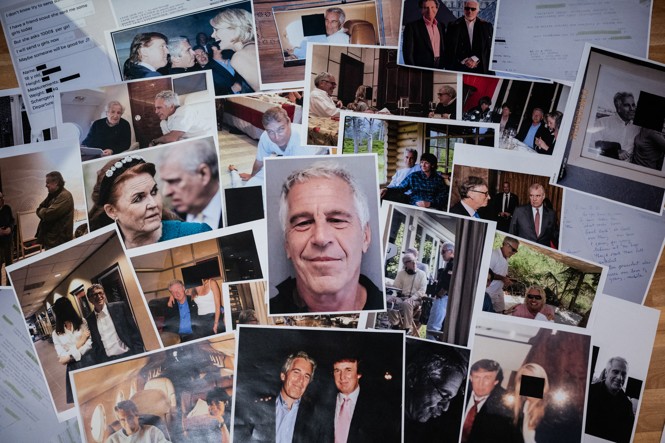
Early last year, Republicans from the House Judiciary Committee were invited to a private dinner at the Justice Department. Representative Thomas Massie of Kentucky remembers asking his then girlfriend, now wife, what he should ask Attorney General Pam Bondi. She suggested he bring up Jeffrey Epstein. At first, he waved off the suggestion. But as he sat at the long formal table, set with formal china and surrounded by top Justice officials, he changed his mind.
“‘I saw you release the ‘Phase 1’ of the Epstein files,” Massie remembers asking Bondi at the April 28 dinner. “When do you think we might get ‘Phase 2’?’”
Bondi looked him in the eyes, Massie said, and explained that all that was left to be released was material she considered “child pornography” and that there was nothing more there. He didn’t follow up then, but her answer didn’t sit right.
“I suspected there was stuff that needed to come out,” he told me.
After the Justice Department announced in July that it would not share any more records, Representative Ro Khanna of California held a morning strategy meeting with his staff and asked for ideas for new bills. Sarah Drory, a young communications staffer who had never before spoken up in this meeting, had a suggestion: “What about a bill to release the Epstein files?”
The room was silent. Drory saw her more senior colleagues exchange confused or dismissive looks. One declared Epstein “a social-media thing.” On her walk home late that night, she called her boyfriend, second-guessing her suggestion. “Is that crazy?” she remembers asking him—and herself.
Three days later, Khanna introduced an amendment in the Rules Committee requiring the Department of Justice to release the Epstein files to gauge support and was surprised when a Republican congressman from South Carolina voted for it. After that vote, Massie called Khanna, and they discussed a long-shot idea late into the night: Could they convince other Republicans to do the same?
Khanna’s staff and consultants tried to talk him out of pursuing such legislation, explaining that it could make him look like a conspiracy theorist, instead of his desired image as a “serious economics guy.” But Khanna explained to his staff that the topic of Epstein kept coming up, especially when he appeared on podcasts or visited the more conservative parts of his district. He recalled a young man delivering a long rant at a recent town hall about how he didn’t trust the government because it was “protecting pedophiles” by not releasing the Epstein files or holding more people accountable. In that moment, Khanna told me, he realized that standing up for Epstein’s victims—and against the wealthy or powerful—was a way to build trust.
“You have to convince people that the government actually works,” Khanna said.
I have been reporting on Epstein—his criminal investigations, his network of powerful friends, and his hundreds, possibly thousands, of young victims—for almost a decade. I’ve chronicled the many false starts and dashed hopes for accountability following Epstein’s second arrest in July 2019, his death while in custody, and the efforts to bring others in his network to justice. I have spent years trying to figure out what, if anything, Donald Trump knew about Epstein’s abuse of young women, and whether the president was at all involved. On this question and many others, I was repeatedly told: “The story is over.”
But over the past several months, something extraordinary has happened: An unlikely duo of lawmakers—a progressive from Silicon Valley and a conservative from Kentucky—partnered with a group of Epstein survivors and a few female Republican lawmakers to successfully push for legislation mandating the release of the so-called Epstein files. It was the most significant act of defiance by Republicans in Congress against the president in his second term, and it transformed what had been treated as a fringe conspiracy theory into a populist rallying cry.
The release of the files over the past two months has led to new criminal investigations outside of the United States. In Britain, Andrew Mountbatten-Windsor, the former prince, and Peter Mandelson, the former U.K. ambassador to the United States, were arrested but haven’t been charged; in Norway, Thorbjørn Jagland, the former prime minister, was charged with “gross corruption.” More than a dozen other prominent people have stepped down from lucrative jobs or lost honorary titles or positions. This is the story, drawn from interviews with more than 40 people over the past eight months, of the unlikely coalition that came together to force some measure of accountability—and of what it hopes to accomplish next.
The sheer volume of records collected over several decades—and the hundreds if not thousands of people who may have information about Epstein and his criminal enterprise but have not been questioned by law enforcement—is both mind-boggling and tragic. Hundreds of prosecutors and other law-enforcement personnel were diverted from investigations to help review the documents before their release, which cost taxpayers millions of dollars. But Justice Department officials have suggested that they are done investigating Epstein’s alleged co-conspirators and have no plans to pursue additional federal charges. That stance—coupled with the department’s extensive and inconsistent redactions in the documents—has prompted even more suspicion. And no one faces more insistent questions about what he might be trying to hide than the president.
Trump does not detail—even privately—what precisely in the files might be so embarrassing to him and those close to him, four administration officials told me and my colleague Jonathan Lemire. Marjorie Taylor Greene, the former representative from Georgia, has said that when the president angrily tried to persuade her to vote against the legislation, he argued that “his friends would get hurt” with the wide release of records, something he has repeated in other private conversations. What the president has clearly said, often in a barking tone, is that he wants his aides and allies to make the whole thing “go away.” One official described the president as “seething.”
[Read: Inside the White House’s Epstein strategy]
Trump’s name appears tens of thousands of times across the files, although many of those mentions are in media reports that Epstein circulated or messages discussing his presidency. But the high number surprised White House staff members who told us they were unprepared for the release. “That freaked out people,” another administration official told us. “Nobody really knew what was coming.”
At least six Cabinet members or senior administration officials were in contact with Epstein—and, according to the documents, had closer and longer relationships with him than had been previously or widely known. All have denied wrongdoing, and law-enforcement agencies haven’t made any allegations against them or the president. In any administration, most top officials go through a grueling vetting process, FBI background checks and security-clearance reviews. It is unclear whether these relationships with Epstein were raised at any point. Every agency involved declined to answer my questions.
Trump has not been interviewed by authorities, despite his very public history with Epstein and Ghislaine Maxwell, who is serving a 20-year prison sentence for conspiring with Epstein to traffic and abuse minor victims. The DOJ declined to answer detailed questions for this article.
Those close to the president insist no one is panicking, but the official acknowledged: “Anytime we are talking about Epstein, we are losing.”
Trump has urged federal prosecutors to continue to investigate Democrats with ties to Epstein, especially Bill and Hillary Clinton, who deny any wrongdoing or knowledge of Epstein’s conduct. The Clintons are providing videotaped depositions to the House Oversight Committee this week in New York. Trump and others have expressed concern that this effort could set a precedent for Trump to be subpoenaed to testify under oath about Epstein, four people familiar with the situation told us. “Everyone’s looking for an off-ramp,” the administration official told us.
Trump has also called his allies in recent weeks to ask about Bondi’s job performance, an acknowledgment that things have not gone according to plan. A White House official told me that the president continues to support the attorney general and that there has been no recent change in that support.
Trump has offered shifting accounts of his friendship with Epstein and when exactly it ended, but he has long maintained that he “had no idea” about Epstein’s criminal activity. The White House has stated that Trump barred Epstein from his Mar-a-Lago club in Palm Beach, Florida, “for being a creep,” although it won’t say when that happened. But among the unredacted files provided to members of Congress is an email from one of Epstein’s attorneys recounting a 2009 conversation in which he says Trump claims that Epstein, who was sometimes a guest at the club, had never been asked to leave. The year before, Epstein had pleaded guilty to two prostitution charges, including soliciting a minor.
Attempting to piece through the files that are public can be disorienting, especially given the administration's extreme reluctance to engage on questions on the matter. Included in the new files is a report that a former Palm Beach police chief told the FBI that Trump called him in 2006, after learning that Epstein was under investigation. “Thank goodness you’re stopping him, everyone has known he’s been doing this,” Trump reportedly said, adding that Maxwell should also be investigated.
[Read: So this is why Trump didn’t want to release the Epstein files]
Nine people familiar with information that was submitted to the FBI and DOJ in recent years told me they were alarmed that many documents—including those that they say include references to Trump—were not made public. The DOJ, the FBI, and the White House declined to respond to my questions about this, but on Wednesday, the DOJ posted on X that it is “currently reviewing files” to see if additional material should be published. The department previously said that some documents “contain untrue and sensationalist claims against President Trump.”
The department released a presentation from last year that includes a slide titled PROMINENT NAMES that features 11 men who have been accused of misconduct. Trump is the first person listed, along with an accusation that he assaulted a minor. It is unclear to what extent this claim and others have been vetted or verified, and the White House declined to answer my questions on the matter.
This week, the journalist Roger Sollenberger, NPR, and The New York Times identified documents related to an allegation of sexual misconduct involving Trump and a minor that were not released by the DOJ, or in some cases, were released and then were deleted from the DOJ website. House Democrats told me on Wednesday that their review of a wider collection of unredacted material available to members of Congress appears to confirm that reporting.
Trump has not been accused by law enforcement of wrongdoing related to Epstein, and he has never been interviewed by authorities, despite his years of friendship with Epstein and Maxwell and his prominence within the files.
The White House declined to answer many of my questions about Trump and Epstein. Instead, Abigail Jackson, a White House spokesperson, sent me a statement: “By releasing thousands of pages of documents, cooperating with the House Oversight Committee’s subpoena request, and President Trump recently calling for further investigations into Epstein’s Democrat friends, the Trump Administration has done more for the victims than Democrats ever have.”
During Trump’s first term, Alexander Acosta, his secretary of labor, was forced to resign over his role in offering Epstein a lenient plea deal in 2008 after a federal investigation into Epstein’s abuse of dozens of young women and minors. Epstein spent minimal time in jail and allegedly continued to abuse multiple victims during his supervised release. A DOJ review later found that Acosta had exercised “poor judgment” but had not committed professional misconduct.
Trump’s experience with Acosta did not appear to affect his second-term choices of Cabinet members and senior officials. None has faced repercussions for their dealings with Epstein. A White House official told me in a statement that “President Trump has assembled the greatest and most effective cabinet in history and he maintains confidence in them.”
During her testimony before Congress, Bondi was asked if any administration officials have been questioned by the Justice Department about their ties to Epstein. She didn’t directly answer.
As the House moved toward a vote on releasing the Epstein files last summer and fall, the White House and top Trump allies launched an effort to forestall it that lawmakers told me was unprecedented in its intensity and scope.
Massie called it a “360-pressure campaign,” one felt not just by him and his staff but anyone associated with him. One tactic he had not experienced before: Some of his key staff members were suddenly offered more prestigious jobs in the Trump administration or more lucrative jobs in the private sector—the idea being that if Massie no longer had a full staff, he couldn’t pursue ambitious legislation.
Massie recalled asking an employee who, a few weeks before the vote, had received an employment offer that would double his salary: “Did it ever occur to you that they might be offering you this job to basically make me less effective?” He said the young man sheepishly replied: “That’s what my mom said.” He turned down the offer and finished writing the bill.
[Read: ‘They’re delusional if they think this is going to go away’]
Much of the White House’s effort was directed at the Republican women in Congress who expressed support for the law, especially representatives Greene, Nancy Mace of South Carolina, and Lauren Boebert of Colorado. Massie started a group text with these Republican allies called “Bravehearts.” Greene was among the first of the Republican women to advocate for the release of the Epstein files, and she helped lead the effort that fall. Epstein survivors who met with her told me that she was among the few members of Congress who asked meaningful follow-up questions seeking to understand the history of the case and the roles of other alleged co-conspirators. Greene was often brought to tears by what she learned. “I never in my life thought I would hug Marjorie Taylor Greene,” one Epstein victim told me. “But she was genuine, and she followed the facts.”
In a meeting with Epstein victims, Mace—who has spoken on the House floor about surviving sexual assault—revealed her frustration with House Speaker Mike Johnson trying to quiet the issue. In November, Boebert was summoned to the White House’s Situation Room to discuss her support for the bill with Bondi, FBI Director Kash Patel, and others, an unusual setting that raised questions about what the White House thought was in the files.
On a sunny morning in early September, two news conferences took place on the U.S. Capitol grounds to promote the proposed law. One event was held by Massie and Khanna, who invited Greene to speak and tried to keep the legislation from being dismissed as an anti-Trump effort.
The other was organized by Epstein survivors and World Without Exploitation, a nonprofit that supports victims of trafficking. A crowd of thousands attended both, some bringing gifts of friendship bracelets and flowers for the victims, others carrying signs that said Believe Women and Release the Files! Several people told me that they had traveled from across the country to be there. No one had anticipated the size of the crowd, and the Capitol Police scrambled to enforce order.
As I moved through the crowd that morning I was surprised by the number of elderly people gathered, including many in wheelchairs or walking with canes. Some told me that the public reckoning over Epstein’s sexual abuse had compelled them to reflect on their own experiences and share painful memories they had hidden away for decades. “Frankly, we were young. You didn’t talk about it,” one elderly woman from West Virginia told me, with tears in her eyes.
When the vote was finally held in the House on November 18, just one member voted against the release of the files. The Senate followed, voting unanimously, and Trump signed the bill into law. The next month, the Justice Department began slowly releasing what would eventually add up to more than 3 million documents.
Democrats have had their own crisis over the Epstein files: How do they separate themselves from the party’s elder statesmen and wealthy donors who have been revealed to have been close to Epstein?
During Joe Biden’s four years in office, the Justice Department did not pursue releasing records related to Epstein and lawmakers did not pursue legislative action. Democrats in Congress told me that their party leadership sought to dissuade them from pursuing the effort in recent months, changing their stance only after feeling public pressure and seeing internal polling.
Last month the House Oversight Committee scheduled a vote to hold Bill and Hillary Clinton in contempt of Congress for refusing to testify about their relationships with Epstein and Maxwell. The former president and former secretary of state worked the phones, calling Democratic lawmakers to discuss Epstein, according to four people familiar with the conversations, some of whom found the effort problematic. The calls reflected a generational divide within the party, with younger Democrats unwilling to look away from the Clintons’ connections with Epstein and Maxwell, arguing that transparency is needed to rebuild trust with voters.
Bill Clinton has said he traveled multiple times on Epstein’s plane in the early 2000s. In an interview last year Maxwell told the Justice Department that “President Clinton was my friend” and that she was involved in creating the Clinton Global Initiative. She attended Chelsea Clinton’s 2010 wedding with Tom Waitt, a tech billionaire and major donor to the Clinton Foundation; Hillary Clinton said Maxwell came as “the plus-one, the guest of someone who was invited.”
Yesterday Hillary Clinton testified for six hours under oath and told lawmakers that she had “no idea” about Epstein and Maxwell’s criminal activities, does not remember encountering Epstein, and “never flew on his plane or visited his island, homes, or offices.” She alleged that Republicans’ efforts to get her to testify were meant to “distract attention from President Trump’s actions and to cover them up.” The Clintons have not been charged with any wrongdoing by law enforcement in the Epstein matter.
Before the Clintons agreed to videotaped depositions with the committee, nine Democrats voted with Republicans to refer Bill Clinton for a full House vote for contempt of Congress. I talked with Khanna before he walked in to vote, and he likened the experience to a Hindu text in which a prince faces a choice to kill one of his family members to uphold justice. “All the Epstein files should come out,” he said, “and if those files implicate Bill Clinton, so be it.”
Massie and Khanna told me their Epstein work has come at a great cost: Several big donors have cut ties, and those losses haven’t been made up, despite a rush of small-dollar donations. Massie faces a difficult Republican primary in Kentucky against a Trump-backed challenger. And then there are the security threats.
Nearly everyone I spoke with for this story told me that their public efforts to get the files released have made them fear for their safety. Across several conversations I had with Massie over the past three months, he would matter-of-factly muse about the risk he believes he is taking.
“I’ve pissed off enough billionaires who are clearly amoral people that I might have shortened my expected lifespan,” he told me.
Massie and Khanna’s critics—and even some of their supportive colleagues—note that the two have used the effort to raise their national profiles. The White House labeled Massie and Khanna “attention-seeking,” and House Speaker Emerita Nancy Pelosi once called their effort “a distraction.” There are indications that Khanna might try to run for president in 2028, an ambition that he doesn’t deny, and he has started doing more national fundraising and holding events in key swing states.
Massie has tied his upcoming election to a larger question about the nation’s future and his party’s devotion to one man: “If the country’s savable, I’ll win my reelection,” he said. “And if it’s not, I don’t need to be there.”
Hanging over the Epstein files has been the loss of Virginia Roberts Giuffre, one of Epstein’s most vocal victims, who died by suicide last spring. Giuffre was an early organizer of efforts to call for the release of information related to Epstein. Her family has told me that they believe the toll of her abuse by Epstein, Maxwell, and others—along with the harassment that accompanied her public advocacy—became “so heavy that it became unbearable.”
[Read: Virginia Giuffre’s family was shocked that Trump described her as ‘stolen’]
When Bondi testified under oath to Congress about the Epstein investigation earlier this month, she urged anyone who had been hurt or abused to contact the FBI. Sitting just a few feet behind her were some of the witnesses to Epstein’s crimes, some carrying small images of themselves as teenagers when they were first abused by the late financier. When a lawmaker asked these victims to stand and raise their hands if they had reached out to the Justice Department to offer testimony and evidence, every hand shot up—some defiantly, some shaking from nerves. He then asked how many of their offers had been ignored or denied. Again, every single hand went up. “Ms. Bondi, it looks like you have some more witnesses to talk to,” he said. The attorney general never turned around.
Sky Roberts, Giuffre’s brother, told me he is now more certain than ever that there is a government “cover-up in real time.”
"Which one is it?” Roberts said. “Are you investigating? Are you not?”
On Tuesday, Giuffre’s family attended Trump’s State of the Union address to Congress, along with more than a dozen of Epstein’s victims who were guests of Democrats. They used their presence to remind lawmakers—and the American public—of the crimes that many in power sought to ignore. For the first time, they were in the president’s line of sight, but he made no mention of them. The question is how long the president, and others in positions of power, can continue looking away.
Jonathan Lemire, Isabel Ruehl, and Marie-Rose Sheinerman contributed to this report.
*Illustration Sources: Nathan Posner / Anadolu / Getty; Bill Clark / CQ-Roll Call / Getty; Jon Elswick / AP.
Popular Products
-
 Enamel Heart Pendant Necklace
$49.56$24.78 -
 Digital Electronic Smart Door Lock wi...
$211.78$105.89 -
 Automotive CRP123X OBD2 Scanner Tool
$649.56$324.78 -
 Portable USB Rechargeable Hand Warmer...
$61.56$30.78 -
 Portable Car Jump Starter Booster - 2...
$425.56$212.78