Is This The End Of The Kennedy Myth?
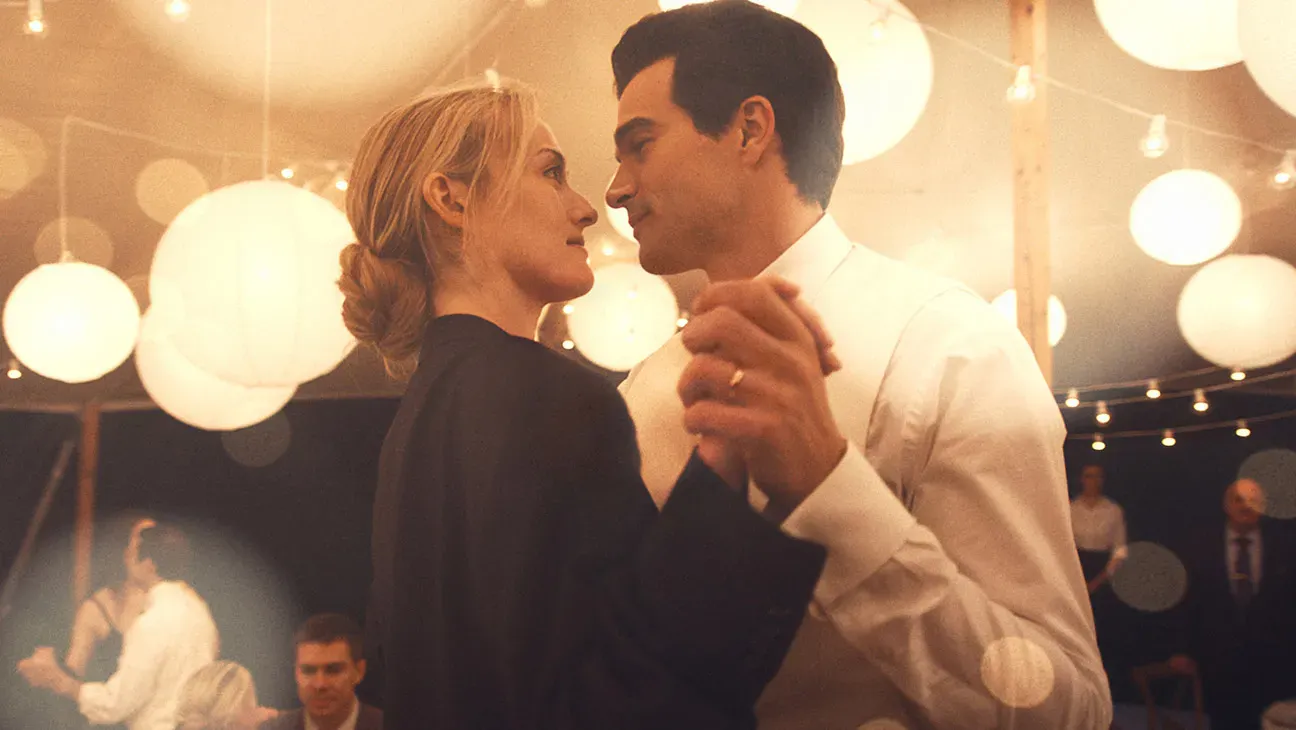
As a television show, Ryan Murphy’s Love Story continues his late career work in Wikipedia necromancy. The show is a farce designed for audiences who carry a deep grief at not having been able to rent in Yorkville when the getting was good.
The people whose lives were harvested for the show, John F. Kennedy Jr. and Carolyn Bessette, deserve clear-eyed acknowledgement and dignity, as all other humans do. But if we’re really being honest about merit and commemoration? These were nice looking white people with expensive educations and good teeth. You’ll find ‘em every weekend in The New York Times’s Vows section. It seems clear that Murphy and Love Story’s other writers feel little need to explain why these people matter: the Kennedy name is enough. But what’s abundantly clear watching the show is that it just isn’t anymore. Love Story falters because that name simply doesn’t mean what it used to.
JFK Jr.’s family name slalomed him through Andover and Brown and NYU Law. He did a little bit of charity work in India that was presented in the press as if he was a lone Jesuit who had been weaving mosquito nets in Odisha for decades. He stumbled through law school, worked in the Manhattan District Attorney’s office for a few years (his last name the key criterion on his application), and launched George, a magazine that Kendall Roy would have considered a bad idea. (That said, one could argue the vacuous George was ahead of its time in its superficial treatment of politics, which was always privileged style over substance and was covered like pop culture.) What made people call him cool and stylish at the time was a literal white washing of 90s Black fashion: a preppy guy wearing backwards hats and wayfarers and mixing sneakers with jeans. A dash of N.W.A. for Watch Hill.
Bessette worked in publicity, and, according to some fashion types online, was a groundbreaking icon in that she wore Miu Miu instead of Halston. Again, these full and complete human beings who were, presumably, decent to random people whom they encountered. When it comes to cultural virtuosos of 90s New York, we ain’t talking Nas or Tony Kushner.
Love Story, along with the other nuggets floating downstream from the billowing superfund site of Kennedy material represents what has poisoned Democratic party politics.
Take it from someone whose ancestor Seamus arrived in the port of Philadelphia with two barrels of whiskey and a change of clothes as his worldly possessions: the Kennedy family are the ne plus ultra of how the Irish became white. First generation thrift; Second generation wealth acquisition by any means necessary. Joseph P. Kennedy first made deals with actual mobster Abner Zwillman then relentlessly nurtured relationships with elite American institutions like Harvard and Yale and the oldest of the old guard boarding schools; calculated flashes of sprezzatura atop the recreational habits of the Social Register—skiing but aggro; boating but loud.
The Kennedy magic was a specific kind of ethnic whiteness cultivated and adjusted and laundered. Be pale enough, have your grandparents’ home language be English (as opposed to Italian or Yiddish), pose for enough photos with and party with enough Roosevelts and Vanderbilts—apex predator Yankee Protestants—and you get asymptotically close to them. Philip Roth nailed this in the first hundred pages of American Pastoral. (Another book to consult to understand the grizzly reality underneath the Kennedy myth would be Dominick Dunne’s A Season in Purgatory, the most morally scathing beach read in American letters. )
Why has this farce lingered in the political realm? The Kennedys elected to high office have a spotty record of actual accomplishment—one that has gotten thinner as time has gone on. For every stirring speech there was the Bay of Pigs. Ted Kennedy’s long list of legislative wins could never quite make up for the fact that he left a woman to drown. Patrick Kennedy and Joseph P. Kennedy III were empty suits.
The answer for their longevity is simple is simple: Democrats are as susceptible to nostalgia as Republicans. The assassination of JFK marked a stark dividing line in American political life—there was always a suggestion that things could have been better had he lived, a possibility brought to rich fictional life in Stephen King’s 11/22/63, which imagines a time traveler who gets to experience the world where JFK lived. (That hypothetical world is destroyed in a nuclear holocaust.) Still, the idea has always been that the Kennedy family represents an elegance and grace—and hope—that has not been present in American politics since JFK’s assassination.
Love Story and the most recent waves of Kennedy politicians are copies of a copy of a copy. Their political positions are all aura. The Kennedy family is profoundly wealthy and well connected—but what do they stand for? The politeness and gladhanding of the Kennedy family is about as helpful at this point as “In This House We Believe” posters that dot the front lawns from Belmont to Presidio Heights. And past those front lawns, inside those homes, under the wan blue light of the family iPad is Love Story.
We’re dealing with two specimens of the Kennedy legacy today. Each represents the worst of the two majority political parties.
In a proper world, Robert F Kennedy Jr. would be a family money kook in East Hampton trying to sell encapsulated swordfish liver and talking about how Incans invented Wi-Fi. But online wellness cults, and the legitimacy of his early career work as an environmental lawyer, and the familial belief that being a Kennedy means you should be in charge of people, have been rocket fuel in the heart of a deeply troubled man. As head of the HHS he has broken with a century of progress in reducing child mortality and profound human suffering because he’s the drum major for the anti-vaccine movement. Mock him for his workouts in jeans—and his abysmal form on squats—if you want, but his legacy will be clear: dead kids whose families trusted him because of his last name. He is a fine avatar for the Trump administration’s embrace of raw celebrity power and detachment from objective reality.
From another well-heeled zip code comes featherweight Zillenial flaneur Jack Schlossberg, daughter of Caroline (a supporting player in Love Story played capably by Meryl Streep’s daughter Grace Gummer), grandson of JFK, primary candidate for New York’s 12th Congressional district, and cringe meme made flesh. He’s a Yale and Harvard grad (obviously) with work experience that doesn’t extend much further than a brief stint at Vogue and a cameo on Blue Bloods. He couldn’t even help himself during a Times profile by Maureen Dowd in which he tip-toed around Gaza—as potent an issue as exists with voters under 30—took a couple shots at his uncle RFK Jr., and paddle boarded. Rep. Jerry Nadler, the man Schlossberg is running to replace, dismissed Schlossberg’s candidacy and his total lack of a public service record. Good. One imagines a future in which this young man comes to his senses, climbs the ladder at Paul Weiss, cuts some checks to TFA and the Whitney, and calls it a life of service.
What is the point? The Kennedy name is there—that’s all you really need to know. And that alone is meant to handwave all the other questions about what precisely the Democratic Party is and should be. The implication has, for decades, been the possession of that name makes everything else immaterial. A Kennedy doesn’t have to prove his credentials.
So Love Story is a case study and a curio for how the contemporary mainstream of the Democratic party is both out of touch with today’s political climate and the history of their own party. Like America at large, it subsists off a myth decades past its expiration date at its own peril. The Kennedy family climbed the ladder, had a few charismatic public speakers, suffered mightily—as millions of other American families have. But what do they have to offer now?
The so-called “No Kings” protests have gotten Democrats and liberals and progressives into the street to protest the avarice and sloppy authoritarian reach of the Trump administration. But while we are on the subject of Americans who imagine themselves as royal, it would be nice if the Democratic party could look inside its own house, recognize the family that’s been playing footsie with the fantasy of Camelot for a while now, and move on.
Popular Products
-
 Classic Oversized Teddy Bear
$23.78 -
 Gem's Ballet Natural Garnet Gemstone ...
$171.56$85.78 -
 Butt Lifting Body Shaper Shorts
$95.56$47.78 -
 Slimming Waist Trainer & Thigh Trimmer
$67.56$33.78 -
 Realistic Fake Poop Prank Toys
$99.56$49.78