Rfk Jr.’s Allies Are Trying To Free Anti-vaccine Doctors To Speak Their Minds
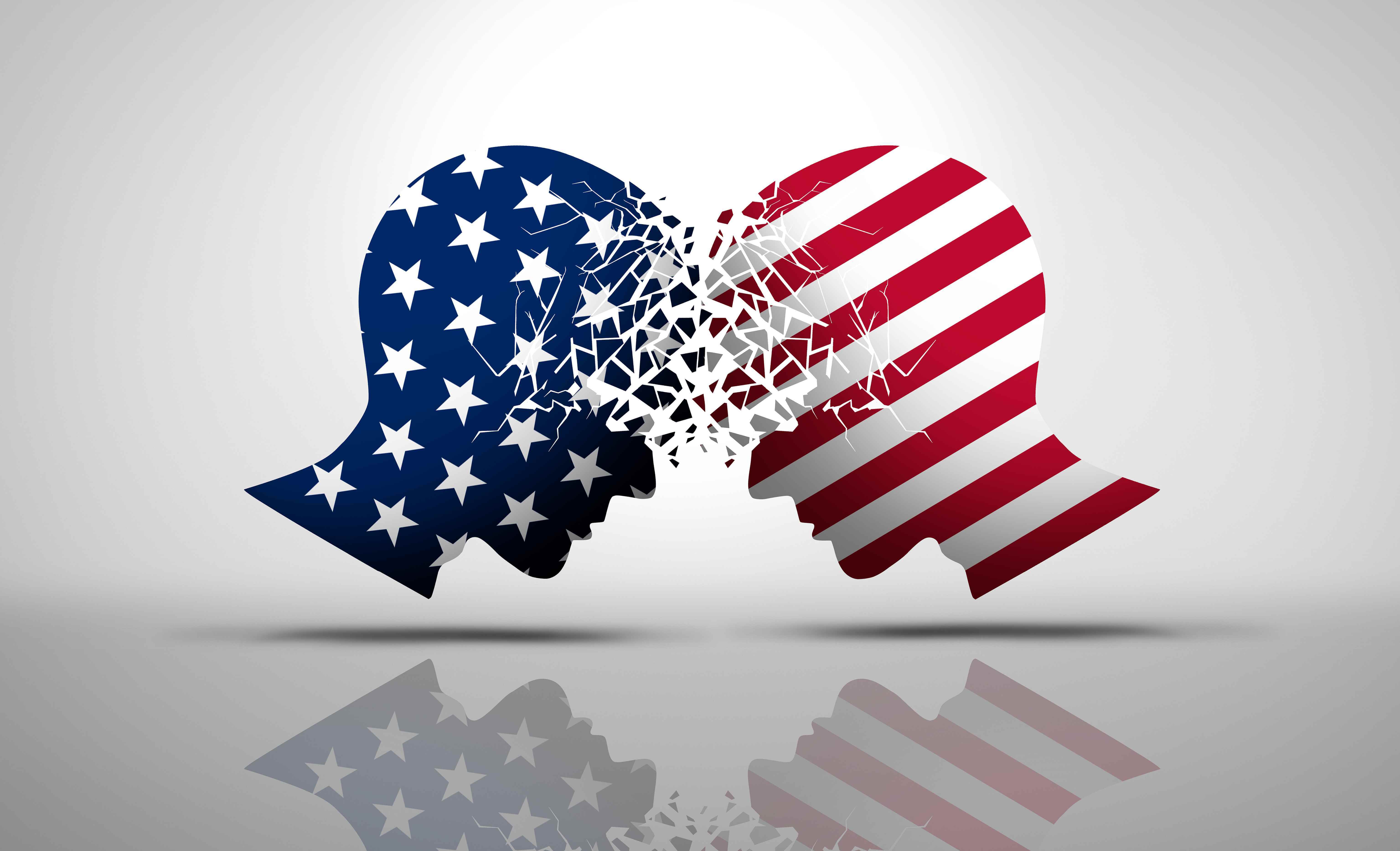
Doctors who give health advice to their patients or community that runs counter to the medical establishment face a rare but very real risk of state sanctions, including losing their license to practice.
That could soon change if anti-vaccine activists succeed in getting the Supreme Court to weigh in on how broadly the First Amendment protects doctors’ rights to free speech – an issue that is central to Health Secretary Robert F. Kennedy Jr.’s Make America Healthy Again movement.
The effort, focused on two court cases that began in California and Washington, is happening in tandem with new challenges to state vaccine mandates, illustrating the anti-vaccination movement's wide-ranging strategy of pursuing its policy goals across all branches and levels of government.
“This is a part of a judicial assault on science and public health that basically weaponizes the Covid-19 pandemic for political and ideological benefit,” said Lawrence Gostin, a public health lawyer at Georgetown University. “What the court is being asked to do and what it may very well do is overturn over a century of established Supreme Court precedent, which will be deeply harmful for the ability of public health to protect the public from major health threats. I can’t emphasize enough how harmful it is.”
But Leslie Manookian, whose nonprofit Health Freedom Defense Fund has asked the court to review its pandemic-era challenge to Covid vaccine mandates, said she thinks the courts are more willing now to account for the lingering frustration over Covid-era policies some Americans believe violated their personal freedoms.
“They say that politics is downstream from culture,” Manookian said. “Well, I think that, very often, the courts are downstream from culture as well.”
A Supreme Court decision in favor of broad speech protections for physicians could have far-reaching implications, possibly bolstering Kennedy’s efforts to dismantle long-established public health practices by permitting doctors to speak more freely with patients and to the public about approaches to health care that are outside the mainstream. This includes whether to recommend vaccination.
Since he took the helm at the Department of Health and Human Services last February, Kennedy has overhauled longstanding vaccine advisory bodies, downgraded childhood vaccine recommendations with scant evidence, promoted alternative and unproven therapies for measles and canceled scores of research grants.
He and his allies have disparaged medical societies like the American Academy of Pediatrics and defended doctors whom state medical boards reprimanded for promoting treatments — like alternative childhood vaccine schedules or ivermectin for Covid infections — that buck the standard of care.
The cases
In the coming months, the court is expected to decide whether to take up two cases focused on doctors’ freedom of speech rights; Kennedy was involved in earlier iterations of the lawsuits before entering government. Both center on doctors who were accused by blue states of spreading misinformation about Covid-19 prevention and treatment.
A third case involving a licensed counselor in Colorado who challenged the state’s law banning so-called conversion therapy for LGBTQ+ patients is actively being considered by the Supreme Court in another lawsuit, Chiles v. Salazar. A majority of justices seemed inclined to strike down the law during oral arguments in October.
Rick Jaffe, the lead attorney on the two pending cases, said the lawsuits represent three facets of free speech issues for doctors: what providers can say in public, what they can advise patients who seek their care and what mental health therapists in particular can advise their clients.
One lawsuit pending before the court involves three doctors in Washington state who either publicized opinions about Covid vaccines and treatments outside the mainstream in op-ed columns and were sanctioned, or wanted to but stayed silent for fear of retribution.
As plaintiffs, the doctors and the Kennedy-founded anti-vaccine group Children’s Health Defense accuse Washington’s medical commission of trampling on the physicians’ free speech rights.
The second case filed by Pierre Kory, a critical care doctor in California who promoted ivermectin as a Covid treatment during the pandemic, is challenging the state’s policy of disciplining licensed doctors who the state determines are spreading misinformation about the virus to patients.
The forthcoming opinion in Chiles — plus however the justices decide to handle these two doctor speech cases — may amplify tension between First Amendment protections as interpreted by the nation’s highest court and states’ ability to regulate medical practice.
Each state enforces its own laws governing the practice of medicine within its borders. State medical boards oversee the licensing and discipline of health care professionals and enforce the standards they must follow.
“How are we going to regulate a medical industry when some within it are more than happy to push misinformation to their patients directly or to the public?” said James Hodge, director of the Center for Public Health Law and Policy at Arizona State University.
Some health law experts said they wouldn’t be surprised to see the Supreme Court take up one of the cases, given its yearslong embrace of free-speech rights for businesses.
They also point to the court’s Dec. 8 decision to vacate and send back to a lower court a challenge by Amish schools to New York’s law banning religious exemptions to vaccine requirements, citing the First and Fourteenth amendments’ free exercise protections.
In that case, the court ordered the Second Circuit Appeals Court to reconsider the suit in light of its 2025 decision in Mahmoud v. Taylor, which found that public schools must allow parents a chance to opt their children out of lessons that conflict with their religious beliefs.
“That's a bright signal that, in one of these cases — either now or in the next few years — the court is going to use the First Amendment just the way it has with the Second Amendment [right to bear arms] to forge a radical ideological agenda,” Gostin said.
“And I call it radical not editorializing at all, but simply recognizing that these cases question long, centuries-old precedent and principle in the United States.”
Courts have historically deferred to states’ authority to regulate the practice of medicine within their borders. But several Supreme Court justices indicated during arguments in Chiles that First Amendment protections may override state rules governing at least some health treatments — even those considered outside the standard of care.
“In so many ways, the justices are using the First Amendment (both freedom of speech and religion) to undermine states' historical police powers,” Gostin said.
The petition that may be easier for the court to consider is the lawsuit against Washington state.
The case focuses on whether boards of medicine can regulate doctors offering opinions outside of medical practice — a notion that reflects an old view that health care professionals should be “morally upstanding,” said Scott Burris, director of the Center for Public Health Law Research at Temple University.
“I think that’s the hardest position to maintain today” given the court’s current makeup, he said, though he added that he doesn’t think a decision in plaintiffs’ favor “would be a huge advance on any First Amendment doctrine.”
That’s different from Kory’s case against California, which implicates medical advice given to patients in a clinical setting.
“If you accept the proposition that it is Covid misinformation ... then it’s equivalent to disciplining a physician for telling somebody that they can treat their bubonic plague with a glass of water,” Burris said. “It does not seem unreasonable.”
“If they take it up and decide it against the state, I think it is a potentially significant step in the erosion of the authority of state governments, legislatures and regulatory agencies to protect patients and clients,” he added.
Mandates waiting in the wings
Meanwhile, medical freedom and anti-vaccine activists are continuing their push toward the Supreme Court on other priorities — namely, state vaccine mandates — and hope to build on recent success.
Health Freedom Defense Fund — a group aligned with Kennedy’s MAHA movement — petitioned the court in December to take up its pandemic-era case against the Los Angeles Unified School District, which required employees in 2021 to receive Covid-19 vaccines to keep their jobs.
The Idaho-based group, which successfully lobbied for a ban on most medical mandates in Idaho that became law last year, is taking on the Supreme Court’s 1905 decision that upheld states’ power to enforce mandatory immunization laws. The effort responds to the San Francisco-based Ninth Circuit’s rejection of its case against the school district, in which the full appellate court ruled that the mandate was legal since “policymakers could reasonably conclude that the vaccines would protect the public’s health and safety.”
Manookian said the appeals court’s opinion is “a distortion” of the precedent set in Jacobson v. Massachusetts.
“They have opened the door to limitless, virtually limitless, authority from the state,” she said.
Some Republican attorneys general concur. A dozen such lawyers, led by Texas’ Ken Paxton, filed a brief on Jan. 29 supporting Health Freedom Defense Fund’s petition and calling on the justices to “reaffirm the right to be free from compelled medical treatment.”
Legal experts said they doubt the court will take up the case, noting it could have weighed in on the precedent for vaccine mandates many times during and right after the pandemic.
But they added that both the justices’ recent decision upholding state limits on gender-affirming care to minors and the forthcoming opinion on conversion therapy could signal where they may go as more challenges mount to states’ authority to regulate medical professionals. The doctors’ speech cases offer a possible indirect route for the court to erode precedent for state vaccine mandates.
“That license comes with obligations,” Hodge said.
Popular Products
-
 Enamel Heart Pendant Necklace
$49.56$24.78 -
 Digital Electronic Smart Door Lock wi...
$211.78$105.89 -
 Automotive CRP123X OBD2 Scanner Tool
$649.56$324.78 -
 Portable USB Rechargeable Hand Warmer...
$61.56$30.78 -
 Portable Car Jump Starter Booster - 2...
$425.56$212.78