The Election-denier Backpedal
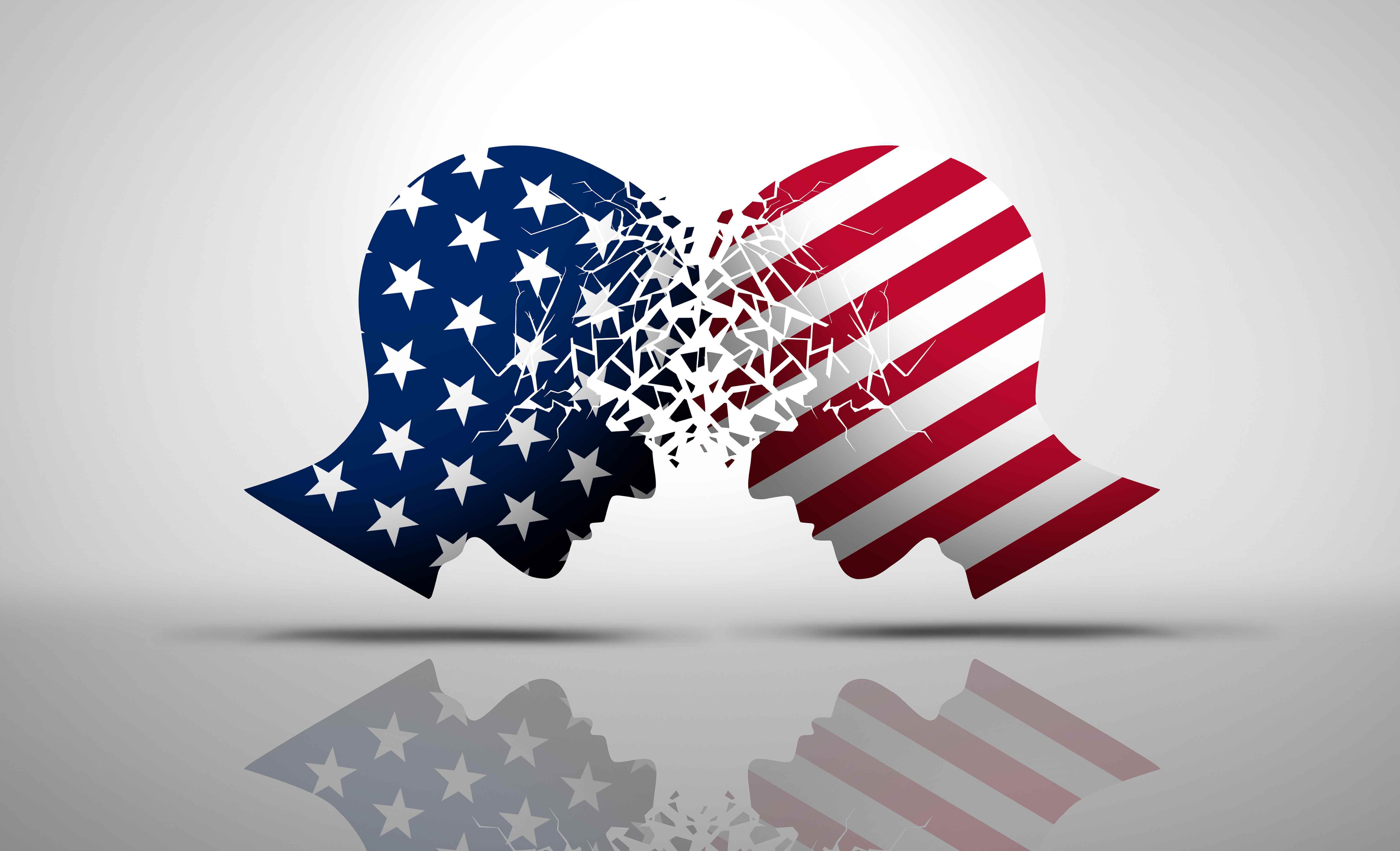
Standing next to Donald Trump at a rally in 2022, Pennsylvania State Treasurer Stacy Garrity told the crowd that Trump had “won” the 2020 election. Garrity is now running for governor—and she has a very different view of the contest: Joe Biden was the rightful winner, she told reporters earlier this year. As for her assertion four years prior? She had simply gotten “caught up” in the excitement of the Trump rally. This summer, Rick Jackson, a billionaire running for governor in Georgia, suggested using the National Guard to combat alleged election fraud. At a recent debate, he denied ever making the comment, and said that he saw no need for federal intervention in the state’s elections.
Garrity and Jackson are not the only Republicans who seem to be rethinking earlier stances that called into question whether election results can be trusted. Trump has long relied on his political allies to amplify the conspiracy theories and falsehoods that have consumed his attention for years. But even though he can’t seem to stop talking about the issue—just last week, Trump offered a $1 million reward to tipsters who help uncover voter fraud ahead of Tuesday’s midterms—others in the party have gone quiet.
Many GOP candidates seem to realize that to stand a chance, they need their voters to trust the system and cast their ballot. Political strategists and election experts told us that there are diminishing returns for the GOP in trying to persuade Americans to care about Trump’s six-year-old fraud claims. The system worked well enough to reelect Trump, and the president has failed to produce credible evidence that voter fraud is a threat to the midterms. “Saying that elections are rigged in this country, saying that Donald Trump really won the 2020 election, is not something that appeals to voters in general elections,” Kelly Rader, a research director for States United Action, a nonpartisan election-protection group, told us. Rader and her colleagues, who maintain a database of election deniers seeking office, found that fewer are running this year compared with four years ago. She was not surprised that the ones who are have been downplaying their election skepticism.
Democrats have been more than happy to remind opponents about their previous promotion of election denial. In Pennsylvania, Janelle Stelson is running to unseat the longtime Republican Representative Scott Perry, a close ally of the president. (The January 6 committee found that Perry had been directly involved in attempts to overturn the 2020 election results. He didn’t respond to our requests for comment.) At a debate last month, Stelson accused Perry of being an “architect of the deadly insurrection.” The congressman responded that the allegation was a “flat-out lie” and said that he was “collateral damage” from the way former Special Counsel Jack Smith “weaponized the federal government against his political foes.”
Stelson told us she hears from voters all the time about Perry’s alleged role on January 6, 2021. “If I don’t bring it up, people ask me, ‘Why not?’” she said. Josh Shapiro, who is running for reelection as Pennsylvania’s governor, has released a fundraising video calling Garrity “Donald Trump’s handpicked election denier.”
[From the October 2026 issue: The election deniers’ long game]
David Crowley, a Democrat running for governor in Wisconsin, asks voters in his fundraising videos whether they “really want an election denier overseeing the certification of our electoral votes.” His opponent, Representative Tom Tiffany, supported a Texas lawsuit to invalidate the results of the 2020 presidential race and, after the insurrection on January 6, voted against certifying Biden’s win. Now that Tiffany’s running for governor, he has downplayed his objection and has acknowledged that Trump lost, saying recently that he would certify the results of future elections “regardless of who the winner is.”
In Georgia, Jackson was asked by a voter whether he would be willing to accept an offer of federal troops to protect against election tampering. “Well, we’ll get National Guard,” Jackson responded, according to The Atlanta Journal-Constitution, which obtained audio of the exchange. In a debate, the Democratic nominee for governor, Keisha Lance Bottoms, confronted Jackson about his comments. When he denied them, Bottoms’s campaign released a digital video splicing together the debate moment and the audio obtained by the newspaper.
Campaign spokespeople for Jackson, Garrity, and Tiffany did not respond to requests for comment. Christopher Nicholas, a longtime Republican political consultant in Pennsylvania, told us that there’s no reason for GOP candidates to campaign on election denial in 2026. “It’s six years ago or more. So life goes on,” he said. “There are other, more current things to talk about.”
The dominant figure in the Republican Party for the past decade would almost certainly disagree. Trump continues to use his authority over the federal government to pursue election-fraud claims from 2020 and undermine confidence in this week’s vote. Although courts have blocked many of the president’s efforts, he has not relented.
Some Republicans have. After Trump’s Justice Department sued Alaska over the presence of two Dan Sullivans on the ballot, Senator Lisa Murkowski, a Republican, wrote on X that DOJ “should never have filed this lawsuit.” (The New York Times has since revealed that the placement of an additional Sullivan was a Democratic scheme intended to confuse voters.) California’s Republican candidate for governor, Steve Hilton, has distanced himself from Trump’s voter-fraud claims and publicly rejected the president’s attacks on voting by mail. The president’s July prime-time address accusing China of tampering with the 2020 race provoked little more than a whimper among Republicans in Congress. Key Republican members of the Senate refused to pass the SAVE America Act, the president’s preferred legislation for combatting what he describes (without evidence) as rampant voter fraud.
Republicans running in 2026 have solid data showing that election denialism is ineffective at swaying voters, political consultants told us, especially as prices rise and the Iran war drags on. “If the economy is bad, that is always gonna be the primary issue over election integrity,” Samuel Chen, a Republican political consultant in Pennsylvania, said. “More people are feeling the economy, and that is going to drive people to the polls in much larger numbers than election integrity.”
[Read: Going hungry in Trump’s economy]
The White House spokesperson Lauren Bis did not respond to questions about Republicans backing away from Trump’s election claims but instead sought to turn attention to the controversy over Alaska’s ballot. “It’s ‘rich’ the Atlantic is completely ignoring the Democrats’ corrupt scheme to stack Alaska’s ballot,” she told us in a statement. “No one has done more to ensure we have free and fair elections than President Trump.”
A handful of GOP candidates are still trying to appeal to the base of MAGA voters by emphasizing fraud fears. Representative Mike Collins of Georgia, whose run for Congress in 2022 featured an ad in which he fired a long gun at a trash can that had a voting machine label, has continued to embrace election denialism. After winning the primary for Senate in Georgia, he told CNN that he still believes that “Trump won” the 2020 election in the state. Jim Marchant, who is running for secretary of state in Nevada, has repeatedly said it is a “badge of honor” to be called an election denier. The tactic has worked well during primaries in places where Trump remains popular. But in competitive general-election races, Republican consultants said. it makes sense for candidates to pivot away.
If candidates who supported voting conspiracy theories end up losing today, election denialism could be seen on the right as a political liability, Rick Hasen, an election-law expert, told us. “They’re trying to not say anything that would offend Donald Trump, so they dance around the issue,” he said. “I think we’ll see more people no longer denying the 2020 election once Trump is no longer in power.”
Today’s results will determine whether election denialism remains a defining feature of Republican politics or continues to recede as the personal obsession of a lame-duck president.
Gabby Deutch contributed reporting.
Illustration Sources: Chip Somodevilla/Getty; Bill Clark / CQ-Roll Call, Inc / Getty; Tom Williams / CQ-Roll Call, Inc / Getty.
Popular Products
-
 Electronic String Tension Calibrator ...
$41.56$20.78 -
 Pickleball Paddle Case Hard Shell Rac...
$27.56$13.78 -
 Beach Tennis Racket Head Tape Protect...
$59.56$29.78 -
 Glow-in-the-Dark Outdoor Pickleball B...
$49.56$24.78 -
 Tennis Racket Lead Tape - 20Pcs
$51.56$25.78