The Loneliest Man In American Politics Has An Army
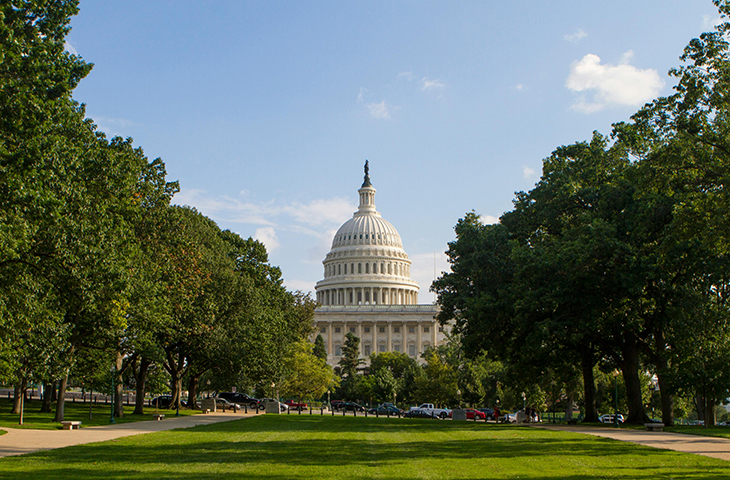
In April 2025, Carl DeMaio, just four months into his first term as a California state assemblymember, sat before a panel of his new colleagues in a small, windowless room in downtown Sacramento and told them that they were contributing to a “cancer on democracy.”
It was one of the 52-year-old freshman lawmaker’s first committee hearings, an early chance to pitch peers on one of his top priorities. In opening remarks, the Republican framed his proposal, which would require government-issued identification in order to vote, as a commonsense, nonpartisan reform to ensure the integrity of elections. No one, argued DeMaio, should have reason to question the legitimacy of American democracy.
It is an issue that has animated Republicans nationally for the better part of two decades. But in the Democrat-controlled California Legislature, the bill stood little chance of survival. The hearing, perhaps unsurprisingly, did not go well for DeMaio. After listening to his presentation, Gail Pellerin, a Democrat from Santa Cruz, told him that if he didn’t “trust the process that put [him] in this office, perhaps [he] should consider resigning.”
“You're the minority, you're the extreme voice,” DeMaio seethed to his Democratic colleagues at the hearing, eyebrows raised and pale eyes growing wider. “Why can't this broken political system hear that?”
After a brief debate, the elections committee voted not to advance DeMaio’s bill, effectively killing it.
To be a Republican politician in California is largely an experience of watching one’s policymaking ambitions crushed beneath a steamrolling Democratic machine. Democrats occupy the governor’s office. They have legislative supermajorities, a lock on statewide elected offices and control of the biggest cities. Republicans are left to be bit players in the running of the country’s largest state, play-acting opposition to Democrats’ plans. But that is not true of DeMaio, who has the potential to deliver one of the country’s biggest MAGA victories in what stands to be a dismal 2026 for his party. In the year and a half following the committee hearing, the first-term state lawmaker took it upon himself to develop and qualify a ballot initiative modeled on the same bill that failed in that dingy Sacramento hearing room. Next week, every California voter will be mailed a ballot including Proposition 39, as DeMaio’s constitutional amendment is known.
If it passes, the measure would do in California what President Donald Trump has struggled all year to do at the federal level with a Republican-led Congress: require every voter to present identification when casting a ballot. DeMaio has mobilized a conservative grassroots army hungry for victories, bypassed the state’s political class and headed straight to voters. Proposition 39 already has California’s Democratic establishment reeling, concerned that a strong showing with a left-leaning electorate could change the national conversation about voter ID.
Any path to victory for Proposition 39, now lagging in polls, runs through a thicket of challenges. Voters, including Democrats, are broadly sympathetic to the idea that they should have to confirm their identities at the polls, but many recoil at such a law when it is associated with Trump. DeMaio needs California conservatives who might not have much else to vote for to show up in November, but the unpopular president who could convey to them the stakes needs to stay away to keep it palatable to everyone else. DeMaio finds himself now living a version of the Republican future, one in which the MAGA movement is sustained by bottom-up organizing rather than top-down charisma — closer to a network of local communities than the national cult of personality that currently defines it. A man with few political friends is finding plenty of fellow travelers.
“It's beautiful music you hear being played in California,” DeMaio said. “I’m simply there to show up with the sheet music.”
Carl DeMaio, by all rights, should not be a power broker in California. A hyperconservative, openly gay, former drive-time radio talk show host, DeMaio is deceptively bookish in appearance, moving through the world with a coiled intensity that can come across as barely restrained rage. One of just 19 Republican lawmakers in an 80-member Assembly, DeMaio has labeled his Democratic colleagues corrupt, Gov. Gavin Newsom a “fraudster” and California Republicans victims of Stockholm syndrome. He has publicly called for the resignation of his own state party chair. A vocal Trump-supporting conservative in a state whose electorate deeply dislikes the sitting president, DeMaio has few natural allies. On the Assembly floor, his microphone is periodically cut off by Democratic leadership. He has been booed by his colleagues on more than one occasion.
“Early on, I diagnosed that one of the reasons why we can't turn California around is we don't have an opposition party,” DeMaio recently said in his office a few blocks from California’s Capitol building, enunciating his words with the effort of someone speaking with great purpose. “I have to start by cleaning out the rot.”
Yet even as he describes California as a dark, dark place — beset by fraud and terrible policies, led by politicians knowingly running it into the ground — DeMaio doesn’t stop at Trumpian I-alone-can-fix-it vainglory. He may have the public manner of a tent-revival speaker but is also ready to be the guy who assembles the tent and the one who distributes handbills outside it to welcome new adherents.
DeMaio’s near-pathological meticulousness is demonstrated in a nine-page guide he recently distributed that explains, essentially, how to throw a party in your backyard. Drafted to encourage Proposition 39 supporters to gather and complete mail ballots en masse, a practice Trump has derided elsewhere as “ballot harvesting,” DeMaio’s How to Host a BBQ, Beer & Ballots event guide spares no detail. The booklet enumerates exactly how many cans of Coors Light and jars of Sweet Baby Ray’s barbecue sauce should be ordered. It specifies the number of people each assigned to set up chairs, put out pens, and prepare napkins, plates and utensils. The arc of the party is disaggregated into quarter-hour intervals, with specific directions for what should occur in each. (Forty minutes before the speaking program begins: “direct guests to food.”)The booklet was published by Reform California, the vehicle for DeMaio’s ascendance in the state’s politics over the past decade. During that time, DeMaio has taken the organization, which began as a regional watchdog in San Diego, and built it into a powerful statewide grassroots army, stoking a conservative political underclass disgusted by decades of Democratic governance. Today, Reform California stands as something akin to a parallel state party. The group has regional operations across the state, maintains near constant communication with its half-million subscribers and last year raised more than $5 million from nearly 100,000 individual donors. The group distributes hyper-specific “plain English” ballot guides for every county in the state, telling supporters who and what should get their vote from governor down to school board trustee in California’s smallest county.
“Carl DeMaio is the establishment now,” former San Diego Republican Party chair Corey Gustafson said in an interview. “The most powerful Republican organization in the state is Reform California. He is the most powerful leader in the California state Assembly. He is in the middle of everything. He has the most robust fundraising organization in the state of California.”
The California Republican Party treats DeMaio’s rise as a threat. He directs supporters’ money to his priorities, rather than party committees. He often criticizes party-endorsed candidates in primaries as insufficiently conservative, while endorsing their primary rivals. Some party officials claim DeMaio does so to serve a self-interested agenda, “bullying candidates into conforming to a personal, politically motivated litmus test just to appear on Reform California’s voter guide,” as Gustafson put it earlier this year.
“Truthfully we’re all getting sick and tired of it,” said Anne Dunsmore, a longtime Republican fundraiser and campaign operative. “You mostly have hardworking senior citizens doing his work, which is worth doing, but not for him.” (DeMaio said he has credited Reform California’s success to their grassroots “time and time again.”)
This year, when Reform California released what it called an “official Republican Voter Guide,” the state party responded with a cease-and-desist letter, accusing DeMaio of “a calculated deception of California’s Republican voters.”
“Carl is always going to say and do whatever Carl thinks is best for Carl,” said California Republican Party spokesperson Matt Shupe.
Just about any other freshman Republican lawmaker in the country, after watching his voter ID proposal tossed in the trash, would have begrudgingly moved on to the next issue that riled up his supporters. But with the power of Reform California behind him, California’s direct democracy gave DeMaio the option of bypassing the recalcitrant body he had fought so hard to join. After that committee defeat, DeMaio quickly called a press conference and told reporters that “whether the politicians get it done or the voters get it done, it's going to get done in 2026.”
It was not an empty threat. Drawing from his bill’s language, DeMaio drafted a constitutional amendment that would require voters to present government issued identification in order to vote. Unlike the plan that Trump has proposed nationally as part of the SAVE America Act, DeMaio’s measure would not require proof of citizenship to register, only government-issued identification when voting in person and the last four digits of an identification number on a mail ballot. (The California measure also requires the state to create a new voter-identification card and issue one at no cost to any voter who requests it.) To put the issue on the ballot in November 2026, he would have to collect 874,641 signatures — a significant hurdle that those seeking to surpass typically approach with a formidable pile of cash to hire paid petition carriers. (It usually costs around $10 million to qualify a statewide measure in California.)
DeMaio did not have access to wealthy backers who could bankroll a petition drive, and only about a dozen full-time paid employees. He was left with the least viable route to the ballot; it has been many years since a primarily volunteer-driven effort had qualified a measure in California. DeMaio blasted his subscriber list with the goal of turning supporters into volunteers, and over weekly Zoom briefings, explained how his supporters could get involved and help raise resources. Within two weeks of being cleared by state authorities in October 2025 to gather signatures, Reform California claimed to have trained and mobilized 14,000 volunteers. It added 2,000 more in the subsequent three weeks.
In those Zoom meetings, DeMaio outlined an unconventional approach to collecting signatures. Instead of just assigning canvassers to heavily trafficked sites in strip malls and farmers’ markets, the voter-ID campaign would also seek many of its signatures by mail. Areas where volunteer interest ran deep could be used to communicate with far-off areas where Reform California needed to reach voters but had fewer people on the ground: one office in Escondido, near San Diego, was tasked with stuffing 300,000 mailers.
The tactic also shifted responsibility away from volunteers and onto voters, who would have to not only sign a petition but return it by mail to be collated by the campaign and submitted to the secretary of state’s office. To remind voters, DeMaio’s volunteers sent out 2 million text messages and 1.5 million handwritten letters, personally imploring voters to support the voter ID initiative.
“It’s not unprecedented, but it’s a little unusual,” said Brandon Castillo, a Sacramento-based ballot-measure specialist who has not been involved in the Proposition 39 campaign. “For control freaks like me, it makes me really nervous.”
By early January, boosted by monthly signature rallies in different regions of the state, the campaign announced it had gathered a million signatures, comfortably passing the state’s threshold. According to DeMaio, about 45% of the signatures were gathered by volunteers. (A separate group chaired by Julie Luckey, the mother of tech entrepreneur Palmer Luckey, funded a paid petition drive. A Reform California post had previously estimated that the Luckey-led Californians for Voter ID gathered two-thirds of the total signatures.) The initiative reached the ballot without any help from the California Republican Party.
“Too many Republicans have been content to lose quietly,” DeMaio said last year. “That’s over. We’re going to force the fight every chance we get.”
Even after the party eventually endorsed Proposition 39, DeMaio has remained the driving force behind the campaign to sell it to voters as the “bipartisan solution” to a widely shared concern about election security. “Can you dislike Donald Trump and still vote yes on Prop 39 for voter ID?” asks a Reform California ad released last week. “Yes, you can!”
Shupe said that state party Chair Corrin Rankin and her staff were organizing election activities at all levels throughout the state every day and that the party would still be “happy to have Carl as part of the team, regardless of what he has to say or do to raise money.”
In one version of DeMaio’s origin story, he is the technocratic endpoint of a well-trod path to political power. He attended high school at the prestigious Georgetown Preparatory School in Maryland, the alma mater of Supreme Court Justices Neil Gorsuch and Brett Kavanaugh, and Georgetown University in nearby Washington. He leveraged a think-tank internship into his own government-contracting consultancy at the age of 23.
But that image of a business-owning, suit-wearing, prep-school avatar of government efficiency is just a partial picture of Carl DeMaio, who as a teenager saw his life spiral into nightmare. For years, he had been prematurely vaulted into adulthood at rapid speed, contending with growing household responsibilities as his mother battled a terminal cancer diagnosis. DeMaio took initiative where he could, trying to bring some structure to his life by fixing things around the house, cleaning, and helping with the family’s finances. Once, he was forced to take the wheel of their car after his mother broke a rib during a coughing fit, safely guiding them to the shoulder. The family had no health insurance and few financial resources.
At 15, after years of watching his mother struggle with her health, he and his siblings gathered around her hospital bedside and promised her that they would be okay. She passed away soon after. Their father had abandoned the family, so Carl’s 19-year-old older sister applied for custody of him and a younger brother.
“I was just like, okay, I just need to survive, DeMaio said. “I was an angry kid.”
The Jesuits took him in, as DeMaio likes to describe his acceptance on scholarship into Georgetown Prep a year before his mother’s death. Although he succeeded in school, he was emotionally closed, declining to share with his friends the realities of his family situation. One former teacher described him as 14 going on 40; others recommended spiritual exercises to encourage self-reflection.
He arrived at Georgetown University just as Republicans were gaining a foothold in Congress after four decades out of power. As a college freshman in 1994, DeMaio translated and localized Newt Gingrich’s attacks on the federal government, penning an op-ed in the student newspaper that called the college’s student association a “corrupt” and “flawed institution” that failed to effectively serve the student body. DeMaio would later refer to a protest he organized against the student association as his favorite college memory.
After graduation, DeMaio tied his martinet instinct to the national agenda. While working at the Congressional Institute, where he began as an intern organizing staff retreats for Republican lawmakers, DeMaio encountered the Government Performance and Results Act of 1993. The newly enacted law required federal agencies to set regular goals and assess their performance but few people within the government seemed to know exactly how it would be applied. DeMaio says he helped convince House Majority Leader Dick Armey that the law’s benchmarks could be used by lawmakers to identify underperforming federal agencies and pull their funding.
DeMaio then turned around and approached those agencies with an offer. His new for-profit consultancy, the Performance Institute, could be hired to help them navigate the new standards. It proved to be a savvy (and lucrative) move in which DeMaio entered an empty field of increasing importance, declared himself an expert, and established a successful enterprise basically from scratch.
In 2002, DeMaio decamped to San Diego — at the time, one of the country’s most conservative big cities — after having discovered the city while hosting Performance Institute conferences there. Shortly after arriving, he presented San Diego with an award as California’s most efficient city on behalf of the libertarian Reason Foundation.
But the businessman’s praise for his new hometown ran out quickly. Following what DeMaio said was a whistleblower tip, the Performance Institute launched an investigation of San Diego’s finances in an effort to identify savings that could cover a $20 million projected budget shortfall. Working in tandem with city officials, DeMaio said he believed it would be no more than a three-month project.
City officials withdrew their cooperation as the investigation grew adversarial. DeMaio’s researchers found what he claimed was actually a $100 million deficit along with “evidence of securities fraud, millions in raids on fee-based enterprises in violation of the State Constitution, and programmatic failures.” (Others involved in exposing the city’s financial condition say that many of the issues were already becoming well known and that DeMaio was simply particularly good at leveraging them for his own benefit.)
DeMaio became one of city hall’s biggest critics, a regular speaker at council meetings and source to local reporters about what he described as horrific mismanagement. In 2004, with funding from a prominent local developer, DeMaio formed San Diego Citizens for Accountable Government. DeMaio’s life experiences were shaping something that began to resemble a political manifesto: The people in charge are broken and flawed. The only person I can trust to achieve stability is myself. In 2007, DeMaio sold the Performance Institute, claiming $2.5 million dollars from the transaction, and sought a seat on the city council.
The 2008 contest pitted the young “firebrand” (as local press referred to him) against a retired fire chief in a part of the city that had been ravaged by fires. DeMaio ran as a Republican in the officially nonpartisan election, and rather than focus on the issues facing his deeply conservative district, he pitched himself instead as a watchdog against citywide corruption. After knocking on over 10,000 doors in an effort to sell his message, DeMaio won the seat with 66% of the vote.
DeMaio kept an outsider’s sensibility even as he became an insider for the first time. He called press conferences to attack the city council’s lack of transparency, challenging proposals publicly before any agreement had been struck among the council. When he realized he was unlikely to get his way, he explored mechanisms to bypass his fellow elected officials altogether. In 2010, he pushed a citizen’s initiative that would have required city government to lead competitive bidding processes for some municipal services. (The initiative ultimately failed to qualify for the ballot.) Two years later, he was the driving force behind a pension reform initiative that succeeded at the polls but was invalidated by a court ruling. That same year, he decided to run for mayor.
San Diego still did not know quite what to make of DeMaio. During the mayoral race, which DeMaio lost to a Democratic congressman, a local TV news crew asked all the candidates to film them doing their primary hobby. The question prompted long deliberation among DeMaio’s staff, who knew DeMaio as someone who would take work-related calls from 4:30 a.m. until deep into the night, without any apparent break for diversions from politics. They ultimately settled on “knocking on doors.”
Intensity is a core part of DeMaio’s political identity, never-say-die outrage part of his appeal. But those who know DeMaio say it also makes him extremely difficult to work with. Ryan Clumpner, who worked as campaign manager on the failed 2012 mayoral run, said DeMaio had a reputation for bullying his underlings, picking on those even more who didn’t fight back and that he was “intensely critical of everything.” Gustafson said that “to disagree with Carl is to have Carl excommunicate you.” (DeMaio characterized Gustafson’s assertion as “sour grapes.” In reference to Clumpner’s assertions, he said that while working on his campaigns is a “fast-paced” environment, he believes the longevity of his staff and its alumni network speak for itself. He noted as well that it has been years since he worked with Clumpner, now a Democratic consultant.)
DeMaio has faced his share of controversies, although thus far none of them have stuck. In 2014, he was accused of sexual misconduct by a former staffer, accusations which DeMaio vociferously denied. (The San Diego district attorney did not file charges due to lack of evidence, and the staffer later pleaded guilty of lying to the FBI). In 2024, his neighbors in suburban San Diego soughta restraining order against DeMaio for an “escalating pattern of intrusive and threatening behavior” (the order was denied). DeMaio remains under investigation by the state’s campaign-finance monitor for misusing campaign funds, which DeMaio called “frivolous.” He said that he takes compliance “very seriously.”
“He’ll always generate crises around him no matter how high he goes,” Clumpner said. “It's an extremely high stress environment.”
After spending $775,000 of his own money on a losing mayoral bid, DeMaio almost immediately began running for a San Diego-area congressional seat. He positioned himself as a “new generation Republican” who wanted to focus on economic reforms and avoid “divisive social issues.” He appeared in a 2014 campaign advertisement with his partner, Jonathan Hale, while holding a pride flag at a parade. DeMaio told reporters that he had wanted to feature Hale in his mayoral campaign, but was advised against it. DeMaio narrowly lost his congressional race in the general election.
There is a version of DeMaio’s story in which, having lost a mayoral and congressional race, he washes out of electoral politics on the beach in San Diego. Instead, work as a conservative radio talk show host helped bring him back to relevance — a platform from which to turn his local watchdog group loose on the state government.
The group, renamed Reform California, found its first major cause in the 2017 increase in the state’s gas tax, passed by the legislature and signed into law by Gov. Jerry Brown. DeMaio decided to make an example of one of the Democratic lawmakers who voted for it: state senator Josh Newman, who represented a Republican-leaning southern California district that had just elected him by only a few thousand votes.
DeMaio took the case to conservative media, announcing his plan for the recall on his show, the DeMaio Report. He then spread the plan on The John and Ken Show, a program with a large and devoted listenership that Newman called “ground zero” for his recall. On the show, DeMaio described his “gazelle strategy,” an effort to pick off a vulnerable member of the Democratic herd and break their supermajority. Newman, as he put it, was “the one with a limp.”
Leveraging DeMaio’s radio audience in San Diego and John and Ken’s listeners in Los Angeles and Orange County, DeMaio began soliciting donations and volunteers for the recall effort. Tens of thousands of dollars poured in from small donors to Reform California. As the movement grew, petition gatherers fanned out across Newman’s Los Angeles-area district, often setting up at the gas pump itself. (A lawsuit, which was later dismissed, alleged that recall campaigners deceptively told potential signers that their signature would help repeal the gas tax. DeMaio now calls it a "frivolous lawsuit” and that signature collectors were always honest with voters.)
DeMaio publicly pressured the California Republican Party to get involved, telling one newspaper that “they deserve their superminority status” if they stayed on the sidelines. The party eventually joined Reform California and another independent group, the Howard Jarvis Tax Association, in backing the recall. The state party contributed more than $800,000, allowing the recall effort to hire paid signature gatherers and expanding their reach.
As the “gazelle strategy” shifted from petition gathering to campaign, DeMaio continued to criticize the gas tax even as Newman fought the June 2018 recall. The Republican whom Newman barely beat two years earlier chose to run against him, this time besting him by 58% to 42%. It was a major coup, breaking the Democrats’ Senate supermajority with one of the only successful recalls of a state officeholder in 100 years.
DeMaio seized that momentum, using Reform California to lead a ballot measure that would repeal the gas tax Newman had voted for. Behind the strength of thousands of volunteers, the initiative qualified for the ballot and garnered local and national headlines in the process. The gas tax repeal failed, but Carl DeMaio had established himself as a “force of nature,” in the words of state senator Tony Strickland, a Republican from an Orange County district.
“Hes got a constituency and he's good at what he does,” Newman said in a recent phone call. “It says something interesting about the extremes of California politics. We might be a solid blue place, but that guy has a following.”
In 2024, after years of criticizing lawmakers from afar, DeMaio ran for the state Assembly. He arrived in Sacramento ready to see both parties as his opponents. Democrats? They’re “kindergarten kids” — corrupt, wasteful and abusive, intent on throwing “temper tantrums” when they don’t get their way. Republicans? “Fucking insane and incompetent,” a “rotting” husk of a party so inured to failure that they believe they can “run a campaign like a one-day bake sale.”
In Sacramento, he found himself more ostracized than ever before — an outcast within a party long since cast out from power. To find sanctuary, on his early morning drives to the airport as he commutes to and from Sacramento from his San Diego home, DeMaio said he returned to the spiritual exercises he learned from the Jesuits decades ago, trying once more to understand the people around him.
“It's all about finding out what your motivation is, what's evil and what is good, and what other people's motivation is,” DeMaio said of the exercises. “What's driving them to do evil or good? That grounds me.”
On a Saturday morning in August, DeMaio again stood at the front of a cramped Sacramento-area room, proselytizing about the importance of voter identification. But unlike two years earlier, dressed down at a committee hearing in front of his Democratic coworkers, he instead found himself among a likeminded cohort drawn to his promise of unglamorous work for an urgent cause.
The office park rental 15 minutes east of the Capitol, packed floor to ceiling with mail crates and campaign materials, was just one of 14 Reform California offices hosting mail-stuffing events that day. DeMaio let the approximately 50 volunteers know their work was an important tactic to drive turnout for Proposition 39, but that a shift to in-person canvassing would bring other rewards: Many Republicans will be shocked to see a conservative activist in California after so many years of abdicating the space to liberal control.
“Please keep coming,” DeMaio said, amid the continued shuffle of envelopes. “It's not going to be one and done.”
DeMaio seemed surprisingly ill at ease at times, more comfortable delivering a stump speech than in the moment-to-moment interactions with people who gave up their Saturday to join him. One volunteer, who said he kept seeing information about Reform California online but was unsure of DeMaio’s sincerity, said he had come for the first time to get a sense of the community. A woman who shows up for weekly volunteer shifts ranted to DeMaio about the injustice of a gas-powered leafblower ban enacted by California. He agreed with her and gently tried to disengage.
DeMaio has made a career out of channeling this kind of generalized anger toward the California establishment. While he began as a fiscal conservative fixated on government waste and abuse, he has followed his party’s Trump-era drift into the areas of immigration, policing and election integrity. Regardless of the issue, DeMaio is a politician built for the current political environment, a man who was railing against institutions at a time when many Americans still had faith in them.
DeMaio has begun to find allies in the capitol, although they may speak less about why they like him than laud the enemies he has made. Alexandra Macedo, the Assembly’s Republican minority leader, said Democrats were “terrified of him in Sacramento.” (There are indications that DeMaio may be moderating his approach slightly. During a floor session this summer, he rose to give a short speech in favor of a bipartisan bill to ban social media for minors. The bill, which Newsom has since signed into law, was a template for future collaboration and proof that the legislature could solve problems if “we put aside the partisanship,” said DeMaio. “Powerful groups can't stop good ideas if we work together.”)
Across the nation, Republicans are describing this as their most challenging election cycle in decades, with Trump, so unpopular across the country, seeking refuge in the reddest states. The fact that DeMaio’s measure may still be competitive in deep-blue California — while Republicans give up on Senate contests in Georgia and North Carolina and hunker down to defend Kansas and Alaska — is a testament to the massive organizing machine that he has set into motion.
DeMaio says he would “love to see” other Republicans around the country develop their own Reform Californias, but for now, his eyes are on California. He is scheduled to attend eight of his carefully choreographed backyard BBQ events in different cities over the coming Columbus Day weekend, among 49 he has scheduled over the month of October. There DeMaio will see how closely his followers hew to the directions in his party manual. After the assembly instructions for pulled-pork sandwiches and potato salad, the final page captures how far DeMaio finds himself from his comfort zone, no longer just mobilizing those who agree with him but having to persuade the ambivalent. The page includes a series of “key centrist message points” that BBQ hosts are advised to share with attendees — among them, that Proposition 39 differs from Trump’s SAVE Act and that it will “restore trust and confidence” in elections. DeMaio forced the question, and now he will have to figure out how to put together a coalition large enough to pass it.
“He is the Republican Party now. And he's eliminated anyone who thinks that's a bad thing,” Gustafson said. “The wins are his, and the losses are his.”
Popular Products
-
 Put Me Down Funny Toilet Seat Sticker
$33.56$16.78 -
 Stainless Steel Tongue Scrapers
$33.56$16.78 -
 Stylish Blue Light Blocking Glasses
$85.56$42.78 -
 Adjustable Ankle Tension Rope
$53.56$26.78 -
 Electronic Bidet Toilet Seat
$981.56$490.78