The Trump-inspired Realignment Of The Conservative Think Tank World
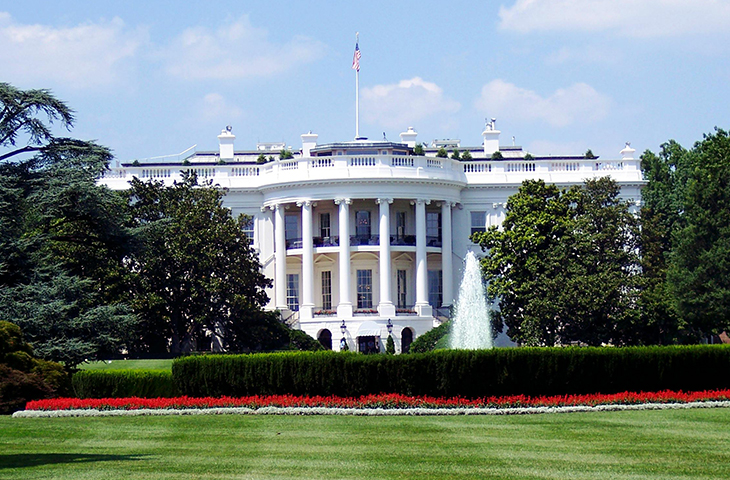
President Donald Trump has reshaped nearly everything about Washington– including the groups clamoring to influence policy.
Three new groups – the America First Policy Institute, American Compass and Advancing American Freedom – have formed since 2020, seeing an opening to create a home for their type of conservative policy that didn’t exist with the GOP old guard, like the Heritage Foundation.
The battle for lasting influence is on, and who ends up on top in this new realignment of conservative think tanks will not only determine who is most influential in Trump’s second term but could also mold the shape of conservative policy in the post-Trump era.
The three new groups are working to drive policy in the future by building on Trump’s brand, expanding on what Trump has built, or looking to counter the direction the GOP is moving in.
“The modern American conservative movement is— in terms of the political ecosystem— not as old or as mature as the modern American liberal movement, going all the way back to Woodrow Wilson,” Heritage President Kevin Roberts said. It is “the natural order of things, you would see additional organizations come into the fold as there is this political realignment personified and led by Donald Trump.”
Some trace the origins of the three groups and the resulting policy realignment back to 2017, when the GOP failure to repeal Obamacare exposed the fractures in Washington’s conservative policy circles. The White House organized dinners with various think tanks following the failed effort, said Marc Short, Trump’s first director of legislative affairs and chairman of AAF’s board.
“If you remember, there were parts of the Freedom Caucus that labeled the repeal effort ‘Obamacare lite,’” Short said, recounting the way Republicans were not able to come together on whether – or how – to replace the Affordable Care Act. “So we began organizing these dinners with the president and many members of the conservative movement.”
The first signs that a new world order was emerging came before Trump was sworn into office. Facing criticism for his potential administration’s links to the Heritage Foundation’s Project 2025 initiative, Trump distanced himself. Once in office, the administration has embraced the policies put together by AFPI, including combatting diversity, equity and inclusion programs and keeping trangender women out of women’s sports. AFPI launched in 2021 and previously was home to over 90 current administration officials.
“If you look at our America First agenda that we put forth, it had innumerable ideas and policy ideas that we would love to see happen. In fact, I think this administration's already like 90, 91 percent already in some sort of action,” said AFPI interim president Greg Sindelar. “When Trump 2.0… happened, we were able to just start acting on the implementation of those ideas with the various agencies.”
Agriculture Secretary Brooke Rollins founded the group and its chair system boasts members like Veteran Affairs Secretary Doug Collins, Housing and Urban Development Secretary Scott Turner, while Environmental Protection Agency administrator Lee Zeldin was on the board of the group’s C-4 and Attorney General Pam Bondi previously led the legal arm.
American Compass, meanwhile, has focused more sharply on conservative economics, especially the worker, after its 2020 launch.
It was founded by Oren Cass, who said there was a void in groups thinking along the policy lines of now-Vice President J.D. Vance and Sen. Josh Hawley (R-Mo.) — prominent voices of pro-union populism.
While existing organizations like Americans for Prosperity, Club for Growth and Susan B. Anthony List strengthened their bonds with Trump post 2017, AAF was founded to counter that stronghold, said Short, who is the chairman of the AAF board. Former Vice President Mike Pence founded the group.
“The president was so effective at capturing a lot of these conservative organizations that they followed him down a path of populism. And we felt that there was a void in the traditional conservative space that needed to have a voice again,” Short said. “They would never have any reluctance to criticize Republican elected officials in the past when they veered off conservative policy. But they've clearly been silenced. How many pro-family groups opposed [Secretary Robert F. Kennedy Jr.’s] nomination? How many free market groups have opposed the trade agenda?”
The emergence of the three new groups comes as Heritage, meanwhile, caused a rift with prominent conservatives last year over its embrace of Tucker Carlson after he interviewed white nationalist Nick Fuentes. Over a dozen staffers left the groupto join AAF.
Roberts insists Heritage’s place in the conservative ecosystem will remain.
“Our attitude at Heritage has always been to add and multiply, to work with anyone, anytime, on any topic on which we agree,” said Roberts, who previously was CEO of the Texas Public Policy Foundation after Rollins and before Sindelar. “And so for some of the new entrants, that's really easy. Like AFPI, we're very philosophically aligned.”
Heritage argues it has been at the forefront of many of the president’s major actions, like working to dismantle the Department of Education, unleashing oil and gas exploration and enacting stricter border policies. Heritage “represents the through line from the American founding to today,” chief advancement officer Andy Olivastro added.
The emergence of these three groups is shaking up a world that also includes libertarian think tank Cato Institute, center-right bipartisan group American Enterprise Institute, the Claremont Institute and Conservative Partnership Institute.
The last major Republican think tank realignment took place between former GOP presidential nominee Barry Goldwater’s 1964 loss and former President Ronald Reagan’s election in 1980, Cass said, describing a process that took over a decade. The Reagan Revolution, Cass said, brought “together the traditional social conservatives along with very free market libertarian folks on economic questions and the foreign policy hawks.”
Cass added that the new realignment has largely just started: “In terms of the overall reconstituting of American conservatism, there are a lot of ways where we’re really at the end of the beginning.”
The new groups have created a wider conservative policy infrastructure for the second-term Trump White House to work with than the first-term Trump White House had.
“One thing that’s very different [in] Trump one vs. Trump two is that there’s just a much larger cohort of people, both inside and outside the administration, to help it go in the direction that it wants to go,” Cass said.
AFPI and Heritage also painted a collaborative picture of working with the White House in the second term.
“The Administration is happy to work with outside groups that help support and promote the President’s policies. The White House will always have open lines of communication with groups who put America First,” White House spokeswoman Taylor Rogers said in a statement.
AFPI said the common goals they share with the president trumps— so to speak— any disagreements.
“It's kind of like my marriage. I love my wife, but we don't agree 100 percent of the time,” Sindelar said. “We agree on what the problem is, and maybe we just have different solutions to get there. That's all collegial through the number of people that we have in administration, the relationships we have, we don't have to air any of that publicly.”
American Compass agrees with the White House on aggressive tariff policy, while it called Trump’s decision to allow Nvidia to sell its artificial-intelligence chip in China a “historic blunder.” But, Cass insisted the administration has no issue with criticism.
“For us, it's not a team sport and why aren’t you on the team? It's a, the best way to be part of actually building a stronger conservative movement is to have these debates,” Cass said. “What we have always found is that substantive criticism on policy choices made in good faith with constructive alternatives is entirely welcomed and seen as part of how governing in a democracy is supposed to work.”
The new think tanks’ investment in Washington is risky, given Trump’s term limits and the potential for Democrats to flip either the House or Senate, or both, in November.
Despite their rise on Trump’s coattails, or in direct counter to the Trump agenda, the groups insist they are here to stay.
“It's a matter of a new conservatism that is emerging, and hopefully we have a unique and valuable role to play in supplying the ideas for it,” Cass said.
Heritage built its Capitol Hill headquarters in 1983. AFPI is following that model.
AFPI bought a $20 million building just steps from the White House, leaving its print on Washington with a focus on the executive branch.
“What we really want to do is create a permanent home for the America First movement,” Sindelar said. “Having the experience of Jan. 6 and 7 [2021], where people wondered if this movement would continue, we want to leave no doubt that this movement will continue. That the president's legacy will continue far after he leaves office.”
Popular Products
-
 Large Wall Calendar Planner
$55.76$27.78 -
 Child Safety Cabinet Locks - Set of 6
$83.56$41.78 -
 USB Touchscreen Heated Fingerless Gloves
$75.56$37.78 -
 Golf Swing Trainer Practice Stick wit...
$21.56$10.78 -
 Golf Swing Training Belt
$41.56$20.78