The Trust-busters Going After Cvs Are Republicans
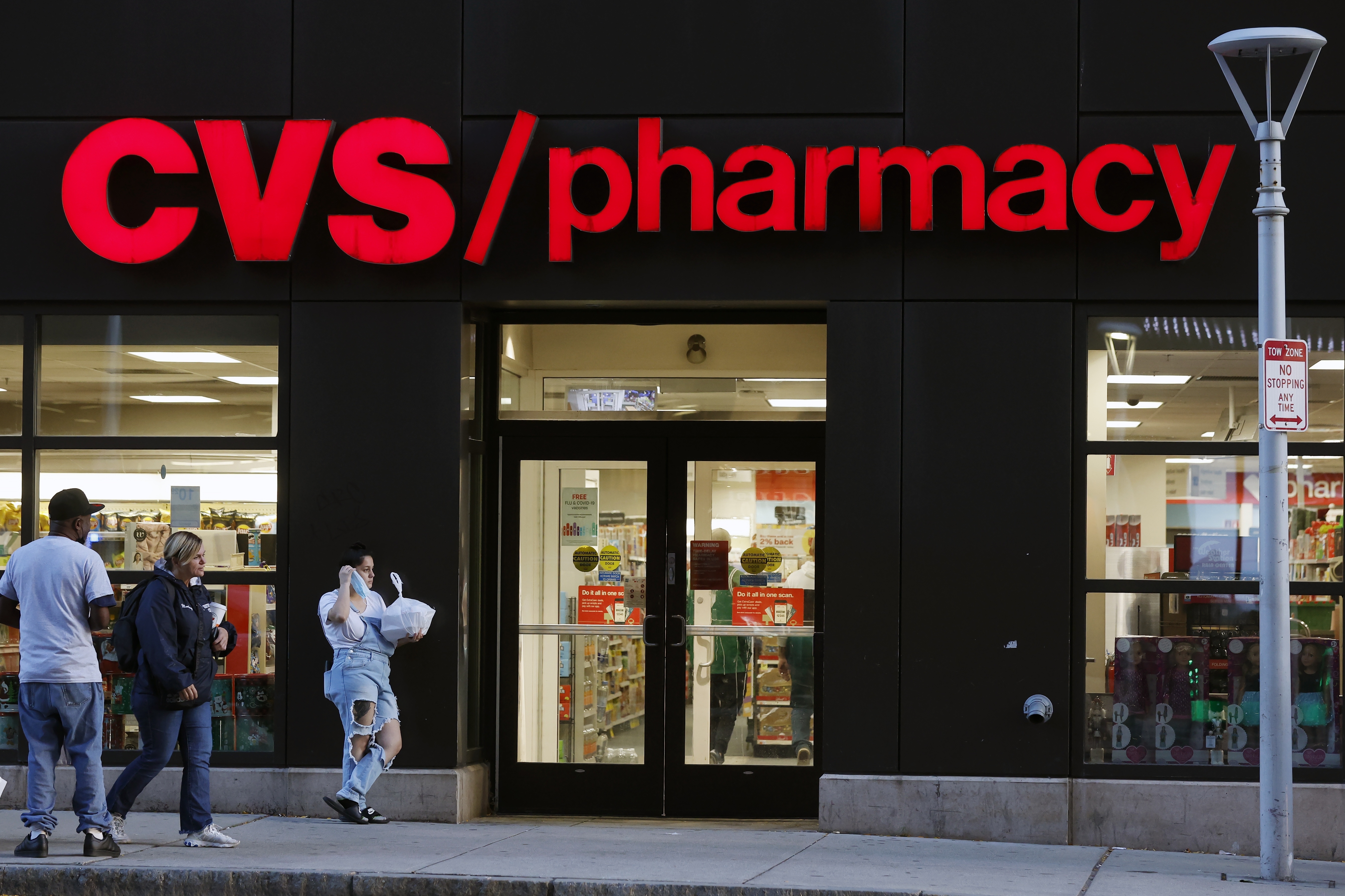
A burgeoning crackdown on pharmacy monopolies that could force CVS to sell off hundreds of its stores is coming from an unexpected place.
The deep red South.
A number of red states, as well as some blue ones, are poised to crack down on pharmacy conglomerates, following Tennessee and Arkansas, where GOP governors Bill Lee and Sarah Huckabee Sanders signed laws to bar companies from owning both pharmacies and pharmacy benefit managers, which negotiate drug prices on behalf of insurance plans.
Republicans who’d never dreamed of breaking up conglomerates like those that own many American pharmacies have come to support the idea, tracking President Donald Trump’s populism, along with consumer frustration over the cost of living. The laws aim to lower drug prices that Trump says are already declining because of his efforts to strong-arm drugmakers on threat of tariffs. Drug prices fell nearly 3% in the year ending in July, the largest drop in more than half a century.
“The average American citizen is really tired of being pushed around and bullied, whether it be from the government or a monopolistic company such as these [pharmacy benefit managers],” said Arkansas state Rep. Jeremiah Moore, a Republican who sponsored the state’s bill.
“For far too long, they've taken advantage of these sick people, and it's what I consider to be crony capitalism,” he continued. “They're bending the rules to benefit their own bottom line.”
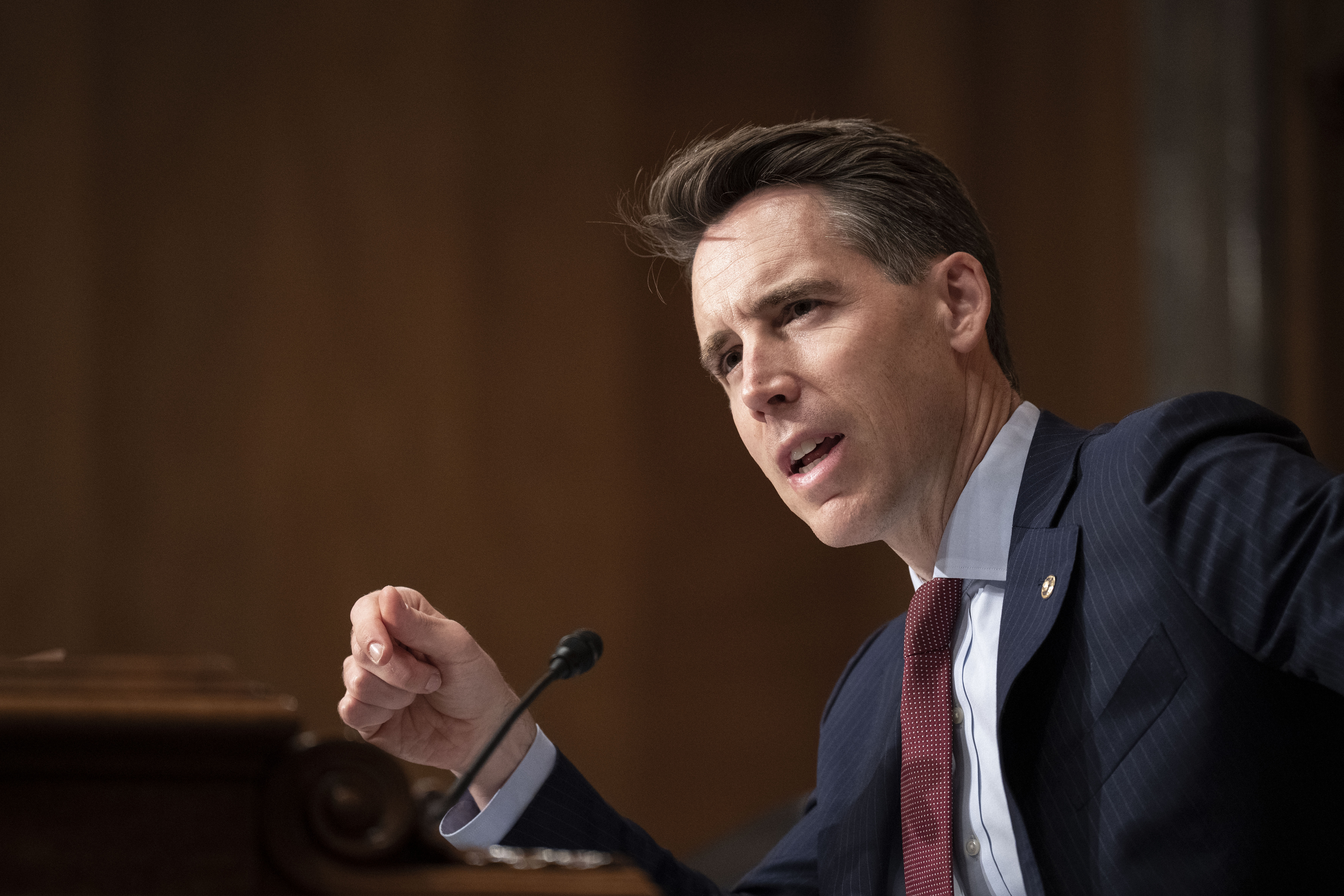
At least 10 other states, including seven Republican-led ones, have pursued similar laws to those enacted in Arkansas and Tennessee. The idea is also catching on in Washington. Missouri Republican Josh Hawley, a populist, and his Democratic colleague Elizabeth Warren of Massachusetts, a progressive, have proposed the Patients Before Monopolies Act, to take the antitrust crackdown national.
Hawley has called the bill “a major step toward restoring transparency and making health care more affordable for every American.”
CVS Health, which owns one of the largest PBMs and would have to divest or shut down its retail pharmacies in Tennessee and Arkansas if the bills are implemented, said the opposite is true.
“Misguided efforts to tear businesses apart is bad policy that will increase consumer costs, decrease access to care, and open the door to private equity stripping the entire U.S. healthcare system for parts,” company spokesperson David Whitrap said in an email.
CVS Health’s ownership of multiple pieces of the health care supply chain allow for a simplified, convenient and cheaper consumer experience, he added.
Proponents of forcing a separation between the PBMs and pharmacies claim companies can steer patients toward their own pharmacies and bill them more for brand-name or specialty drugs. They say requiring PBMs to divest their pharmacy businesses would force more competition with independent pharmacies and lower prices.
Major PBMs are suing to stop the Arkansas and Tennessee laws.
If the courts side with the health care giants and block the laws, state lawmakers and independent pharmacists say prescription drug prices will rise, Americans will be overcharged, and local pharmacies will be put out of business by the big chains.
If the courts decide the laws can take effect, CVS Health and UnitedHealth Group, which dominate the pharmacy and health insurance sectors, say they'll have to shut down more than 100 brick-and-mortar pharmacies in Arkansas and Tennessee, creating pharmacy deserts and raising costs for consumers. It could also give other states or the federal government the green light to move forward with similar laws, impacting thousands of chain pharmacy locations.
CVS Health and UnitedHealth Group own two of the three largest pharmacy benefit managers, CVS Caremark and OptumRx, which, along with Cigna’s Express Scripts, control roughly 80% of the market.
In Tennessee, CVS Health told POLITICO implementing the policy would force it to shutter 134 community pharmacies and would increase costs to Tennessee employers by $180 million per year, as the company says employer health plans pay CVS pharmacies lower reimbursement rates than other pharmacies.
In Arkansas, the company would shutter 23 pharmacy locations and cease deliveries at its more than 100 mail-order pharmacies in the state, leading to a $6.6 million cost increase for health plans, care disruptions for more than 340,000 residents and the elimination of more than 500 jobs, said CVS' Whitrap.
“Is this the tradeoff that Arkansas — or really any state — would want to make?” Whitrap said. “It’s bad for healthcare costs, it’s bad for healthcare access, it’s bad for patients who need specialized care, and it’s bad for local jobs.”

UnitedHealth Group said the laws would upend care for behavioral and mental health care patients at dozens of specialty pharmacies it owns in the two states.
“The treatment these patients receive is complicated enough, and if these laws are successfully implemented, it will only exasperate an already stressed healthcare system, and add hardship to families, especially those in rural and underserved communities,” the company said in a statement.
But proponents of the policy point to Federal Trade Commission reports showing that pharmacy benefit manager-owned pharmacies charge health plans significantly more for certain types of drugs and reimburse their own pharmacies at much higher rates compared to independent pharmacies. They argue that if the PBM-owned pharmacies do ultimately shut down, independent pharmacies are ready to pick up the slack.
As the dueling narratives play out, interest in pursuing policies targeting vertical integration in health care — where one company owns different entities of a supply chain, like a health insurer owning a pharmacy and a primary care practice — is growing on both sides of the aisle, setting up a potentially yearslong fight over the best ways to address the issue.
“This fight is a precursor to what will be a decade of ongoing de-integration of these companies,” said Tennessee state Rep. Aftyn Behn, a Democrat who co-sponsored the state’s bill. “I do look at this as a harbinger.”
How health care giants got so big
As health care giants have merged and acquired new businesses, the PBM industry has gotten more and more consolidated.
In 2007, CVS Health purchased Caremark for $26.5 billion and later acquired Aetna in 2018 — combining a major PBM, national insurer and sprawling pharmacy network under one corporate umbrella. UnitedHealth, already the nation’s largest insurer, launched its PBM in 2011 and has since scaled its business by buying up competitors and expanding its specialty pharmacy and behavioral health footprint.
CVS Health also operates the country's largest retail pharmacy chain, with a roughly 21% market share and about 9,000 locations nationwide. UnitedHealth operates a mail-order pharmacy service, delivering roughly 220 million home-delivery prescriptions annually, and owns the specialty pharmacy Genoa Healthcare, with about 30 locations across Arkansas and Tennessee and hundreds more nationwide.
But health industry consolidation seems to have reached a tipping point over the past few years, with even Republicans, long friends to industry, growing frustrated with what they view as anti-competitive behavior driving higher costs.
They’ve teamed up with allies on the left to target vertical integration, urging federal agencies to investigate the biggest players and advancing legislation to compel the industry to be more transparent about its business practices.

"You can’t lower health care costs without rooting out corporate profiteering in health care,” Warren told POLITICO in a statement, noting her bill with Hawley is “not a new idea,” as Congress has long scrutinized monopolies in other industries.
PBMs have sought to convince lawmakers and patients that the state laws are a bad idea, spending millions and hiring dozens of lobbyists in their campaign opposing Tennessee’s bill, according to the National Community Pharmacists Association, which represents independent pharmacists. That campaign was ultimately unsuccessful, as both Tennessee’s and Arkansas’ bills received broad bipartisan support.
Still, not all Republicans are on board with breaking up big business. A handful of right-leaning groups have warned lawmakers that the state bills go against free market principles, will force pharmacies to shut down and would reduce access to care for rural Americans with few other options.
“This attempt to force wholesale restructuring without really knowing what happens to patients, to their costs, to their pharmacy access is really reckless,” said Naomi Lopez, senior fellow at the Goldwater Institute, a libertarian think tank.
In the courts’ hands
PBMs have sued to stop Tennessee’s and Arkansas’ laws from going into effect, and both policies are on hold as the courts decide whether they can proceed. The cases could have implications for states’ ability to tackle antitrust issues.
In Arkansas, a federal judge granted CVS Caremark, Express Scripts and OptumRx a temporary injunction blocking enforcement of the law, which was set to take effect earlier this year. Arkansas appealed.
During a September hearing, the PBMs argued the law threatens interstate commerce and unfairly discriminates against out-of-state companies, while protecting in-state businesses. A decision in favor of the PBMs could impact states’ abilities to pass and enforce antitrust laws beyond health care, said John Vinson, CEO of the Arkansas Pharmacists Association, a group representing pharmacists in the state.
“It boils down to: Was this a protectionism law to protect Arkansas in-state businesses, or was this a law that addresses antitrust concerns to protect public health and safety? And do states have rights to do that or not?”
A ruling on the state’s appeal is expected in the next few months.

In Tennessee, PBMs are challenging the law on similar grounds — that it unfairly penalizes out-of-state corporations. The companies are also seeking a preliminary injunction against the policy, which is set to go into effect in 2028.
Legal experts warn that the states may face an uphill battle in convincing federal judges that the bills don’t violate the Constitution’s Commerce Clause, which prohibits states from discriminating against out-of-state economic activity, a point the conglomerates are emphasizing.
But Moore, the Arkansas Republican representative, said he’s confident states have the right to intervene “on behalf of the patient’s health and safety.”
The bill isn't about protectionism, Moore said. “It's about wanting to shut down [the PBMs’] ability to line their pockets at a disadvantage to patients and taxpayers.”
The courts’ decisions are likely to impact whether other states move forward with similar proposals, but because both laws are being challenged in federal district courts, a decision in one won’t necessarily set a precedent for how another court proceeds.
“Even if Arkansas were to not get the outcome it desires, another state might, and then it might be looked at in the U.S. Supreme Court if there are conflicting opinions or decisions from two different areas within the appeals court,” Vinson said.
What's best for patients
While they wait for the courts to rule, both sides are fiercely making the case that their position benefits patients.
Employees of Genoa, the specialty pharmacy owned by UnitedHealth, say they're worried about their pharmacies being shut down or sold off if the laws take effect.
Genoa’s locations usually operate within community health centers and offer pharmacy services for people with mental and behavioral health issues, stocking injectables and other specialty medicines that smaller, independent pharmacies don’t always have readily available. If they were to shut down, employees said, thousands of rural patients with conditions like schizophrenia or substance-use disorder might lose access to life-saving care.
"It's sad, and it scares me," said Brett Edelson, CEO of Genoa Healthcare. "I've been to our pharmacy in Johnson City, Tennessee, where that is the hub of the community — that is where the community receives mental health care, and that's where we have a general pharmacy, and that's replicated across a lot of the rural sites."
Volunteer Behavioral Health Care System in Tennessee operates 10 community health centers that include Genoa pharmacies, several in rural parts of the state. The one-stop shop, with a provider and pharmacy under one roof, has been valuable for the health system’s patients, many of whom struggle to get to health care appointments because they don't own cars, said the group’s senior vice president of operations, Amanda Hayes.

Hayes, who met with Tennessee legislators to plead with them not to pass the law, said she's worried that if the system's on-site specialty pharmacy closes, patients with serious medical conditions will fall through the cracks.
But proponents of the bills strongly rebut claims that patients would be harmed by the laws. The opposite is true, they say.
An independent pharmacy owner in rural east Tennessee, granted anonymity because he feared legal retaliation from the large PBMs, said the companies’ outsized market power is making it impossible for small, struggling pharmacies like his to survive. The pharmacy owner said he’s witnessed the big PBMs aggressively steering patients to their own mail-order pharmacies, while lowballing reimbursement rates for independent pharmacies, claims that mirror FTC's reports.
Those business practices have made it difficult for local pharmacies to stay open, creating pharmacy deserts, he said. Rates of retail pharmacy closures have more than doubled in recent years, with independent pharmacies more than twice as likely to close compared to chain pharmacies, according to a USC Schaeffer study.
“When you’re losing 100 bucks filling a medication, you begin to face this ethical dilemma: Do I need to turn this patient away in order to stay in business to help other patients?” the pharmacy owner said. “That scenario falls squarely at the feet of these health care companies," he said, adding, "They steer patients and squeeze out competition.”
He also pushed back on the conglomerates’ claim that hundreds of pharmacies would close if the policies go into effect. The law requires the companies to divest their pharmacy businesses, not close them. Other large chains that don’t own PBMs, like Walgreens, could buy them up and keep the brick-and-mortar locations running.
“That's what pharmacies do all the time,” he said. “There's plenty of other options that are on the table.”
Popular Products
-
 Devil Horn Headband
$25.99$11.78 -
 WiFi Smart Video Doorbell Camera with...
$61.56$30.78 -
 Smart GPS Waterproof Mini Pet Tracker
$59.56$29.78 -
 Unisex Adjustable Back Posture Corrector
$71.56$35.78 -
 Smart Bluetooth Aroma Diffuser
$585.56$292.87