The White House Considers Granting 250 Pardons For The Nation’s Birthday
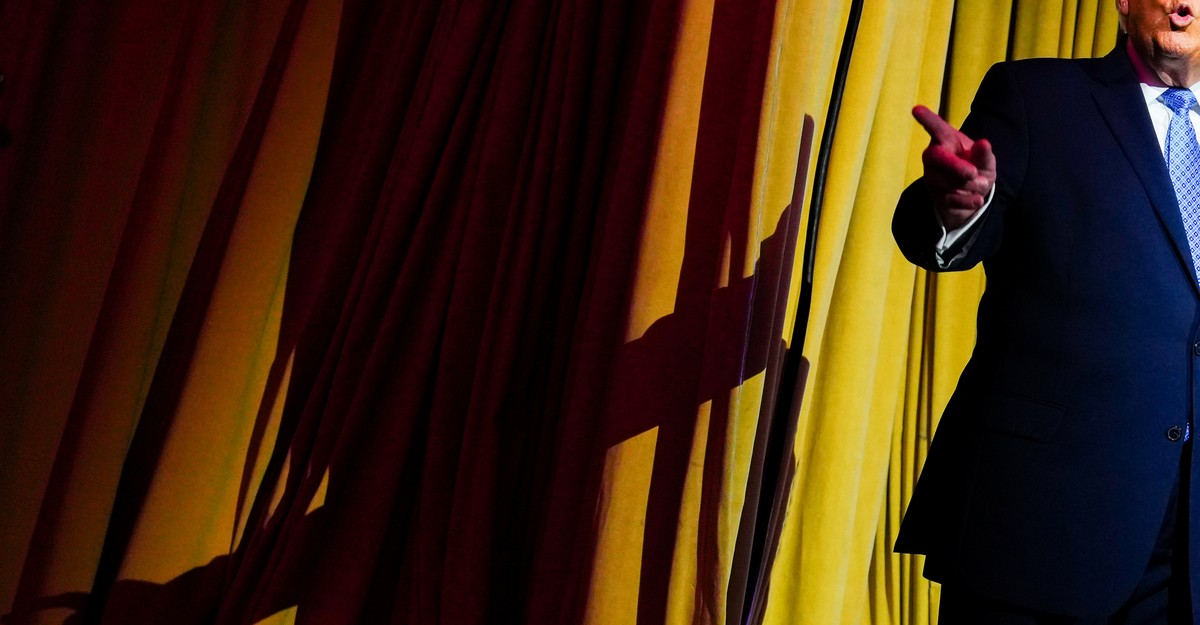
Presidents have generally treated their pardon power like an embarrassing secret, closely held among only a few trusted aides and exercised quietly in the final days of an administration. Some have signed clemency warrants just hours before boarding Marine One for their final flight.
But not Donald Trump.
Since returning to the White House for his second term, Trump has wielded his authority to grant clemency with abandon. He issued pardons or commuted the sentences of nearly 1,600 people associated with the January 6 Capitol riot on his first day back in office and has publicly mused since about preemptively pardoning aides and allies. Now the White House is discussing a possible announcement of presidential pardons as a centerpiece of the nation’s semiquincentennial celebrations over the Fourth of July weekend, according to 14 people familiar with the conversations. The idea has been described as “250 pardons for 250 years,” an initiative that would put one of the most politically fraught constitutional powers at the forefront of the country’s birthday festivities.
The president had not been presented with the proposal as of Friday, and the idea may never rise to his level, a White House official told us. Trump’s advisers are still split on whether mass pardons for the anniversary of American independence would be a good idea. One adviser said there had been polling that suggested that a mass pardon could benefit the president, but any action was unlikely by Independence Day. The Wall Street Journal reported last month that 250 pardons were being considered.
Advocates for the plan say that it would both underscore the president’s singular authority and reinforce an image he has long sought to cultivate: “Trump the merciful,” as a person close to the White House described it to us recently. Meanwhile, the prospect of a mass pardon has set off an international frenzy of lobbying and dealmaking, in which even slight proximity to the president can be monetized.
Five current and former administration officials and nine private-sector lawyers, lobbyists, and other individuals with ties to Trump’s orbit told us that the jockeying among those seeking clemency for past crimes has been intense. One criminal-defense attorney called it “a three-ring circus,” and a former administration official said that it was “batshit crazy.” One lobbyist told us that he had started turning off his cellphone as the ”“aggressive” requests from clients intensified in recent weeks. All spoke with us on the condition of anonymity to discuss sensitive matters with high stakes in the days ahead.
One former Trump associate who had been approached to help facilitate a pardon described the push to be included in the possible 250 for the celebration of American independence as distinctly different from what had occurred in Trump’s first term. “Everything is now out in the open,” he told me, drawing a contrast to previous attempts to keep plans under wraps and disguise the appearance of selling access. For those hoping to obtain a presidential pardon or other form of clemency, this person said, “now is the time.”
The White House did not respond in detail to the reporting in this story. “President Trump takes his absolute constitutional power to issue pardons and commutations seriously,” White House Press Secretary Karoline Leavitt told us in a statement. “That’s why we have a rigorous review process involving the Department of Justice and the White House Counsel’s Office—a team of elite lawyers who carefully evaluate every request before it reaches the President’s desk, and he serves as the final decision maker.”
Attorneys and lobbyists told us that they had been inundated with requests to take on pardon cases in recent weeks as word of the possibility of 250 pardons circulated; some firms have struggled to keep up with the demand. “In 30 years of practicing law, I’ve never seen anything like this,” another attorney told us wearily. “I’m exhausted.”
The “250 for 250” mass-pardon effort has been supported in part by Alice Johnson, who became the nation’s first “pardon czar” last February, as well as the Department of Justice pardon attorney Edward R. Martin Jr. and others in the president’s orbit. (Martin was previously the interim U.S. attorney for Washington, D.C.) Advocates say that the idea is to link the July 4 theme of freedom with correcting what some view as overly punitive criminal sentences or the “weaponization” of the justice system by the president’s Democratic predecessors.
The president’s advisers differ as to whether a July 4 mass pardon would be politically helpful because it would shore up support among the president’s allies, or harmful amid low approval ratings and weakening support among Republicans in Congress. Last month, members of Trump’s party openly balked at a DOJ plan to pay out $1.776 billion to those who claim to have been targeted by the government.
[Read: Trump isn’t giving up on his slush fund]
Those familiar with the pardon efforts said that although there had been indications by White House and Justice Department officials of “movement” in pardon cases in recent days, it was unclear what the president would ultimately decide if the plan was formally presented to him. “The list is ready when he asks for it,” one attorney who has been in contact with the White House told us.
Three people familiar with the pardon discussions told us that among the individuals being considered are the Malaysian fugitive Low Taek Jho, also known as “Jho Low,” who is wanted for his alleged role in an international financial-fraud scheme that diverted billions of dollars, involving a company known as 1MDB. Pras Michel, of the musical group the Fugees, is also being considered for a pardon after being convicted for conspiring with Jho Low and a Chinese-government official to carry out a lobbying campaign to end the U.S. criminal investigations into the scheme after the money was stolen. Another person being considered is Nicole Daedone, a co-founder of the OneTaste “orgasmic meditation” business, who was sentenced to nine years in prison for her role in a forced-labor conspiracy.
Juda S. Engelmayer, a spokesperson for OneTaste, told us that the company was familiar with the “250 for 250” discussions but that “we know people are advocating for us” on behalf of Daedone. Engelmayer said that the company had not received any communication from the White House or other official channels. David Tafuri, who is among the attorneys representing Michel in his post-conviction motions and potential legal appeal, told us in an email that “we have never had any involvement in any matters related to a potential pardon and have had zero discussions with anyone in the US Government about it.” (Representatives for Low did not respond to a request for comment.)
One attorney familiar with the recent pardon efforts told us that there have been discussions involving “very rich, well-placed individuals” from India, Greece, Turkey, and France who were told that their cases were under consideration. Those who had recently spoken with the White House about potential pardons said that they were told that criminals sentenced by Barack Obama– or Joe Biden–appointed judges were viewed more favorably for pardons, and that those sentenced by Trump-appointed judges may be less likely to receive a pardon.
Two administration officials familiar with the “250 for 250” effort said that the White House could also consider individuals who had been charged under a law that imposes stiff mandatory minimum sentences for those in possession of firearms in relation to violent or drug-trafficking crimes.
In response to questions, a Justice Department spokesperson said, “Anyone is eligible to apply for a pardon and POTUS is the ultimate decider.”
The established process of applying for pardons runs through the Department of Justice’s Office of the Pardon Attorney, which is supposed to evaluate cases and compile a list of recommendations for the president. But people involved with the process told us that it has largely been replaced with an informal network of intermediaries to the White House. They use their connections to advocate for a pardon, in exchange for a fee.
“It is general knowledge in our practice that for $2 million, you can have a pardon,” one prominent white-collar defense attorney told me. “The clients come to us and tell us, I’ve been told I need to go hire this specific person, and [then] I will get a pardon.” Liz Oyer, who was the Justice Department’s Pardon Attorney under Biden and during the initial months of Trump’s second term, wrote to us that “Donald Trump has turned the pardon process into the Hunger Games.” Leavitt told us that the president “finds it detestable that anyone would even attempt to profit off pardons.”
We spoke with multiple people loosely affiliated with the Trump administration who had been approached in recent weeks by lawyers seeking pardons for clients as part of any Independence Day announcement. These people said they were told that they would make millions if they would use their connections to help facilitate the conversations necessary for a pardon—despite, in many cases, having no prior legal or lobbying experience. Most said that $1 million to $2 million was the going rate, though they were aware of clients offering many times that for more challenging cases. Some established white-collar defense lawyers told us that they were unwilling to continue to advise those who pursued pardons in a way that could be viewed as a potential felony by a future Justice Department once Trump is no longer in office.
Some of the president’s allies have been pushing for a mass-pardon announcement for more than a year. They came close to succeeding last year before the planned announcement was abruptly halted, two former administration officials told us. One former administration official told us that although previous administrations had focused on pardons at the end of the presidential term, officials wanted it known that the Trump White House Counsel’s Office and Justice Department were “open for business” from the earliest days of the second term.
Among the president’s advisers, some share the president’s belief that he should use his pardon power widely to correct for the “weaponization” of past Justice Departments. They see his pardon authority as a mechanism, in part, for currying support with key parts of his base as the midterms approach. Other advisers have warned that issuing pardons at this juncture may backfire politically. Republicans in Congress have also expressed their concerns about mass pardons and say that any action could complicate Acting Attorney General Todd Blanche’s already contentious confirmation process.
Popular Products
-
 Classic Oversized Teddy Bear
$23.78 -
 Gem's Ballet Natural Garnet Gemstone ...
$171.56$85.78 -
 Butt Lifting Body Shaper Shorts
$95.56$47.78 -
 Slimming Waist Trainer & Thigh Trimmer
$67.56$33.78 -
 Realistic Fake Poop Prank Toys
$99.56$49.78