The World's 10 Richest Families
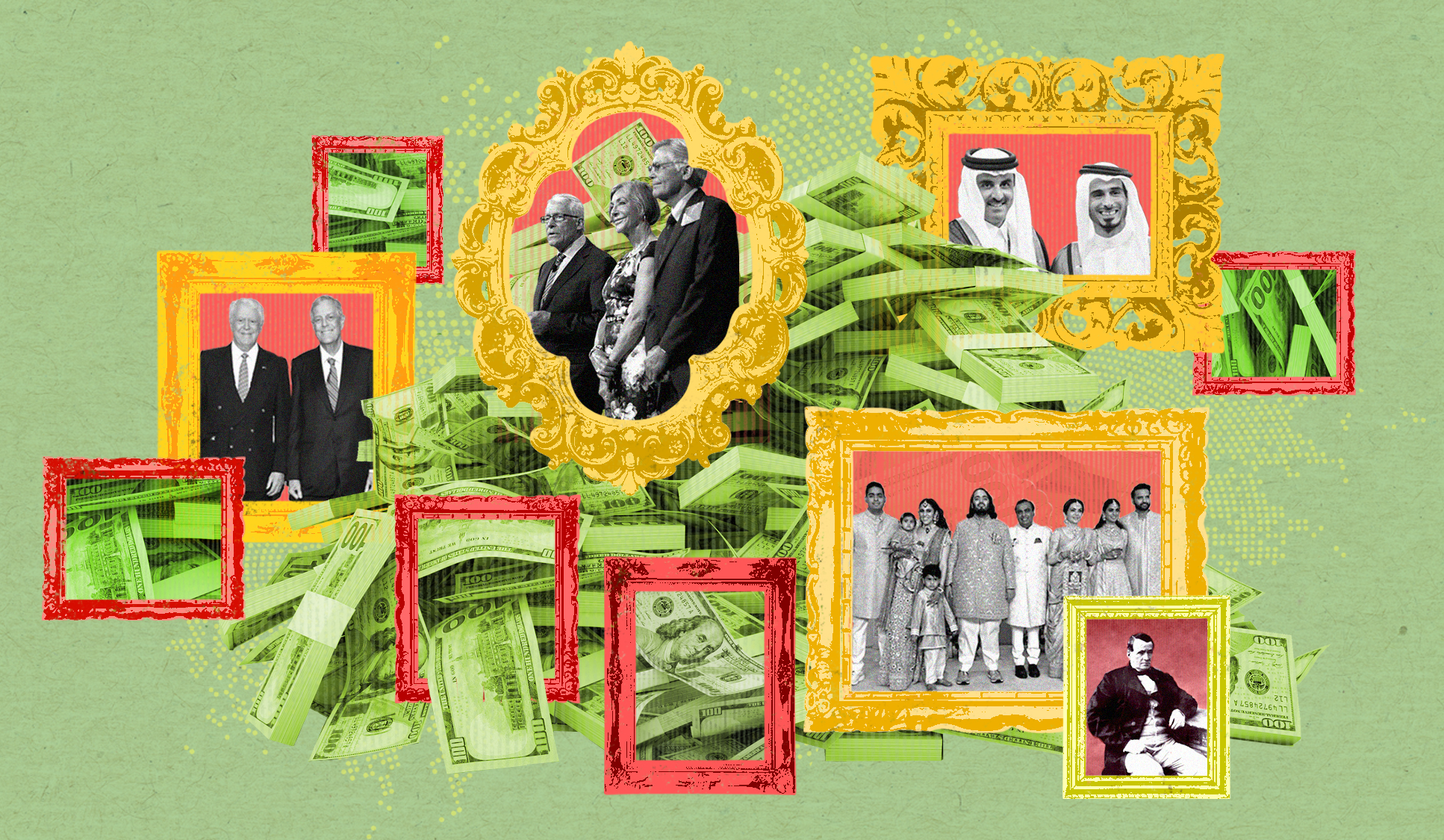
Billionaires have proven a popular punching bag in entertainment in recent years, from movies like HBO Max's dark comedy "Mountainhead" to apocalypse-themed billionaires-in-a-bunker series like Hulu's "Murder at the End of the World" and "Paradise." These depictions have generally not been positive, and the reputation of many wealthy elites was further degraded by the recent political frenzy around the U.S. Department of Justice releases on Jeffrey Epstein, the disgraced financier whose 2019 suicide triggered many conspiracy theories. The Epstein files have implicated or embarrassed countless people on lists of the world's richest, including Microsoft CEO Bill Gates and New York Giants chairman Steve Tisch.
Yet the ultra-rich are shrugging off their declining popularity — in part, by flexing their muscle in American politics. A recent analysis by The New York Times showed that just 300 billionaires and their relatives made nearly 20% of all political contributions in the 2024 election cycle that resulted in a Republican trifecta in Washington and the election of President Donald Trump for a second term. The $3 billion they spent influencing elections up and down the ballot was a 12,000% increase from 2008. Still, most global billionaires and their families prefer to operate in relative obscurity, collecting luxury automobiles, private jets and coveted art rather than direct political influence.
At a time when the economy is being powered by the spending habits of the 1%, the world's richest 500 people collectively added $2.2 trillion to their fortunes over the course of 2025 alone — an extraordinary upward redistribution of wealth. The Trump administration's February 2026 decision to begin a bombing campaign against Iran, though, could soon change things; it has snarled shipping and air traffic in and around the Persian Gulf, rattling financial markets and spiking prices for oil and other critical commodities.
Our list only looks at families where the wealth is already intergenerational; this means that we exclude, for example, the family of Meta CEO Mark Zuckerberg, given that his phenomenal riches have yet to be passed down to heirs. The economic boom driven by Silicon Valley entrepreneurs that began in the late 20th century created an entirely new class of moneyed elites, most of whom did not start out in life with anything like the riches they have now. Many of them, like Oracle founder Larry Ellison, are also still alive. As a consequence, this list is likely to evolve when individuals from the current cohort of elderly billionaires, like investor Warren Buffet, pass away and distribute their fortunes to their children and extended families.
The Walton family ($513.4 billion)
Sam Walton opened his first discount variety store in Bentonville, Arkansas, in 1962 and turned it into a retail empire "by buying up low-cost goods and selling them at lower prices than his competitors," said Fox Business. Today, Walmart operates more than 10,500 stores in 19 countries, and Walton's heirs are worth $513.4 billion. There are now three Waltons — Jim, Rob and Alice — who are worth more than $100 billion each, and their largesse "largely stems from the Walmart shares given to them by their father," said Business Insider. One of the family's heiresses, Christy Walton, made waves when she "promoted a planned nationwide protest against President Trump by placing a full-page advertisement that ran in the New York Times" in June 2025, bucking a trend of the country's wealthiest elites seeking to curry favor with the president.
The al-Nahyan family ($335.9 billion)
The discovery of oil in the 1960s set off a "breathtaking transformation" of the United Arab Emirates from a society of subsistence "date farmers, camel herders and pearl fishermen" to one of the richest countries in the world, said The New York Times. The al-Nahyan family is the hereditary monarchy of the Emirate of Abu Dhabi, which has increased its natural resource wealth with its pioneering sovereign wealth fund, the Abu Dhabi Investment Authority (ADIA). Among many other endeavors, the ADIA purchased a stake in the city of Chicago's parking meters in 2008, and now the "revenue from these meters has reportedly reached over $150 million annually — all flowing to the investor group led in part by ADIA," said Driven Magazine. Adding to the good times is the fact that the United Arab Emirates "has become a hub for the Trump Organization's international expansion," said Forbes, and in 2025 alone the president and his family "entered into at least nine agreements with ties to the gulf nation — some involving government entities in the country, many stemming from business relationships developed there."
The Emirates, and the al-Nahyan family, have much at stake following the descent of the Persian Gulf into war in February 2026, having turned the country into a commercial, banking and aviation hub. In particular, Iran's "attacks on Dubai are a major pain point for the UAE, which relies on the city's reputation as a business and tourist hub," said The Atlantic Council.
The Al-Saud family ($213.6 billion)
Perhaps the only family in the world with a country named after them, the Al-Saud dynasty completed their conquest of the Hejaz (now Saudi Arabia) in the 1920s. While this wasn't clear then, over the years Saudi Arabia would come to control "about 20-25% of all the world's oil reserves while producing about 10-15% of the world's daily oil consumption," said Epicenter. Because the "family contains as many as 15,000 extended members," it is challenging to "accurately assess the wealth of the House of Saud," said Investopedia. The Saudis also threw themselves into the movie business in 2025, and the country's "sovereign wealth fund now backs some of Hollywood's biggest deals, including a $24-billion financing package for Paramount's $78-billion Warner bid," said The Los Angeles Times.
Saudi Arabia, like many Gulf countries allied with the United States, has been subject to retaliatory attacks following President Trump's decision to launch a regime decapitation strike against Iran on February 28, 2026. The outbreak of violence will complicate the country's political strategy, as well as the Saud family's wealth trajectory.
The al-Thani family ($199.5 billion)
Another family of Gulf royalty has turned natural resource wealth into a multifaceted and growing portfolio. "No ruling dynasty in the Arab Gulf has played a seemingly weak hand with more skill" than the al-Thani family, said Manara Magazine. The country's diplomatic and investment strategies are all about "building Qatar into an international brand that can underpin its existence and the family's longevity," said Bloomberg. Former Qatari Emir Sheikh Hamad bin Khalifa al-Thani is a superyacht enthusiast who owns the Katara, a "$400 million mega yacht" that "comfortably accommodates up to 34 guests in 14 cabins serviced by 95 crew members," said the South China Morning Post. The family is so flush that Qatar "gave America a $200 million jet that could eventually be used as Air Force One" in May 2025, said Politico.
Iran has also targeted Qatar for retaliation following the Iran war outbreak, and severely damaged a major Liquid Natural Gas facility on March 18, 2026, with uncertain consequences for the country's economic future.
The Hermès family ($184.5 billion)
Thierry Hermès was the "sixth child of an innkeeper," said Vanity Fair, who "went to Paris an orphan, proved gifted in leatherwork and opened a shop in 1837." He and his descendants built a luxury fashion empire that has survived world wars, multiple French regime changes, and an era of globalization that has led to dizzying change and competition. The luxury brand's business model is the polar opposite of Walmart, which presumably would not have much luck selling scarves that cost $4,125 each. Sales remained strong in 2025 despite a price hike in the U.S. "aimed at passing on the burden of tariffs to its clients," said Reuters. While Hermes stock tumbled along with many other continental luxury brands when President Trump issued a threat of new tariffs against eight countries in the European Union in January 2026, they recovered when the president appeared to walk back his stance a few days later.
The Koch family ($150.5 billion)
The Kochs began their ascent to the top of the global wealth hierarchy when Fred Koch "used his training in chemical engineering to develop an improved method of turning oil into petrol" and built oil refineries in Stalin's Soviet Union and Hitler's Germany, said the BBC. His son Charles was "groomed as Koch's successor, becoming president of the family business after his father died in the 1960s" and diversified the family's interests into "energy, chemicals, agriculture, finance and electronics, producing everything from toilet paper to steak." The Kochs spent more than $49 million in the 2024 election cycle, donating almost exclusively to Republicans and sending $40 million alone to the right-wing SuperPAC Americans for Prosperity Action. The New Civil Liberties Alliance (NCLA), a conservative group funded in part by Koch family money, filed a lawsuit against the Trump administration in April 2025 contesting the legality of the president's new tariff regime. When those tariffs were overturned in a landmark February 2026 Supreme Court decision, the NCLA indicated it was looking into challenging the legal basis of the Trump administration’s next round of tariffs.
The Mars family ($143.4 billion)
You may never have heard of the Mars family, but you've almost certainly eaten its candy. The family's company, Mars Inc., based today in Virginia near the CIA's headquarters, "was founded in 1911 when Frank Mars started selling candy out of his kitchen in Tacoma, Washington," said Forbes. The family's vast confectionery empire includes Halloween staples like Snickers and M&Ms and operates 135 factories in 68 countries, employing more than 140,000 people. These bonbon barons do not enjoy the limelight and are known as a "reclusive dynasty of billionaires who spend a good deal of time on a remote ranch in Wyoming," said The Guardian. Amid the global upheaval over tariffs, the Mars empire was well-positioned to benefit from the Trump administration's changing, given that the company claims to "make 94% of its U.S. products locally," said Yahoo Finance. Still, the price of the company's Halloween-themed candy variety packs rose 12% in 2025, meaning that "working families will keep getting spooked at the checkout line," said The Century Foundation. The Mars family, however, will be just fine.
The Ambani family ($105.6 billion)
The Ambanis are the richest family in Asia, and their empire, which includes oil and gas, telecommunications and retail businesses, has a "valuation that is equivalent to 10% of India's Gross Domestic Product," said The Independent. It all started in 1958, when Dhirubhai Ambani launched a company based in Gujarat, India, that "began as a small firm trading commodities like spices and polyester yarn" and gradually expanded to make Reliance Industries a "global powerhouse," said People. Scion Anant Ambani's 2024 reception following his wedding with Radhika Merchant was "attended by over 14,000 people" and featured "60 floral animal sculptures" that each required "over 100,000 flowers to make," said Vanity Fair. It's safe to assume that the Ambanis' soirée substantially exceeded the 2024 average U.S. wedding cost of $33,000.
The Bettencourt Meyers Family ($93.8 billion)
Françoise Bettencourt Meyers is considered the wealthiest woman in the world and is the heiress to the fortune first amassed by the founder of cosmetics empire L'Oréal, Eugène Schueller. She plays a "pivotal role in preserving the family fortune" through her role as a L'Oréal board member and "serves as the chairwoman of the family's lucrative holding company, Téthys Invest," said Yahoo Finance. In recent years, L'Oréal has consolidated its control over the global cosmetics industry by acquiring competitors like the Australian luxury brand Aesop, hair care company Color Wow and cologne brand House of Creed, among many others. Bettencourt Meyers is "known to play the piano for several hours a day and has written two books — a five-volume study of the Bible and a genealogy of the Greek gods," said the BBC. She has two sons with her husband Jean-Pierre Meyers, Jean-Victor and Nicolas, and rarely engages with the press. In 2025, Jean-Victor Meyers succeeded his mother as vice chairman of the L'Oréal board of directors.
The Wertheimer family ($85.6 billion)
In 1925, "Pierre Wertheimer, and his brother Paul struck a deal with Gabrielle 'Coco' Chanel" to create "Société des Parfums Chanel with the aim of selling and producing Chanel beauty products," said Business Insider. That history means that the Wertheimer family's "destiny has been intertwined with the world's second-largest luxury brand for a century," said Women's Wear Daily. The Wertheimers are oenophiles in an era of declining wine-drinking and have acquired a large luxury wine empire, including Domaine de l'Ile on the island of Porquerolles in Provence, as well as three estates in Bordeaux and St. Supéry Estate Vineyards and Winery in California's Napa Valley, said Wine Spectator.
Industry sources speculate that current Chanel owners Alain and Gérard Wertheimer are preparing to hand the reins to their 39-year-old nephew Arthur Heilbronn, who has "taken on management positions overseeing his and his relatives' real estate, banking and media investments" in recent years, said Business Standard. If so, that would be "another quiet move in a succession symphony that's decades in the making," said Yahoo Finance.
Popular Products
-
 Classic Oversized Teddy Bear
$23.78 -
 Gem's Ballet Natural Garnet Gemstone ...
$171.56$85.78 -
 Butt Lifting Body Shaper Shorts
$95.56$47.78 -
 Slimming Waist Trainer & Thigh Trimmer
$67.56$33.78 -
 Realistic Fake Poop Prank Toys
$99.56$49.78