Transcript: What The Democratic Moderation Debate Gets Wrong
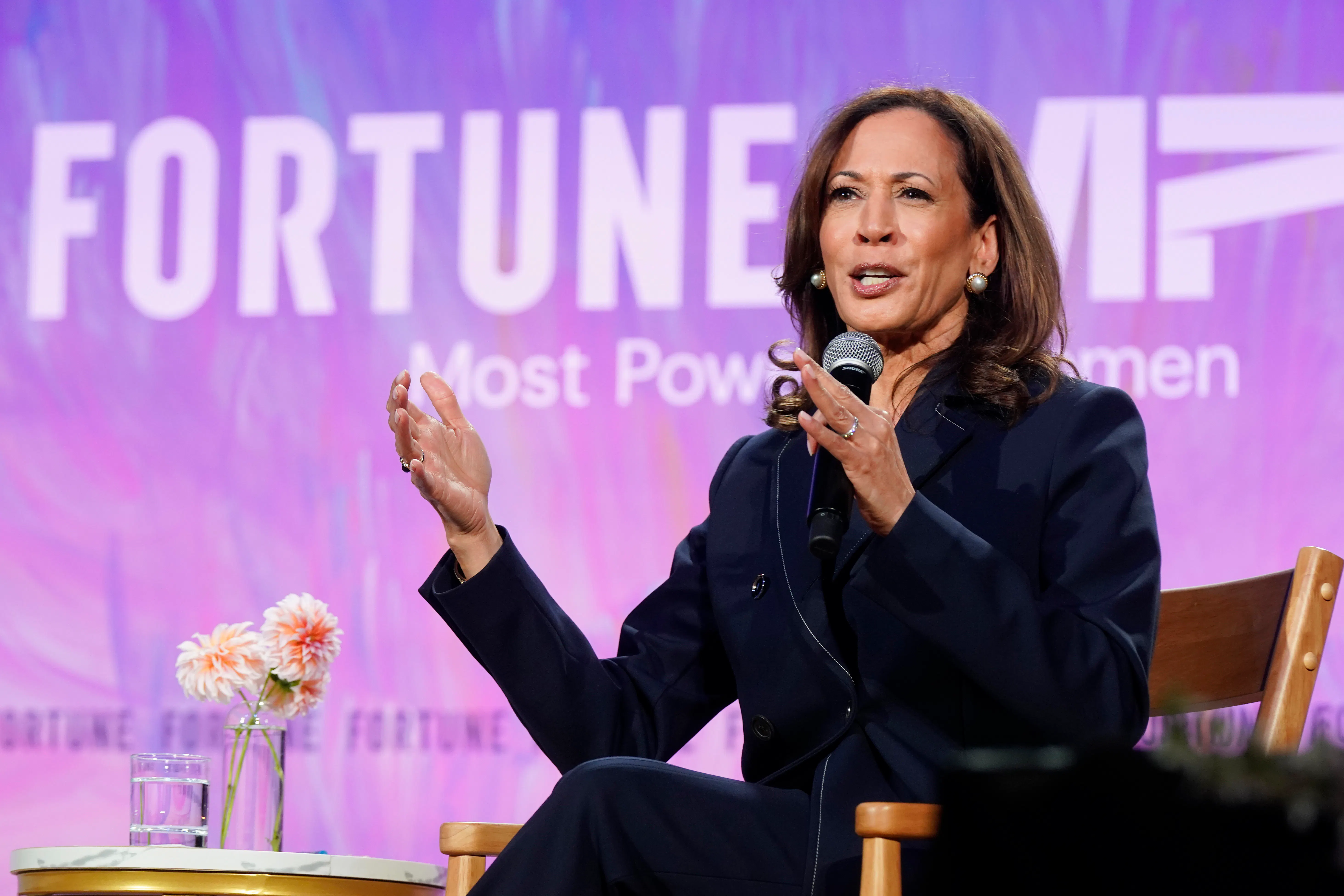
This is a lightly edited transcript of the March 27 edition of Right Now With Perry Bacon. You can watch the video here or by following this show on YouTube or Substack.
Perry Bacon: Good afternoon. This is Perry Bacon—I’m the host of Right Now, a show from The New Republic. I’m joined today by Jake Grumbach. He’s a professor at the University of California, Berkeley, and he’s been a guest once before. Jake, welcome.
Jake Grumbach: Thanks for having me back on, Perry.
Bacon: Good to see you. So I want to talk about something you’ve written a lot about—this Democratic Party debate about so-called moderation. There were two pieces this week that I thought were really telling.
One is from The New York Times: “Why Are So Many Democratic Politicians So Far Out of Touch?” And the second is from a site called The Liberal Patriot, titled “No Learning Please, We’re Democrats.”
Both pieces are different in some ways, but they share the same basic argument: that after the 2024 election there was a lot of talk about the Democratic Party needing to move—to become more so-called moderate, particularly on so-called social or cultural issues. And both authors are now lamenting that the Democratic Party has not moved to the right as much as they had hoped.
I think they’re correct that the Democratic Party has not necessarily become more anti-immigration or moved on trans rights. I might feel differently about whether that’s the right diagnosis, but I want to unpack a little bit why this has happened.
Let’s start with the Liberal Patriot piece, because it goes through several specific issues. I’m going to ask you two questions about each one: first, do you think this is an actual problem with the Democratic Party? And second, would moderating help—would moderating in a policy sense help? And if not, what would?
The first issue the Liberal Patriot raises is what it calls the culture problem: there’s a yawning gap between the cultural views of the Democratic Party, dominated by liberal professionals, and those of the median working-class voter. So: is the culture problem a real problem, and is it solved by ideological moderation?
Grumbach: I think political parties—both the Democratic and Republican parties—represent different groups within society, and therefore always struggle to combine sets of committed activists, party stalwarts, and constituencies they’ve represented for a long time: Black voters in the Democratic Party, rural whites and evangelical whites in the Republican Party.
This is a known challenge for political parties around the world, in democracies and partial democracies like the U.S. But the thing that strategists and pundits have really locked in on over the past couple of years is this very simple answer: the Democratic Party needs to moderate, get more centrist on the left-right dimension—typically with an emphasis on culture-war issues.
Ruy Teixeira is the writer of The Liberal Patriot blog, and he is a fascinating character. Back in the Obama era, he was writing about the permanent Democratic majority on the basis of young people and voters of color as this new multicultural coalition. Then the Trump era comes, and suddenly it’s about the white working class that’s been lost. The point here is that there are a lot of moving parts, and moving in a centrist direction is not something that can just be done easily.
We saw Kamala Harris—a mainstream California liberal, I would say, in the middle of the Democratic Party—really try to run a moderate campaign in the 2024 presidential election. Not speaking to Gaza, tough-on-crime prosecutor, the toughest cop on the beat, very much not defund the police. And that didn’t work. There were other structural reasons—things like inflation and the way voters who don’t pay a ton of attention to the news reacted to it. And it’s actually really hard to make yourself look more moderate; you end up looking like a flip-flopper who doesn’t believe in anything.
There’s this uncanny valley for Democratic candidates, as Chris Hayes recently mentioned in an interview I liked, where you are seen by the base of the Democratic Party as a centrist sellout, and seen by the Republican Party as the ultimate partisan lib—capital-D Democrat. That was the Hillary Clinton problem. Hillary Clinton actually governed as a New York senator as a moderate Democrat—she’s part of the Clinton family, a historically nineties-moderate part of the Democratic coalition—and that still didn’t work.
What my coauthor Adam and I have been advocating is breaking out of this left-right dimension—particularly in this age of authoritarianism. We actually don’t know what works; elections are hugely uncertain. There are some things we know, but most things we don’t, and polls are very volatile right now. So anybody selling you the idea that just moderating will save democracy is selling you something. That’s the short answer, but I’d love to rant more on this.
Bacon: So let me ask: are Democratic Party leaders culturally out of step with voters? You seem to be saying that on some level, all politicians are.
Grumbach: Yes. Politicians themselves have incredibly huge egos—which is part of why the U.S. federal political class is among the oldest in the world. These are people who don’t want to retire, people who really believe in their own importance. And politicians, by definition, are not like the rest of society.
At the same time, it’s really crucial for parties to recruit candidates who are authentic and relatable, because voters don’t think all that much about policy and politics all the time—at least those swing voters who often determine elections. That’s why you sometimes see candidates with credible messaging.
I think James Talarico is a new example of trying to sidestep the trans rights issue through an authentically liberal Christian ethos. You can’t design this in a lab—you need to allow candidates to be themselves, because otherwise they come off as pandering lab rats attempting to craft messaging directly for the audience, and voters can really see through that.
Trump and the Republican Party are out of step on many issues. The Democratic Party has sometimes been out of step too, although its policy platform at the national level is much more popular than the Republican platform—especially economically. But here’s another example. The Biden administration from 2021 through 2023 did have a more liberal asylum policy on immigration—for people showing up and claiming asylum fleeing violence, especially from Central America, a large number were basically granted stays. That did provoke some backlash, but the Biden administration and Kamala Harris shifted much more conservative on this in 2023 and locked it down.
They became more centrist on the issue—but the damage was done in some ways, and when they shifted, nobody really believed it was credible. People thought the old policy was still in place. That’s an example where everybody at the Democratic elite level knows that story, and nobody is doing that asylum policy anymore. It’s done.
So these pieces that keep coming out saying “get more moderate on these issue areas”—it’s already baked in. And when you hear “moderate on immigration” now, what that really means is what the Trump administration is doing: internal mass deportation, secret police, ICE and Customs and Border Patrol, it’s killed American citizens.
For the Democratic Party to take its foot off the gas on immigration right now would be very foolish. The point is there is no simple moderate recipe to capture ostensibly white working-class median voters. You have to be authentic. There are times the Democratic Party has taken policy stances that are out of touch, but it’s not a one-to-one—not something you can pander your way out of. This debate has just totally jumped the shark at this point.
Bacon: So I think what the Liberal Patriot piece is saying—and I think this part is well taken—is that if you do a poll, what you’d find is that college-educated Democrats are probably to the left on these issues: more pro-choice, more pro-trans rights—more willing to say there’s racism in America than non-college Democrats. And so it’s worth asking what we’re capturing here.
My guess is that the people who marched in Selma were to the so-called left of the people who stayed home in Selma. So I’m not sure what these poll gaps actually tell us. But what do you think?
Grumbach: It’s a great point. So sometimes over time, mass opinion on cultural, racial, gender, and sexuality issues has gotten more liberal—that’s a fact. Interracial marriage: my own parents’ marriage was very unpopular back in the day, and now it has over 90 percent support.
The legalization of interracial marriage, pro-choice attitudes especially, gay rights and LGBT rights in general—when we think about the early nineties Will & Grace era versus nationally legal gay marriage and the cultural impact of LGBT individuals. The point here, though, is that there’s a trade-off in the positions you take on these social issues.
On the one hand, leadership through activism—political leaders and so forth—can move public opinion and help bring it into the future. At the same time, in the present snapshot in time, you may be a step ahead of where people are right now. That’s a trade-off that needs to be acknowledged. You get maybe a short-term loss for a long-term gain. There are various trade-offs that parties and activist groups face on these issues.
When you listen to the moderation punditry, there is no trade-off. There is a snapshot in time where voters are frozen with fixed opinions, and it’s treated as permanent. That’s why G. Elliott Morris, the pollster, writes about opinion trajectories. For example, leaders basically knew that internal ICE enforcement—the secret police, essentially—would end up being unpopular once implemented. Leaders knew that.
Chris Van Hollen, the senator who went to El Salvador: when this issue was changing, he effectively moved public opinion through leadership. And there was already opinion movement just from people seeing ICE and Customs and Border Patrol breaking up families and committing violence. What the moderation brigade really wants is pure poll-reacting.
That’s not to say there aren’t trade-offs—there sometimes are. The civil rights movement pushed forward, and as Martin Luther King wrote in his Letter from Birmingham Jail, the white moderate was saying slow down. But King was dragging those northern white moderates along, to the point where opinion shifted over time on civil rights. To say “Martin Luther King, please stay home because you’re out of step with the median voter right now” would be absurd.
At the same time, it would not be unwise to acknowledge that movement on civil rights did turn off some voters. So these are real trade-offs, and in an authoritarian moment they are very clear—where, for example, abortion bans happen and women who have miscarriages are literally under criminal prosecution in some states. Those sorts of situations demand creative responses, and sometimes that involves trading off distance from the median voter now in order to bring people along into the future.
The point is: none of this stuff is simple. At the same time, sometimes moderating on some issues helps, and sometimes it hurts in the long run. These things are just nuanced, and we actually don’t know the answers. We need all hands on deck—creative experimentation in terms of running candidates and in terms of institutional responses to authoritarianism.
Bacon: So the next problem he raises is the working-class and rural voter problem. Those are obviously different things, but talk about this: is there a real working-class and rural problem with the Democrats? And would moderation fix it?
Grumbach: So structurally, over time, center-left parties in democracies around the world have all become more college-educated in their bases. This is class realignment happening around the world. And in the U.S., it is very well predicted by what public opinion researchers call the racial resentment index. Racial resentment essentially measures this: who do you blame for racial inequality? Do you think Black-white inequality is due to laziness on the part of Black people, or to discrimination and institutional racism?
How you answer those questions predicts how you vote, and it’s really correlated with going to college as well. So a lot of analysts call this educational realignment—where college-educated voters have become part of the Democratic Party, and working-class, especially rural and evangelical voters have become part of the Republican Party, particularly white voters, and to some extent Latino voters in 2024, although that’s shifting back very quickly. We could call it educational polarization, or we could call it racial-resentment polarization. This is very clear around the world.
Bacon: And it’s important to emphasize that this is happening around the world—it may not be the U.S. Democratic Party alone. It’s happening to Labour in Britain, the French liberal party, and so on, right?
Grumbach: And I have to say, incumbent parties in general are struggling to deal with globalization and rapid change. We’re now in the AI moment, but when you think about globalized markets, global travel, integrated markets, and immigration—these things really do change people’s sense of life. Manufacturing declines, and it’s just a huge amount of change, even if it’s sometimes positive.
It does involve change, and parties often don’t have a good answer to those changes. That’s why we see incumbent parties struggle around the world—there’s just a lot of “throw the bastards out,” revolving-door elections. This was also true in 2024, with incumbent parties being punished because of global inflation related to COVID.
The U.S. two-party system really struggles with this. But I’ll mention one more point: rural voters are more impactful in Senate elections, and across the board in the Electoral College and U.S. House elections to some extent as well. That [disproportion] has grown over time. Senate malapportionment is actually at record levels, where a tiny percentage of the U.S. population can seat at least 40 senators to block anything through the filibuster, or even hold a Senate majority.
So this is a deep constitutional problem of political inequality in the U.S. And there is some logic to the fact that it hugely benefits more rural white voters, and to some extent rural Latino voters, who have fluctuated in recent elections and now seem to be turning quite sharply against the Trump administration.
Bacon: Let me move to the other piece—the New York Times article. There was a vote in the Senate on banning trans women from women’s sports, and all the Democrats voted against it. So despite the rhetoric from Gavin Newsom and others, when there’s a vote on Capitol Hill, Democrats tend to take the pro-transgender-rights position almost no matter what. And this is being criticized in the New York Times article: why don’t more Democrats explicitly moderate their stands on transgender rights, immigration, and other issues—why do they maintain positions far to the left of the electorate and the median voter?
So there’s a real critique on trans rights you see throughout this moderation discourse. If Democrats moderated on trans rights, would that have a big electoral impact?
Grumbach: So it’s an important thing to note that in polling, trans participation in NCAA sports polls incredibly unpopular. This is true—as is affirmative action on the basis of race, which has polled poorly for 60 years. And yes, in a lot of those 60 years it was implemented with gusto—with much more teeth than people remember.
There were anti-affirmative action ballot initiatives in states and national policies against it starting in the nineties. But prior to that there were actual quotas in hiring and preferred contracting—which my research with Abena Asiamah, a law professor, quantitatively looks at through court-ordered affirmative action on local governments. And it’s actually a great example of where there was not backlash where affirmative action was implemented. Local whites don’t go—oh, I’m so mad at this affirmative action police department or something. Instead, the whole country of moderates and conservatives says: we don’t like this in general, regardless of whether their own area has any affirmative action at all.
And that symbolic politics story is quite similar with trans rights, where people cannot name a trans athlete. There are a couple dozen NCAA trans athletes or something like that. But it is a symbolic issue that polls poorly. That said, what should Democrats do about it? One thing to note is that what comes up to congressional votes—like this particular one—is often an especially extreme policy that’s specifically targeted.
Andy Beshear, the very moderate Democratic governor of Kentucky, vetoed an anti-trans sports bill in Kentucky and came away popular because he said: it’s not that I’m a trans rights activist obsessed with this, but this bill is done with specifically hate-based targeting, and I’m not going to entertain it as governor—it’s not a relevant policy issue.
And we’ve seen a similar approach from Graham Platner, running in the primary in Maine, saying something like: I’m this white guy populist, and I’ll tell you, on my men’s wrestling team in high school there was a girl on the team and nobody cared. You can’t convince me this is a real problem.
Overall, it’s hard to know if the Democrats did go along with a Republican-sponsored bill banning trans athletes in sports whether they would get any credit for it. That’s the key question. It’s hard to get credit because voters don’t like flip-floppers. They don’t like feeling like they’re being pandered to—that the party is winking at them, saying: we’re really doing this for you, median voter. They don’t love that.
So while polling does show this is quite unpopular, it’s actually unclear whether the Democratic Party would get credit for moderating on it. And it does trade off, as I mentioned, on the long-term trans rights issue. If you believe in trans rights overall, then taking that vote could potentially get you some moderate voters right now—but reduce overall opinion change on trans rights, which over time has gotten more liberal, just like every other social issue.
Bacon: So I think the sub-question here is that a lot of this coverage implies that electability and winning elections is the only thing that matters in this age, which I think most people would agree is important.
I think they’re correct about that. So I think the conceit is that moderation equals electability. You’re saying moderation doesn’t necessarily equal electability—so if you were asked what does equal electability, what would you say? We don’t know, or something more specific?
Grumbach: I would say there are some limits. On the left-right spectrum, of course you can go to some far extreme in any direction and lose a lot of voters—that’s an absolute truth. But for the most part, these candidates are already pretty strategically trying to position themselves.
What Adam and I find is that the gains come from other things. For example: candidate quality and charisma, populism and running against the establishment and the status quo, issues outside the left-right dimension—are you seen as corrupt, engaged in insider dealing or insider trading like some members of Congress, or are you seen as authentically yourself? All of these things matter. Plus, at the presidential level, I think it’s pretty clear there’s something like a gender penalty. There are all sorts of things that go into elections.
My point is not that it’s never good to moderate on some issues. I do think we have some evidence of that—the asylum policy from 2021 to 2023 did go a bit too far. There are some areas where moderation is warranted, potentially even on trans rights issues. But what I’m saying is it’s not simple. There are ways through this, and in this era of authoritarianism, what is even more important is what politicians do with their institutional power when they’re in office.
As a scholar of democracy and democratic backsliding, you cannot save democracy by saying the non-authoritarian party to win every election. That is not a viable strategy to protect the rule of law and democracy. For that reason, you need real elite strategies about holding accountable transgressors who violate the Constitution. And we’ve seen the Democratic Party be quite poor at that over the last decade of authoritarian threats. That is much more important than moderation.
I actually got a repost from moderate Senator Ruben Gallego on this point when I said: effectively holding elites accountable for attempting a coup—on January 6, 2021, or more recently, the constitutional violations of DOGE under Article I of the Constitution, or the ignoring of judicial orders around deportations by the Department of Homeland Security—holding them accountable through the rule of law is [immeasurably] more important than some after-the-fact poll-following tweak to your messaging or your policy agenda. So the obsession with this moderation-electability question is, in a sense, an impotent rage at the fact that you have to find some way to block authoritarian pushes—and the elite strategies to do that have been quite weak.
Bacon: And I guess that framing feels like you’re in control of things—if only we moderate, we’ll win every election. That gives you a sense of agency. Whereas if you say 2024 was a product of random inflation and anti-incumbency forces, we have no agency. So instead we ask: what did Kamala Harris say in 2019? Because she, in theory, had agency over that.
Grumbach: That’s right. And to the extent Kamala Harris was held liable for earlier statements that were mainstream liberal positions and then moved to moderation, it hit that uncanny valley. But we also have to think about Amanda Litman, of Run for Something—she is really focused on candidate recruitment rather than taking the existing Democratic Party, which is quite geriatric in its leadership, and trying to find new messaging for it. You have to find and recruit candidates who represent their communities authentically.
The Democratic Party has struggled to do that, because with the way fundraising and primary elections work, it’s mostly going to be lawyers in their fifties deciding they want to run for office—rather than a diverse set of candidates who come from different parts of the Democratic coalition, whether that’s the labor movement or other constituencies. We see this in Black representation right now, where many of the oldest Democrats running for reelection in 2026 are Black and have not cultivated the next generation of Black leadership—outside of some important exceptions.
All of this matters more than just tweaking messaging and policy positions. You actually have to have a long-term, genuine belief in these sets of issues that gives you credibility over time—because you actually care about them. I think that is more crucial than your exact position. Voters can see through that type of bullshit.
Bacon: So we’re about to have a bunch of people run for president, and I think there’s going to be one camp that says: so-and-so in 1997 voted for this, or they said this immoderate thing, or they said the Green New Deal was good—they cannot win. There’s going to be a big focus on ideological moderation as a litmus test. That’s one side.
On the other, I don’t think we can find a completely fresh face with no one having heard of them—it would be good to have some qualifications, having served in some kind of government. So what will you be looking for in terms of candidates in this next cycle?
Jake Grumbach: You can’t always predict it in advance. In 2020, Bernie Sanders and Elizabeth Warren were both running, and it was not clear early on that Bernie Sanders would do better in the primary. You actually have to see where energy goes.
The Democratic Party is still a party of young people, despite some discussion of a youth realignment toward the GOP among young men—which has been dramatically overstated. Young people are very much against the Republican Party right now.
Bacon: Let me stop you for a second, because I think what you’re saying is we should evaluate how candidates are going to perform based on how they’re actually performing. But I think the problem is that in some ways these articles are hinting that if the Democratic base likes someone too much, we should be skeptical of them—the implication being that the base is out of touch with regular people. So if a candidate is too enthusiastically supported by the base, that becomes a red flag for the moderation group.
Grumbach: I think that’s right. But we saw how this worked with the Gaza protester kids who were protesting as of late 2023. Huge amount of energy. And I’ll say again, essentially all social movements that have blocked authoritarian takeovers and coups involve some sort of student protest movement.
Liberals joining in with conservatives and crushing that protest movement was a huge unforced error. That is youth energy that can be channeled, and that is crucial. The Democratic Party has won when it’s carried energy with the youth, going back to Obama 2008—I was in college and I remember that hype. So one signal I take is: what is the authentic youth energy getting behind? That’s one signal here. But I think you’re right that the moderation crew wants to say go where the median voter is.
Bacon: Yeah. If a person polled high with young people, I think they would almost automatically be flagged—we should oppose that person. That’s what happened with Zohran on some level, right?
Grumbach: That’s exactly it. So Zohran is also such a great example of cutting through this left-right dimension. Zohran is a more left candidate, but there are other moderates that are doing well too. My point is not that you should move left on every issue, but rather that Zohran is somebody who is incredibly compelling and effective and cut through that—and is now seen as someone who brought energy from key constituencies in New York City: immigrant groups and young people. He also now has a reputation for competence as well, and he uses new media in a very skilled way to cut through narratives and build authenticity.
All of that can happen among moderates too. So my point is exactly that: I’m going to be open to a bunch of different kinds of candidates. Of course I have my policy agenda that I hope gets implemented, but I’m going to see where the energy goes and follow that authentic energy. And it’s not going to come down to exactly which combination of policy issues poll best.
Bacon: Someone might say there’s a genocide happening—and it’s possible that person is not inspiring in other ways and creates no energy. And it’s possible someone who ducks the genocide question might still in other ways be a more appealing candidate to people. So the litmus test on policy, and energy, are somewhat separate things?
Grumbach: I think that’s right. Policy does matter—you can’t have a wholly bad policy agenda. The fact that Zohran Mamdani has this populist affordability platform that was very popular is not totally unrelated. Economic populism and running against the establishment and the status quo really matters. But it’s not a perfect predictor. There are all types of candidates that generate energy, and it’s tough to predict—especially in this volatile era of social media and virality. Issues are also changing a lot. There’s new polling on candidates’ policy responses to AI, and highly populist jobs programs and blocking AI implementation and data centers are now incredibly popular—to an extent that even surprised me.
These things change in real time. And it’s a “if you stay ready, you don’t have to get ready” type of logic—see where this goes and be open to it. I would say this, though: the centrist moderation argument is essentially just pick somebody who’s conservative on culture-war issues. But if that were true, then Biden and Harris’s position on Israel-Gaza would have been a huge winner—that’s the centrist move, appearing bipartisan by building a coalition with the Republican Party.
Instead, that reduced youth energy was a huge liability. We know this. The DNC spiked an internal autopsy that made that clear. And on other issues, going the other way matters. The point is it’s not just “moderate, that’s it.” And I think: why is that argument so popular when the statistics are so not there for the idea that moderation always helps?
Bacon: It seems intuitive, right? If you move to the right, you’ll win more people on the right. That seems intuitive. It just doesn’t happen to be true.
Grumbach: Yeah. And a lot of times mass opinion is outside of the elite consensus. Trump did that with respect to immigration, where there was this Bush and Democratic Party consensus on low-wage immigration—he broke out of that. There are other things around war and foreign policy, and especially now AI. If you break out of the constraints that both parties are [operating under], you can gain. The Democratic Party taking something more like the Republican position might help on some issues. The point is this is issue by issue—you can’t just think about polling as a snapshot.
The other thing about this polling stuff that’s hilarious is how much poll wording really matters. This is such a crucial point. For example, if you change the wording around the trade-offs of policies—the moderate crew likes to say Democrats shouldn’t run on Medicare for All, because if you just poll on “Medicare for All” or “universal healthcare” it’s very popular. But when you say it’ll cost trillions—
Bacon: —it’ll abolish private insurance, because nobody wants to abolish anything—I think that’s what’s really driving those numbers.
Grumbach: Exactly. When you give those more negative details, particularly out of context, it becomes less popular. But we see that sometimes polling firms strategically don’t do that on culture-war issues. Have you seen many polling questions on trans sports that say: do you want to ban trans people from participating in NCAA sports? Very big yes. But then if you say that involves looking at a child’s genitals, suddenly it’s incredibly unpopular.
So the point is that groups will try to sell you this set of issue polls and you need to take them with a massive grain of salt. It’s really hard in this day and age—I’m an academic, so it’s part of my job. The point is it doesn’t sell the big pundit bucks or consultant contracts to say it’s very uncertain. We actually don’t know who will be the candidate that captures energy on AI as an issue. I could not predict some of the ways these primary elections are going and how energy in the parties is moving. We need to actually—this is a time for experimentation and seeing how energy builds.
Bacon: I like what you’re saying, which is essentially: we don’t need to, in January 2027, pre-decide who the best candidates are. We can just wait—by December it’ll be clear who has energy and who doesn’t, and we can talk about that then. There’s no need to pre-assign. I think that’s helpful, because I know a lot of average voters I talk to are very nervous: am I allowed to support this person? And “let’s just find out” is a better answer than “they have these positions” or “they’re a white man” or whatever.
I covered the 2007–08 cycle and it was clear Obama drove energy. If you had told me in 2004 that we’d elect a Black man named Barack anything—of course I would have said no. But there we are. And in some ways, if you’d told me Minnesota would be the place where all the energy to oppose ICE comes from, I would have said: why Minnesota? Isn’t Minnesota just nice, boring people? But something happened there.
Grumbach: Maybe they cleanse themselves in the waters of Lake Minnetonka—but I totally agree with that. Barack Hussein Obama—the idea that there wouldn’t be a massive race issue, and potentially a connection to Islam at the time. And it takes this moment in the primaries where there’s a critical mass, and of course the Ted Kennedy endorsement was huge. But the point here—there’s some great research on this—people try to strategically discriminate: I would love to have a woman president, but I know the median voter won’t go for it. What that logic does is just empower the less strategic, more discriminatory voters even more.
But the thing that I think, sadly, in the Democratic Party—because it’s so hard in the U.S. constitutional system to change national policy, plus right-wing authoritarianism—the Democratic Party base has become pundits themselves, obsessed with electability. And political systems really struggle when large numbers of people are strategic actors rather than authentically voting their conscience.
When everyone votes their conscience, we can actually take stock of the legitimate desires of society and try to aggregate them and produce representative outcomes. So I would encourage everybody: don’t try to do the second-order strategy. Instead, just see what candidates you like, try to convince others to vote for the candidates you like on the basis of their vision, platform, and likability—not on the basis of how you think other people will react to them. That is part of why there’s so much writing and anxiety about electoral strategy rather than the issues and policies themselves. We know much more about how trans rights play to the soccer mom demographic than we know about actual trans policy. I’m not an expert—
Bacon: Me neither, on how sports policy should work and so on. I think that’s a good point. And my worry is that pundits focus too much on ideological moderation. And some of my friends are obsessed with race and gender. I think we can discuss a gender penalty, but I’m not sure it applies the way people think—like Gretchen Whitmer against JD Vance: I would say Gretchen has a huge advantage right now because Trump is so unpopular.
And I think that sort of reasoning—if this person is a woman or a minority, they can’t win—is its own problem. That’s what regular voters express to me too. Two women have lost presidential elections, therefore women can’t win? Let’s increase the sample size a little bit first.
Grumbach: I think that’s right. At the same time, qualitatively looking at this—we can’t statistically detect it clearly. I’ll say the research is clear at the congressional level: there is no gender or race penalty anymore. It’s a real triumph of American civil rights era politics. That was not true for such a long time.
And now we see in many state legislatures—like here in California—real racial parity: the same percentage of Latinos in the legislature as in the California population as a whole. Real triumphs of representation. Women lag in all these respects compared to their 50 percent of the population, but have grown hugely in representation since the civil rights era. I will say qualitatively, despite the fact that we see no penalty statistically in congressional or state-level elections, at the presidential level it does seem hard to argue that gender isn’t a more powerful factor than even race.
Bacon: What should I do with that information?
Grumbach: Nothing. Like I said, don’t be a strategist. Vote.
Bacon: That’s hard to do. You’ve told me two things that are hard to do at once. You’ve told me a woman might have a hard time winning, and also that I should ignore that. But you’re saying this election is going to—anyway, sorry.
Grumbach: It’s not that a woman will have a hard time winning. I think it’s just pretty clear there is a greater challenge. And a lot of the congressional findings about women running for office show that women had to be better than the men on average just to win—there’s gender discrimination throughout your rise in politics, to the point where once you get to Congress, women are much more productive legislators than men on average, because of that filter of discrimination.
It’s similar to the joke that came up when DEI was really being talked about in executive orders early in 2025, and people would say: oh, if you see a Black pilot or a woman pilot, you should be worried. But it’s actually the opposite—
Perry Bacon: —that person probably had to do a lot to get that job.
Grumbach: It’s just clear how powerful gender has become. When we think about the economy, the right-wing movement and MAGA economics itself, tariffs—it’s hugely gendered. The message is that the economy is too feminized and gay, and it needs to return to “trad” economics: blue-collar working-class jobs, trad wives, and conservative family structure. I’ll just say gender has emerged as quite important.
And we also see over time, across generations, Gen Z is more racially progressive than any previous generation, as with most social issues—but gender attitudes, because of the attitudes of a subset of young men, have plateaued a bit more. So I’ll just say this is not a slam dunk, and you should vote your conscience. But I do think it’s hard to argue against a gender dynamic occurring right now.
Bacon: Let’s end on a positive note—and the positive note might be that we don’t know. And I think that’s empowering in a certain sense.
Grumbach: That’s exactly right. We hear those phrases: what would you have done in the 1930s? There are all sorts of strategies for fighting authoritarianism. There are strategies at the organizational level in civil society—why did law firms and universities fold to authoritarian pressure, and why are some now not folding?
Businesses and labor unions are caught in this crossfire, with some very progressive unions resisting ICE and others endorsing Markwayne Mullin for DHS secretary. So that’s just the organizational side. Then in politics there’s legal and institutional leadership. And then finally there’s peaceful protest—another round of “No Kings” protests on Saturday. All of these go beyond just voting in primary and general elections.
Bacon: I think you’re saying we’ve made elections too central to fighting authoritarianism. Is that part of what you’re getting at?
Grumbach: And those things have effects on elections too. Quantitatively, the 2020 Black Lives Matter protests—while there was all sorts of hand-wringing from the same moderation brigade about, for example, Kenosha, Wisconsin having more property damage than other places, or in the L.A. ICE protests where people burned a Waymo and things like that—we hear a lot about this potentially turning off the median voter. But we actually know pretty consistently that those protest movements, while sometimes diminished in efficacy by property damage, are incredibly effective at mobilizing voters. So these things all go together.
Politics is a lifelong struggle, and the struggle for democracy is one that has played out over hundreds of years in American politics. We have a new, acute authoritarian crisis that’s distinct from political inequality as a chronic crisis—but it’s very uncertain, and the point is not to go for easy answers, like just tweak left and we’re done.
Bacon: Thank you for joining me. Bye bye.
Grumbach: Thanks Perry.
Popular Products
-
 Orthopedic Shock Pads For Arch Support
$71.56$35.78 -
 Remote Control Fart Machine
$80.80$40.78 -
 Adjustable Pet Safety Car Seat Belt
$57.56$28.78 -
 Adjustable Dog Nail File Board
$179.56$89.78 -
 Bloody Zombie Latex Mask For Halloween
$123.56$61.78