Trump Buries The 20th Century
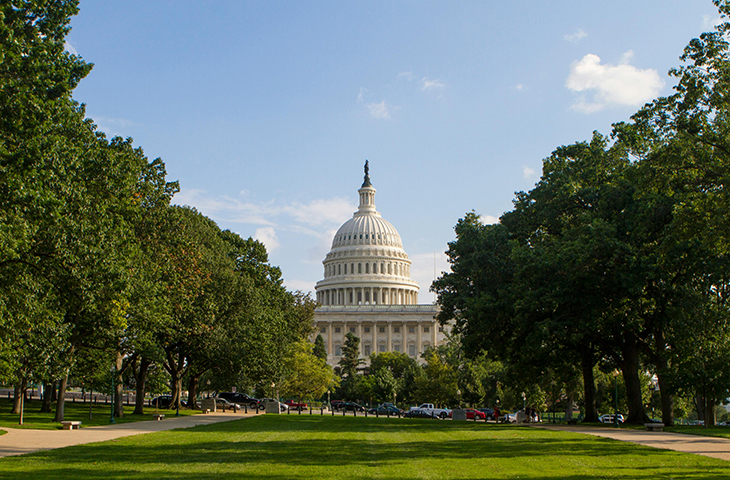
With a roar of rockets and bombs, a gasp of international outcry and the death of Iran’s supreme leader, President Donald Trump’s legacy became clearer than ever.
He is burying the 20th Century: Its villains, its alliances, its political norms and ceasefires. And he is unleashing a future of uncertainty and disruption with no new equilibrium in sight.
Across both his terms as president, and in so many different areas of policy and governance and culture, his signal achievements have been acts of demolition.
His Supreme Court appointees struck down Roe v. Wade, ending the seething political and legal stalemate on abortion rights that governed America since the 1970s.
His military interventions in Latin America have brought the Cuban government, one of the last surviving Cold War regimes, to the brink of collapse.
His tariffs and trade threats have blown apart the Reagan-Clinton policy consensus on free trade, upending half a century of global commercial arrangements and diplomatic relations.
His America First worldview and contempt for Europe’s political establishment have increasingly relegated NATO’s charter, the 1949 accord forging the globe’s most powerful military alliance, to antique status.
His acts of corporate favoritism and personal enrichment, and his use of the justice system as a weapon of vengeance, have erased the post-Watergate regime of legal and ethical norms for the presidency.
And in the first few hours of war in Iran, Trump’s attack killed the enduring leader of the 1979 Iranian revolution, Ali Khamenei, a dictator as cruel as he was ancient.
In every instance, Trump’s allies and admirers say he is completing the unfinished business of a generation: doing the work that other American leaders have been too weak or too conventional or too unpatriotic to do themselves.
In each case, too, Trump is tearing down old structures and systems without a vision for replacing them. At age 79, Trump is himself a creation of the age he is now unwinding, with a worldview molded in America’s prosperous, socially turbulent decades after World War II. It is not evident that he’s interested in designing the grand policies of the future.
Even if Trump had a modernizer’s imagination, there is not too much time left for him to build a new world. Trump has about 35 months left as president – about as long as it takes to make one major motion picture – and just eight months before a midterm election that could sap his power.
It is not likely that before he leaves office we will see a stable global trade order, thriving new governments in Havana and Tehran or a post-NATO order of international security that reflects America’s overdue destiny as a Pacific nation.
It is harder, still, to imagine that Trump might help lead a hard process of legislative compromise on other issues that have been intractable for decades, like abortion or the national debt — though he may be the one president who could force a grand bargain on immigration.
Trump’s opponents have often criticized him for his vacant sense of history: his too-hasty dismissal of 20th Century achievements like NATO and NAFTA and START, his middle school-level commentary on figures like Abraham Lincoln and Andrew Jackson, his weird public musings about Frederick Douglass being recognized more and more.
This philistinism and historical ignorance was at the heart of Joe Biden’s case against Trump. Biden deplored Trump as an insult to the American political tradition and promised to make Washington work, repair broken norms and turn over power to the next generation. His slow-moving, self-admiring, politically dysfunctional administration achieved none of these things.
If there was a chance then to build a bridge to the 20th Century, Biden lost it.
The next time the country chooses a replacement for Trump, resurrecting the past won’t even be an option.
For American policymakers and voters, there’s no longer any prospect of mimicking détente with regimes in Iran and Cuba that are unraveling at this very hour. Barack Obama pursued that aim as part of his own 21st Century agenda; that path is now closed for good.
America’s credibility as a trade negotiator and commercial partner is already changed forever; the next president will be unable to restore Bush-era trade relations even if he or she wants to. NATO’s place in the world won’t return to where it was in 1998 just because the next president says the right words about Washington’s commitment to its allies.
This is already obvious to leaders looking at the United States from the outside in.
“We know the old order is not coming back,” Prime Minister Mark Carney of Canada said at the World Economic Forum last month. His speech, declaring an epochal “rupture” in geopolitics, was the climactic event of Davos for a reason.
Yet for all Trump’s zeal to crush big institutions and enemies and conventions of the past, he has also failed so far to lock in an agenda for the future. Many of his policies — on technology, energy and international security — can be changed or undone with the stroke of a pen, as Biden’s were. Others, like Trump’s landmark tax cuts, are unpopular and face a dim fate whenever Democrats next win power. The variegated coalition that won the 2024 election for Trump, and raised Republican hopes of a lasting realignment, fractured within months of his inauguration.
If the 20th Century is finally dead, this country’s trajectory in the 21st is an immense question mark.
That is the great challenge Trump has left for the next president. For a visionary successor, it could also be an opportunity unmatched in recent U.S. history.
Popular Products
-
 Classic Oversized Teddy Bear
$23.78 -
 Gem's Ballet Natural Garnet Gemstone ...
$171.56$85.78 -
 Butt Lifting Body Shaper Shorts
$95.56$47.78 -
 Slimming Waist Trainer & Thigh Trimmer
$67.56$33.78 -
 Realistic Fake Poop Prank Toys
$99.56$49.78