Us Colleges Struggle As International Students Turn Away
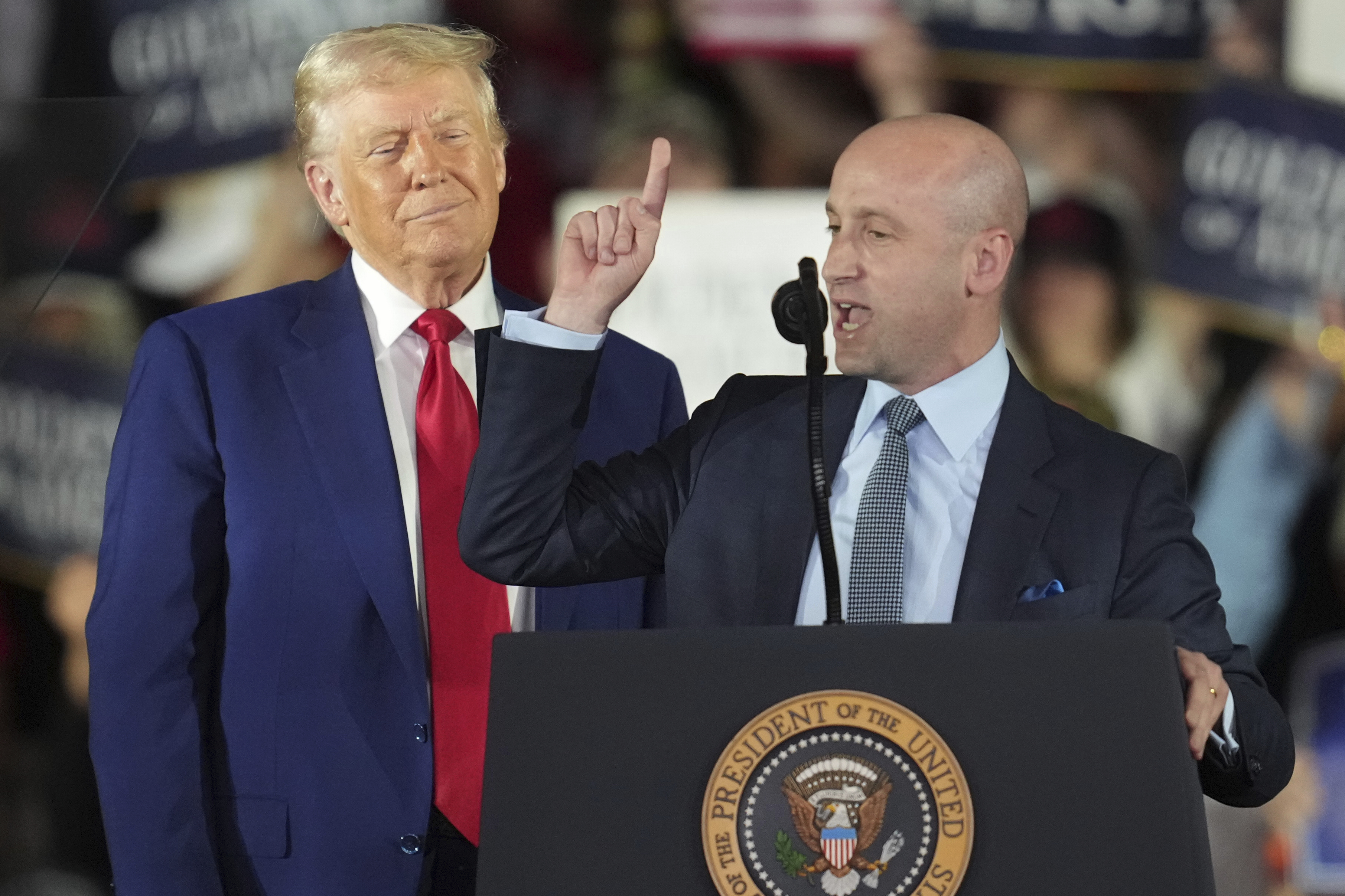
The U.S. has long been a prime landing spot for international students. Thanks to President Donald Trump's visa crackdown, they’re now taking their talents and tuition dollars elsewhere.
Tighter visa restrictions, stricter vetting and visa interview and appointment bottlenecks are contributing to what early data suggests will be a steep decline in international student enrollment nationwide this fall. And that was before Trump elevated Stephen Miller — the architect of his immigration agenda and campaign against academia — to chief of staff.
The limits on foreign students advances two administration aims: narrowing avenues of potential immigration and hitting the bank accounts of academic institutions conservatives have long criticized. Now, the policy changes, coupled with the administration’s “America First” rhetoric and immigration sweeps, are taking hold, higher education leaders say.
“This is great for the United States that they're spending money here, that they're learning about our culture and our country,” Michael Roth, president of Wesleyan University, a private liberal arts school, said of international students. “To just make it harder in the name of some kind of nationalism, it seems like we're shooting ourselves in the foot just to see how good our boots are.”
The nationwide enrollment stats for the last academic year are expected to be released this month, but figures released by individual universities signify what is likely to be another slump this fall.
The number of international students enrolled at the University of Washington’s Seattle campus declined for a second year in a row, falling to its lowest level in at least a decade. At the Ohio State University, those numbers fell by nearly 13% — the fewest it’s seen in 16 years. And the Illinois Institute of Technology plans to borrow up to $200 million from its endowment because of its declining international student enrollment.
Benjamin Johnson, a spokesperson for Ohio State, said in a statement the university’s international student enrollment “strengthens the academic experience” for all of their students.
“We want the world’s best and brightest to choose Ohio State for school and stay to build a life and career in Ohio,” Johnson said.
Stan Veuger, an economist at the American Enterprise Institute, a conservative-leaning think tank, said the Trump administration’s goal is to “cut off all forms of migration to the maximum extent they can.”
And with Miller now serving as the president’s top adviser, “I think it will gradually get worse unless some of the Democrats manage to effectively push back,” he said, referencing the pending Democratic takeover of Congress.
Higher education leaders warn that the administration’s ever-changing visa rules and proposed restrictions could permanently damage the country’s appeal to international talent and upend universities’ finances. International students, who often pay full tuition, are an important source of revenue for colleges and sometimes subsidize financial aid and other services for domestic students.
“The latest data we have shows that when it comes to bachelor's degree programs at public universities, every international student opens up two spots for American students,” said Zuzana C. Wootson, deputy director of federal policy at the Presidents’ Alliance, which represents 500 presidents and chancellors of public and private colleges and universities.
“At the end of the day, who's going to be feeling the harm the most will be domestic students and Americans,” she added.
House Education and Workforce Chair Tim Walberg argued the administration’s policies ultimately benefit domestic students.
“For the present time, they're helping make sure that the schools are there for who they're supposed to be for,” he said. “When we ultimately find out that we are woefully absent with people in the seats and there are plenty of places available for American students that meet the qualifications, then I think we can start to look at the international.”
At Denison University in Ohio, President Adam Weinberg said his school is getting questions from concerned parents of foreign students because of all the policy changes. He said it’s too early to tell what their foreign enrollment will look like, but “we expect pretty steep declines.” International students make up 17% of the private liberal arts school’s student body.
“I am absolutely in favor of immigration control and making sure that we're following our laws,” Weinberg said. “And we absolutely need to educate U.S. students … colleges and universities should be educating them and preparing them to drive the economy forward. But we're also going to need to attract talent from around the world and we need to keep it.”
The Trump administration’s immigration policies and its enforcement mechanisms have “spread a great deal of fear and a great deal of anxiety” among international students, faculty on visas and undocumented students, said Patricia McGuire, president of Trinity Washington University, where international students make less than 2 percent of its enrollment.
McGuire said one of her international students was assaulted near a D.C. metro station and didn’t call for help because “she was afraid if she called the police that she would be arrested and deported.”
“That is just disgraceful for this country,” she said.
Department of Homeland Security and top administration officials, including Vice President JD Vance, last month argued the stricter policies are designed to discourage visa fraud and that Americans should not have to compete against international students for work.
"The performative outrage is incredible," an unnamed DHS spokesperson said in a statement. "Where was the outrage when foreign nationals were abusing the system, violating the terms of their student visas, and making a mockery of our immigration laws? If the media really cared about legitimate international students, they would be thanking President Trump for cracking down on the rampant fraud to ensure only those truly intending to study in the United States are given the privilege.”
A State Department spokesperson said in a statement that the administration is "protecting our nation and our citizens by upholding the highest standards of national security and public safety through our visa process. As Secretary [Marco] Rubio said, 'a visa is a privilege, not a right.'"
The unnamed spokesperson also added that embassies and consulates are prioritizing "thoroughly vetting each visa case above all else," and the agency is encouraging international students to apply for their visa "as early as they can" in anticipation of "additional processing time for these visa categories."
"The United States continues to welcome qualified international students whose academic pursuits contribute to American colleges and universities, support the U.S. economy, and strengthen our nation's global competitiveness," the spokesperson said.
If foreign student enrollment plummets as expected, international education advocates warn it might not bounce back the way it has from previous downturns because schools in other countries are eager to compete for these students.
Fanta Aw, executive director of NAFSA: Association of International Educators, said the visa appointment situation this summer was “even more difficult” for international students than it was during the Covid-19 pandemic, which spurred a 46% decline among those studying at a U.S. university for the first time.
“There is a very intentional attempt by this government to close the doors,” Aw said, adding that prospective students “now understand that uncertainty has become the policy of this administration. … As a result, we have seen expression of interest in the U.S. decline significantly, and with students refocusing their energy on other destinations of choice.”
Survey data released Thursday by NAFSA and Study Portals, a research consulting group, found that 50% of colleges in continental Europe saw higher undergraduate enrollments among international students and 59% of Asian schools saw higher postgraduate enrollments between August and October.
The DHS spokesperson said “NAFSA’s ‘reporting’ is completely misleading and not backed up by any real evidence" and that the Student and Exchange Visitor Program "has not experienced a 10% drop of foreign student enrollment."
A significant factor for international students — especially those at the graduate level — when choosing to study in the United States is the ability to earn work experience. But the Trump administration is seeking to make that much harder, arguing that these programs have become a “back door into the American workforce” and are putting American workers at a disadvantage.
In addition to the new procedural regime, the administration is creating new pressure on the nation’s foreign student enrollment with a plan announced last monthto sharply raise visa fees.
The DHS has proposed a stunning $70,000 fee for each student seeking Optional Practical Training, known as OPT, which is a key driver of foreign student enrollment. Participants made up roughly a quarter of all international students in the United States.
Under the administration’s proposal, universities would be responsible for paying the fees. A DHS spokesperson last month said the changes will "require foreign students to justify their worth to employers."
Higher education advocates say schools will likely pass the costs on to students. The program allows foreign students on F-1 visas to temporarily work in the United States in jobs related to their fields of study after graduation. It often serves as a bridge for those students to transition to other immigration statuses, like the H-1B visa, a temporary, employer-sponsored visa, to continue working in the country.
“We couldn't do it. It wouldn't be affordable for us to do that,” said Wesleyan’s Roth, whose international enrollment has held steady. “Maybe there are super-rich schools that could do that. But for a school, even a small liberal arts college, to do that for their international students who are graduating, it's going to be millions of dollars.”
The Trump administration has also proposed steep fees of more than $100,000 for certain new H-1B petitions. And, among other regulatory changes, DHS finalized a separate rule in July requiring foreign students to apply for visa extensions if they need more than four years. A federal court blocked the proposal before it could take effect in September.
Veuger said additional limits could be ahead.
“You can always impose more fees. You can start suspending universities’ ability to issue the documents they need to renew their visas. You can make it even harder to go get appointments,” he said. “As long as there’s people coming in, they can make it harder.”
Popular Products
-
 Put Me Down Funny Toilet Seat Sticker
$33.56$16.78 -
 Stainless Steel Tongue Scrapers
$33.56$16.78 -
 Stylish Blue Light Blocking Glasses
$85.56$42.78 -
 Adjustable Ankle Tension Rope
$53.56$26.78 -
 Electronic Bidet Toilet Seat
$981.56$490.78