Best Practices From Evangelistically Effective Churches
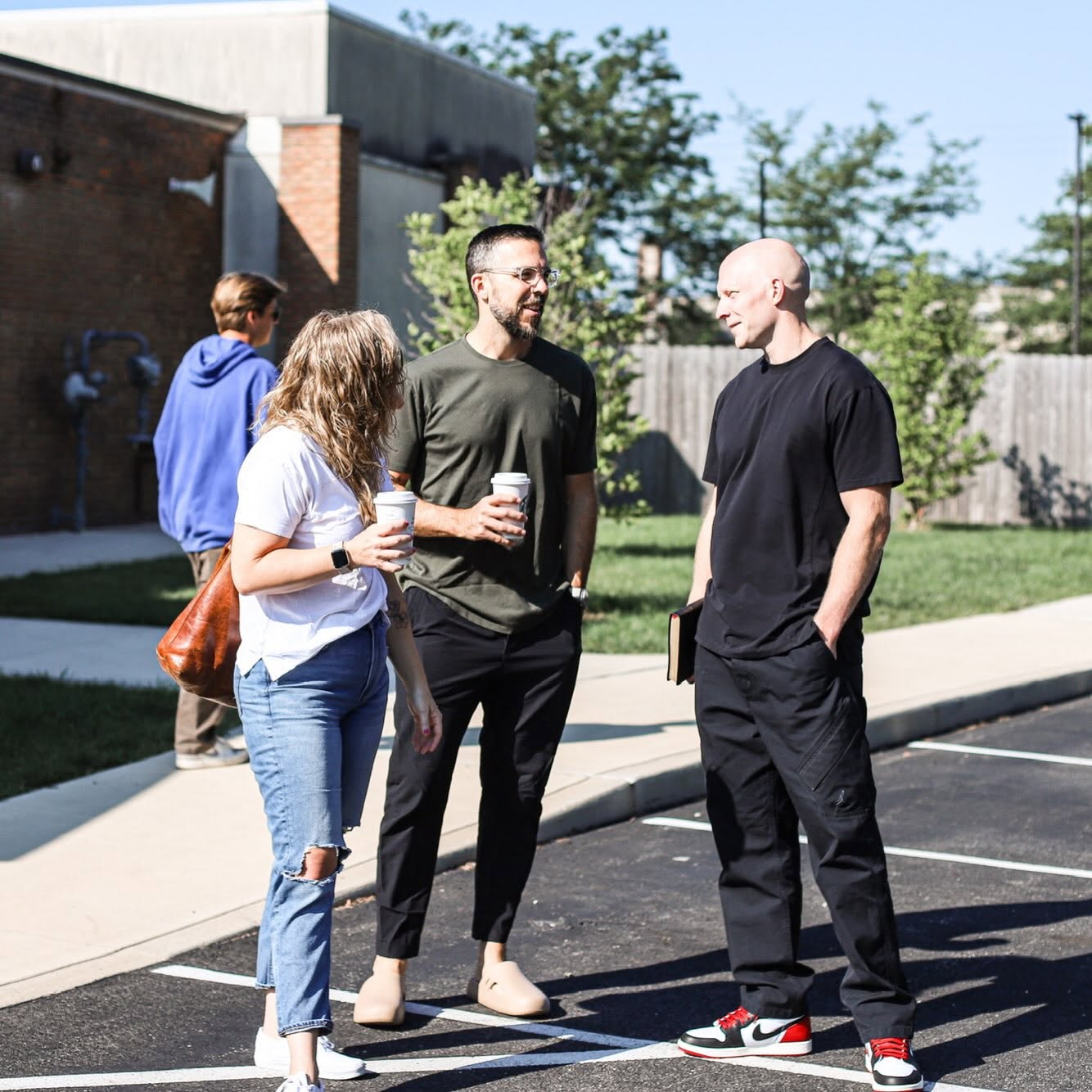
In the summer of 2021, pastor Luke Peterson moved to Columbus, Ohio, to look for lost people.
To find them, he joined a gym. He started building friendships. And then he began asking those friends if they wanted to come over.
“Word started getting around—‘You’re not going to believe this, but Luke’s a pastor,’” he said. ‘It created some intrigue, and people started coming. I used to have a note in my phone of how many people came to our church because I went to CrossFit Grandview. It was up to like 60 or 70 before I stopped counting because it was impossible.”
Peterson’s good at evangelism, and his church is too—last year, they welcomed around 500 first-time visitors. When he preaches, he knows about half his audience is probably unchurched.
This is unusual in a country where 40 million adults have stopped attending church over the last 30 years, and where 76 percent of pastors said “fostering connections with unchurched people” is a need in their church.
Much has changed since the Billy Graham rallies of the ’60s, the door-knocking of the ’80s, and seeker-sensitive church billboards of the ’90s.
In the past, “you could randomly walk up to the person pumping gas next to you and say, ‘Do you know Jesus?’” said Perimeter Church pastor Jeff Norris. “Could that still work? Sure. But more and more, we tell people to invite neighbors into their home. The reality is that evangelism is much slower, and more relational, than it used to be.”
Today, people aren’t as likely to read the Bible, think it’s the Word of God, or go to church. But they’re also less hostile to Christianity than they were five years ago. And while they read the Bible less—especially in Gen Z—the trajectory is moving up.
“We’re not past ‘my truth, your truth,’” said Rob Warren, pastor of Doxa Church in Madison, Wisconsin. “But people aren’t as sure that their truth is actually true.”
These days, evangelistically effective churches are keeping evangelism front of mind in the way they preach, train, and encourage their congregations. They’re celebrating small wins. And they’re leading with a high view of Scripture, prayer, and God’s sovereignty.
“We’ve seen all of our ministries grow—from kids to youth to college ministry to Doxa Church as a whole,” Warren said. “It’s not just one demographic of people who are getting saved. God’s doing something.”
Times Have Changed
Thirty years ago, evangelical churches leaned on programs like Evangelism Explosion or Continuous Witness Training to deliver evangelistic focus and training, church leader Thom Rainer said. Those structured initiatives fit well in a culture that was more Christian and more institutionalized—it took an average of 20 church members to reach one person for Christ per year.
Today, it takes 50, Rainer said. “Evangelism efficacy, evangelism effectiveness, has definitely diminished.”
That trend is likely to continue. As social media and AI fill our time and increase our social anxiety, even relational evangelism is growing more difficult.
As social media and AI fill our time and increase our social anxiety, even relational evangelism is growing more difficult.
“I’ve got a new couple that moved into my neighborhood a while ago, and I haven’t even seen them yet,” said Daniel Simmons, executive pastor of campuses and central discipleship at The Summit Church.
This means equipping the congregation is more challenging—and important—than ever before.
“Evangelism can be this thing that is so burdensome and guilt-driven,” said pastor Christian Gracia. He planted King’s City Church in Las Vegas in 2024 with around 80 people and has seen the church grow to more than 400.
“People can feel like they’re not ready or not good enough at evangelism,” Gracia said. “They don’t always know what to say, and can feel like a terrible Christian because they don’t do it. And I always want to help them understand that’s not true.”
Start with Leadership
If church leaders want to create a culture of evangelism in their church, there’s only one place to start, said Warren, who has baptized 150 people in the last eight months.
“Tell me 10 people that you’ve shared the gospel with over the last month or two,” he said. “Because if the leadership team is not doing that, then it’s just an aspirational thing and you’re not going to be able to sustain it. You need those ‘just the other day’ stories.”
At Perimeter, they’re putting structure around this. This PCA megachurch in Atlanta was planted by a gifted evangelist, Randy Pope, in 1977. Over the years, they’ve seen thousands come to Christ. But last spring, during a staff training, Norris noticed the focus had slipped.
“What we tend to do, if left unto ourselves, if church leaders aren’t constantly pushing, is default to what is comfortable,” he said. “Church becomes more about me and my comfort or what my children need. . . . If you don’t constantly keep pushing on evangelism, it’s going to become too big of a burden and people will stop doing it.”
He saw this during Perimeter’s two-day staff workshop: “It became a bit more evident that most of us aren’t making disciples,” he said. “I told them—starting with the executive leadership team all the way down—that their supervisor is going to begin asking them what’s going on in their personal ministry.”
This isn’t quota-driven, like “How many times have you shared the gospel this week?” It’s more along the lines of “Who are you praying for who doesn’t know Jesus?” “How are you trusting the Lord to provide opportunities for you to share the gospel with that person?” And then, “Have you been able to have those conversations? If so, how have those gone? Is there anything I can be praying for?”
Over at The Summit Church, pastored by evangelist J. D. Greear, similar conversations are taking place.
“We only grew 2 percent this year—we have not grown much over the past few years,” Simmons said. “We did some real soul searching in the spring, and found that our people have lost that invitation culture.”
So Summit staff are reminding themselves of their goals.
“Every ministry needs to know how they contribute to reaching lost people with the gospel, including the ones that may not intuitively do it,” Simmons said. “We’ve got a strong prayer ministry here. How does prayer contribute to reaching lost people? They should know that. Our deacon ministry should know how they contribute to reaching lost people. Our small group ministry should know how they contribute to reaching lost people.”
Preaching
As leaders begin to share their faith, it’ll come out in their conversations: “Just the other day, I was talking to a guy . . .”
This is especially powerful if it comes from the pulpit—and that’s only the beginning of how pastors can use their platform to encourage the spread of the gospel. In a recent sermon, Gracia talked about truth and morality, explaining ideas such as postmodernism and cultural relativism.
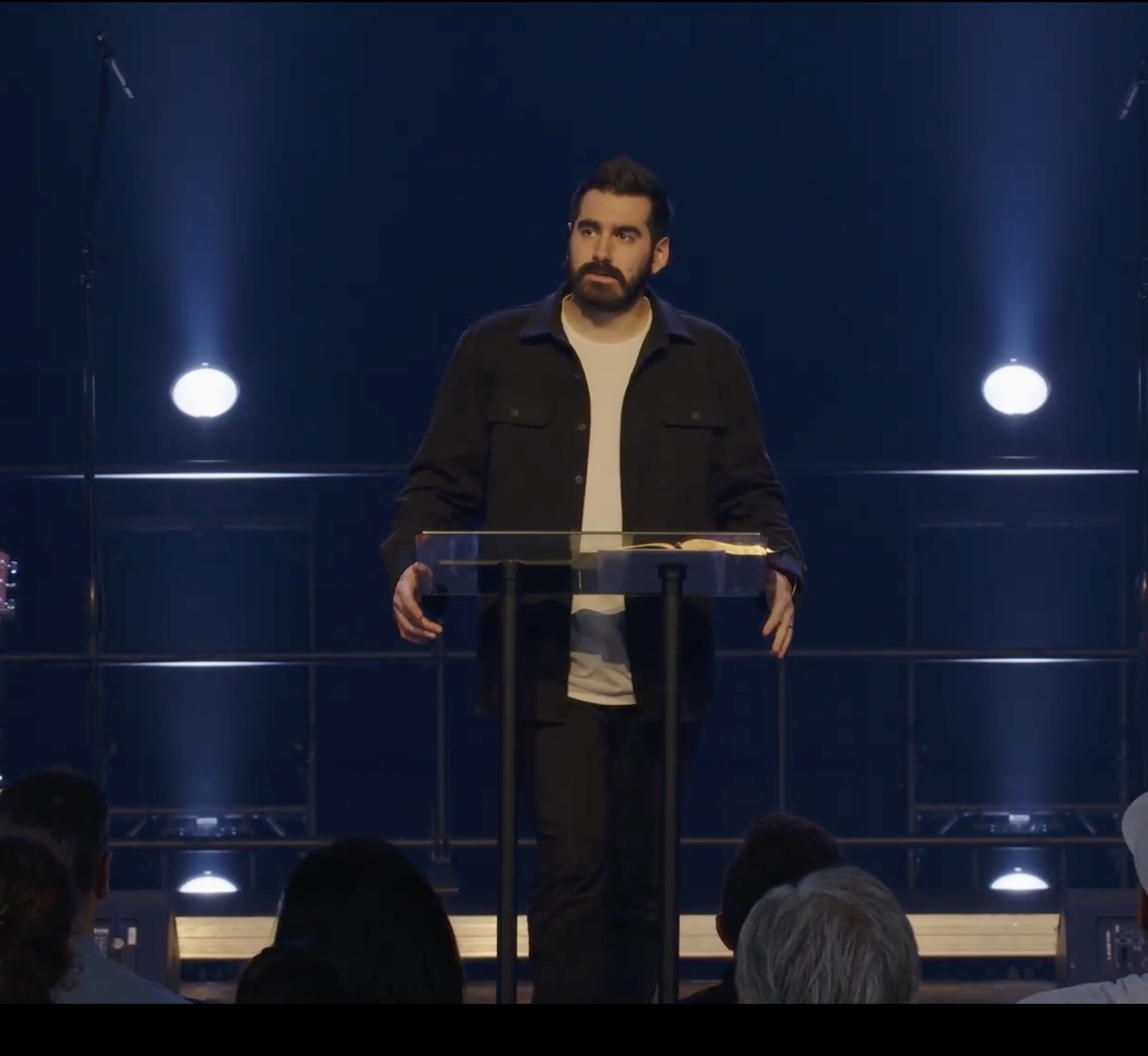
“We’re not trying to win arguments,” he told his congregation. “I’m not trying to give you ammo for the water cooler. I’m trying to help you understand the world you live in. I’m giving you names for the water you’re swimming in, and then trying to help you navigate it. There are actually great reasons for what you believe. And there are also people who are seeking better answers than they have.”
The Sunday teaching is primarily for believers. But it can be done in a way that’s aware others are there to “come and see” (John 1:39).
“People have shown a lot of courage and risked a lot of relational capital to bring their friends along,” Peterson said. “When you’re sitting next to somebody that is far from God, you see and hear the service differently. I know that—I’ve been in that seat. So when I preach, I want to use language that’s not needlessly offensive or that creates insiders and outsiders.”
Explain where verses are found in the Bible, or what the red letters mean, he said. When appropriate, differentiate. (“Christian, I’m talking to you,” Warren will say. Or “If you aren’t in Christ, I’m talking to you right now.”) Sometimes, directly ask nonbelievers to make a decision for Christ, Simmons said.
And be clear in your teaching, Gracia said. “People want to know what we believe and why. I think it’s the most compelling thing about our faith.”
Training and Praying
Christians can pick up enthusiasm for evangelism from their pastor. But they’ll probably need some additional education.
“I’ve found that one-off evangelism trainings aren’t very helpful,” Simmons said. “You need to do it consistently, through classes, small group trainings, and men’s and women’s ministries.”
The first lesson he teaches comes from pastor Larry Osborne.
“He said that everybody is relationally like one of those flat green Lego pieces that you can build on,” Simmons said. “Some people have a big green piece, and some people have a small piece, but once it’s full, it’s full. So if we want to make disciples, we have to make sure there’s room on there for the lost.”
The second thing you need is a clear, consistent way to share the gospel, he said. Multiple tools can help with this—anything from the Bridge to Life diagram to the Romans Road to the 3 Circles.
“One isn’t superior to the others,” Warren said. “But we chose one for our congregation because we want to get a common language within our church.”
All this has to be rooted in prayer—prayer seasons, regular prayer meetings, staff meeting prayers, and spontaneous prayer.
All this has to be rooted in prayer—prayer seasons, regular prayer meetings, staff meeting prayers, and spontaneous prayer.
“I read that D. L. Moody always had a note card on him, with a list of 100 unsaved people that he was asking God to save,” Peterson said. “By his funeral, 98 had become followers of Jesus, and at his funeral, the remaining two became Christians. I felt inspired by that, so I created a massive list of people that I’m praying for.”
For those who aren’t gifted as evangelists, Simmons recommends a shorter list of about three or four names. “Pray like crazy,” he said. “Ask God to give you an opportunity to share with them. Ask God to save them.”
Like evangelism, prayer requires effort, and over time Christians tend to slide away from it. But also like evangelism, prayer is “a fire that burns brightly if you stoke it,” Simmons said.
Living It Out: Small Groups
“In the early church, two things were happening to bring people to Christ,” Simmons said. “They were preaching the gospel faithfully and they were living it out.”
In evangelistically fruitful churches, a lot of the “living out” is happening in small groups. Studies show frequent churchgoers in small groups are more likely to pray for opportunities to share Christ (56 percent, compared with 31 percent of churchgoers not in a small group). They’re also more likely to have shared the gospel in the last six months (55 percent vs. 29 percent) and to have invited an unchurched person to a worship service (68 percent vs. 39 percent).
Unchurched people who get connected through a small group are more likely to stick than those who just come on Sunday, Gracia said. “If you can get them in those environments that are a little bit more intimate, something powerful can really happen.”
At King’s, small groups are encouraged to occasionally take a break from Bible study to hang out with those “who are far from God but close to [them],” he said.
Doxa Church does this too.
“A couple times a quarter, we’ll have what we call an Out,” Warren said. “That is when our small groups have a social event, or multiple social events. We invite our friends that aren’t connected to Christ or the church. It might be a barbecue, where I invite my neighbor and you invite your neighbor, and we just sit in the backyard and play cornhole and sit around the fire.”
It’s not a bait and switch—nobody whips out the Romans Road partway through the evening, he said. “The goal is for our friends to see the gospel before they hear it.”
Once you do this—say, inviting a few people from work or the gym or the park—it gets easier, Peterson said.
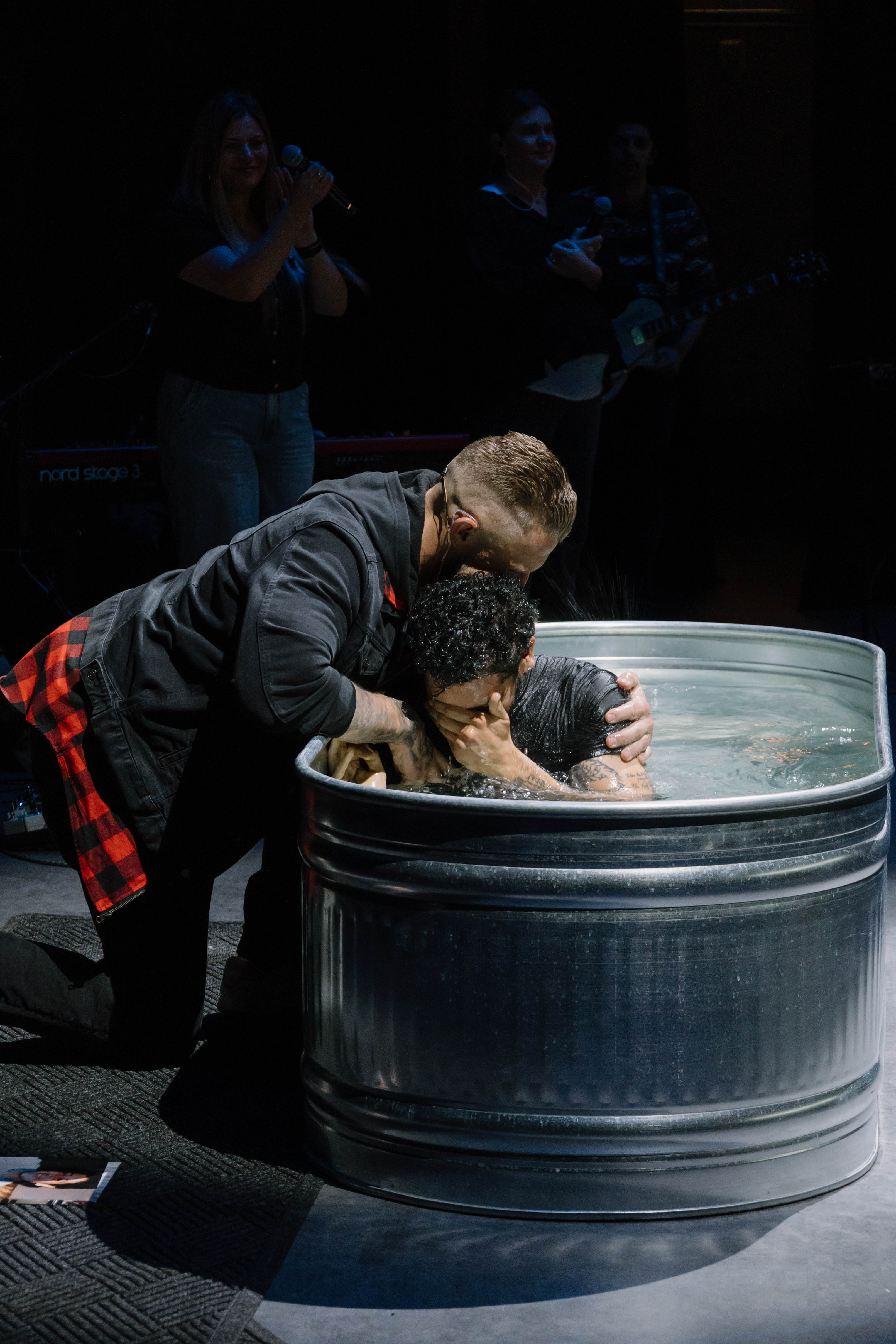
“Last September, we baptized two good friends of ours from the gym,” he said. “They brought in another coach at the gym and his wife. And that coach brought another coach and her boyfriend. It started some momentum. Now it’s easier to invite this other unsaved coach because everybody he knows is already in this group.”
All of this requires your church members to have friends who don’t know Christ.
“And if you don’t have anybody to invite—well that’s your next step,” Gracia said. “You need to build non-Christian friendships.”
Living It Out: Individuals
America’s recent loneliness epidemic hasn’t been confined to teenagers. About half of American adults now report having three or fewer close friends. We spend about 20 fewer hours a month hanging out with our friends than we did in 2000. We’re more alone than ever before.
In this environment, seeing if someone on the bus wants to walk through the book of John with you is a big ask.
“If that’s walking, let’s go back to crawling,” Norris said. “Can you just be more intentional and prayerful to greet people around you? Notice others. Say, ‘Hey, how are you doing?’ Introduce yourself.”
For that to work, you have to be around people.
“I go to a gym that’s farther from my house but close to my church,” Peterson said. “That way I’m not saying, ‘You should come to this church that’s 30 minutes away.’ I’m saying, ‘Come to my church that’s a mile from here.’”
Peterson’s wife also drives farther to consistently take the kids to a park near the church. To get around unchurched people, his dad plays golf every Friday and his mom volunteers at the zoo. His mother-in-law regularly walks the same nature trail, looking for familiar faces she can talk to. Others in his church have begun to check out with the same cashier at the store each week or frequent a coffee shop near church. Still others are joining running clubs or Ultimate Frisbee leagues with an eye on meeting and befriending people.
“You’re going to learn names, and then you’re going to ask an intentional question, and over the months and years, you’ll get to know people and then be able to ask them out to dinner,” Peterson said. “One of our best strategies has been to take people to dinner and pay for it.”
Those friendships aren’t initially built on sharing the gospel but on asking questions.
Asking Questions
“Somebody once asked Francis Schaeffer if he had an hour to share the gospel, what he’d do,” Warren said. “He said he’d ask questions for 55 minutes, and then respond with the gospel in the last five.”
Your questions shouldn’t be aggressive or combative.
“We’re attuned to seeing online news anchors or people on TikTok argue and debate,” Peterson said. “You’re not trying to do that. You’re trying to learn what they believe. And then you can say, ‘That’s really interesting. Thanks for sharing.’ And then if they want to ask you a question, that’s an opportunity.”
They might not ask you. People aren’t used to doing that.
“Being friendly is such a nonexistent thing in our culture,” Peterson said. “No one asks questions about someone’s life. We all want to share our opinions. But if someone is inquisitive and curious, people will open up, and you never know where that will lead.”
He remembers a ministry leader talking about “relationships that can bear the weight of the gospel—if they know you, if you have proximity with them, you earn the right to talk to them and enter that door.”
That comes with time, and it can also come with offering to share a burden with them, Gracia said.
“Ask them how you can pray for them—put it out there,” he said. “Maybe you could say, ‘Hey, I pray for people I know. I would love to pray for you. Is there something going on in your life I could pray for?’”
That lets them know that you’re a Christian, that you care, and that you pray. They’ll probably remember that later.
“I have a guy in my street that is very hard towards the gospel and the church,” Warren said. “He has stiff-armed me since I’ve lived here—we don’t talk. But last year, his sister and his mom died, and I was the first phone call that he made. . . . There’s gonna be a moment when people need God, and we want them to know where to go.”
Going Deeper
If and when people are open to spiritual conversations, invite them to church. Here’s what Simmons tells people who are wavering:
“If you’re not comfortable coming yet, or you want to know more, I get it. Go watch one of our services online. And then, if you like what you see, or you’re curious, come with me. Even if you’re 25 percent curious, just come one time. Just come and see.”
Sitting in a service “puts people in the path of hearing God’s Word from another person, which is really powerful,” he said.
You could also ask them to read through a book (perhaps Tim Keller’s The Reason for God) or work through a Bible study with you. Norris uses four short Life Issues booklets.
His favorite place to find lost people is the golf course near the church.
His favorite place to find lost people is the golf course near the church.
“One of my practices is to play golf with church members, and to ask them to invite one friend from the club who doesn’t know the Lord,” he said. During the time it takes to play 18 holes, he gets to model for the church members how to engage someone evangelistically.
“At the end of the round, you can say, ‘Hey, man, I really enjoyed some of the things that we talked about today. One of the things I love to do is take people to lunch—I’ll pay. Over the course of four weeks, if we had lunch a few times, we could study the book of John together. I feel like it could answer some of the questions that you have. Would you be interested?’”
Last fall, someone was.
“He had never read the Bible,” Norris said. “He couldn’t really tell you the point of Christianity, other than ‘Try to be good.’ We met for four weeks, and he was absolutely mesmerized at the Word of God. He said, ‘Can we keep meeting and studying the Bible?’”
That man became a believer, was baptized, and joined the church. Now his wife and children are coming too.
But it started small. Evangelism today almost always does, which is why, if you want to build a culture around it, you have to celebrate everything.
Celebrate Everything
“Sharing the gospel is like working out a muscle,” Norris said. “You’re not going to keep going if you feel like you’re failing at it. But a lot of times, there is a lot of failure before there is success. So we celebrate every little thing.”
Peterson does this through stories, shared in the church newsletter, during meetings, or in services. It could be a person who went to a basketball game with his neighbors and learned more about their family—maybe that’s more than he was doing three years ago. Or it could be the men who work from home on Fridays and who have started going to the same coffee shop together to invest in people there. Or the young man who bought a house strategic to where the church building is.
As people begin to take steps toward evangelism, the practice sells itself.
“Generally, the happiest people I talk to on Sunday are those who are like, ‘Guess what I did this week?’” Gracia said. “They got to pray with someone or talk with them about the gospel. If a church member has brought someone with them to church, they are ecstatic. When there is spiritual movement in someone’s life, it is the best thing in the world.”
Warren saw this with teenagers he took to do evangelism in Florida over spring break.
“Every night we would give taxi rides and talk to people,” he said. “I don’t know how effective it was for mass evangelism, although every year there’d be people who met Jesus. But I found that every student who came back from that trip started sharing the gospel in their everyday life.”
They had realized it wasn’t as hard or scary as they’d thought, he said. And once you begin to see fruit, it’s easy to keep going.
“The moment you see it work, you’re like, Yes. I’m about to do this to everyone,” Gracia said. “God isn’t trying to punish us by making us do evangelism. He is sharing something really good.”
Something Really Good
“In terms of my conversion rate on evangelism—like how many people come to faith when I share the gospel—I’m probably batting .08,” Simmons said. “But if you’re asking how many times I’m impacted when I share the gospel, I’m batting 1.000.”
Simmons feels this so strongly that he sometimes takes guys he’s mentoring over to the park to share their faith with strangers.
As people begin to take steps toward evangelism, the practice sells itself.
“I don’t do that because I think that’s an effective evangelism strategy,” he said. “I do it because it’s an effective disciple making strategy. . . . One of the ways I fight sin is by sharing the gospel with other people. One of the ways that I stay grateful and humble is by sharing the gospel with other people. One of the ways I come into the presence of the Spirit is by sharing the greatest story that’s ever been told.”
Conversion is always the work of the Spirit.
“I can speak and serve, but it’s God that saves and sanctifies,” Warren said. “When we get that—not only a high view of Scripture but a high view of the sovereignty of God—it frees the Christian from so much pressure. Because there have been times where I’ve been in Panera, and I’m sharing the gospel with a guy, and I’m like, Dude, I am nailing this right now. I am doing so good. I should write a book. And the guy’s glazed over and has no idea what I said.
“And then there’s other times where I’m in that same Panera, and I’m fumbling through, and I’m not even coherent. I’m thinking, I’m making Jesus look really bad right now. And then that guy’s like, ‘That makes total sense.’ And he becomes a Christian and comes with me to church and we baptize him.
“When you have stories like that, the pressure comes off.”
Popular Products
-
 Classic Oversized Teddy Bear
$23.78 -
 Gem's Ballet Natural Garnet Gemstone ...
$171.56$85.78 -
 Butt Lifting Body Shaper Shorts
$95.56$47.78 -
 Slimming Waist Trainer & Thigh Trimmer
$67.56$33.78 -
 Realistic Fake Poop Prank Toys
$99.56$49.78