When Morningness Is Confused With Godliness
“Do your quiet time with God every morning.”
“Give God your first hours (your best hours!) of the day.”
“Rise early for Scripture and prayer; it sets the tone for the rest of your day!”
From pulpits to podcasts, I’ve heard these sentiments often in Christian circles. The instructions aren’t just to spend alone time with God but to specifically do so as the very first act of your day. For many, the “morning quiet time” has become a measuring rod of how well you’re doing in your relationship with God.
Actor Mark Wahlberg once went viral on Instagram for a screenshot of his morning routine: waking up at 2:30 a.m., praying at 2:45, and completing his first workout before 5:30. This is one of many examples of how early rising has become associated with aspirational godliness.
But is it really more virtuous to be a morning person than a night owl?
What If You Have to Sleep In?
Behind the modern mindset of hyperidealized mornings is the assumption that being a “morning person” is a virtue in and of itself—a gritty choice toward wellness and productivity within everyone’s power. The implication is that if you’re disciplined and wise, you’ll set the alarm clock and start the day early; you’ll make it happen. If you’re slothful or foolish, you won’t. Extenuating circumstances are just excuses.
For many, the ‘morning quiet time’ has become a measuring rod of how well you’re doing in your relationship with God.
But what would this mean for nurses whose work begins and ends when it’s dark outside? What about parents with newborns, whose babies’ demands don’t abide by our ideal rhythms? How about Christians who are naturally night owls: most alert, focused, and productive at night?
Should these folks just suck it up and aspire to get up earlier in spite of their circumstances? Or could it be possible that our idealizing of morning quiet times is more cultural than biblical?
God Loves Early Risers
At first glance, it might seem that God’s Word does value our mornings most. Pastor David Mathis wrote an insightful article summarizing the abundance of instances in Scripture in which God’s people (including Christ himself!) either rose early to good effect or were directed by God to do so.
Consider the Psalms: In Psalm 5:3, David says, “O LORD, in the morning you hear my voice.” In Psalm 88:13, the Sons of Korah sing, “In the morning my prayer comes before you.” In Psalm 90:14, Moses prays to God, “Satisfy us in the morning with your steadfast love, that we may rejoice and be glad all our days.”
God clearly meets with his people in the morning. Case closed? Not quite.
When you consult the whole counsel of Scripture, it becomes clear that God emphasizes meditating on his Word, singing his praises, and praying to his name just as much in the night as in the morning.
Nocturnal Worship
Let’s explore some nighttime examples.
In Acts 16:25–26, after Paul and Silas are imprisoned in Philippi, God’s Word notably mentions the timing of their worship: “About midnight Paul and Silas were praying and singing hymns to God . . .”
Silas and Paul don’t try to go to sleep early so they can engage with God at the crack of dawn. They stay up late, worshiping at midnight. The results are profound.
In Psalm 63:5–6, David prays to the Lord, “My soul will be satisfied as with fat and rich food, and my mouth will praise you with joyful lips, when I remember you upon my bed, and meditate on you in the watches of the night.” This psalm as a whole is arguably a nighttime prayer. David prays these lyrics to the Lord seemingly all while on his “bed,” singing midnight praises.
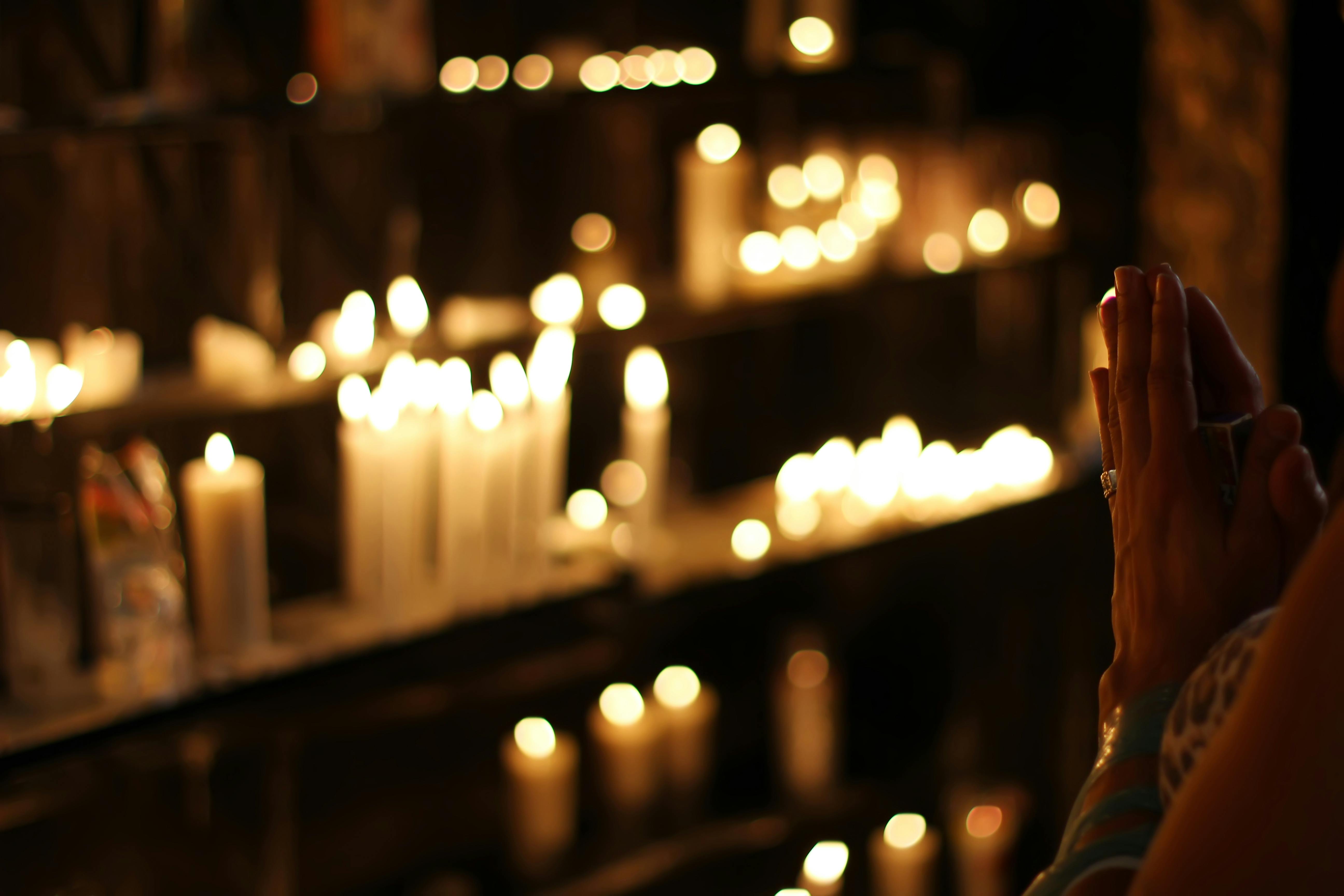
Consider Jesus’s earthly life. On the fateful day before his crucifixion, when it comes to spending devoted time alone with his Father, Jesus prays passionately, in Gethsemane, at night (Matt. 26:36–56). There is no mention in the Gospels of Jesus rising early on this momentous day; it might have happened, but the recorded emphasis is Jesus’s spiritual devotion in the dark.
Morning and evening aren’t pitted against each other in the Bible. They’re a complementary pair: Psalm 77:2 says, “In the day of my trouble I seek the Lord; in the night my hand is stretched out without wearying.” Psalm 88:1 says, “O LORD, God of my salvation, I cry out day and night before you.” Psalm 92:1–2 says, “It is good to give thanks to the LORD, to sing praises to your name, O Most High; to declare your steadfast love in the morning, and your faithfulness by night.”
What does this mean for practical living? If you’ve never tried it, consider adding nighttime worship to your spiritual toolbox. Carve out time to pray, praise, and ponder the Scriptures before bed.
If you struggle with insomnia, see it as a devotional opportunity. If your brain just won’t turn off at 3:00 a.m., fellowship with your Maker rather than letting your mind wander aimlessly. In a unique season of spiritual desperation, set your alarm clock for the middle of the night, to wait on the Lord under the stars, to intently watch for his presence and answers to prayer (Ps. 130:6).
Dreams can be God’s chosen instrument to instruct and encourage his people (e.g., Gen. 28:10–22; 37:6–7; 1 Kings 3:5; Matt. 1:20–21; 2:13; Acts 2:17). Dreams appear in Scripture as a meaningful spiritual realm, and the thoughts you think in the final moments before sleep often seep into your nightly imagination. What better way to end your day than to fill your mind with God and his excellencies, to draw your heart near to his love, and to pray for spiritual protection while you slumber.
Ultimately, if mornings are a perpetual struggle for you, release yourself from the guilt and legalism of needing to give God a half hour every morning. Give him your nights!
Balanced Worship
If you’ve found it fruitful to rise early to devote alone time to God, continue doing so with discipline and joy. But beware of imposing your own daily spiritual practices on others with a prideful narrow-mindedness that Scripture lacks.
Release yourself from the guilt and legalism of needing to give God a half hour every morning. Give him your nights!
Excessive sleeping can be a sign of sinful sloth (Prov. 19:15). But biblically, the godly Christian can please God just as much staying up late to worship as rising early. Both routes are biblical and blessed.
The mature Christian life, across different seasons, will have various rhythms of dedicated worship at all times of the day and night: sometimes at the crack of dawn, other times at noon, or even in the dark (Deut. 6:4–7). Sacrifice your mornings to the Lord when you’re able. Devote your evenings too.
Popular Products
-
 Classic Oversized Teddy Bear
$23.78 -
 Gem's Ballet Natural Garnet Gemstone ...
$171.56$85.78 -
 Butt Lifting Body Shaper Shorts
$95.56$47.78 -
 Slimming Waist Trainer & Thigh Trimmer
$67.56$33.78 -
 Realistic Fake Poop Prank Toys
$99.56$49.78