‘apple And Google’: Inside New York Pilates’ Defiance Of Private Equity
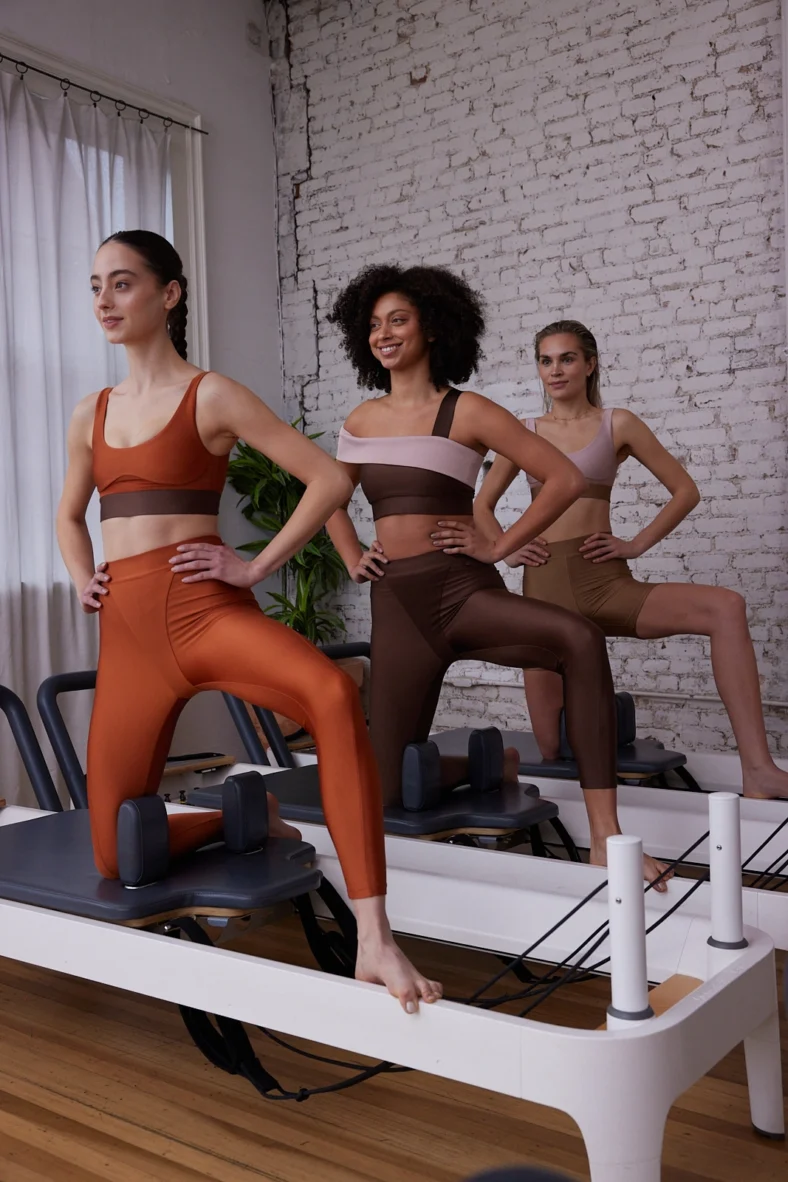
As other Pilates brands race to expand through franchising and PE money, New York Pilates is seeing success with a different approach: prioritizing absolute control
There is a strange irony in the way Pilates is scaling. While the practice demands a steady core, its biggest players are in a state of manic motion, fueled by a backdrop where consumer demand is apparent, private equity is swirling and franchise operators have hit the gas pedal in a winner-take-all race to scale.
But when you enter the soon-to-open 6,000-square-foot Flatiron studio of New York Pilates, you won’t find corporate slogans or a rush to crank out carbon copies. Instead, you find two massive columns of illuminated vanilla onyx and reformer Pilates led by 400-hour-certified instructors.
It’s the house that Heather Andersen and Brion Isaacs built. And they did it on their own terms across four New York City locations, four Hamptons-area outposts and five more New York-area studios on the way.
The Apple vs. Google Philosophy
It’s impossible to dodge a headline about a new Pilates studio popping up, especially in a city said to have more Pilates studios than Starbucks coffee shops.
New York Pilates, though, has taken a different path.
“Heather and I always would look at Apple and Google,” Isaacs said, reflecting on New York Pilates’ 13-year journey. “Google would go out there and try to do as much as they could, but look at Apple. Apple’s never first, but always best. We’ve always been about taking our time. Let’s stay in our own lane, do our own thing.”
That “own thing” involves a design aesthetic that can’t be replicated. It’s an area where Isaacs shines, his background in branding and design complementing his wife Heather’s 20 years as a Pilates instructor, whom he calls the “Queen of Pilates.” From New York Pilates’ West Village location, housed in what Isaacs notes was Bob Dylan’s old practice space, to the new Flatiron expansion, no two studios look alike.
Defying the PE ‘Boys’ Club’
“We have no private equity, no family money, nothing,” Isaacs said.
The decision to remain independently owned wasn’t just about aesthetics; it was also a reaction to the underwhelming dynamic of the private equity firms themselves. Isaacs recalls meetings with some major players where the dynamic was telling.
“I remember one of the biggest out there,” he said. “Heather was like, ‘That guy didn’t speak to me once. He only spoke to you.’”
Andersen is candid about the tradeoff of not taking on private equity money — debt financing carries personal liability but it keeps control exactly where they want it.
“I was really reluctant to take on any kind of private equity early on,” she said. “My passion is Pilates, and being able to maintain the quality as the number one most important thing is non-negotiable for me.”
Of course, there were moments of doubt. Isaacs mentioned the psychological toll of watching PE-backed competitors race to open locations while New York Pilates held the line.
“Did we make the right decision?” he recalls thinking. “And we always said: you don’t have to be the biggest. You just have to be the best.”
While there may have been moments of wonder, he said the graveyard of fitness brands was hard to ignore — the names that took the money, burned bright and then ultimately burned out.
“There’s this rapid growth,” Isaacs said, “but then there’s this just as rapid decline.”
Why They Won’t Franchise
Franchising, unsurprisingly, is off the table — though the opportunities have presented themselves.
“I think it’s really good for selling franchises,” Andersen said. “But it is not really good at executing the modality, and I think it’s very difficult to maintain a brand voice and quality when you have owners all over the place. For us, number one is the quality and maintaining that very high level of quality across all of our locations, across every class.”
“I don’t think the franchise model executes on that vision,” she added.
Instead, New York Pilates is expanding on its own terms: eight locations now, with Sag Harbor expected to open this spring, a 9,000-square-foot Upper East Side studio on 86th and Third in the works and Williamsburg slated for later this year or early 2027, among others.
It also gives them room to maintain the element of surprise.
“No one knows what we’re going to do next,” Isaacs said. “Our newest studios don’t look like our oldest. We update our programming every quarter. We run it like a real business with a product to sell to our customers.”
Quality Over Quantity
To mark the Flatiron expansion, New York Pilates jumped on the “2026 is the new 2016” trend sweeping TikTok — highlighting a limited-time, annual unlimited membership at $199 a month, a stark contrast to competitors charging $300-$500.
Not that they’re hurting for clients. At one point, after temporarily pausing new memberships, the waitlist climbed to as many as 4,000 people, all eager to get into the brand’s reformer-based Abs, Arms & Ass class, which runs daily, year-round, across all locations.
After COVID, the studio also made the decision to pull itself from ClassPass, the third-party booking platform, opting to pass savings directly to students instead and cultivating a community of Pilates enthusiasts.
“When there are so many new people in every single class and people who aren’t committed to the practice, it’s very difficult to maintain the quality and the level of the class,” Andersen said.
Staying in your own lane is a taller order when the road is increasingly congested. With rivals multiplying at a breakneck pace, one would imagine the competition can trigger a sense of urgency. But Andersen isn’t rattled, noting that New York Pilates was successful before the market expansion that we see now.
“You can’t create when you’re competing,” she said. “There’s room for everyone and I think that if you approach any marketplace from a vision of fear, then you’re going to spend all of your time distracted about what other people are doing. And our vision is to focus on ourselves and what we are doing.”
Though New York is the focal point for now, bigger ambitions appear on the horizon.
“We want to be the best Pilates studio in New York, and then soon the rest of the world — when it’s the right time and when we’re ready to do it,” Isaacs said. “We always say that the turtle wins the race, and we’ve always been happy to be the turtle. And it’s not who does it fastest for us, it’s who does it best.”
The post ‘Apple and Google’: Inside New York Pilates’ Defiance of Private Equity appeared first on Athletech News.
Popular Products
-
 Anti-Slip Overgrip Tape For Rackets
$64.99$44.78 -
 Table Tennis Rubber Cleaner Spray – 1...
$28.99$19.78 -
 Tennis Racket Dampener 2-Pack Shock A...
$34.99$23.78 -
 Adjustable Elbow Brace Support Strap ...
$40.99$27.78 -
 Electronic String Tension Calibrator ...
$41.56$20.78