3 Pickleball Overhead Shots That Turn Lobs Into Easy Points
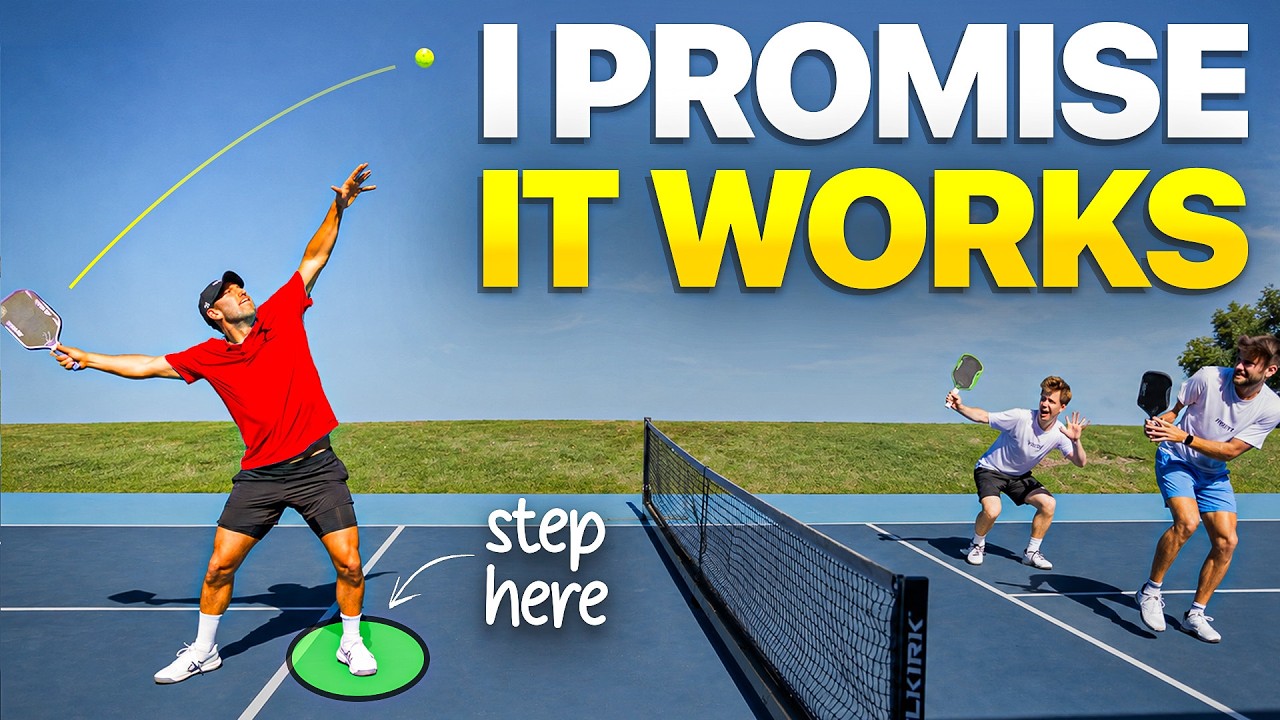
The pickleball overhead does not have to be a scramble. Learn the three-shot system that handles any lob safely and turns it into offense.
The pickleball overhead is the shot that should end the point, and instead it ends up in the net, in the fence, or worse, with you flat on your back.
A lob floats up, your feet betray you, and a ball you should crush turns into a scramble.
Here is the good news. You do not need three different swings and a physics degree.
You need one simple decision tree, and coach Kyle Koszuta of ThatPickleballGuy lays it out cleanly: rip it, hook it, or let it go.
Get those three responses right and every lob becomes a choice instead of a panic.
Here is exactly when to use each one, and the footwork that keeps you upright while you do.
Love pickleball? Then you'll love our free newsletter. We send the latest news, tips, and highlights for free each week.
The One Rule That Matters Most: Stop Backpedaling
Before you touch a single overhead, absorb this: never backpedal to chase a lob. It is the most dangerous movement in the sport.
Your instinct is to shuffle straight back with your eyes on the ball, and that is precisely how feet get tangled and wrists get broken.
Koszuta tells the story of a player who backpedaled after a lob at his very first session, fell, and left in an ambulance.
He is not exaggerating the risk. A Yahoo Sports safety column puts it plainly, warning players to never shuffle back or backpedal if lobbed because of the risk of a broken wrist, arm, or head injury.
If a ball is truly over you, turn your hips and run, or let it bounce. You never move backward while facing the net.
That one habit protects your body and sets up every overhead below.
Learning to read the lob early is half the battle, which is why sharpening your anticipation pays off before you ever swing.
Overhead 1, The Rip It: Your Standard Pickleball Overhead
The rip it is the classic tennis-style pickleball overhead, and you use it when the ball is in front of you and you have time to set your feet.
This is your offensive weapon, the shot that ends points.
The technique breaks into three simple moves:
- Turn your hips so your body is perpendicular to the sideline. This is the setup that makes everything else work.
- Move your feet. Take a single shuffle step if the ball is close to overhead, or a crossover step if you need to travel back and have the time to do it.
- Load and throw. Your off arm points up at the ball to track it and keep you balanced, while your paddle arm pulls back with the elbow tucked, like the top of a rowing motion. Then swing through it like throwing a baseball, letting your body rotation drive the ball down.
That non-hitting arm matters more than people think.
Pointing at the ball keeps your shoulders level and your contact point out in front, which is the difference between a clean put away and a ball that sails long.
The footwork here is the same lateral movement that shows up all over the game.
A Yahoo Sports coaching tip on pivot and shuffle footwork reinforces the point: stay low, keep the paddle in front, and move sideways rather than turning and running when you do not have to.
If your feet are a mess in general, start with a clean drop step and fix the shuffling habits that quietly cost you position.
Should you jump on the rip it?
You can, but you do not have to. If you have time and balance, a small hop can add power, but a grounded, rotational swing is more reliable for most players.
Save the jump for the ball you have clearly tracked and set up under.
Overhead 2, The Hook It: The Pickleball Overhead That Looks Wrong
Here is the shot almost nobody teaches.
The hook is a pickleball overhead you reach for when the ball is over your head or slightly behind you, it arrives faster than expected, and your feet are already caught.
In other words, the exact moment the rip it falls apart.
Two problems show up when you get lobbed: the ball travels over your head, and you make contact late, which sends it long or into the net.
The hook solves both by letting you make contact while the ball is behind you.
The kitchen rule is what makes the footwork tricky. You must have both feet established outside the non-volley zone before contact, or it is a fault.
If you are fuzzy on that boundary, here is a refresher on the kitchen line and the non-volley zone.
Rather than fight your natural first step, Koszuta says to plan around it:
- Step one: your front foot steps in naturally, because it always wants to.
- Step two: a back step with your other foot as you turn.
- Step three: slide that front foot back out so it clears the kitchen line at contact.
His cue is simple: turn, step, and use the momentum from that slide to whip the paddle through with a straight arm.
No jump, no big backswing, just a compact motion he says doubles as a shoulder warm up you can do every morning.
Why bother learning something this awkward? Because it keeps you close to the kitchen.
Instead of running deep into the backcourt, you handle the ball, get it down fast, and stay in position for the next shot.
That is a form of taking the ball out of the air to build offense rather than surrendering the point.
How do you practice the hook pickleball overhead?
Start with no ball. Rehearse the turn, back step, slide sequence until your foot reliably ends up outside the kitchen.
Then have a partner feed short lobs that force you to hook rather than rip. Groove the footwork first, add the swing second, and only then add pace.
Overhead 3, The Let It Go: When Skipping the Shot Wins the Point
The smartest overhead is sometimes no overhead at all.
When a lob sails too far past you to rip and too deep to hook with any downward angle, forcing the shot just hands the point away.
Trying to turn and rip a ball that is already behind you almost always loses.
So does a desperate hook when your partner is standing right where the ball is landing.
Let it bounce and reset instead. From there you have two clean options:
Sky lob it. Send the ball high to buy time, call your partner back with you, and reset the point. Survival now beats a hero ball.
If you want that defensive lob to actually land, study how to lob without getting smashed.
Turn, run, and drop. Chase the ball down, let it rise and fall, then hit a soft reset much like a third shot drop and work your way back to the kitchen together.
The theme in both is patience and partnership. Watch Ben Johns get lobbed and you will rarely see him panic into a low-percentage swing.
He turns, resets, and rebuilds the point from the back, then grinds his way forward.
Knowing how to recover after being pushed back from the kitchen is what makes letting it go a winning play instead of a giveaway.
How the Three Pickleball Overhead Shots Fit Together
The whole system runs on one quick read of the incoming lob. Koszuta boils it down like this: if the ball is shallow and in front of you and you have time, rip it.
If it is over your head or slightly behind and you have to move back, hook it. If it is those situations but simply unreachable, let it bounce.
Make that read fast and the panic disappears, because you already know your answer before the ball comes down.
It is the same decision discipline that separates advanced players from everyone still guessing.
None of this works if the lob catches you flat-footed, so treat lob defense as a skill you drill, not a shot you hope to survive.
The players who handle it best are the ones who stopped making the common mistakes with the lob long ago and who can also defend overhead smashes when the roles flip.
Frequently Asked Questions
What is the most important rule for hitting a pickleball overhead?
Never backpedal. Facing the net and shuffling straight back to chase a lob is the leading cause of serious falls in the sport.
If a ball is over your head, either turn your hips and run for it or let it bounce, but never move backward while facing forward.
When should you use a rip overhead versus a hook overhead?
Use the rip when the ball is in front of you and you have time to turn and set your feet, because it is your most powerful put away. Use the hook when the ball is over your head or slightly behind you and arrives too fast to set up, since it lets you make contact behind your body and stay near the kitchen.
How do you avoid a kitchen fault on an overhead?
Both feet must be fully established outside the non-volley zone line before you make contact. The common error is stepping into the kitchen out of instinct as the ball drops.
Train the turn, back step, and slide so your foot clears the line every time.
Should beginners learn the hook overhead?
Yes, especially if you are not in your athletic prime. The hook keeps you upright, keeps you near the kitchen, and removes the temptation to backpedal.
Groove the footwork with no ball first, then add short lob feeds from a partner before you take it into games.
What do you do when a lob is completely out of reach?
Let it bounce and reset. Either sky lob the ball high to buy time and pull your partner back with you, or turn, run it down, and hit a soft drop to work your way back to the kitchen.
Both beat a low-percentage swing that gives the point away.
Popular Products
-
 Photochromic UV400 Sports Glasses
$78.99$54.78 -
 Hip Trainer with 39 Gears
$98.99$68.78 -
 Arm Resistance Bands for Baseball & S...
$64.99$44.78 -
 Portable Badminton Set with Bag & 3 B...
$64.99$44.78 -
 Soft Practice Balls - Indoor Outdoor
$37.99$25.78