5 Advanced Pickleball Tips For Dictating Third Shot Drive Placement
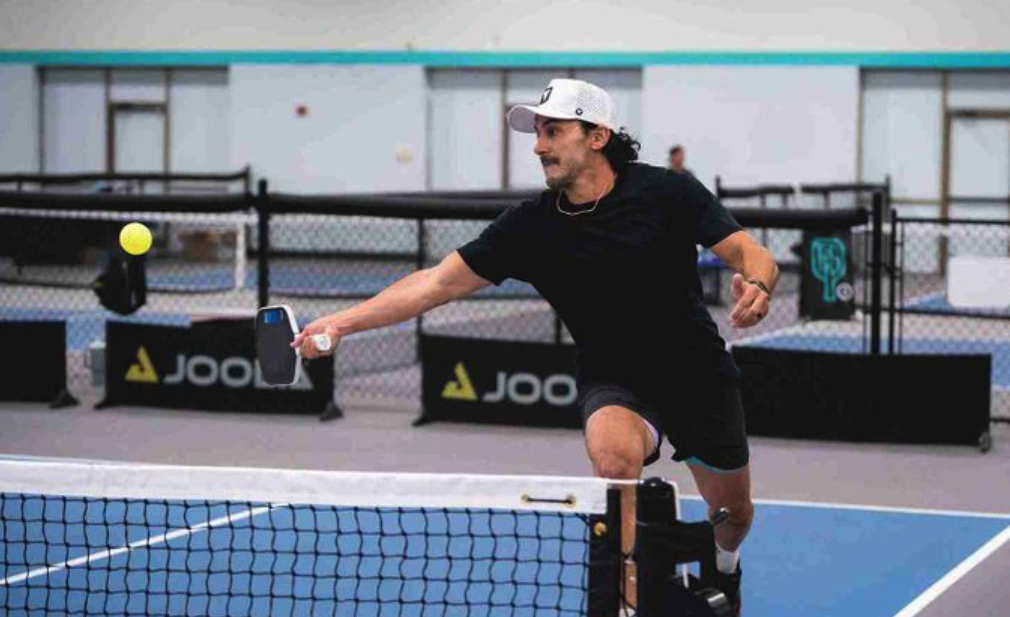
Most players hit the third shot drive hard and hope. These advanced pickleball tips teach you to pick a target first so the drive sets up the fifth ball instead of ending the point for your opponents.
The best advanced pickleball tips for the third shot drive have almost nothing to do with how hard you swing.
They have everything to do with where the ball goes and what that target forces your opponents to do next.
At 3.5, the drive is a swing. At 4.5, it's a question you're asking two people at the kitchen line, and you already know the answer you want.
That gap is most of what separates average from advanced.
Here's the thing most players get backward. They treat the drive as a winner and get frustrated when it comes back.
Good opponents block almost everything.
A peer-reviewed match analysis of professional men's doubles found that 90.8% of shots were intercepted across nearly 7,000 tracked shots.
Your drive is going to come back. The only question is what it comes back as.
Love pickleball? Then you'll love our free newsletter. We send the latest news, tips, and highlights for free each week.
What Makes These Advanced Pickleball Tips Different From Just Hitting Harder?
Placement dictates the return; power only dictates how fast a bad return comes back at you.
That's the whole spine of advanced pickleball strategy on the third ball.
Quick definition: the third shot drive is the serving team's third ball of the rally, struck low and flat from near the baseline instead of floated soft into the kitchen.
It's the loud cousin of the drop, and it exists because of the rules, not preference. USA Pickleball's official rulebook requires the serve and the return to bounce once each, so the serving team is always hitting that third ball off the ground while stuck behind the returning team.
You're down a position. The drive is one way to buy it back. The third shot drop is the other.
Both are fine. Neither works if you're aiming at "over there." Every one of the advanced pickleball tips below starts with a named target.
Tip 1: Drive at the Right Hip, Not the Open Court
Aim at the body, specifically the dominant-side hip, because that's the one spot where neither the forehand nor the backhand block is comfortable.
Open-court drives look pretty and get blocked back with an easy paddle face, which is the first thing to fix in most drives.
Think about what a jammed player has to do. They have to move their feet back and rotate at once, and almost nobody does both in the half second they get.
The block sits up in the midcourt, and now you're attacking the fifth ball instead of resetting it.
The hip target also solves the two-handed backhand problem. Players with a strong two-hander eat anything you send to their left shoulder.
Send it to the right hip and that second hand becomes a liability, because they can't get the paddle out in front.
If you need more pace to make the target sting, the fix is usually hip rotation, not arm speed.
Tip 2: Hunt the Middle Seam When You Want Confusion
Drive through the middle when the returning team is split, because the middle creates a decision and decisions create hesitation.
Between two right-handers, the middle ball lands in the backhand-forehand seam, and both players reach for it or neither does.
This is one of those advanced pickleball tips that sounds basic until you watch the point again.
The middle drive pulls both opponents toward the center, which opens both sidelines for your partner's poach and for your next ball.
That's why T and sideline placement matters more than raw pace at higher levels.
Honestly? The middle is the most underused target in rec play. Everyone wants the highlight down the line.
When Should You Skip the Middle?
Skip it against a lefty-righty pair with two forehands in the center. That setup turns the middle into their strength.
Drive at the outside hip instead and make them reach across their body.
Same goes if one player is camping the middle, which good doubles partnerships do on purpose.
Tip 3: Read the Bounce Before You Commit to Driving
Drive only when the return gives you a strike zone you can attack from a balanced position. Everything else is a drop, a topspin roll, or a reset.
USA Pickleball's instructional guidance points to two practical triggers: a return whose peak bounce is above your knees, and a return landing roughly halfway between the baseline and the kitchen line.
Treat those as coaching thresholds, not hard laws; ball speed, spin, and your own balance all move the line. They're still a far better filter than "I feel like driving."
How Do Advanced Pickleball Tips Handle the Deep Return?
The deep, low, heavy return is not a drive ball. Force it and you'll spray into the net or float a sitter.
That's when you roll it or drop it and live to hit the fifth. Building that read is really a shot selection habit, and it's the single fastest way to cut unforced errors.
Tip 4: Pair the Target With Your Feet
A drive without forward movement is a gift.
Placement only pays off if you and your partner convert the block into court position, which means you're moving through the transition zone as the ball travels, not admiring it from the baseline.
That same professional match study found 71.3% of shots were played from the transition zone. Elite play happens in the midcourt.
Good drive, bad feet, and you've handed a competent team a slow-moving target in no-man's land.
Two or three steps in is usually enough, and most advanced pickleball tips about the drive fall apart without this piece.
Split step, absorb the block, then reset or attack based on the height of the ball.
Remember the non-volley zone extends seven feet from the net on each side, so you've got real estate to work with before you're anywhere near a kitchen fault.
Players who fear the line stall out at 15 feet and lose the point they already won.
Which Advanced Pickleball Tips Help Most With Recovery?
The midcourt reset is the one. Soft hands, paddle out front, knees bent.
A driver who can't reset is a one-shot player, and good opponents will bait that all day long.
Tip 5: Run the Drive as a Two-Ball Play
Stop thinking of the drive as one shot.
The best pattern in the sport is the drive followed immediately by a drop, and it works because you've already changed your opponents' paddle speed and spacing.
Here's the sequence worth drilling:
- Drive three at the right hip or the middle seam, low and flat.
- Take two steps in as the ball crosses the net.
- Drop five into the kitchen off the block, now from a much shorter distance.
- Close to the line and start the dinking battle from even footing.
That drive-drop combo turns a 50/50 third shot into a high-percentage fifth, because dropping from midcourt is enormously easier than dropping from the baseline.
It's also a partner play. Your partner should be poaching off your drive more than they currently are, and if you've jammed the right hip, that pop-up is coming.
How Do You Drill These Advanced Pickleball Tips?
Advanced pickleball strategy lives or dies in drilling, so drill placement with targets instead of feel.
Put a cone at the right hip position and the middle seam, feed yourself returns, and score it. Twenty balls, count how many land in the zone.
Then add the read. Have a partner mix deep low returns with shorter high ones and force a live call every ball: drive, roll, or drop.
That's the shot selection drill that separates a 4.0 from a 4.5, and it beats hitting a thousand drives at nothing.
These advanced pickleball tips work because they're about intent.
Controlled aggression is a choice you make before the ball arrives, and more pace on the shot itself is a separate project from learning where to put it.
Pick a target. Move your feet. Hit the fifth.
Key Takeaways
- Placement beats power. Nearly all drives get blocked back at high levels, so choose the target that produces the worst block.
- The right hip is the best default target, because it jams both wings and kills the two-handed backhand.
- The middle seam creates hesitation between two right-handers, but it's a weakness against lefty-righty pairs.
- Drive when the bounce peaks above your knees; roll or drop the deep, low return instead.
- The drive is a two-ball play, not a winner. Drive, step in, drop the fifth, close to the line.
Frequently Asked Questions
Where should you aim a third shot drive in pickleball?
Aim at the dominant-side hip of the player who returned, or through the middle seam between two opponents. Both targets jam the paddle and produce weak, high blocks. Open-court drives look aggressive but give opponents a clean, comfortable paddle face to block with.
When should you drive instead of drop the third shot?
Drive when the return sits up in your strike zone, generally when the ball's peak bounce is above your knees or the return lands around halfway between the baseline and the kitchen line. Drop or roll when the return is deep, low, or pushes you off balance. Driving from a bad position is the most common error at the 3.5 and 4.0 level.
Does the third shot have to bounce in pickleball?
Yes. USA Pickleball's two-bounce rule requires the serve and the return of serve to each bounce once before either team may volley, so the third shot is always played off the ground. That rule is why the serving team starts the rally at a positional disadvantage.
Is the third shot drive better than the third shot drop?
Neither is better; they solve different problems. The drive works against attackable returns and against opponents with slow hands or weak blocks. The drop works against deep returns and against teams that punish pace. Strong players hit both and decide based on the return, not on preference.
How do you stop getting stuck in the transition zone after driving?
Move forward as the ball crosses the net rather than waiting to see the block, then split step and take the ball low with soft hands. Two or three steps in per shot is enough. Getting stuck usually comes from admiring the drive, not from slow feet.
Popular Products
-
 Portable Foldable Table Tennis Set wi...
$506.99$353.78 -
 Oversized Giant Tennis Ball
$40.99$27.78 -
 Tennis Racket Lead Tape - 20Pcs
$51.56$25.78 -
 Silicone Tennis Racket Balance Weight...
$34.99$23.78 -
 Portable Pickleball Set with Net, 4 P...
$363.99$253.78