5 Mental Lessons From Playing Pro Pickleball At 14 Years Old
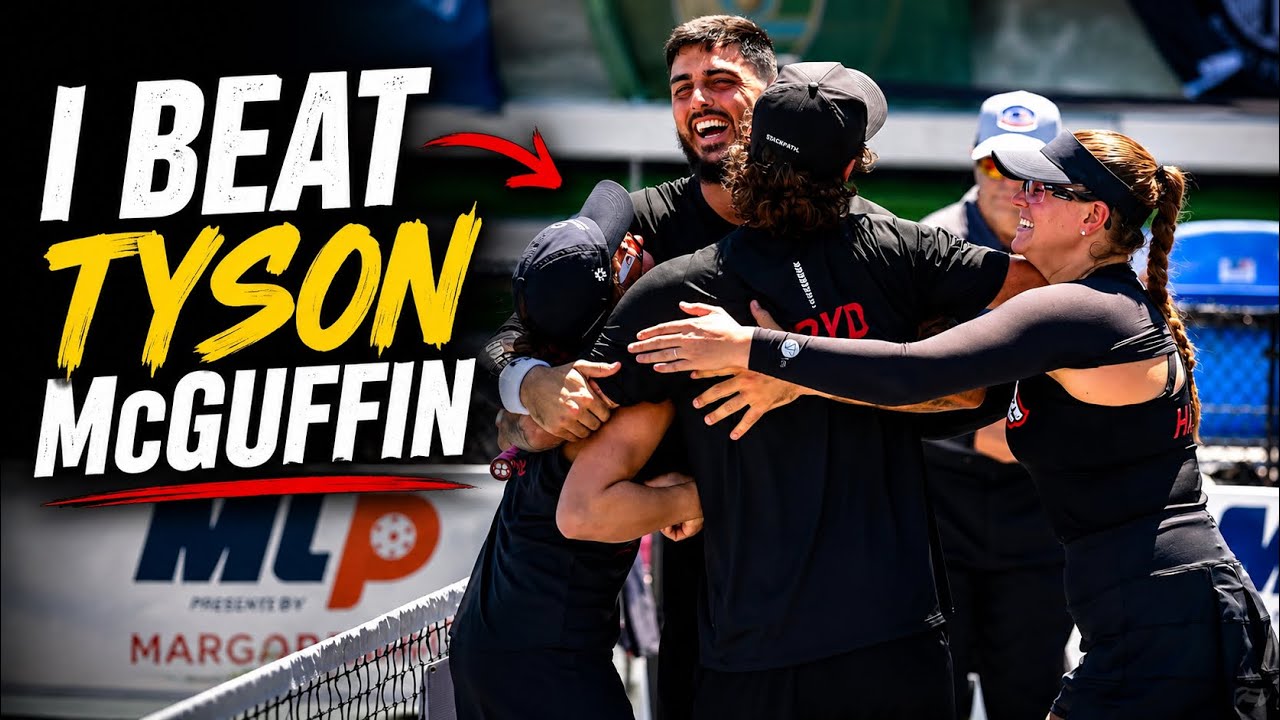
A teenage sub walked onto Championship Court at Major League Pickleball New York and beat Tyson McGuffin in mixed doubles. Here is exactly what that match revealed about competing at the highest level.
Playing your first ever Major League Pickleball match against one of the sport's most recognizable names is already terrifying.
Doing it as a last-minute substitute, at 14 years old, on Championship Court in New York, is a different category of pressure entirely.
That is exactly the situation Kelly Goodnow found herself in at MLP New York.
She got the call just days before the event, flew out, practiced once with the Carolina Hogs, and then stepped onto the court against the Palm Beach Royals.
What followed was one of the more surprising results of the MLP season.
This breakdown covers exactly what happened, why it worked, and what you can take from it into your own competitive game.
The full story comes directly from Kelly Goodnow on YouTube.
Love pickleball? Then you'll love our free newsletter. We send the latest news, tips, and highlights for free each week.
The Setup: How Does a Teenager End Up at MLP?
Kelly got signed to the PPA roughly three days before the MLP draft. The timing meant she was not selected in the draft and had no MLP team heading into the season.
Then the phone rang. The Carolina Hogs had two women unavailable for MLP New York and needed a substitute. Kelly was the call.
She flew out, practiced with the team for one day, and was suddenly lining up against the Palm Beach Royals, the sixth-ranked team in the league who had already won an MLP tournament that season.
The Hogs had not won since May. The expectations were not exactly sky-high.
Understanding the MLP format matters here. Each match consists of four games: women's doubles, men's doubles, and two mixed doubles matches.
Each game goes to 11 points.
That short format is critical, and we will come back to it.
What Actually Happened in the Match?
Women's doubles went to Tina Pisnik and Sofia Sewing for Palm Beach, 11-5.
They were undefeated on the season and had beaten Anna Bright and Kate Fahey 11-2 just prior. Losing that game was not a surprise.
The Hogs men then won their doubles game against Tyson McGuffin and Casey Diamond. That was already a significant result.
In the first mixed doubles match, Abby Hatton and DJ Young won for the Hogs, 11-9. Suddenly the match was tied heading into the final game.
Kelly and her mixed partner Michael Loyd knew exactly what was at stake. Win the last game and the Hogs pull off a genuine upset. Lose and Palm Beach takes the match.
That is about as high-pressure as it gets for a first MLP appearance.
How Did Kelly and Michael Beat Tyson and Casey?
They started at a level that surprised everyone, including themselves.
Kelly and Michael jumped out to a 10-4 lead against Tina Pisnik and Tyson McGuffin, two of the most experienced players in the game.
Then Pisnik and McGuffin started coming back. The score tightened to 10-9 before Kelly and Michael called a timeout to reset mentally.
After the break, they closed the game out.
The crowd went wild. So did the Hogs bench.
For a first MLP match, that is as dramatic a finish as you could script. And there are five specific lessons every competitive player should pull from how it unfolded.
Lesson 1: Nerves Are Not the Problem You Think They Are
Kelly said it directly: looking back, she would have told her nervous pre-match self that there was no reason to be anxious.
Not because the stakes were low, but because the environment was actually supportive.
The crowd, the teammates, the atmosphere, it all fed her energy rather than draining it.
If you want to stop letting nerves tank your performance before big matches, the fix is not to care less. It is to redirect that energy toward the competition itself.
There is a real skill to this. Learning to manage pre-match nerves is something every competitive player has to actively work on, and the earlier you start, the faster results improve.
What Does the Crowd Actually Do to Your Game?
Here is something counterintuitive from Kelly's experience. The Palm Beach Royals had kids in the crowd screaming mid-point in support of their team.
You might expect that to rattle the Hogs players.
Instead, Kelly said it got her pumped up. The noise energized her rather than disrupting her focus. That is a trained response, not an accident.
When crowd noise or opponent energy is trying to work against you, the instinct is to block it out. The better move is to absorb it and convert it.
Players with strong mental habits know the difference between distraction and fuel.
Lesson 2: Starting Strong in a Game to 11 Is Not Optional
In Major League Pickleball, every game goes to 11. There is no best-of-three sets, no second-set comeback, no extended match format to bail you out.
Kelly and Michael understood this and came out swinging. Going up 10-4 early did not happen by accident.
They made a conscious decision to start at their highest intensity level and not wait to warm into the match.
This is something strong competitive performance consistently demands, regardless of your level.
Waiting until you "feel it" in a short-format game is how you lose before you even realize the match is slipping away.
Lesson 3: You Can Be Up 10-4 and Still Lose
This is the flip side of lesson two, and it is just as important.
Kelly and Michael were six points away from victory and watched Tina Pisnik and Tyson McGuffin claw all the way back to 10-9.
That is a five-point swing in a game that only goes to 11. It happens fast at this level.
The comeback was a reminder that no lead in a short-format game is safe until the final point is won.
As Kelly pointed out, Anna Bright has said publicly that pickleball is not bound by a clock.
You can be down 0-10 and still win. That cuts both ways. Staying composed after a bad run is a skill that determines who closes out leads and who blows them.
Lesson 4: The Timeout Is a Weapon, Not a Retreat
When the score went from 10-4 to 10-9, Kelly and Michael called a timeout. That decision mattered.
Most recreational players use timeouts only when they are losing. The best competitive players use them to stop momentum shifts before they become fatal.
At 10-9, the timeout broke Pisnik and McGuffin's rhythm at the worst possible moment for Palm Beach.
After the break, the Hogs closed it out.
That is textbook timeout use. Managing pressure in competitive pickleball often comes down to these small decisions that most players overlook entirely.
Here is a short checklist for when to call a timeout in a competitive match:
- Your opponent has won three or more points in a row
- You or your partner just made two unforced errors back-to-back
- The energy in the match has visibly shifted against you
- You need to reset a specific tactical conversation with your partner
- You are up late in the game and need to recalibrate before serving out the match
Lesson 5: Nobody Is Unbeatable in a Short Format
This is the lesson Kelly flagged most directly, and it is worth spending real time on. Tyson McGuffin is one of the most decorated players in the sport.
Tina Pisnik is ranked number six on the PPA tour in mixed doubles.
Neither of those facts prevented a teenage sub from going up 10-4 on them on Championship Court. Ranking and reputation do not score points. Execution does.
The strategy that beats elite players is rarely complicated.
It is usually about doing simple things at a high level and staying mentally present longer than your opponent expects you to.
What the Mixed Doubles Format Specifically Demands
Mixed doubles in MLP is where matches often get decided.
The women's and men's doubles games can cancel each other out, and mixed becomes the tiebreaker format where strategy and communication matter most.
Kelly and Michael's partnership worked because they communicated, started with intent, and trusted each other through the comeback pressure.
Winning more points in mixed doubles consistently comes down to those exact factors.
Here are the specific things that gave Kelly and Michael an edge in that game:
- Intentional fast start: They did not wait to see how the match would feel. They attacked from point one.
- Trust in the partnership: Neither player tried to do too much individually under pressure.
- Smart timeout timing: They stopped the bleeding at 10-9 rather than letting it reach 10-10.
- Crowd energy conversion: Instead of getting rattled by the Royals' crowd, they used the noise as fuel.
- Short-format awareness: They understood that in a game to 11, every single point carries outsized weight.
If you want to see how mixed doubles strategy differs from other formats at the competitive level, these three strategic decisions cover the key differences in detail.
What Comes Next for Kelly?
At the time Kelly filmed this video, the next MLP waiver period was approaching.
Teams can drop a player and pick up someone not previously on a roster, and Kelly was hoping to get signed to a full MLP team for the rest of the season.
Several teams had already expressed interest. Whether or not that materialized, what she showed at MLP New York was not a fluke.
A composed, focused performance that ended with a win against two of the sport's veterans speaks for itself.
For context on what MLP rosters and movement look like throughout the season, the MLP trade tracker is worth bookmarking.
And if you want the full recap of how the New York event played out across all teams, the MLP New York recap covers everything.
The bigger takeaway here is not just about Kelly. It is about what competing at any level actually requires. Short formats reward players who start fast, stay mentally sharp, and refuse to treat any opponent as automatically out of reach.
That applies whether you are playing MLP on Championship Court or a local tournament on a Wednesday night.
The mental framework is identical. The mental mistakes that cost players matches are the same at every level, and so are the fixes.
Frequently Asked Questions
What is Major League Pickleball and how does the match format work?
Major League Pickleball is a team-based professional pickleball league where four-player rosters compete in matches across four games: women's doubles, men's doubles, and two mixed doubles matchups. Each individual game goes to 11 points, so the format rewards fast starts and mental consistency. The team that wins the most games wins the overall match.
How did Kelly Goodnow end up playing at MLP New York?
Kelly was signed to the PPA just days before the MLP draft, missing the selection window entirely. When two Carolina Hogs women became unavailable for MLP New York, she was called in as a substitute and flew out with barely 24 hours of practice before competing on Championship Court.
How did a 14-year-old beat Tyson McGuffin at MLP?
Kelly and her mixed doubles partner Michael jumped out to a 10-4 lead against Tyson McGuffin and Tina Pisnik before McGuffin and Pisnik rallied to 10-9. A well-timed timeout stopped the momentum shift, and Kelly and Michael closed out the match to win the final game and secure the overall upset for the Carolina Hogs.
Why is the timeout so important in a game that only goes to 11?
In a short-format game, a three or four point swing can erase what felt like a comfortable lead in under two minutes. Calling a timeout during a momentum shift breaks the opponent's rhythm at a critical moment and gives your team a chance to reset tactically and emotionally before the match slips away.
What can recreational players take from how Kelly competed at MLP?
The core lessons transfer directly: start every competitive match at full intensity, use timeouts strategically rather than reactively, and never treat any opponent as automatically better than you based on ranking alone. Short-format pickleball rewards mental consistency and execution far more than raw talent or reputation.
Popular Products
-
 Tournament Chess Set with Inlaid Wood...
$651.99$389.78 -
 Quartz Electronic Analog Chess Timer ...
$85.99$59.78 -
 Travel Chess & Backgammon Set with Wo...
$47.99$32.78 -
 Digital Remote-Controlled Under Desk ...
$393.99$274.78 -
 Pull-Up Assist Resistance Bands Set
$138.99$96.78