Ai-powered Body Composition Scans Are Here – Can They Actually Monitor Health Risk?
Body composition scans that leverage AI and smartphone technology are making fat-to-muscle ratio tracking more accessible, but medical experts question whether these tools provide accurate insights
As artificial intelligence pushes deeper into consumer health, body composition is becoming more accessible than ever. What was once confined to hospitals, research labs and elite performance centers is now in your pocket. Smartphone camera-based scans are being marketed as a way to estimate fat and muscle distribution using as much as a full-body selfie.
Their rise comes at a moment when body composition is no longer just a fitness concern. New imaging research has linked higher levels of visceral fat to accelerated brain aging and a greater risk of future neurodegenerative disease, including Alzheimer’s.
These trends have fueled a broader debate among clinicians, researchers and health tech leaders about whether camera-based tools meaningfully inform health decisions, or if they risk oversimplifying complex biology.
Why Body Composition Has Become A Brain Health Issue
For decades, weight and body mass index (BMI) dominated health assessments. But mounting evidence suggests those metrics miss a critical variable, which is where fat is stored.
Recent research presented through the Radiological Society of North America found that individuals with higher visceral fat — fat around the organs — show structural brain changes associated with accelerated aging. Unlike subcutaneous fat, visceral fat is metabolically active and closely linked to metabolic dysfunction.
“Visceral fat is linked more specifically to insulin resistance, type 2 diabetes and inflammation in the body more so than overall weight or BMI,” senior study author Cyrus Raji, M.D., Ph.D., at Washington University School of Medicine in St. Louis, Missouri, told Athletech News.
As a physician-scientist who studies brain aging and metabolic risk, Raji emphasized that this risk develops long before symptoms appear.
“Obesity, especially visceral obesity, raises the risk for Alzheimer’s 20 to 25 years before symptoms show,” he explained to ATN. “People often assume someone was always thin, but many were obese earlier in life or had high visceral fat despite a normal BMI.”
That long latency period has brought renewed attention to body composition as a potential early indicator of long-term brain and metabolic health.
DEXA, MRI & The Reality Behind The ‘Gold Standard’
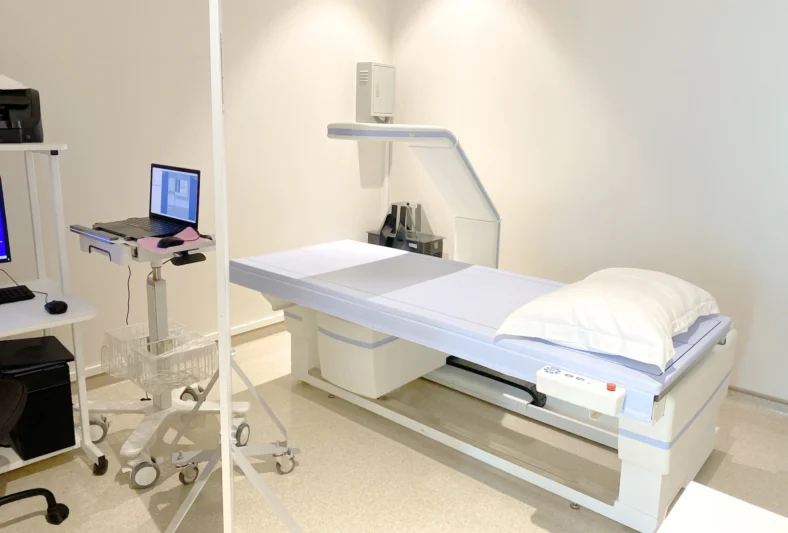
As interest in body composition grows, so does confusion about how it should be measured. Dual-energy X-ray absorptiometry, or DEXA, is often referred to as a gold standard, but experts caution that even DEXA has limitations.
“DEXA is the most accessible and is usually accepted for validation studies,” Steven Heymsfield, professor in the department of metabolism and body composition at Pennington Biomedical Research Center in Baton Rouge, Louisiana, told ATN, noting that even then, there are two manufacturers, and results from those systems differ slightly.
“DEXA is 2D collecting pixels across the whole body, but it needs several assumptions to derive the measurements,” Heymsfield explained.
Both Raji and Heymsfield agree that MRI has the most accurate and anatomical resolution for measuring visceral fat and lean tissue. It provides 3D imaging and thousands of voxels across the entire body.
Those scans, however, may be expensive and impractical for frequent use. That tradeoff between accuracy, accessibility and cost frames the debate around newer alternatives.
How Camera-Based Body Composition Scans Work
Camera-based body composition apps use computer vision and machine learning to analyze photos taken with a smartphone. Most require two or three images captured under standardized conditions to then create a 3D human avatar.
“Measurements from that avatar are then used in equations to estimate body fat,” Heymsfield explained to ATN.
In practice, this means the app is not measuring tissue directly, but inferring it from body shape patterns learned across large datasets.
One of the most prominent examples is Spren, which has published validation data comparing its estimates to DEXA.
“The validation showed a mean absolute error of about 2.6% and a correlation of 0.95 with DEXA,” Spren CEO Jason Moore told ATN, citing work conducted with the Pennington Biomedical Research Center under Heymsfield’s oversight. “We also tested against three different DEXA machines at the same time and saw less variability than the machines had between themselves.”
The study included 84 participants across a wide range of ages and body types and demonstrated a 0.99 correlation for scan-to-scan repeatability.
“Repeatability is what allows you to track real change,” Moore noted. “If the measurement jumps around, it’s not actionable.”
Accuracy vs Repeatability in Real-World Tracking
Validation studies often focus on accuracy, but Heymsfield argues that repeatability may be just as important for consumers tracking change over time.
“If you measure someone on day one and day seven, you want the difference to reflect ‘true’ biological change, not measurement error,” he said. “The more repeatable a measurement is, the more likely it will detect biological differences.”
Spren reports that its users scan far more frequently than people undergoing DEXA or clinic-based assessments. According to the company, less engaged users scan about once every 14 days, while more engaged cohorts scan every four days on average.
“Frequency and granularity drive better decision-making,” Moore shared.
Spren says users who scan more frequently tend to see better outcomes, averaging about five pounds of fat loss and three pounds of muscle gain within the first 90 days, according to Moore. Researchers caution, however, that such outcomes reflect behavioral changes rather than the technology itself.
Medical Skepticism Remains Strong
Despite growing adoption, physicians remain cautious about how camera-based tools are positioned and interpreted.
“Camera and web apps are theoretically more available, but they currently lack scientific validity compared to other clinical tools,” Raji said, adding that consumers should expect precision and accuracy from health technologies.
Raji also stressed that most consumer tools do not directly measure visceral fat, which remains the key risk factor identified in brain aging research.
“People should interpret body fat estimates with caution if they lack direct visceral fat measurements,” he said.
Heymsfield added that consistency of measurement is also key and one they’re currently investigating as camera-based systems depend heavily on user compliance with testing protocols.
“Subjects must perform the test exactly as instructed — clothing, distance from the app, positioning — for results to be reliable. If done that way, the measurements should be fine. But conditions at home may not be ideal, which raises some concerns. Lighting, clothing and setup all matter,” he explained.
Third-Party Validation & Adoption
Spren has also gained attention from outside researchers.
In a peer-reviewed Sensors paper, Steffen Baumann, director of AI medical device programs at whole-body MRI provider Prenuvo, described Spren as “a leading example” of how smartphone cameras can be transformed into validated body composition labs.
“While many of these tools are not yet approved for diagnostic use, their ability to engage users in long-term tracking offers significant promise for preventive care. Ongoing validation, usability testing and feedback integration will be critical to broaden clinical acceptance,” the study authors state.
According to Moore, Spren’s platform has processed more than 100,000 scans and is used by more than 120 universities and research institutions. It is also being deployed in partnership with Snap Fitness and among athletes sponsored by Under Armour.
Scales, BIA & Hybrid Approaches
Camera-based tools aren’t the only accessible option. Bioelectrical impedance analysis, or BIA, devices, including smart scales and systems like InBody and Evolt, are widely used in gyms, clinics and research settings.
These tools estimate body composition by measuring electrical resistance through the body. While hydration status may affect readings, BIA devices offer consistent trend tracking and are more accessible than imaging-based methods.
“BIA is most widely available for people overall,” Raji told ATN, noting that each method serves a different role depending on context.
Many clinicians and coaches now combine approaches using DEXA or MRI for baseline assessments and tools like BIA devices or camera-based apps for ongoing monitoring between scans.
Both have trade-offs. Smart scales and BIA devices like InBody have decades of clinical use behind them and are straightforward to operate. But accuracy can vary depending on the device. A review of 15 BIA devices found that validity ranged widely, with some performing far better than others. Hydration levels can also skew readings, since BIA works by passing a small electrical current through the body, and water affects how that signal travels.
Another study published in Frontiers in Nutrition on the InBody found that it consistently read body fat about 3% lower than DEXA, and tended to underestimate fat mass while overestimating lean mass. The good news is that the same research found the device was highly reliable day-to-day, meaning that while the absolute number may be off, the trend it shows over time is trustworthy.
Camera-based apps face a different challenge. They’re newer and more sensitive to user error, but their ease of use makes frequent scanning practical, which helps with tracking changes over time. At their best, both methods land in a similar accuracy range relative to DEXA, even if they have different blind spots.
Where These Tools Fit & Where They Don’t
When asked whether body composition will play a larger role in monitoring health, Raji stated a clear “Yes,” adding that “body fat and muscle mass are key predictors of morbidity and mortality.”
However, how those measurements are obtained and how the data is used, remains a point of concern. Clinicians generally view camera-based body composition scans as adjuncts to clinical imaging.
“Knowing body composition data, paired with a structured plan for managing those results, could be the most helpful approach to meaningfully change health outcomes,” Raji told ATN, but drew a clear boundary around clinical use.
“I do not endorse camera-based body composition measurements,” he said, adding that even decisions about DEXA scans should be made in consultation with a primary care physician.
The post AI-Powered Body Composition Scans Are Here – Can They Actually Monitor Health Risk? appeared first on Athletech News.
Popular Products
-
 Photochromic UV400 Sports Glasses
$78.99$54.78 -
 Hip Trainer with 39 Gears
$98.99$68.78 -
 Arm Resistance Bands for Baseball & S...
$64.99$44.78 -
 Portable Badminton Set with Bag & 3 B...
$64.99$44.78 -
 Soft Practice Balls - Indoor Outdoor
$37.99$25.78