Nike’s Innovation Push Comes As Sales Keep Sliding — Can The Swoosh Turn Things Around?
The sportswear giant is doubling down on the performance side of its business, including running and fitness, unveiling a wave of new products as it looks to reverse falling sales and reclaim market share from competitors
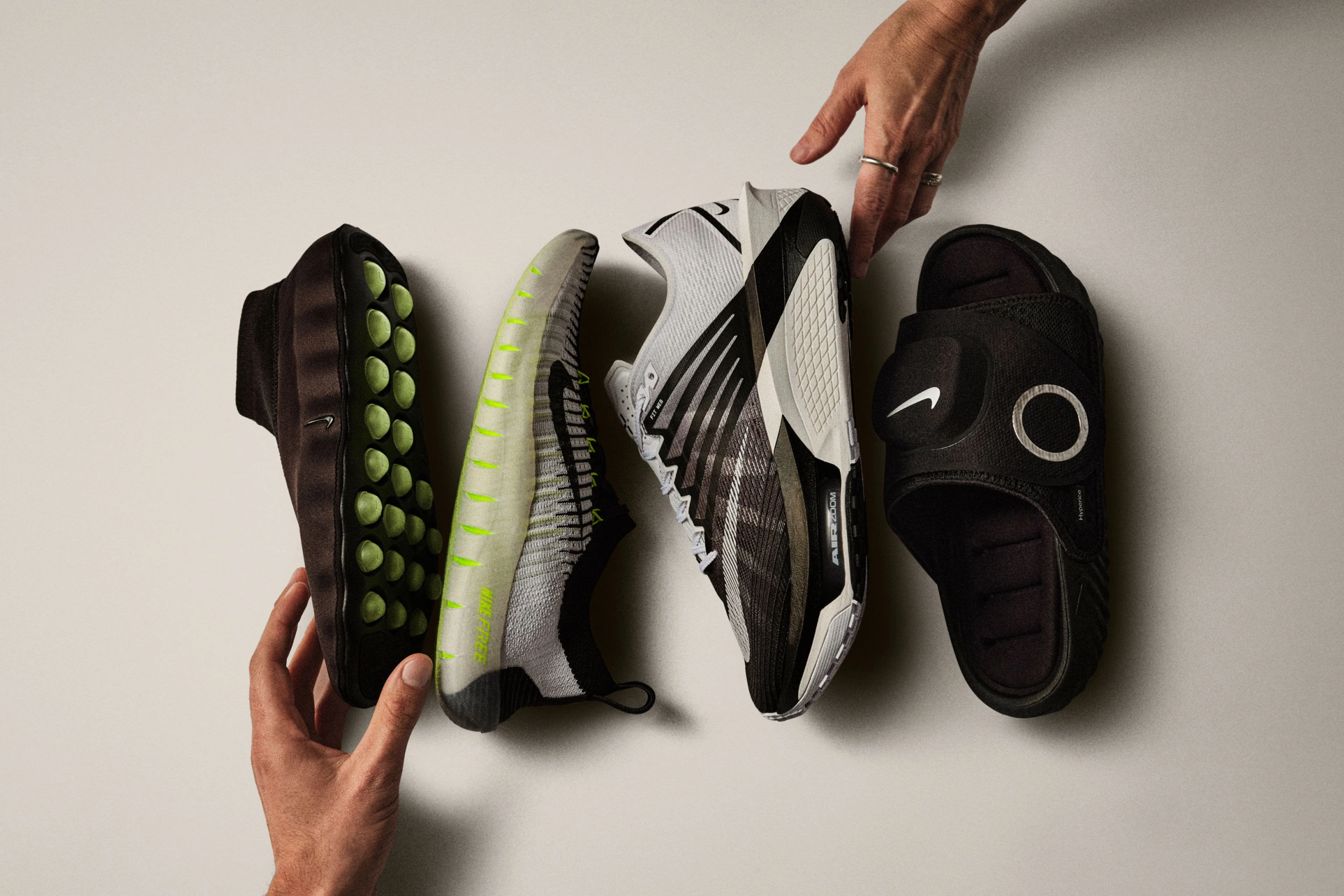
Nike spent two days this week showcasing a pipeline of new products, from neuroscience-inspired sneakers and strength training apparel to recovery footwear equipped with heat and vibration.
The announcements began Monday at Nike’s World of Athletes showcase, where the sportswear giant unveiled four new Nike Mind footwear styles, the return of Nike Free training shoes and an expanded Nike Pro apparel lineup.
On Tuesday, Nike put financial targets behind this innovation, outlining a strategy that calls for “performance sports” — footwear and apparel related to sports, running and training — to generate $4 billion of the approximately $5 billion in additional annual revenue the company hopes to achieve by fiscal 2031.
The company’s emphasis on performance comes as Nike struggles to regain ground lost to competitors. Annual revenue has fallen from $51.4 billion in fiscal 2024 to $46.4 billion in fiscal 2026, and sales declined another 4% in its latest quarter.
How Nike Lost Its Lead
Under former CEO John Donahoe, who took over in 2020, the company aggressively pursued a direct-to-consumer strategy, prioritizing its own stores and digital channels while pulling back from wholesale partners. Although the approach initially appeared successful during the pandemic’s e-commerce boom, as consumers returned to physical stores, Nike had less exposure at major retailers and specialty running shops, creating opportunities for competitors.
Brands including Hoka, On, Brooks and Asics gained traction with runners, while Nike became increasingly dependent on franchises like the Dunk, Air Force 1 and Air Jordan. Although those sneakers generated billions in revenue, their widespread availability eventually contributed to oversupply, discounting and reduced consumer interest. In 2024, Nike shares plunged roughly 20% in a single day following a disappointing financial outlook, wiping out more than $28 billion in market value.
Three months later, Nike announced that Donahoe would be replaced by Elliott Hill, a 32-year company veteran who came out of retirement to lead the turnaround.
Hill’s new “Full Stride Ahead” strategy, announced Tuesday, concentrates resources on five priority performance categories: running, training, global football, basketball and outdoor.
The focus reflects where Nike is already seeing momentum. During its October earnings call, the company said its performance business grew by high single digits, driven by double-digit gains in running, global football, tennis and golf, even as overall sales declined.
Nike Doubles Down on Training & Recovery
Nike’s latest product announcements suggest the company is looking to build on that momentum by expanding further into training, where interest in strength workouts, hybrid fitness and recovery is creating new opportunities.
Nike’s new “Prime, Train, Recover” system organizes products around the full training experience.
Among the more unusual additions is Nike Mind, a neuroscience-inspired footwear platform that uses foam nodes beneath the foot to stimulate sensory awareness. Four new styles will begin launching in summer 2027.
Nike is also reviving its Free training franchise with the Free 3.0 and Free 5.0, while introducing five Nike Pro apparel categories designed for activities ranging from weightlifting to hybrid racing.
The activewear giant is also focusing on recovery by leveraging a tech partnership. The new system incorporates the recently released Air Zoom Hyperslide, developed with Hyperice, which combines cushioning with heat and vibration technology.
The approach follows Nike’s expansion into hybrid fitness, including footwear designed for Hyrox-style competition, as well as its growing strength training equipment business. The moves place Nike in more direct competition with Puma, which holds an official Hyrox partnership through 2030.
Nike is also looking for growth outdoors. At Tuesday’s investor day, executives identified outdoor as a nearly $60 billion market where Nike currently holds less than 1% share. The company plans to expand distribution of its ACG (All Conditions Gear) brand and expects it to contribute more than $1 billion in incremental revenue between fiscal 2027 and fiscal 2031.
Sportswear Struggles
While performance is gaining traction, Nike’s larger lifestyle business continues to struggle.
Nike Sportswear, which accounted for just under half of the company’s latest quarterly revenue, declined by low double digits. Jordan Brand revenue fell by mid-teens, while Greater China sales dropped 26% on a currency-neutral basis.
Nike’s efforts to reduce oversupply are also weighing on sales. At Tuesday’s investor day, executives said four classic footwear franchises, Air Force 1, Air Jordan 1, Dunk and Chuck Taylor, are expected to generate roughly $6 billion in fiscal 2027, down from $13 billion at their 2024 peak.
As Nike looks to replace that lost revenue, it is investing in new performance and lifestyle products while trying to regain ground in women’s activewear, where Lululemon, Alo Yoga and Vuori have gained traction. Its NikeSkims partnership with Kim Kardashian has expanded into footwear and international markets.
Monday’s showcase also included new running shoes, including the Vaporfly 5 and Vomero 19, alongside lifestyle silhouettes like the Nike Morpho X and Project Ride.
“Our classics are the foundation of Nike Sportswear, but the future can’t be built on classics alone,” said Sebastien Mermet, Nike Sportswear’s VP and creative director.
More from ATN
- Just Released: Athletech’s Franchise Outlook Report
- From Hyrox to Bathhouses: Key Takeaways as Wellness Economy Hits $7.5T
- New Startups Push to Innovate Strength Training Tech
- ATHX Games Unveils USA vs Europe Competition
- Want the industry edge? Join ATN Pro for unlimited access, exclusive analysis and event perks.
Popular Products
-
 Portable Foldable Table Tennis Set wi...
$506.99$353.78 -
 Oversized Giant Tennis Ball
$40.99$27.78 -
 Tennis Racket Lead Tape - 20Pcs
$51.56$25.78 -
 Silicone Tennis Racket Balance Weight...
$34.99$23.78 -
 Portable Pickleball Set with Net, 4 P...
$363.99$253.78