'curling Irons Can Be Just As Healthy As Air Styling' — I Chatted To A Major Haircare Brand Founder About The Styling Mistakes We're All Making
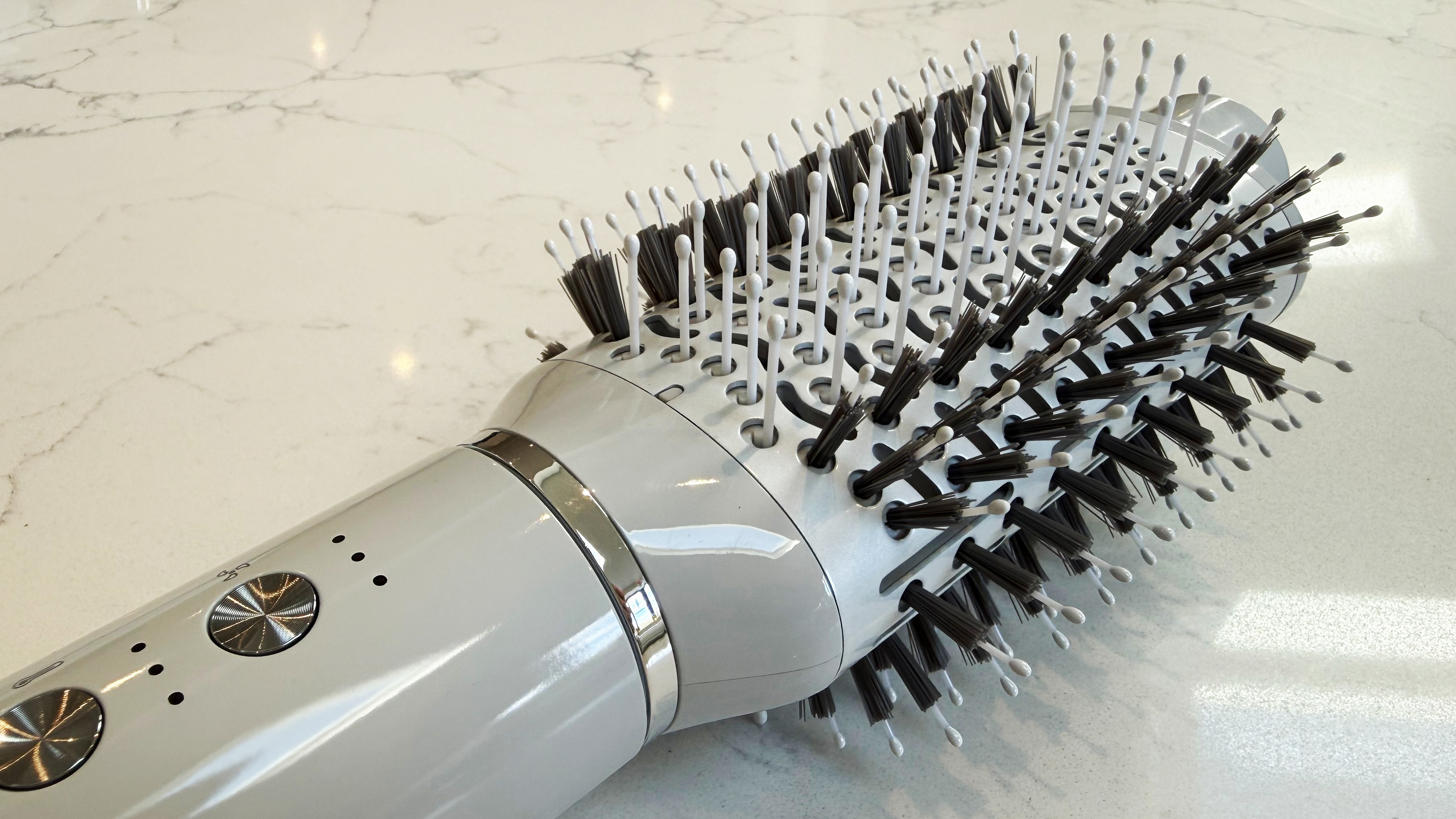
The hot topic — no pun intended — in haircare gadgets right now is heat. More specifically, the evils of heat, and how it's a one-way street to fried locks and frizz. So when I spoke to Dr Julie Chung, co-founder of haircare brand T3, I was surprised to discover she has a rather different take.
"Heat in general has been sort of demonized incorrectly," she tells me. "Women always think, 'Oh heat is terrible for my hair, I'm just gonna let it air dry, I'm gonna shower and just sleep on it.' Hair is actually in its most fragile state when it's wet. It tends to be much easier to break — that tensile strength is decreased and it's more likely to snap. And not to mention when you air-dry your hair, usually the hair is very frizzy and it tends to look even unhealthier if your hair is already in a dried out state."
Hair is in its most fragile state when it's wet. It tends to be much easier to break — that tensile strength is decreased and it's more likely to snap
That focus on hair health is nothing particularly new. "Women have always been obsessed with trying to find the healthiest option," Dr Chung tells me. "You know, people pursuing this idea of healthy heat is something I'm seeing [right now], but that's something that I've seen for 20 years."
However, the conversations have been buoyed up by the arrival of air stylers like the Dyson Airwrap. They've been heralded as the solution to all our heat-damage fears, but Julie is skeptical about that, too.
"The air styler category has grown quite big and there's this notion that air curling is better than curling iron curling, which I don't necessarily agree with," she continues. "I think it's right for some women in terms of ease of use, but I think curling irons can be just as healthy as air styling. It really depends on how many passes you go through in the hair, how adept the woman is with her styling."
So hot tools aren't inherently terrible, which is good news, because — as Dr Chung is at pains to point out — air stylers won't work for everyone. If your hair type isn't the kind to happily hold a curl that's been created by just a waft of a breeze, and you do decide to swap your air curler for a hot tong or enlist the help of a straightener to create ribbon curls, then it's worth finding a good one. Julie suggests paying attention to the kind of heat and how it's being delivered.
"The key there is ceramic. So in our Aire 360, for example, we have a ceramic coating instead of plastic because we know that ceramic is a better conductor of heat," Dr Chung explains. "We have a specific proprietary ceramic blend that evenly heats the plates without any hot spots. So it has a gentle delivery of heat along with far-infrared heat, which is a gentler heat as well."
Big air, better hair
What about hair dryers — those are safe, right? Wrong. Here, too, Dr Chung has opinions that seem to butt up against those of other makers, with their fixation on packing the most power possible into their dryers.
The average woman cannot and should not be using high velocity heat every day
"The biggest secret sauce — which isn't even a secret because I talk about it so openly, but even now our competitors do not want to embrace — is the fact that you do not need heat to be at the highest setting, and you do not need the highest velocity," she insists. "This is something that stylists sometimes need in order to do a quick blowout very quickly, but the average woman cannot and should not be using high velocity heat every day."
Dr Chung talks about how people will often add a concentrator "without really thinking", then use a round brush and really focus the heat in, with the aim of smoothing out the hair. "It's extremely damaging when done repeatedly", she warns.
Similarly, if you regularly pop your dryer on full-blast when rough-drying your hair, so it feels "like a wind tunnel where your hair is flying all over the place", that's not great either — and not just because the wind tunnel effect will kick up static.
"It'll dry your hair, yes, but will make it extremely dry and not just dry your hair, but take all the moisture out of your hair without sealing the cuticle," she explains.
The brand has found an innovative way to avoid this, without sacrificing efficiency, and the concept dates right back to T3's debut product. "We had this idea called Soft Air, where we delivered a larger volume of air at lower heat, so it would dry your hair very, very quickly, but without stripping it of all its moisture."
She explains how the team shaped the concentrator and the barrel of the dryer so that the air wasn't expelled in a dense stream, but instead came out in a larger volume, occupying a larger space. The idea of Soft Air is that it could still dry hair efficiently, but without the need to max out on power or temperature, and when combined with ions helps to decrease static frizz.
I've been trying out one of the brand's dryers (the T3 Afar) and the air delivery feels noticeably gentler — almost unsettlingly so — and less concentrated than any other hair dryer I've tested. It's slower to dry my hair than the likes of the Dyson Supersonic Nural, but it does leave my locks feeling softer and with less frizz than usual. So maybe Dr Chung is on to something. Excuse me while I dig my curling tongs out of storage.
Popular Products
-
 Professional Hair and Scalp Detection...
$1,765.99$1056.78 -
 Fairywill Sonic Electric Toothbrush Set
$148.99$103.78 -
 Electric Hair Straightener and Curlin...
$161.56$80.78 -
 High Tech Laser Therapy Watch For Hyp...
$536.99$374.78 -
 Wireless Health Tracker Smart Ring - R11
$131.56$65.78