‘it 100% Sounded Just Like Her’: Ai Voice Scams Are Getting Frighteningly Convincing — Here’s How To Protect Your Family
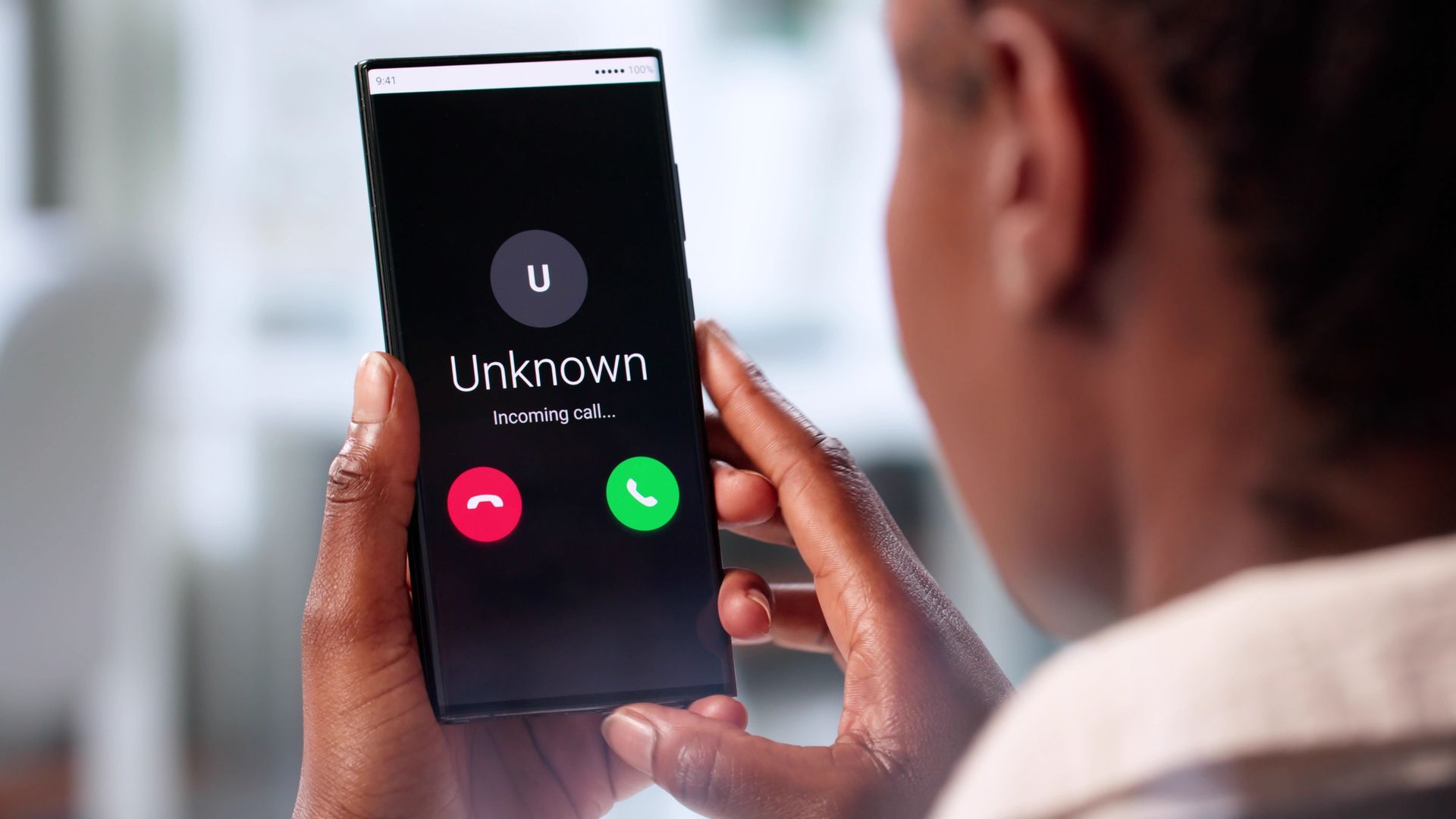
AI voice cloning has reached the point where scammers can convincingly imitate human voices — and worryingly, research suggests we're not particularly good at telling the difference.
Take the case of one X user, for instance, who posted: “Got a call from my wife telling me she forgot her wallet and needed the credit card to pay for her gas.
Except my wife was at home with me, and drives a Tesla. Same voice, bit... off, weird cadence, but 100% sounded just like her. If she wasn't there, and it wasn't about gas I would have fallen for it.
I entertained it for a while to get more out of it, I was so confused. Must be some sort of voice deepfake. The responses were too fast for AI, I think it was a voice filter. I wish I had thought to record it.”
Whether this particular call used generative AI or a real-time voice filter isn't clear. What is clear is that the days when recognizing somebody's voice was enough to prove who was on the other end of the phone are over, and I’m not alone in finding that terrifying.
When news of the story hit Reddit, some people were skeptical about whether this had actually happened, but there were plenty of people with similar stories. “This just happened to me last week,” said one user. “They called aunt and grandmother and said they were an attorney and that I was in jail and needed to be bailed out.”
The ‘relative in distress’ scam
According to the 2026 paper Evaluating AI Models' Capability to Automate Voice Phishing Attacks by Fred Heiding and colleagues, a study involving 4,100 US adults found that up to 36.1% said they would comply with, or were unsure whether they would comply with, an AI-powered “relative in distress” scam.
Importantly, that figure measures self-reported willingness to comply, rather than the number of people who were actually fooled into handing over money. The researchers describe it as a measure of susceptibility to the scam rather than observed behavior.
The researchers also found that persuasiveness mattered more than how human the voice sounded, and that people who regularly used AI weren't any better at identifying synthetic voices than people with no AI exposure.
While the scam of tricking people into thinking their loved ones need money may be an old one, AI is making the danger especially real. If the scammer actually sounds like your loved one, how do you know it’s them?
One answer is to set up a family code word today. It doesn't need to be complicated — just something everybody knows, and that a scammer would be unlikely to guess or discover online.
There’s also an even simpler precaution: hang up and call the person back on a number you already know. If your son, daughter, partner or parent apparently calls out of the blue asking urgently for money, don't rely on the voice sounding right. End the call and contact them yourself.
The Ferrari deepfake case shows why some form of personal verification can work. In 2024, a Ferrari executive received messages followed by a phone call apparently impersonating CEO Benedetto Vigna. Suspicious of the call, the executive asked the supposed Vigna to identify a book the real CEO had recently recommended to him. The caller couldn't answer, and the attempted deception fell apart.
A family code word essentially does the same thing. And it’s something you might have to start thinking about today, if you haven’t already.
Can you trust your own ears?
“AI's deepest impact isn't on our devices; it's on us," says Mark Beare, Head of Consumer at Malwarebytes. "When people can no longer trust what they see, hear, or who they're talking to, the damage reaches far beyond any single scam and into the building blocks of our society.”
A Malwarebytes survey published in June found that 85% of people said it’s hard to tell a scam apart from the real thing, up from 66% the previous year. Perhaps even more tellingly, 88% said it was becoming harder to tell which content online was genuinely human or real.
And that problem isn't restricted to our ears. AI-generated images and deepfake videos are increasingly challenging the assumption that seeing or hearing something for yourself is proof that it really happened.
We used to be able to rely on a familiar voice as proof of identity, but it seems that in 2026 that's no longer enough. AI voice technology is only going to become more convincing, so our behavior needs to change with it.
Agree on a code word with the people closest to you now, and if you get an unexpected call asking for money, hang up and call them back.
Popular Products
-
 MUCAR BT200 Automotive Full System Di...
$190.99$132.78 -
 Smart Auto-Recharge Robot Vacuum Cleaner
$613.56$306.78 -
 Wireless Security Alarm Sensor for Do...
$40.99$27.78 -
 Remote Control Page Turner & Camera C...
$54.99$37.78 -
 Wireless Rechargeable Selfie Shutter ...
$7.99$4.78