“unleashing The Power Of The Team Is Our Mission”: Atlassian Ai Heads Tell Us Why Context And Collaboration Will Be The Key To Unlocking Business Success
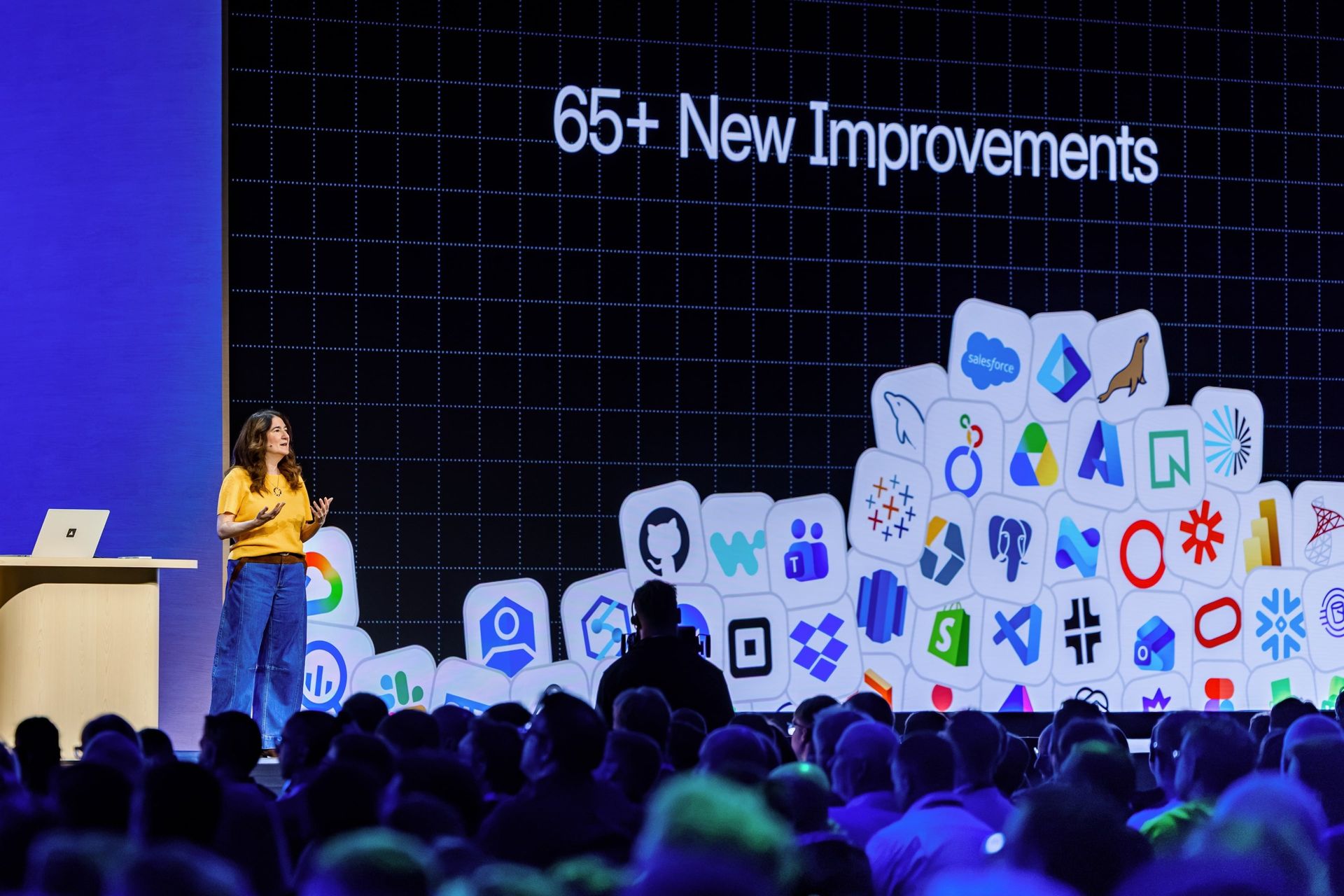
There’s no doubt that AI has helped revolutionize the world of work at many companies, with human employees working alongside agents to unlock improved efficiency and productivity.
But for many firms, the promise of AI is still being overshadowed by the sheer scale of the endeavor - with so many models (and new ones emerging on a seemingly weekly basis), how do you know what is right for you?
One of the big themes at the recent Atlassian Team Europe 26 conference was how companies can cut through the chaos and realize their aims, so I spoke to the company’s top AI minds to find out more.
The power of teams
“Atlassian's entire ethos is all around teams - unleashing the power of the team is our mission,” Atlassian Chief Product & AI Officer, Tamar Yehoshua tells me at Team Europe 26.
“We've all been using AI agents (but) they're all more geared towards an individual,” she adds, “but they're not organized or effective for teams...so we're taking that and saying, ‘how do you work effectively with teams and AI’? That's multiplayer, and so we want to make sure everyone can work effectively, so you can collaborate with agents in an effective way like you can collaborate with humans.”
This “multiplayer” AI was another major theme at Team Europe 26, as Atlassian looked to emphasize its position as being the connector between customers and technology.
“Teamwork is very messy, and our job is to make it much less messy, and understandable and controllable for our customers,” Atlassian Head of AI Sherif Mansour says.
“A lot of AI is about increasing personal productivity…the same problems we solve for humans, we solve for agents.”
“Every customer we talk to, everyone is using AI - it's no longer should we, or what do we do - that's already happened...but people are not sure how to use it effectively, and they're not sure if they're getting the maximum ROI,” Yehoshua adds.
“You see the evolution with every new technology, first there’s scepticism, then curiosity, and then its acceptance, and then it’s optimising - I think we’ve gotten through the initial phases, and now we’re asking, how do I use this effectively and optimize it?”
She notes there are different levels of anxiety for customers, as the sheer number of new AI models coming out can be disorientating, especially with the need to stay flexible for when new models launch.
She notes that companies don’t want to be using advanced models for simple tasks - something Mansour refers to as “killing a mosquito with a rocket launcher” - so making sure the right model for the job is on offer is vital.
Atlassian’s AI gateway looks to pick the best model for the task within its products - so for example, Rovo work will switch to a new model if a more advanced one is released, all without the customer ever knowing - although they retain the ability to pick their own model if they want.
Yehoshua also highlights new upgrades to Loom, which now offers video generation from pull requests, and AI agents which use Rovo to categorize defects and cut down on duplicate reports.
No silver bullets
“AI feels like chaos to many of us - but I don’t think the answer is giving them a silver bullet that will solve all their problems,” Mansour says.
“We like to use the phrase ‘give them a nervous system’ so they can handle it - we’re always thinking about how we can bring calm and visibility and control to the chaos.”
Mansour says he advises customers not to bet entirely on one provider for the whole context graph, as the real value comes from collaborating with multiple entities to gain different kinds of opportunities and insights.
“There’s a lot of silver bullet offerings…but no-one really talks about the messiness of work,” he says, “it’s about creating a system to help you control the chaos - the chaos will always be there, but how do you make sure you’re aware of it?”
“It’s less about making teamwork perfect - it’s about making teamwork less messy.”
I ask Yehoshua about personal usage - is she embracing the chaos of AI, or taming it for maximum efficiency.
“Everything that I do, I ask myself first - if this is a process I could change?,” she says, “if you look at AI and how it’s working, the biggest thing is behavior change…I tell customers, there is so much power in the tools they already have, and building in that behavior change is important, but it has to come from the top-down.”
How do we make sure we don’t go too far, and just automate all work processes, I ask her.
“I think it’s going to be trial and error - I think we’re going to try things and some of them might not work - but I honestly don’t think that’s our problem yet,” she replies, noting that enterprises often have the guardrails and protections needed to ensure a human always remains in the loop, and the answers can be trusted.
In an earlier session, Atlassian CEO Mike Cannon-Brookes had declared that, “customers are not subscribing for the software we've built, but for the software we will build”.
Normally you might question such a forward-looking statement, but with Atlassian’s focus on collaboration, it seems to ring true.
“The pace of delivery has increased significantly,” Yehoshua says, “you want to align with the companies that have the same vision as you do…people in some ways want more flexibility, as things are changing so fast, especially with models, they don’t want to be locked in…we are a neutral party who want to make it easy for our customers to work - we’ve always been the open platform who focuses on the team.”
“The main advantage we have is our platform,” she adds, “the strength of what we do is that customers are using us across so many different areas of their workloads.”
Do more - with more
Looking forward, it’s clear AI is here to stay - and it’s down to businesses themselves to judge how best to embrace it.
“I think we've now empowered more people to do more,” Yehoshua says. “Anyone can build a prototype - now that doesn’t mean that you want anybody checking in production code - so you still have to have very clear guidelines on what can go into production - but the idea is that it’s democratized, where the ideas can come from…so you have so many more options on how the lifecycle can evolve.”
“Worlds are expanding - they’re not going to be merged into one, but everyone can do more…every role can do more, so that everything is accelerated.”
Mansour agrees, pointing out that harnessing the power of context in your data can be the ultimate differentiator between your business and the competition.
“If we all have access to the same intelligence, that’s like a level playing field, it’s the sum of all averages - what’s unique is the actual perspective you bring to the table,” he says.
“Our customers shine when their context shines - and so anything we can do to help them enrich the context, understand it better to provide it to AI in a secure way, they will always get better results from that.”
Popular Products
-
 Digital LED Pixel Art Photo Frame
$450.99$314.78 -
 Ai Dash Cam with Front & Rear HD, GPS...
$295.56$147.78 -
 Blind Spot & Lane Change Detection Ra...
$286.99$199.78 -
 Waterproof Multi-Sport Health Tracker...
$83.99$57.78 -
 Electric Blackhead Remover Vacuum Por...
$208.99$145.78