7 Ways To Grow Your Service Business
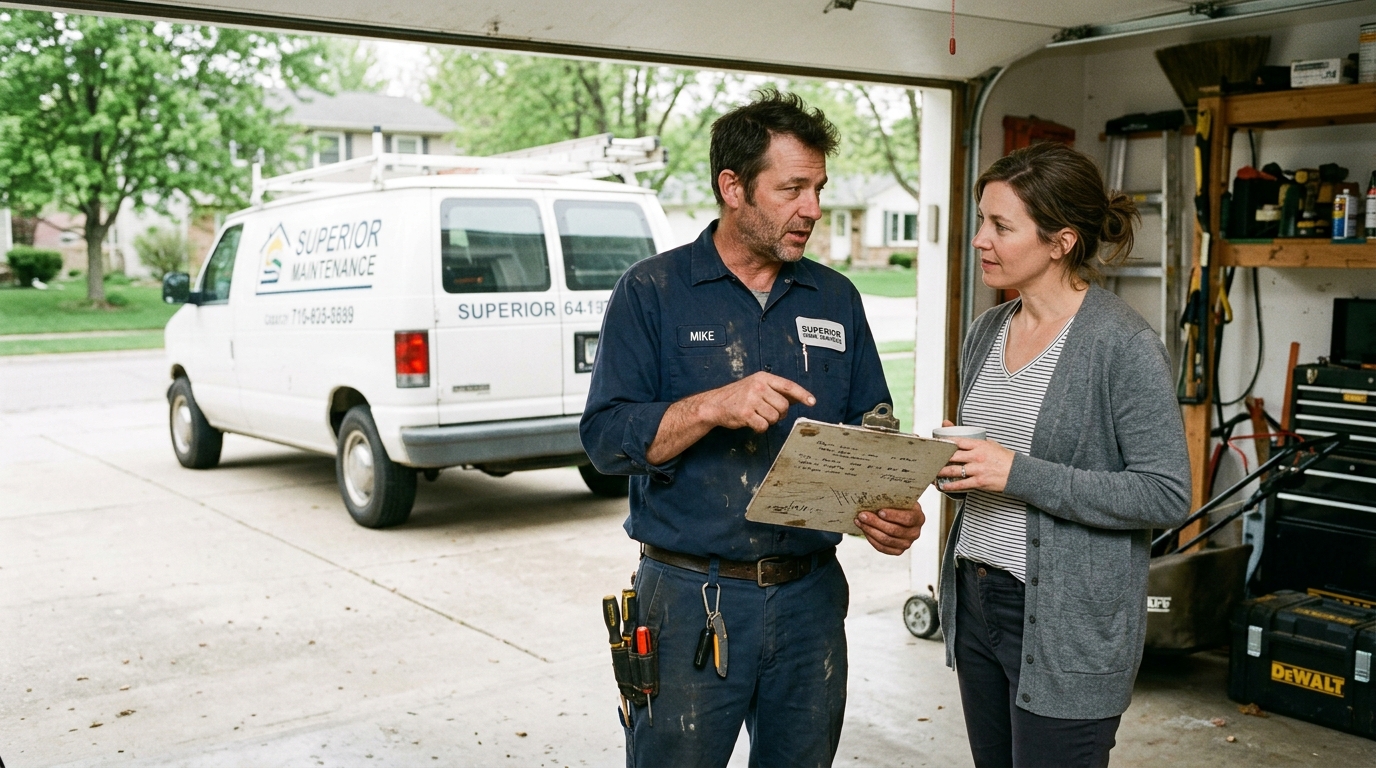
Running a service business means competing for the same local customers as every other contractor in your area, all while keeping a crew busy and a calendar full.
The old growth playbook, more ads and a bigger budget, costs more for the same number of leads today. Growth now comes down to getting more value out of every customer and every hour your technicians spend in the field.
Lead costs keep climbing while skilled technicians get harder to hold onto. Customers also expect a faster response than they did even a year ago. We've broken down seven strategies that tackle each of these pressures head-on.
#1 Make your reputation work harder
Most homeowners and property managers check reviews before they call anyone. BrightLocal's research shows the vast majority of consumers look up a local business online before deciding who to hire. A handful of three-star reviews can cost you the job before you've even sent a quote.
A one-star increase in your average rating can lift revenue by 5 to 9%, according to Harvard Business School research on Yelp ratings. Ask for a review after every completed job instead of hoping a happy customer remembers to leave one. A modest referral discount for existing customers costs far less than most forms of paid advertising.
#2 Win local searches before the call
Search is usually the first stop before anyone hires a contractor. Research cited by Hook Agency found that 84% of homeowners use Google before choosing a service provider. Most people never scroll past the first few results.
A complete Google Business Profile makes a real difference here. Google's own data shows that a complete profile makes customers 70% more likely to visit and 50% more likely to buy from you. Keep your service area listings and photos accurate.
#3 Turn one-off jobs into recurring revenue
A one-time repair pays the bills today. It does nothing for next quarter. Maintenance plans and service memberships change that by giving you predictable income between emergency calls.
Industry estimates put preventive maintenance contracts at close to 40% of total HVAC revenue, a sign of how much recurring work already flows through these programs. Keep your plan simple: one straightforward tier beats three confusing ones. Train technicians to recommend the plan after a service call instead of trying to sell it like an add-on.
#4 Get more from existing customers
Winning a new customer costs far more than keeping one you already have. Selling additional work to an existing customer succeeds 60-70% of the time, while a brand-new customer converts at just 5-20%, according to widely cited customer-retention research. That gap alone should change where you spend your follow-up time.
Look for the natural next step after every job, like gutter guards after a cleaning or a duct inspection after a tune-up. Train your team to mention these options on-site instead of waiting for the customer to ask. A short follow-up message a few weeks later keeps the offer fresh without feeling pushy.
#5 Run scheduling and dispatch from one system
Spreadsheets and sticky notes stop working once you have more than a couple of crews on the road. Commercial service management software puts scheduling and dispatch on one screen instead of scattered spreadsheets and paper job sheets. The market for these platforms is on track to grow from roughly $5.6 billion in 2025 to nearly $9.7 billion by 2030, according to Grand View Research.
Real-time dispatch means you can slot a same-day emergency call into a gap in the schedule instead of turning it down. Mobile access lets technicians see job history and customer notes before they knock on the door. Most users of this kind of software run small operations rather than large enterprises, so the learning curve fits a five-person crew, not a 500-person fleet.
#6 Quote and invoice faster to win jobs
Customers contacting multiple companies for the same job almost always hire whoever responds first. Research from MIT, popularized through the Harvard Business Review, found that contacting a new lead within five minutes makes you dramatically more likely to actually reach them than waiting half an hour. Most service businesses still take hours, sometimes days, to send a quote.
Speed matters after the sale, too. A quote sent from the job site, with a digital signature and an online payment link, gets approved faster than a paper estimate mailed or emailed later. Faster payment also means fewer awkward follow-up calls chasing invoices that should have been settled weeks ago.
#7 Invest in the technicians you already have
Finding skilled labor is the single biggest constraint on growth for most service businesses right now. Up to 2.1 million skilled trades positions could go unfilled in the US by 2030, according to research from commercial real estate firm JLL. Demand for electricians alone is projected to grow at roughly three times the average rate for all occupations through 2034, the same research found.
Hiring your way out of this isn't realistic for most owners, so retention matters just as much as recruiting. Pay matters, but so does giving technicians modern tools instead of paperwork and guesswork. A crew that isn't fighting bad scheduling and slow payment processes is a crew that's more likely to stick around.
Wrapping up
None of these seven strategies work well on its own. A strong reputation feeds your local search rankings, which in turn feeds your lead pipeline. The system you use to manage scheduling and invoicing is what lets you keep up once those leads start calling.
Growth in 2026 isn't about chasing more leads at a higher cost. It's about getting more value from the customers and jobs you already have. We'd start with whichever strategy addresses your biggest bottleneck this quarter, then move to the next once it's running smoothly.
Popular Products
-
 Professional Hair and Scalp Detection...
$1,765.99$1056.78 -
 Fairywill Sonic Electric Toothbrush Set
$148.99$103.78 -
 Electric Hair Straightener and Curlin...
$161.56$80.78 -
 High Tech Laser Therapy Watch For Hyp...
$536.99$374.78 -
 Wireless Health Tracker Smart Ring - R11
$131.56$65.78