Smart Glasses Were Being Used To Secretly Film Women 12 Years Ago
One of the advantages of having written about tech for as long as I have is that you start to notice when the same ideas come around decade after decade, in different shapes and sizes. Especially the bad ones.
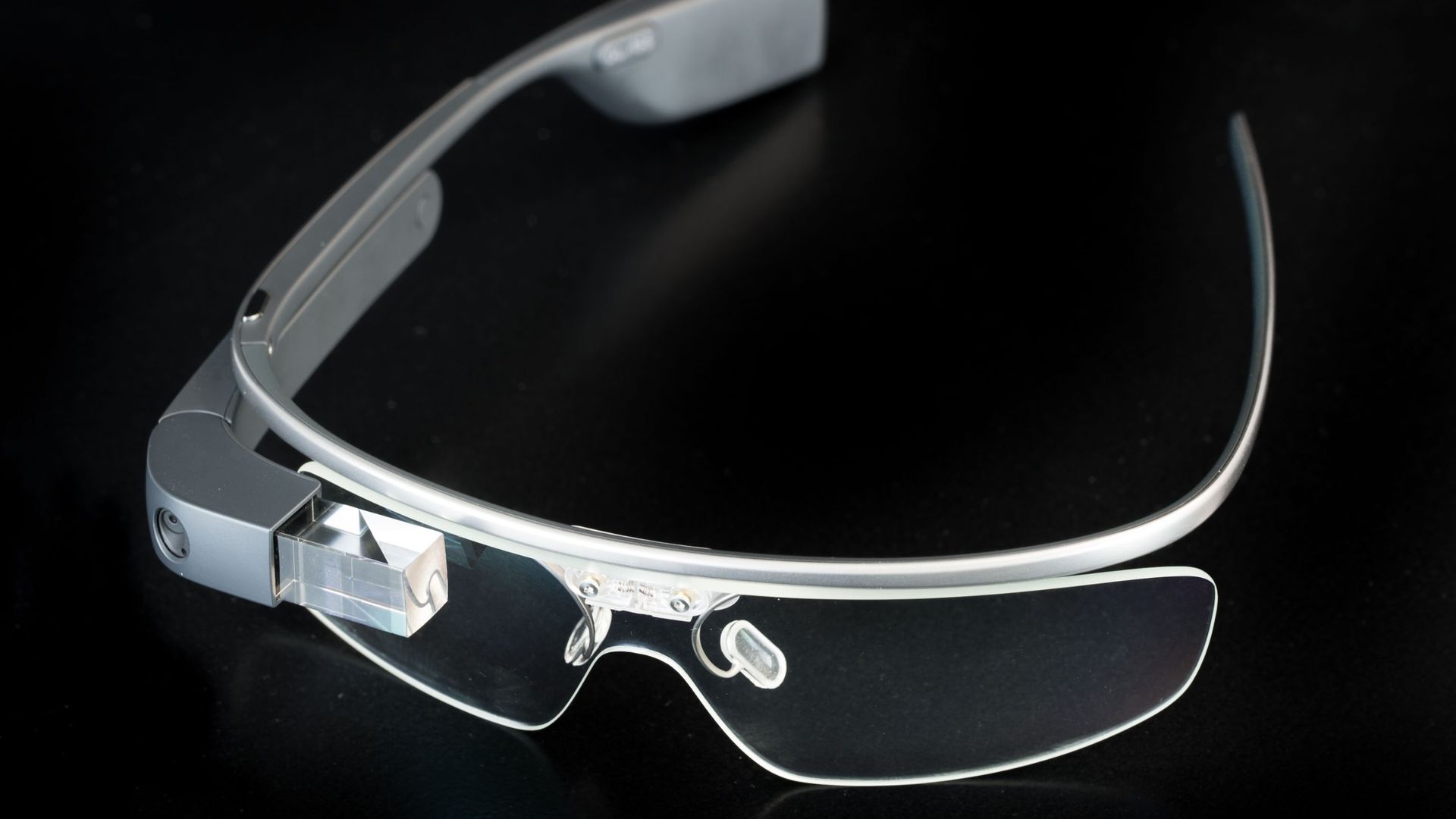
12 years ago Google invented something called Google Glass — a set of glasses complete with a camera so you could record what you were looking at — and it was so roundly hated by everyone that we all breathed a collective sigh of relief when they went away.
But now it's 2026 and smart glasses are back, powered by AI, and tied in with a world-famous fashion brand, but fundamentally they still have exactly the same problem, which still hasn't been fixed: they enable people to record other people without their consent.
The problem is that none of this should have come as a surprise. The privacy risks of putting a camera on somebody's face weren't merely predictable — they were predicted. Women were raising concerns about men using Google Glass to record them more than a decade ago.
And yet here we are again.
The curious case of Google Glass
Let’s remind ourselves what happened the first time that smart glasses arrived.
Google Glass arrived in 2013. It puts a small heads-up display and camera on the wearer's face, allowing them to take photos and record video from their point of view. Almost immediately, privacy became one of the defining controversies around it.
By 2014, women were explicitly raising issues of abuse. Wired reported that women were particularly interested in technology that could detect and block Glass because of concerns about men covertly recording them in nightclubs. "Even if they didn’t know if the device was recording, they felt threatened by its presence", said Oliver, the creator of the detection device.
Google Glass wearers were being called “Glassholes,” businesses were banning the device, and Google itself was publishing etiquette guidance because of complaints about people creepily filming others without permission.
By 2015, consumer Glass effectively died. Privacy wasn't its only problem — its price, awkward appearance, and lack of compelling everyday uses all played a part — but by January 2015 Google had stopped selling the consumer Explorer Edition. Glass survived as an enterprise product before Google finally discontinued the Enterprise Edition in 2023.
Smart glasses didn’t die with Google Glass. They had simply retreated to a lab to lick their wounds and wait for that vital next piece of technology that would make them relevant again. That technology was AI. In 2023, AI-powered smart glasses, partnered with leading fashion brands, started to emerge, with Meta leading the charge with its Ray-Ban Meta glasses.
This time they looked much more like ordinary glasses. Meta had also found the compelling use cases that Google Glass struggled to provide: its glasses could use AI to answer questions about what you were looking at, give you directions, and translate signs and conversations. But they could also still record what, or more importantly, who, you were looking at without needing that person's consent.
It’s like women don’t exist
Frankly, I don’t think Meta should have released them with that ability, but here we are. It’s like we’ve learned nothing from the Google Glass debacle. Almost as soon as the next generation of smart glasses emerged they were being used to harass women and record them without their consent or knowledge.
Researchers at the University of Sydney have been studying hundreds of social-media videos involving smart glasses and found men using them to approach and record women without their knowledge, including at gyms, workplaces and beaches. Australia's eSafety Commissioner says the technology can amplify gendered harms because recording can be almost undetectable, and specifically highlights pickup-artist content in which women often don't know they're being filmed.
The researchers analysed 350 publicly available Instagram videos from 2023–2026. In a subset of covert POV videos, around 60% of interactions were classified as potential harassment. And in about 43% of the videos, women were subjected to further abusive online commentary, sometimes exposing personal information.
These are real victims. CBS interviewed a woman who discovered she'd been secretly recorded only after the resulting video went viral, attracting more than 200,000 views. Her reaction said it all: “I had no say.”
And France has now opened an investigation involving alleged sexual harassment and discreet smart-glasses recording.
I don't think these products were designed to harm women. That's almost the point. Too often, the technology industry seems to design products around what the person using them can do, without giving enough consideration to the person standing on the other side of the technology. And when the potential for abuse disproportionately affects women, that's a particularly serious blind spot. Women have historically been underrepresented in the data and testing used for product design, with designers still describing the male body as the implicit default.
Meta clearly did think about privacy. The glasses have a recording LED specifically designed to tell people nearby when the camera is being used. But if your safeguard against covert recording is a tiny light on the front of the glasses — one that people have found ways to conceal or disable — is that really enough?
Did it consider what happens when a man wearing an almost invisible camera approaches a woman who's alone?
Meta's audio-only smart glasses
Yesterday at Meta Connect, Meta announced a new version of its smart glasses called the Ray-Ban Meta Audio glasses, which don’t have a camera. They got barely a mention in Zuckerberg’s keynote, but I wonder if they were released because of the existential threat to its business that the now commonly used “perv glasses” moniker poses.
Ray-Ban Meta Audio has no camera. You can still listen to music, make calls, translate conversations, and talk to Meta's AI, but the person sitting opposite you no longer needs to wonder whether they're being secretly recorded.
Meta hasn't said the Audio glasses exist because of the privacy backlash, and removing the camera inevitably removes some genuinely useful features too. For visually impaired people in particular, a camera combined with AI can be transformative.
But Ray-Ban Meta Audio proves something important: smart glasses don't have to contain a camera.
Twelve years ago, women were already warning that putting inconspicuous cameras on people's faces could enable men to record them without their knowledge, and today researchers are documenting precisely that behavior.
Google Glass users became known as “Glassholes” because people hated that the person they were talking to was recording them. Twelve years later, we're having the same argument about “perv glasses.”
That's what makes me angry. This wasn't an unforeseeable consequence of some revolutionary new technology. We'd already run this experiment and realized that these should never have got out of the lab in the first place.
Popular Products
-
 Professional Hair and Scalp Detection...
$1,765.99$1056.78 -
 Fairywill Sonic Electric Toothbrush Set
$148.99$103.78 -
 Electric Hair Straightener and Curlin...
$161.56$80.78 -
 High Tech Laser Therapy Watch For Hyp...
$536.99$374.78 -
 Wireless Health Tracker Smart Ring - R11
$131.56$65.78