Tesla Reveals $3.3bn Cybercab Push, But Driverless Cars Face Big Headwinds
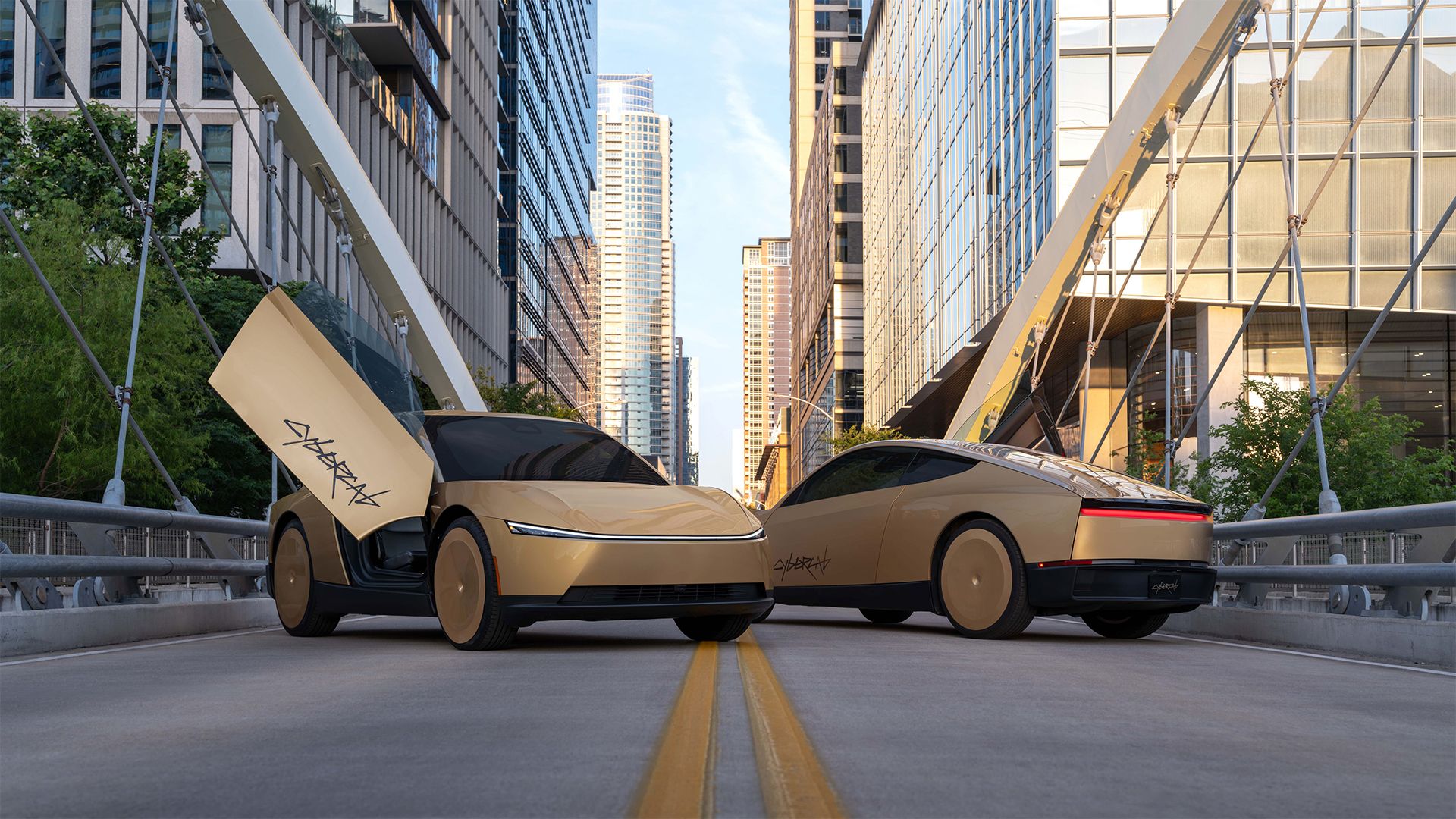
- Tesla says it will invest €3 billion ($3.3 billion) in its German Gigafactory
- The move is intended to boost Cybercab production outside the US
- Recent polling suggests few people feel comfortable with fully autonomous vehicles
Tesla has announced that it will invest a massive €3 billion ($3.3 billion) in its German Gigafactory to boost production of its Cybercab fully autonomous robotaxi.
The move bucks the trend of German automotive downsizing and is designed to support Tesla's ambitious plans to produce up to one million Cybercab robotaxis annually at its Grunheide facility, despite the Cybercab not yet being sold at scale to private buyers or businesses.
In stark contrast, German giant Mercedes-Benz announced that it would freeze future investment at its German plants and is now examining possible closures.
This is, in part, due to the fact that labor in Germany can “cost up to five times as much as at Eastern European sites,” according to the company's production chief, Michael Schiebe.
Meanwhile, BMW and Volkswagen are both cutting jobs and considering scaling back production or closing facilities, according to Reuters.
Tesla says it will submit a building permit application for the Grunheide project before the end of 2026. Construction is scheduled to begin in the first half of 2027, with production set to start in 2029.
Tesla CEO Elon Musk announced in November that the company would wind down production of the ill-fated Cybertruck at its Gigafactory in Austin, Texas, to free up production capacity for the Cybercab in its domestic market. Clearly, the scale of Tesla's ambitions extends well beyond US customers.
Recently, Tesla embarked on a 2,000-person hiring spree at its German site to ramp up Model Y production. However, there's no word on whether the Gigafactory expansion will also result in increased passenger car production, or whether it could mean scaling back Model Y and Model 3 production in Europe.
Automotive sector analyst Matthias Schmidt told Reuters that Germany should be asking how much of Tesla's investment will “result in sustainable, long-term employment” and how much will involve “automated, low-labor work moving forward."
Does anyone actually want Tesla's autonomous future?
According to recent YouGov polling, which surveyed adults in eight countries about their feelings toward driverless cars, the vast majority remain skeptical about riding in self-driving vehicles.
British respondents were the most opposed to the idea, with 47% of those questioned saying they felt “very uncomfortable” about riding in a driverless car. Just 5% said they would feel “very comfortable.”
The results were broadly similar in Germany, France, Italy, and Spain, where the majority said they would feel either “fairly uncomfortable” or “very uncomfortable.”
Even in the US, where companies including Waymo, Zoox, Tesla, Uber, and Lyft have fully autonomous robotaxis operating in various cities, 42% of respondents said they felt “very uncomfortable” about riding in driverless vehicles. With an additional 21% saying they'd be "fairly uncomfortable" riding in one, that means 63% of US respondents felt negatively about the tech.
The only country that appeared more accepting of fully driverless cars was Singapore, which recorded the highest proportion of “fairly comfortable” responses at 34% and the lowest proportion of “very uncomfortable” responses at 14%.
Looking further into the results, YouGov says the majority of those surveyed believe self-driving cars will eventually become capable of driving as safely as human drivers. However, most remain uncomfortable with the prospect of sharing the roads with them.
The poll also revealed that even in countries that appear more accepting of self-driving cars, there is still net negativity toward the potential job losses associated with the technology.
The research suggests that the impact self-driving cars could have on employment is a concern that, to a certain extent, transcends enthusiasm for the technology.
With all this in mind, it begs the question: is the world ready for Tesla's ambitious robotaxi rollout, or is the company forcing a technology on us that very few people have actually asked for? Let us know what you think in the comments below.
Popular Products
-
 Women’s Smartwatch with Bluetooth Cal...
$33.99$22.78 -
 Men's Smartwatch with Bluetooth Call ...
$121.99$84.78 -
 QERE E80 Wireless Headphones with Noi...
$130.99$90.78 -
 Veepeak OBDCheck BLE OBD II Scanner A...
$148.99$103.78 -
 Thinkcar BD6 OBD2 Scanner Full System...
$193.99$134.78