Real Id Requirements, Plane Crashes And More Were Top Transportation Stories In 2025
2025 was a turbulent year for aviation, with deadly crashes and fiery incidents, yet Americans took to the skies as air travel soared to record-breaking levels.
Here's a recap of some of the biggest happenings for aviation and travel in 2025:
Plane crashes
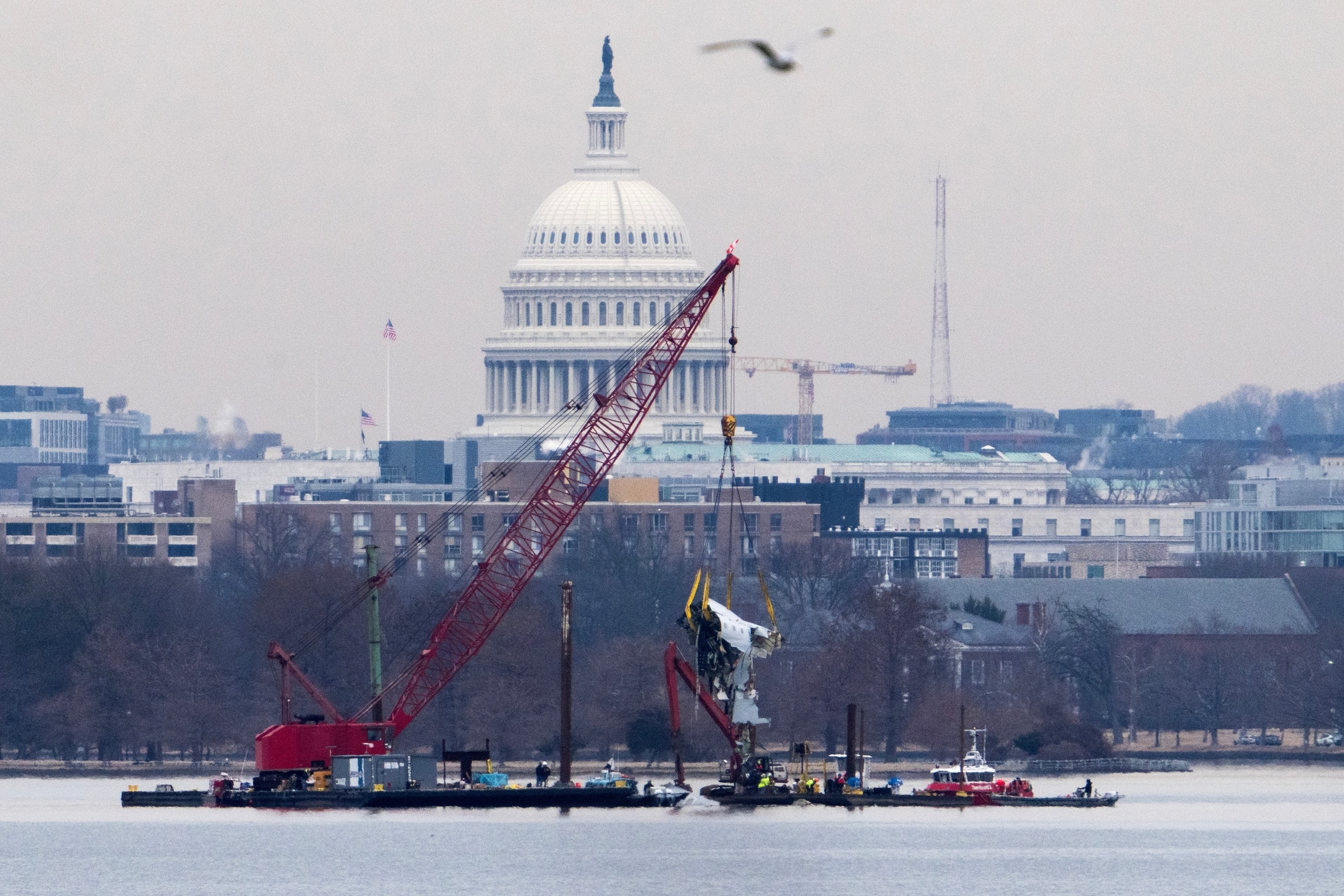
The year started with the deadliest commercial airline crash in 16 years, when an American Airlines flight and a Black Hawk military helicopter collided mid-air near Reagan National Airport in Washington, D.C., killing a combined 67 people on board both aircraft.
Following the crash, the FAA restricted and banned military aircraft operations over Reagan Airport.
The NTSB is currently investigating the cause of the crash and a final report is expected by January 2026.
The same week as the DCA crash, a medical helicopter transporting a child, her mother and four others crashed near a Philadelphia strip mall, killing all six on board and one on the ground. The cause of the crash is also under investigation by the NTSB.
A month later, in February, a Delta Air Lines plane crashed and overturned while landing at Toronto Pearson International Airport in Canada.
All 80 people on board survived, though 21 passengers were injured -- two seriously, according to the Transportation Safety Board of Canada. The preliminary report from March revealed that the right main landing gear collapsed on impact when the Delta flight landed, with the wing hitting the runway and fuel spray causing a massive fire. A probable cause of the crash is still unknown as the investigation continues.
In April, a tourist helicopter crashed in Hudson River, between New York City and New Jersey, killing a Siemens Executive, his family and the pilot. Following the crash, the FAA shut down the operations of New York Helicopter Tours as it investigates.
In June, An Air India flight with 230 passengers and 12 crew onboard crashed in Ahmedabad, India, shortly after takeoff, killing all but one passenger on board that flight. This marked the first time a Boeing 787 Dreamliner was involved in a fatal incident.
Indian investigators are leading the investigation with assistance from the NTSB, and a preliminary report released in July revealed that fuel to the plane's engines was shut off just seconds after the plane lifted off. A final report on what caused the crash has yet to be released.
In November, a UPS cargo plane crashed during takeoff at Louisville International Airport, killing three on board, 11 on ground, and injuring 23 others.
A preliminary report from the NTSB showed the moment the aircraft's left engine came off during takeoff and ignited. The investigators are also focusing on the metal fatigue cracks around the plane's engine.
Following the crash, the FAA grounded all McDonnell Douglas MD-11, MD-10 and DC-10 planes from flying until inspections. These aircraft are primarily used for cargo and aerial firefighting operations.
Though it may seem like there have been a lot more aviation incidents this year, officials reiterate that flying remains safe.
Jennifer Homendy, the head of the National Transportation Safety Board, routinely says flying is safer than driving to the airport.
"Aviation is incredibly safe," Homendy said while presenting the preliminary report on the D.C. crash. "[Reagan National] is where I always fly out of. I say often that your biggest risk is in your personal vehicle when you're going to and from the aircraft at the airport. Aviation is safe."
New requirements took effect in 2025, while some rules were eased for air travelers.
REAL ID requirement
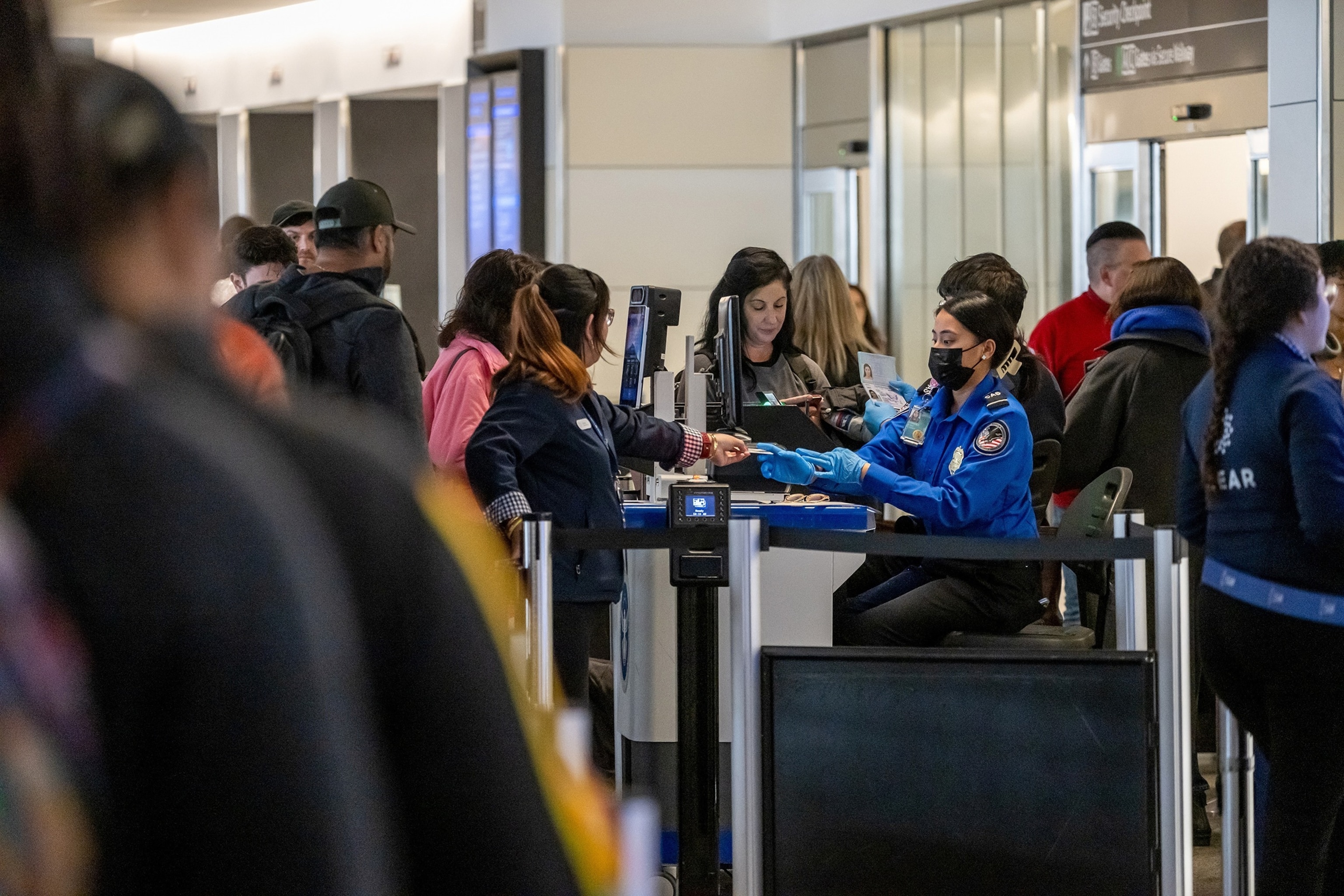
The REAL ID requirement went into effect in May, requiring domestic travelers boarding commercial flights to use a REAL ID or an alternative form of approved documentation in order to verify their identity and pass through the TSA security checkpoints. Children under the age of 18 do not need to have a REAL ID. TSA said around 94% of travelers are already using a REAL ID or another acceptable form of ID.
In November, TSA announced that it will start imposing a $45 fee for those traveling through the TSA checkpoints without a REAL ID or another form of acceptable fee starting in February 2026.
TSA said the fee will cover the administrative and IT costs associated with the ID verification program and ensure the expense is covered by the travelers and not the taxpayers.
This fee is part of the agency's next phase of the REAL ID implementation process and will require individuals to verify their identity through a biometric or biographic system if they don't have a compliant form of identification before they're permitted to cross through the checkpoint. The agency warns that even then, there is no guarantee that individuals will be cleared to cross through the security checkpoint.
Shoes off requirement removed



A major change for air travelers came this summer when TSA announced passengers going through security checkpoints at airports will no longer be required to remove their shoes, ending the nearly two-decade mandate by the agency.
Those traveling without a REAL ID will not be required to take off their shoes, but individuals could be flagged for other reasons that could require them to go through additional security screening.
This was a major shift since TSA began requiring passengers to take their shoes off in 2006.
The policy came five years after Richard Reid tried to blow up an American Airlines flight from Paris to Miami with explosives packed in his shoes. The explosives failed to detonate and Reid was held down by fellow passengers and the flight crew.
Newark outages ATC modernization
In May, the air traffic control facility, which handles aircraft over the Newark Liberty International Airport, experienced multiple equipment outages, causing the air traffic control computer screens to go dark for 60-90 seconds. This led to the controllers losing communication with aircraft and unable to see them during this time.
Following the outage, several controllers went on medical leave, calling the experience a traumatic event. The controllers are entitled to at least 45 days away from the job and must be evaluated by a doctor before they can return to work. This caused a staffing shortage at an already understaffed ATC facility, leading to massive flight delays and cancellations for weeks, primarily impacting United Airlines, which has a hub at Newark, officials said.
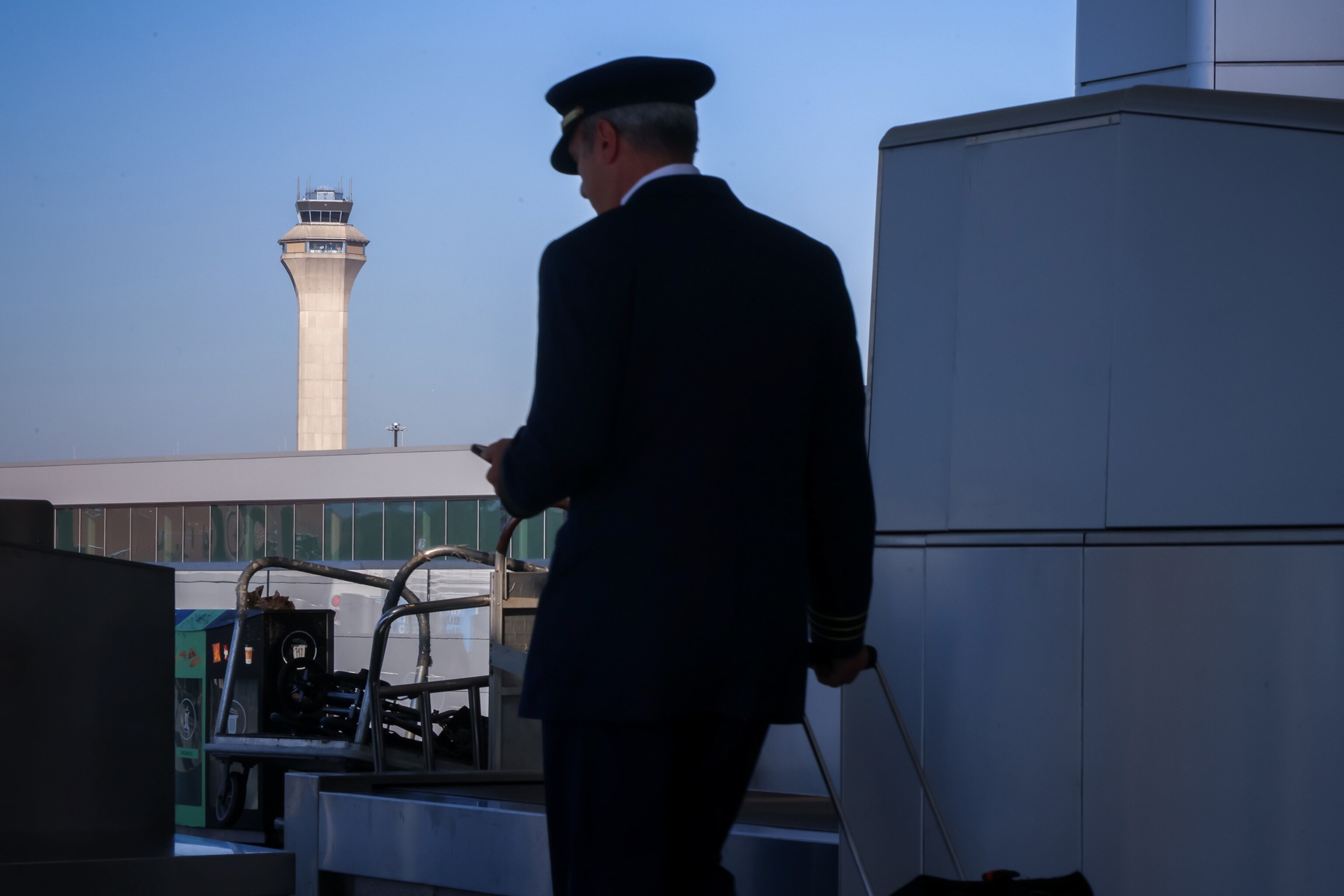
Ultimately, the FAA met with airlines and decided to reduce the number of arrivals and departures at the airport to free up airspace and make the operation more reliable due to the ATC staffing shortage and runway construction. The arrival/departure rates were gradually increased in the fall, but these restrictions remain in place until October 2026.
The equipment reignited concerns about the antiquated air traffic control system, leading Transportation Secretary Sean Duffy to announce an accelerated timeline to overhaul the entire air traffic control system by 2028.
Changes include swapping out old telecommunications for "new fiber, wireless and satellite technologies," "installing new modern hardware and software," replacing 618 old radars; and building six new air traffic control centers and replacing towers, the Transportation Department said.
The DOT received $12 billion down payment for the project under the Bill Beautiful Bill, but Duffy has said billions more are required from Congress for the project.
Government Shutdown
The longest government shutdown in U.S. history earlier this year had a massive impact on air travel as federal workers, including air traffic controllers and TSA agents who were forced to work without pay.
A week into the government shutdown, flight delays and cancellations started to climb as sick calls involving air traffic controllers left a number of airport towers and control facilities short or without enough staff to properly handle all flights.
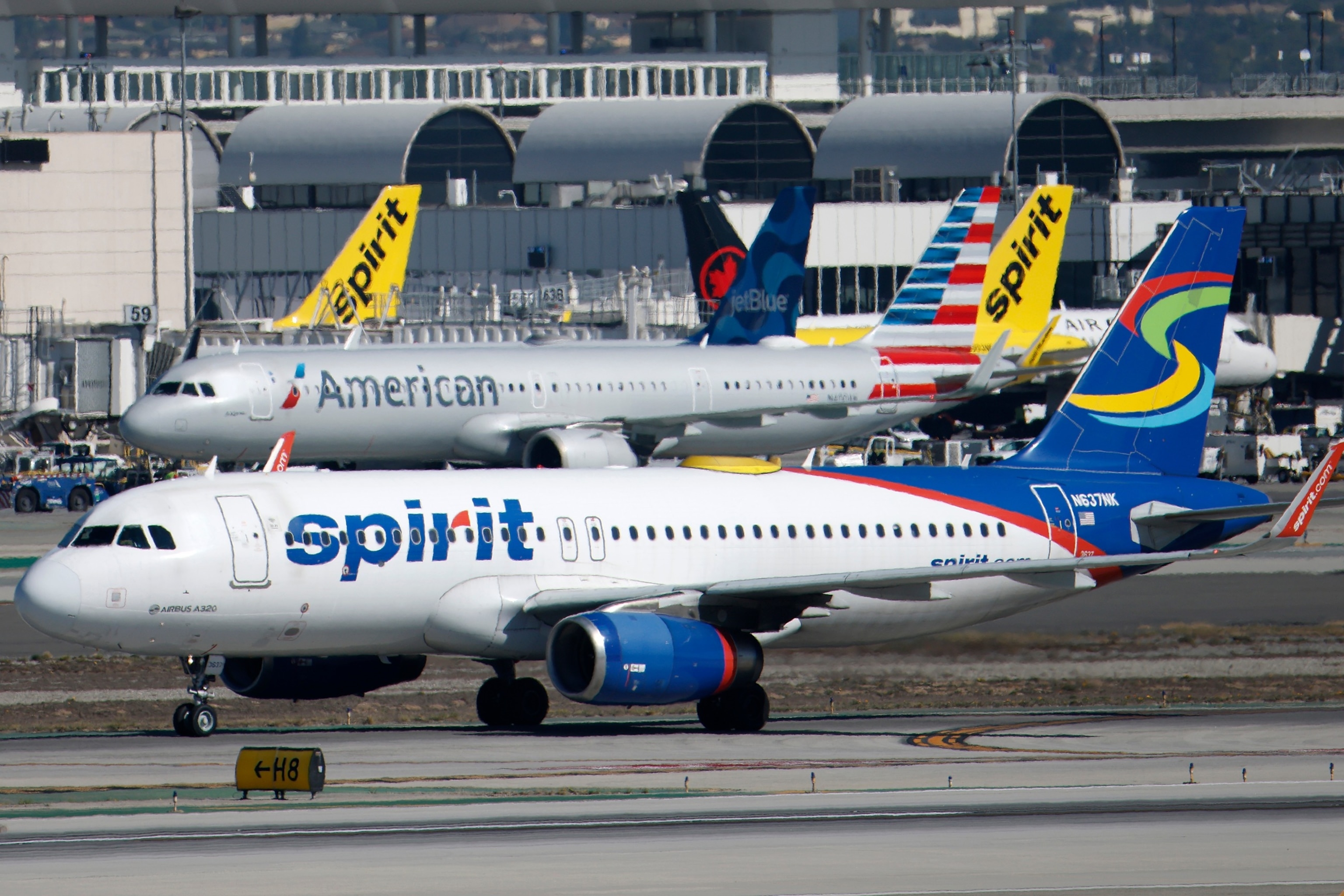
As a result, the FAA reduced flight capacity by 10% at 40 major airports across the country, citing safety reports from pilots that controllers are slower to respond, not using proper terminology and there have been more incidents of planes getting too close together.
The reductions did not impact long-haul or international flights, but the action resulted in thousands of flights getting canceled or delayed each day.
The flight reductions began at 4% and were set to gradually increase to 10% but did not, as the shutdown ended within a week of the reductions being implemented. The agency is also investigating reports of any airlines not abiding by the flight reductions during the shutdown.
Record-breaking travel year
Despite the crashes and aviation mishaps, it was a record-breaking year for travel.
The TSA said the Sunday after the Thanksgiving holiday was its busiest day in history, with the agency screening more than 3.1 million people through its security checkpoints at airports nationwide. The Nov. 30 numbers beat the previous record of 3.09 million air travelers screened, which was set on Sunday, June 22. All of the TSA's top-10 busiest air travel days have exceeded 3 million travelers and have occurred since July 2024, with eight out of the 10 days occurring this year, according to the TSA.
In January, AAA projected that an estimated 19 million Americans are expected to set sail on cruises this year. That's a 4.5% increase from last year and marks the third consecutive year of record-breaking passenger volume.
The year is also finishing off strong with AAA projecting 122.4 million Americans will travel at least 50 miles from home for the Christmas and New Year's holiday travel period from December 20th through January 1st.
United Airlines said it is expecting its busiest winter holiday season ever, with the Saturday after Christmas -- Dec. 27 -- forecast to be the airline's most crowded day in the airline's history.
American Airlines said its planning for four flights to depart each minute over its holiday period, from Dec. 18 through January 5.
About 109.5 million people are forecast to travel by car over the holidays, up 2% from last year, AAA said.
Popular Products
-
 Hanging Toiletry Bag Waterproof - Tra...
$137.99$95.78 -
 Antioxidant Shoe Storage Box Dustproo...
$100.00$57.78 -
 Ergonomic Third Footpeg with Adjustab...
$120.76$98.78 -
 Portable Air Purifier with Intelligen...
$150.12$89.78 -
 Portable Negative Ion Air Purifier fo...
$45.99$31.78