The Pickleball Game That Became A Wedding Invitation
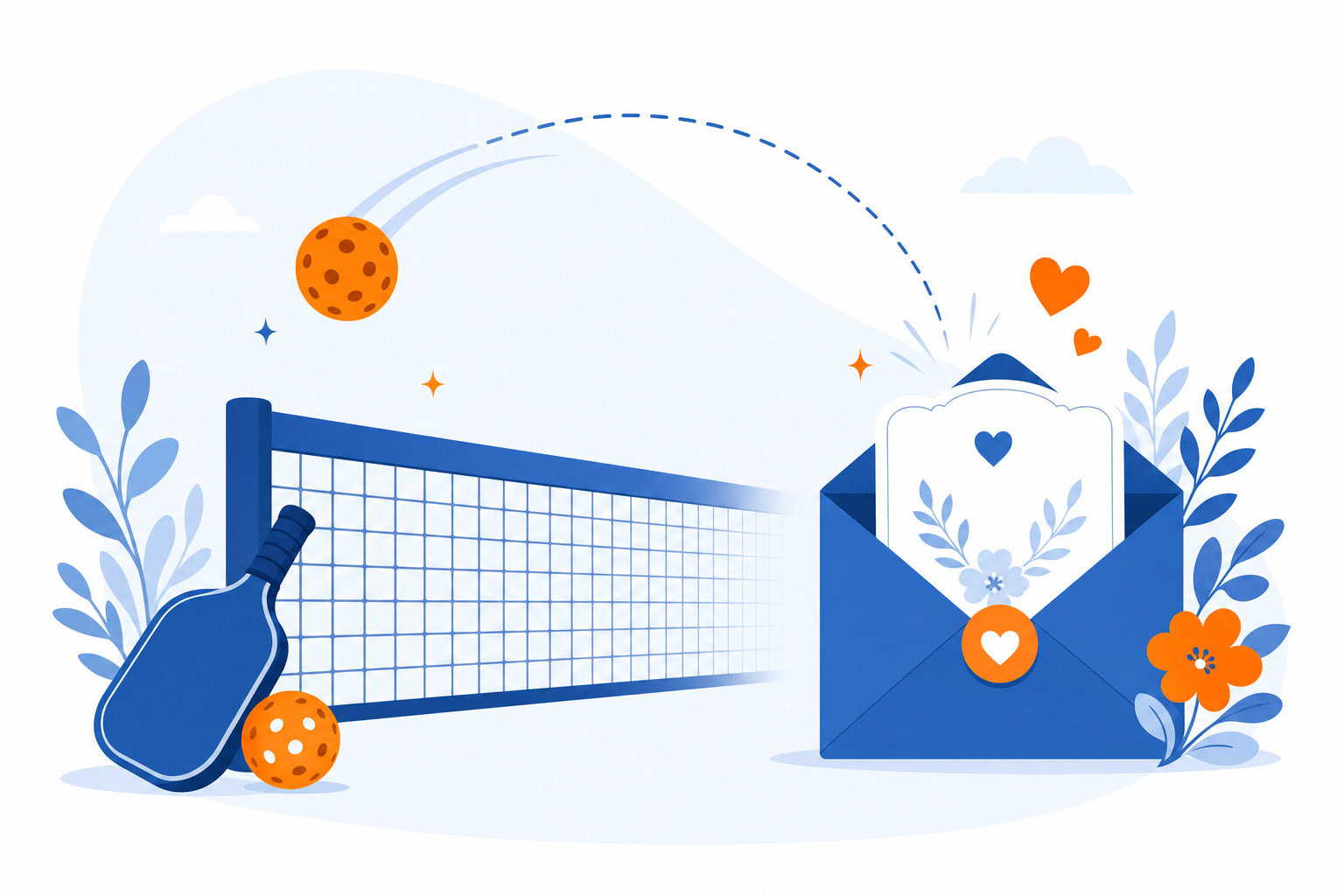
Two people are getting married next year. I’m invited to the wedding.
That outcome traces back to an afternoon on a pickleball court, a casual text message I almost missed the meaning of, and a small introduction I made because I had a feeling I should.
I didn’t set out to be a matchmaker. I just invited people to play pickleball.
How It Started
When I first moved to Austin, I noticed how hard it is to build real connections in a new city. You meet people at events, you get their business card, you follow up maybe once, and then it fades. A lot of networking feels like that — a lot of surface-area contact with very little depth.
So I started hosting things. Dinner parties at first, then other gatherings. The idea was simple: bring people together in a context where they could actually talk. Not a conference, not a mixer — just a small group in a comfortable setting with enough time to get past the surface stuff.
Pickleball became one of those contexts. You’re active, you’re communicating, you’re laughing at each other’s mistakes. It’s one of those situations that breaks down formality pretty quickly.
The Afternoon on the Court
One afternoon I had three people coming: two brothers who were new to Austin, and a woman who was also new to the city and didn’t know many people. None of them knew each other.
We played for a couple of hours. It was a good time. Nothing particularly notable happened. Everyone went home.
A few days later, the woman texted me.
“I really enjoyed playing with so-and-so,” she said. “He reminds me of my friends back home.”
I sat with that for a moment. It was a friendly text. Polite. But there was something in it that felt like more than just “thanks for a fun afternoon.”
I had a nudge that she was telling me something without telling me directly. That she’d enjoyed spending time with this person and hoped there might be another opportunity to do so.
So I made an introduction.
The Introduction I Almost Didn’t Make
It would have been easy to let it go. She said something nice. I could have replied with “so glad you had fun!” and moved on.
But I’d been at enough gatherings by that point to recognize that moment — the one where someone signals interest in a connection without asking for it directly. Sometimes people do that because they’re not sure if the other person is interested. Sometimes they just don’t want to seem presumptuous.
I reached out to the brother separately. Got a sense that he’d also enjoyed meeting her. Made a proper introduction. Got them in the same room again. They exchanged numbers.
That was it. I didn’t do anything else.
The Part I Didn’t Plan
A few months later I was hosting an event at my place. I looked up at one point and saw the two of them walking in together.
I was not expecting that.
I remember the feeling — a quiet, genuinely delighted surprise. Like something had happened on its own that I had only very loosely set up.
Years Later
They’re now engaged. Getting married next year. And they insisted — their word — that I come to the wedding.
I’ve thought about this story a lot since then. What it means, what I’m supposed to take from it.
The honest conclusion I keep landing on: you can’t engineer connection. I couldn’t have designed that afternoon on the pickleball court to produce an engagement. That’s not how it works. The chemistry, the timing, the compatibility — none of that is in my control.
What I could control was the invitation. Creating a situation where those two people were in the same space, doing something together, with enough ease and informality to actually connect.
What “Creating Conditions” Actually Looks Like
I’ve hosted over fifty dinner parties in Austin. Lots of events, lots of introductions. Most of them don’t produce a story like this one. People meet, they have a nice time, maybe they stay in touch.
But every now and then, something compounds.
The question isn’t whether you can predict which ones will. You can’t. The question is whether you’re creating enough conditions that the good stuff has a chance to happen.
The ripple effects don’t always announce themselves. Sometimes they do, like a wedding invitation. But often they’re quieter. A friendship that started at a dinner. A job introduction that happened because two people met at a casual gathering. A business partnership that began because someone walked into a pickleball game.
You don’t always find out. That’s okay.
The Small Invitation That’s Easy to Not Send
Here’s what I keep thinking about.
If I hadn’t sent those invites, those two people don’t meet. That’s not speculation — there’s no other path in this story where they find each other.
Everything that followed from that afternoon — the text, the introduction, the event, the relationship, the wedding — starts with me sending a message to a few people who were new to town and saying “want to play pickleball Saturday?”
That’s a pretty small action.
But small actions are the ones most at risk of not getting sent. They feel low-stakes, easily deferred, not urgent enough to prioritize. There’s always something more pressing.
I’m not suggesting you should spend your life trying to engineer moments for other people. That would be exhausting and it doesn’t actually work.
But I do think there’s something to having a consistent practice of low-stakes, open-ended invitations. Not because you know what they’ll produce. Precisely because you don’t.
The couple getting married next year didn’t tell me this was going to happen. How would they know? They just came to play pickleball.
Popular Products
-
 Electronic String Tension Calibrator ...
$41.56$20.78 -
 Pickleball Paddle Case Hard Shell Rac...
$27.56$13.78 -
 Beach Tennis Racket Head Tape Protect...
$59.56$29.78 -
 Glow-in-the-Dark Outdoor Pickleball B...
$49.56$24.78 -
 Tennis Racket Lead Tape - 20Pcs
$51.56$25.78