Retirement Spending Is Not Flat. How Real World Expenses Change After Age 70
The 4% rule and most retirement calculators often just assume you are going to spend the same inflation-adjusted amount of money for the next 30 years. On the one hand, this is a simple and clean idea for managing finances, but it’s also completely wrong. Real retirement spending rarely works like it’s supposed to, and if you are planning on it being static, you’re likely setting yourself up for a big surprise.
Quick Read
-
Retirement spending declines more than 30% between ages 60 and 85.
-
Healthcare costs for retirees triple from $13,000 annually at ages 65-74 to over $40,000 after 85.
-
70% of retirees need long-term care. Nursing home costs exceed $100,000 annually without Medicare coverage.
- You can earn up to $1,500 in cash bonuses just for moving your savings; see how this limited-time Raisin offer works before it’s gone. Hint: use code 'HEADSTART'
A recent report from JPMorgan Asset Management indicates that average retirement spending declines by more than 30% between ages 60 and 85. This isn’t a small adjustment to be sure, it’s a fundamental shift in how money is moving through your life, at this period in your life.
The focus here is now on the fact that this decline isn’t even uniform across various expense categories, as some are dropping faster than others, while others are spiking, and timing matters more than most retirees expect. What’s even more notable is how much spending can change after you turn 70, so having your finances in order is critical.
The Go-Go Years End, But Healthcare Begins
Arguably, the biggest shift after you turn 70 is that swap between discretionary and non-discretionary spending. Travel, dining out, entertainment, and transportation all start declining as mobility becomes more limited and energy levels drop. Data from the Bureau of Labor Statistics indicate that households aged 75 and older spend roughly $5,091 annually on transportation, compared with $9,321 for those aged 55-64.
This is a 50% drop due to the need to commute less, fewer driving responsibilities, and reduced long-distance travel. However, at the same time, healthcare costs are jumping in the other direction. According to RBC Wealth Management, in 2024, a healthy couple between the ages of 65 and 74 spent around $13,000 annually on healthcare. This number jumped to more than $23,000 for those between the ages of 75 and 84, and after you turn 85, the number jumps again to more than $40,000 annually.
Medical expenses are also likely to double between 70 and 90, with a lot of the increases coming from nursing home and long-term care spending. What is most concerning is that a lot of these costs catch retirees off guard if they budgeted more toward flat expenses.
Housing Costs Drop While Food Stays Steady
As the single largest expense category for retirees, housing costs cannot be ignored, even as they decline more with age. In 2025, the average American aged 55 to 63 spent approximately $27,850 on housing, according to Consumer Expenditure Survey data. For those age 75 and older, this figure dropped to $22,160 as this decline is linked to eliminating mortgage debt, downsizing, or relocating to regions with lower property taxes.
Food spending, on the other hand, has remained somewhat sticky through 2025 for retirees. While there is a continued decline in restaurant spending as older retirees prioritize dining at home, overall food costs haven’t dropped due to the cumulative impact of grocery inflation. A similar pattern holds true for utilities and essential household services. These categories don’t scale down much with age, and they still represent an increasing proportion of the total household budget as other discretionary expenses fall away.
The Long-Term Care Wildcard
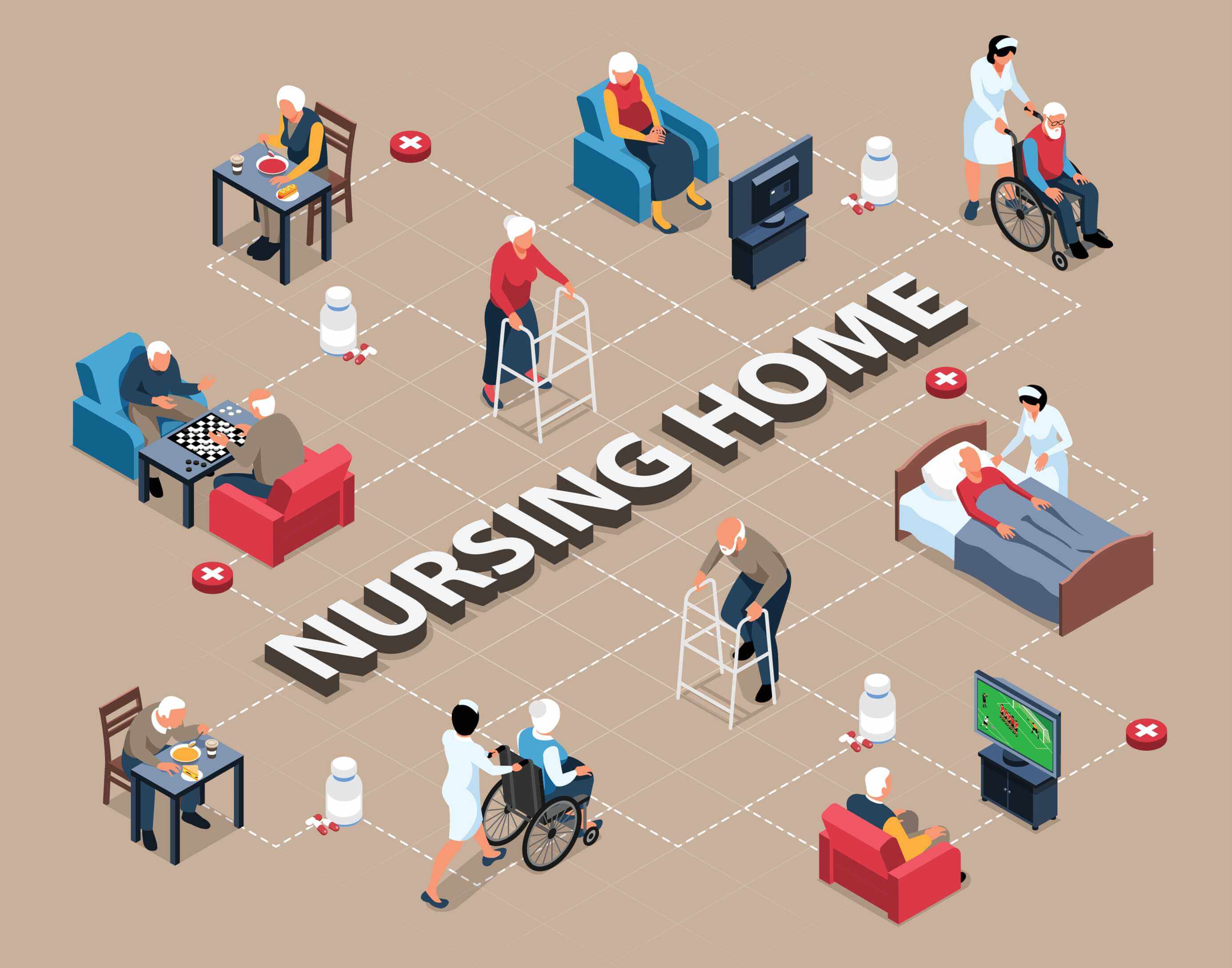
The expenses that blow up most retirement budgets after 75 are long-term care. About 70% of retirees will need some form of long-term care services, whether it’s a home health aide, assisted living, or a nursing facility. In 2025, the national median cost of assisted living was around $5,676 per month or $68,112 annually, while a semi-private nursing home cost can exceed over $100,000 annually.
The big challenge is that these costs aren’t covered by Medicare, which means they are out-of-pocket expenses unless you have either long-term care insurance or Medicaid.
The timing of these scenarios makes things even more challenging. Let’s say you enter a nursing facility at 82 and stay for three years, which means your out-of-pocket costs could exceed over $300,000, which comes right out of a retirement budget. Even a home health aide, which could run as much as $50,000 annually, is exactly why so many retirees find themselves draining their retirement savings faster than expected.
Entertainment and Travel Follow the Smile Curve
Discretionary spending doesn’t decline in a straight line, and instead it follows what researchers call the “smile curve” with peaks at the beginning and end of retirement. Generally speaking, in the first decade of retirement, many people ramp up spending on travel, hobbies, and entertainment. AARP data indicates that adults 65-69 take as many as 3.3 trips per year, compared to 2.8 for those ages 70-74 and 2.5 for those over 75.
Between ages 75 and 85, discretionary spending drops more sharply as health limitations reduce activity levels. Transportation costs fall as driving becomes less frequent. In addition, entertainment budgets shrink as retirees start to spend more time at home. After turning 85, overall spending can rise again, but it is driven more by healthcare and caregiving than by leisure activities.
Why This Matters for Withdrawal Strategy
If spending actually declines by 30% from age 60 to 85, a static withdrawal strategy that increases with inflation every year is a fundamental mismatch to a retiree’s reality. You’re either over-withdrawing early and depleting your portfolio unnecessarily, or under-withdrawing late and sitting on assets you could have used to improve the quality of life during active retirement years.
A better approach is to budget for higher discretionary spending in your 60s and early 70s, knowing you can cut back later on. Separately, building a healthcare reserve that grows over time to handle any potential spikes in medical costs after 75 is a wise idea.
There is also a need to plan for housing expenses to decline as you downsize or pay off the mortgage, but don’t count on food or utilities dropping. The key here is to recognize that retirement isn’t a 30-year window anymore. It’s more of a series of separate phases with different spending patterns, and your withdrawal strategy should adapt to match them.
Finally! Access 25+ Cryptocurrencies The Easy Way
After years of waiting for a good option, SoFi now offers access to major cryptocurrencies like Bitcoin, Ethereum, and Solana, along with more than 25 total digital assets. What stands out isn’t just the selection, it’s the integration.
You don’t need a separate app, a new login, or a different funding source. Crypto lives next to the rest of your portfolio, which makes position sizing, rebalancing, and capital deployment far easier for investors who actively manage risk.
If you’re an active investor who wants crypto exposure without stepping outside a regulated financial ecosystem, SoFi is a top choice. Get started here.
The post Retirement Spending Is Not Flat. How Real World Expenses Change After Age 70 appeared first on 24/7 Wall St..
Popular Products
-
 5V USB Heating Pad for Jackets
$45.99$31.78 -
 Reusable Adult Bib with Crumb Catcher
$20.99$13.78 -
 Inflatable Portable Hair Washing Basi...
$68.99$47.78 -
 Portable Unisex Travel Urinal
$49.56$24.78 -
 Foldable Garbage Picker Grabber Tool
$93.56$46.78