Aging In Place: Designing Homes That Support Independence At Every Stage Of Life

What does it truly mean to feel at home?
Photo by Keith Tanner on UnsplashA home is more than a place to live. It’s where routines form, identities settle, and daily life unfolds.
For many people, especially as they grow older, home is not just a place of comfort. It’s a place of autonomy, routine, identity, and control. Aging in place – the ability to live safely and comfortably in one’s own home over time – is not a trend or a niche design concept. It is a long-term, practical approach to housing that recognizes aging as a normal, ongoing part of life.
Rather than seeing aging as a reason to relocate or downsize prematurely, aging-in-place design asks a different question:
What if our homes were designed to adapt as we do?
This approach shifts the focus from reaction to preparation – from retrofitting after challenges appear, to planning spaces that remain usable, intuitive, and supportive across decades.
Aging in Place Is About Independence, Not Limitation
A common misconception is that aging-in-place design is only about safety features or medical accommodations. In reality, it is about maintaining independence, efficiency, and confidence in everyday life.
Yes, safety matters – but it is not the end goal.
The real objective is enabling people to continue living on their own terms.
This includes:
• Moving freely without unnecessary physical strain
• Navigating spaces intuitively, even as vision or mobility changes
• Using kitchens, bathrooms, and living areas without assistance
• Maintaining daily routines with minimal disruption
Design choices such as step-free entrances, wider circulation paths, reachable controls, and well-balanced lighting do not signal decline. They simply reflect good planning.
When spaces work smoothly, independence feels natural – not engineered.
Designing Beyond Fall Prevention
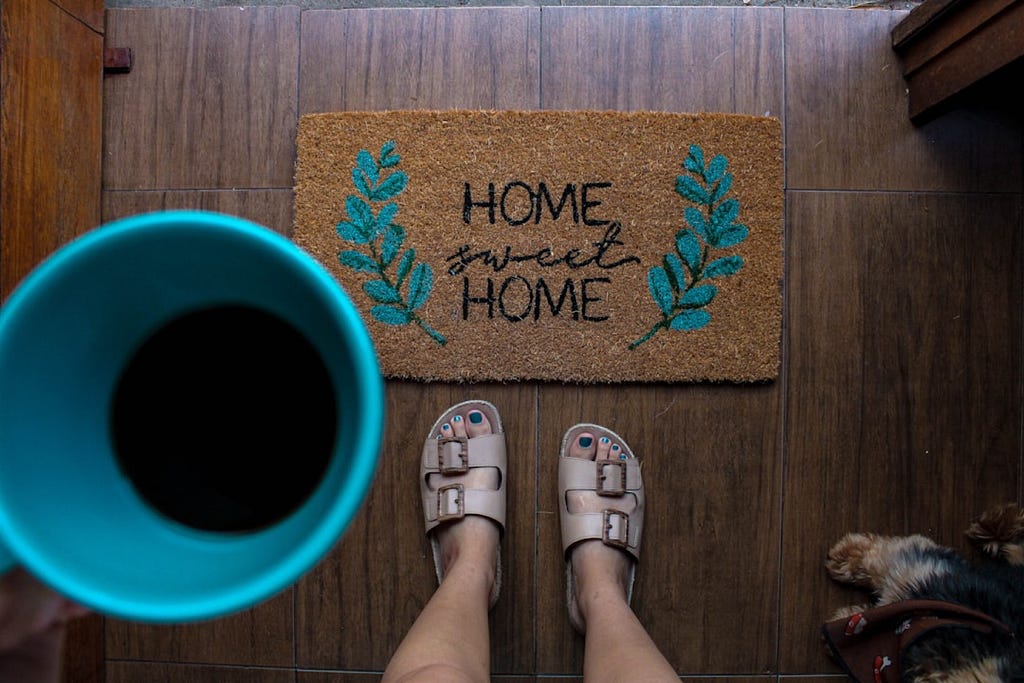 Photo by Juliana Romão on Unsplash
While fall prevention is an important consideration, reducing aging-in-place design to grab bars and handrails misses the bigger picture.
Effective aging-focused homes address multiple layers of daily living:
• Spatial clarity: clear layouts that reduce confusion and unnecessary movement
• Physical efficiency: doors, handles, and fixtures that require less force
• Visual comfort: lighting that supports depth perception and reduces glare
• Surface stability: flooring that balances grip, comfort, and durability
These elements work together to support ease of movement and decision-making – not just to prevent accidents, but to preserve energy and confidence throughout the day.
The Emotional Value of Staying Home
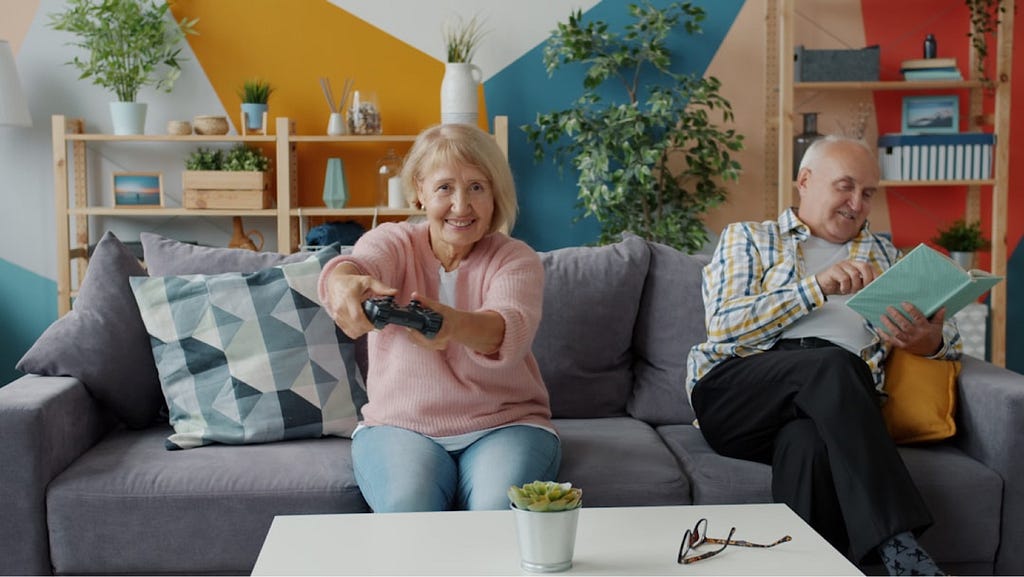 Photo by Vitaly Gariev on Unsplash
A home is more than its physical structure.
It holds routines, memories, relationships, and a sense of belonging.
Relocating later in life often means more than adjusting to a new space – it can disrupt social connections, daily rhythms, and personal independence. Aging-in-place design respects this emotional reality by allowing people to stay connected to their environment while their home quietly adapts to them.
Design can reduce the need to “ask for help” with simple tasks:
• Reaching storage without strain
• Moving between rooms without obstacles
• Navigating the home safely at night
These moments matter. Independence is built on small, everyday actions done without friction.
Universal Design and Aging in Place Go Hand in Hand
Aging-in-place design aligns naturally with universal design – the principle that environments should be usable by as many people as possible, regardless of age or ability.
Features like:
• Lever handles instead of round knobs
• Wider doorways and hallways
• Open, flexible layouts
• Touchless or single-lever fixtures
…benefit everyone, not only older adults.
These solutions work just as well for:
• Parents carrying children
• People recovering from injury
• Guests with temporary mobility limitations
• Multi-generational households
When accessibility is integrated from the beginning, it does not stand out. It simply becomes good design.
Technology as a Supportive Layer, Not a Replacement
Smart home technology has become a valuable partner in aging-in-place design – when used intentionally.
Examples include:
• Motion-activated lighting to improve nighttime navigation
• Voice-controlled systems for lighting, temperature, and appliances
• Smart thermostats that maintain comfort efficiently
• Optional monitoring tools that support safety without invading privacy
Technology should never replace independence. Instead, it should extend it – quietly supporting daily routines while remaining easy to use and unobtrusive.
The most effective smart homes are not gadget-heavy; they are thoughtfully integrated.
Planning Early Makes the Biggest Difference
One of the most important principles of aging in place is timing.
Designing for long-term usability is:
• Easier during initial construction or renovation
• More cost-effective than retrofitting later
• Less disruptive to daily life
Planning ahead does not mean designing for a specific limitation. It means creating flexibility – homes that can adjust gradually without requiring major changes.
Adaptable design is resilient design.
Aging in Place Is a Design Responsibility
 Photo by Vitaly Gariev on Unsplash
As designers, architects, and homeowners, aging in place challenges us to rethink how we define “normal” living environments.
It asks us to design for continuity, not exception.
For longevity, not just aesthetics.
For real daily use, not idealized scenarios.
When homes evolve with the people living in them, they support freedom, choice, and independence – not just safety.
Aging in place is not about preparing for decline, It’s about designing for life as it unfolds.
References & Further Reading
• World Health Organization (WHO) – Age-friendly Environments
https://www.who.int/ageing/age-friendly-environments
• AARP – Home and Community Preferences Survey
https://www.aarp.org/research/topics/community
• Centers for Disease Control and Prevention (CDC) – Home and Fall Prevention Design
https://www.cdc.gov/falls
• National Institute on Aging – Aging in Place: Growing Older at Home
https://www.nia.nih.gov/health/aging-place
• Center for Universal Design, North Carolina State University
https://projects.ncsu.edu/design/cud
Aging in Place: Designing Homes That Support Independence at Every Stage of Life was originally published in ILLUMINATION on Medium, where people are continuing the conversation by highlighting and responding to this story.
Popular Products
-
 Classic Oversized Teddy Bear
$23.78 -
 Gem's Ballet Natural Garnet Gemstone ...
$171.56$85.78 -
 Butt Lifting Body Shaper Shorts
$95.56$47.78 -
 Slimming Waist Trainer & Thigh Trimmer
$67.56$33.78 -
 Realistic Fake Poop Prank Toys
$99.56$49.78