Us Attack In Iran Poses Bigger Risk To Energy Market Than Venezuela
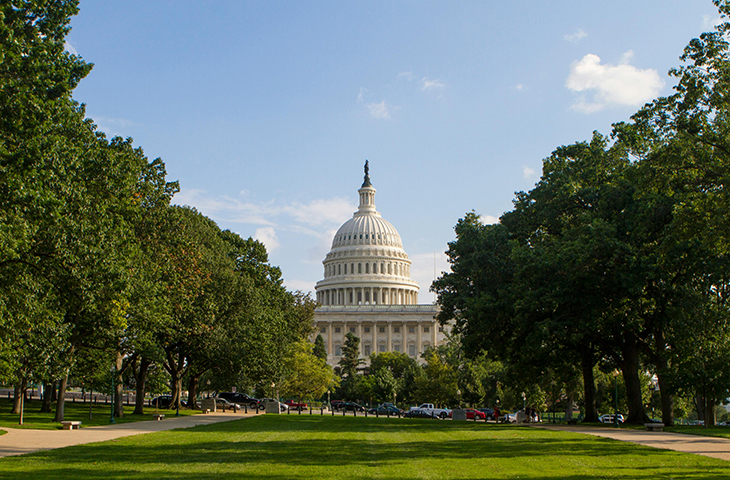
President Donald Trump’s joint military attack with Israel against Iran Saturday is the second time his administration has struck a major oil-producing country this year — and this time, the consequences for global markets could be far more severe.
Iran, a member of the OPEC cartel, sits at a crucial chokepoint for global energy trade — the Strait of Hormuz, through which 20 percent of the world’s oil and gas flows.
Unlike the limited market impact seen after the U.S. military incursion into Venezuela in January, or short-lived market tensions from the bombing strike the U.S. carried out against Iran last year, a broader conflict in the Middle East could lead to disruptions in Saudi Arabia and other countries, according to energy and geopolitical analysts.
The new military campaign will likely be measured in “days not hours,” a Trump administration official said, suggesting the Saturday strikes would be part of a larger, coordinated campaign. Iran had already launched counterattacks Saturday against U.S. military bases in the region.
The U.S. oil market was closed Saturday, but prices had jumped in anticipation of an attack to reach $67 a barrel on Friday, about $5 higher than a month ago. The global Brent crude oil price benchmark could reach $80 on U.S.-Iranian hostilities, analysts at investment bank Barclays said Friday.
The political blowback could also draw in China, which buys about 90 percent of Iran’s exports of 1.5 million barrels per day. Any major supply disruption could drive up global energy costs and lead to higher prices at the gas pump for Americans — a dynamic largely avoided after the U.S. took over shipments of crude oil in Venezuela.
“Iran is a larger oil producer than Venezuela and thus the consequences of a disruption could be larger,” said Samantha Gross, director of the Energy Security and Climate Initiative at the Washington, D.C.-based think tank Brookings Institute. “Add in their strategic location on the world’s most important oil chokepoint and you have a situation that could have significant market impacts, not just in the U.S.”
The U.S. attack drew criticism from Democratic members of Congress, who were already seizing on the potential impact of the operation on oil prices at a moment they’re leveraging affordability concerns as a 2026 midterm election issue.
“Americans are demanding help with the cost-of-living crisis, but President Trump would rather start another war, potentially driving up energy prices, than listen to them,” Democratic Rep. Rosa DeLauro said in a statement.
Fernando Ferreira, director of the Geopolitical Risk Service at consulting firm Rapidan Energy Group, said Iran could follow through on its threats during past conflicts to disrupt shipping through the Strait of Hormuz, or even try to close it completely with mines and drone attacks.
Tehran or its proxies could also target oil and gas infrastructure in nearby U.S. allies, as they did in 2019 with a drone attack on two Saudi Arabia refineries, Ferreira said. Qatar, which hosts the largest U.S. military base in the region, shares a major gas field with Iran that is a key supplier for global liquefied natural gas markets.
In the event the U.S. strikes and Iranian’s own hostility toward the country’s government help push the regime out of power, Iran’s oil fields offer a major opportunity for international oil companies to expand production, said Robert Auers, market analyst at consulting firm RBN Energy. The nation has been under crippling sanctions, but its infrastructure is considered to be structurally sound, unlike that of Venezuela’s.
The head of the U.S. oil industry’s top lobbying group said earlier this year that American producers are prepared to be a “stabilizing force” in Iran if the regime there falls.
Iran has huge oil reserves that are more easily drilled than the shale formations in the United States, Auers said.
“Iran’s upstream and downstream sectors are much better run than the Venezuelan ones,” Auers said. “There’s potential to grow output nearly right off the bat. You could quickly add back 500,000 to 1 million [barrels a day] in Iran.”
But Jim Burkhard, vice president and global head of crude oil research at S&P Global Energy, said regime change “historically does not lead to higher production quickly,” even with Iran’s oil sector being in better shape than Venezuela’s.
“People with investment capital — are they going to have the confidence that there’s going to be security and stability to realize a return on their investments?” Burkhard said. “There’s a whole host of questions that won’t be answered overnight.”
Analysts noted that low crude prices — which had sunk to five-year lows earlier this year — have given the Trump administration more leeway to make moves like it has in Iran and Venezuela.
“Given how well supplied the oil market is, it certainly provides some cushion,” Burkhard said. “If the oil market was tight, then [the attacks in] Venezuela and Iran probably could lead to even higher prices because of the unknown.”
Popular Products
-
 Classic Oversized Teddy Bear
$23.78 -
 Gem's Ballet Natural Garnet Gemstone ...
$171.56$85.78 -
 Butt Lifting Body Shaper Shorts
$95.56$47.78 -
 Slimming Waist Trainer & Thigh Trimmer
$67.56$33.78 -
 Realistic Fake Poop Prank Toys
$99.56$49.78