The Super-cheap Google Fitbit Air's New Health Guardian Features Rollout — Including Blood Pressure Trends And Insulin Resistance — Is One In The Eye For Expensive Rivals Like Whoop
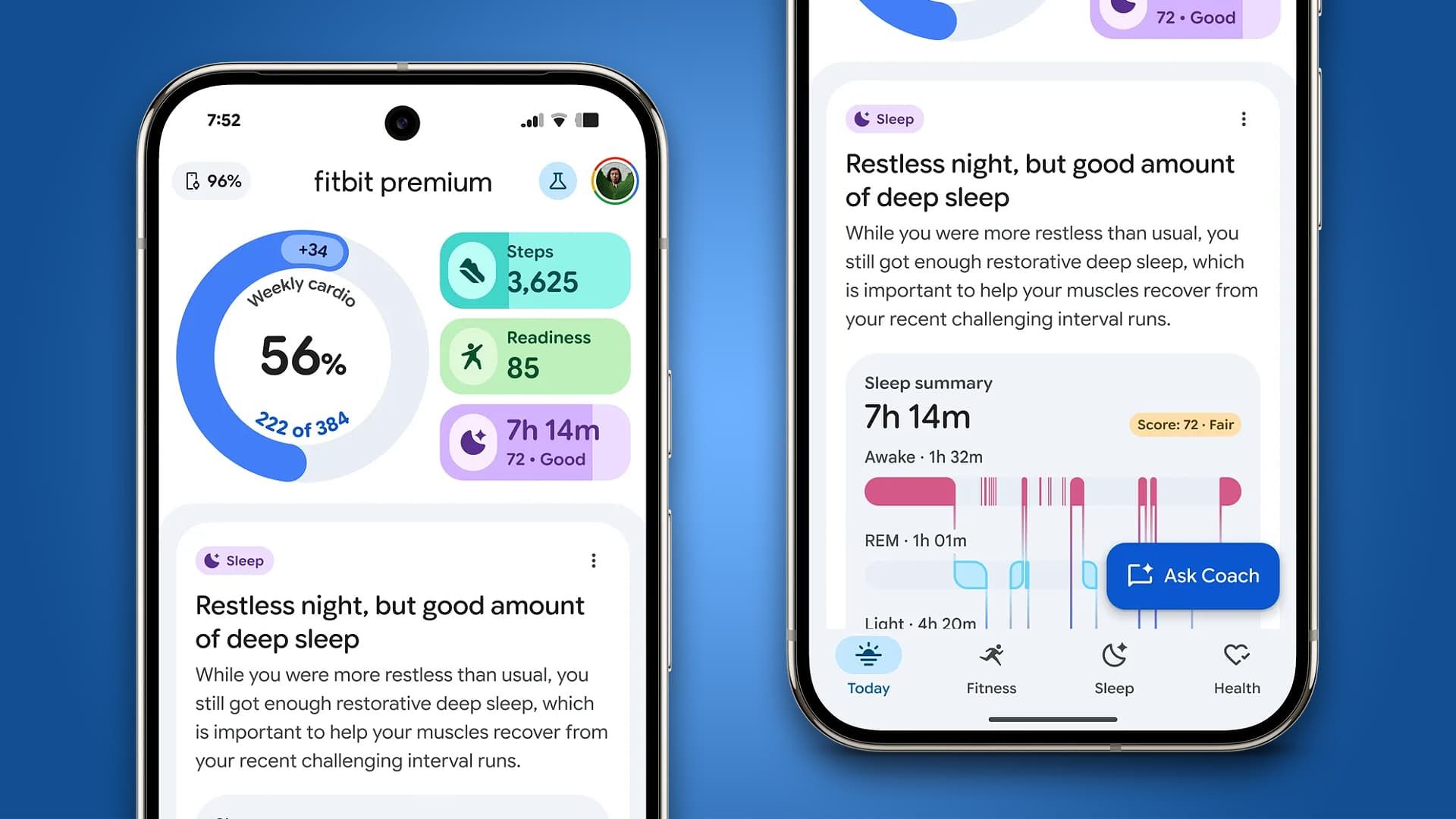
- The Google Fitbit Air is getting some new features introduced with the Google Pixel Watch 5
- Health Guardian includes Insulin Resistance Trends, Blood Pressure Trends and Sleep Breathing Quality
- These features are not behind a Google Health Premium subscription, and are available on the Google Health app for free
The Google Fitbit Air is one of the best cheap fitness trackers, a $99.99 / £84.99 / AU$199 fitness band that offers a basic level of fitness tracking within its free tier, and an advanced AI-powered fitness coach with an additional premium subscription. We liked it at the free tier, although the app is a bit limited, and the premium experience will depend on your tolerance for interacting with chatbots.
However, both tiers are about to get a little bit better, which means the Fitbit Air is becoming even better value, with the addition of Google's new Health Guardian suite of features. The suite comprises a trio of tools, introduced earlier this year on the Google Pixel Watch 5. News site Gadgets & Wearables dug through version 5.07.2 of the app and found the three new features in the app's code.
Pixel Watches get four new tools rather than three, but Google's Breathing Emergency Detection requires the watch's emergency contact and notification infrastructure, which the screenless Fitbit Air doesn't have.
What's new
First up for the new tools is Insulin Resistance Trends. Insulin Resistance is an important metric, as it tells you how sensitively your body responds to blood sugar, and insulin resistance is of course a major precursor to type-2 diabetes. This metric "analyzes multi-week physiological data to track shifts in your metabolic health", pointing at resistance levels going up and down. However, for truly accurate blood sugar metrics, you'll need something like a continuous glucose monitor.
Next up is Blood Pressure Trends, which "passively measure your pulse and motion patterns throughout the month to estimate your blood pressure trends without requiring a cuff or manual calibration". Blood pressure via LED technology is very new to wearables, and it's amazing to see it in a device this cheap. However, it's worth noting this isn't a replacement for a cuff, just a likely indicator of trend. You'll still need regular measurement with either a cuff or a doctor's appointment for anything serious, but it can be an indication to start paying attention to your blood pressure.
Finally, Sleep Breathing Quality is a sleep feature showing you how much time you spent in 'optimal breathing' the night before. Google Health Coach, the AI chatbot you get in the app's premium tier, can offer advice about how to improve this based on your sleep score and other contextual information.
In fact, while you get the basic numbers for all three new metrics, the Google Health Coach can dip in and surface these stats to offer actionable advice. For example, you can use your Insulin Resistance Trends in combination with your nutrition logging to allow the coach to help you make a meal plan to bring that number down.
Worth buying?
While I'm not the biggest fan of Google's AI Health Coach, I did like the Fitbit Air as a whole, and new, useful, actionable metrics can only add to its already-excellent value proposition.
Whoop can estimate daily blood pressure ranges, but it doesn't offer an Insulin Resistance Trends metric, for example, whereas the Garmin Cirqa doesn't cover blood pressure estimates or insulin. Both competitor wearables have SPO2 blood oxygen sensors, however.
Health Guardian tools are only general indicators of your body's trends. However, if any of these metrics matter to you, for many people the Google Fitbit Air is cheap enough that these new features could be an incentive to pick one up over its more expensive rivals.
Popular Products
-
 Vector Optics Magnifier with Flip Sid...
$210.76$147.78 -
 Wireless Ring Remote Controller for S...
$40.99$27.78 -
 Portable & Rechargeable USB Electric ...
$75.99$18.88 -
 Graphics Drawing Tablet with Stylus P...
$661.99$395.78 -
 Mini Clock Camera with Wireless Charging
$290.99$202.78